































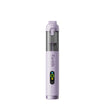






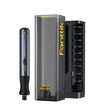
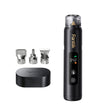
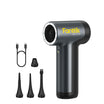
A mini circular saw is the right choice for thin stock, short cuts, and tight-access spots within its documented depth limit. A full-size 7-1/4-inch saw is the safer pick when you're cutting 2-by lumber, ripping long boards, or repeating deep cuts all day.
When weighing a mini circular saw vs full size circular saw DIY wood cutting setup, the right tool depends on how thick your material is and how much of it you need to cut in one pass.
Key Takeaways
- Choose a mini saw for thin stock, short cuts, or tight spaces within its documented depth; choose a full-size 7-1/4-inch saw for thicker lumber, long rips, or repeated deep cuts.
- Our Fanttik O11 Pro cuts up to 1 inch of material straight and 0.65 inch at a 45-degree bevel, so anything deeper calls for a full-size saw.
- Listed RPM alone doesn't predict cutting speed or quality; blade size, depth capacity, and power delivery under load matter more.
- A lighter, shorter saw is easier to position in tight spots, but it still needs stable, controlled handling, not one-handed operation.
- Stop cutting and switch tools if material exceeds the saw's documented capacity, the workpiece shifts, or the blade binds.
Which Saw Fits Your Cut?
Your material thickness and cut length decide which saw category fits the job. The table below lines up the specs that matter most before you pick up either tool.
| Spec | Mini saw (Fanttik O11 Pro) | Full-size 7-1/4" saw |
|---|---|---|
| Blade diameter | 3-3/8" (85 mm) | 7-1/4" |
| Straight-cut depth | Up to 1" | Deeper, varies by model |
| 45° bevel depth | 0.65" | Deeper, varies by model |
| Listed RPM (no-load) | 4,500 RPM | Often higher, varies by model |
| Weight / length | 2.4 lb, 10.75" | Noticeably heavier and longer |
| Best-fit workload | Thin stock, short or tight-access cuts | Deep, long, or repeated cuts |
A compact saw like our Fanttik O11 Pro saw works well when your material sits inside its documented 1-inch straight-cut limit and the job calls for frequent repositioning in a tight space. Its smaller blade and lighter body trade cutting capacity for control in small areas.
A full-size 7-1/4-inch saw earns its weight when you're cutting common 2-by lumber, ripping long sheet goods, or running the saw for hours on a bigger project. The larger blade and platform give you more depth in a single pass, though the exact capacity always depends on the specific model you buy.
If your project mixes both jobs, thin trim cuts and deeper framing cuts, you may end up reaching for both saw types rather than forcing one tool to do everything.
Cutting Depth Is the First Go/No-Go Check
Cutting depth is the single measurement that tells you whether a compact saw can finish the cut in one pass. Measure your stock first, then compare it against the saw's documented rating.

- Measure the actual thickness of your material, not the nominal size printed on the label.
- Check whether the cut is a straight 90-degree pass or a beveled 45-degree cut.
- Compare that measurement with your saw's documented maximum. Our Fanttik O11 Pro is rated for up to 1 inch straight and 0.65 inch at 45 degrees.
- If the material is thicker than your saw's rating, move to a full-size 7-1/4-inch saw or another cutting method instead of forcing multiple passes.
Nominal lumber sizes are misleading here. A "2-by" board, like a 2x4, actually measures about 1.5 inches thick, which already exceeds the O11 Pro's 1-inch straight-cut capacity. That one comparison is often enough to settle whether a given framing or decking task needs a full-size saw, regardless of how the smaller saw handles otherwise.
Why RPM Does Not Decide Cutting Performance
A higher RPM number doesn't mean faster or cleaner cuts. RPM is one spec among several that determine how a saw performs.
Our Fanttik O11 Pro lists a 4,500 RPM brushless motor, measured with no load on the blade. Full-size 7-1/4-inch saws often list higher RPM figures, but that number alone doesn't show how the saw behaves once the blade is loaded into real wood.
Blade diameter, tooth count, feed rate, and how much power reaches the blade under load all affect actual cut quality and speed. A smaller saw can list an RPM close to a larger one without matching its depth capacity or ability to push through thicker stock. Treat RPM as a secondary spec to compare after you've already confirmed depth capacity and blade suitability for your material, not before.
Maneuverability Helps, but One-Handed Control Has Limits
A lighter, shorter saw is easier to carry and reposition, but that convenience doesn't remove the need for stable control. Weight and length only address part of the handling equation.
We design the Fanttik O11 Pro at 2.4 pounds and 10.75 inches long, noticeably smaller than a typical 7-1/4-inch saw. That size difference matters most in overhead work, cabinet interiors, or other cramped spots where swinging a heavier saw into position is awkward.
Easier positioning is not the same as one-handed operation. A saw's own manual sets the grip and control requirements for a given cut, and those requirements don't disappear just because the tool is lighter. Long cuts, knotty grain, or any situation where the blade could bind still call for a firm, deliberate grip and a properly supported workpiece, regardless of which saw size you're using.
Full-size saws carry more mass, which can help keep the blade tracking straight through a long rip, at the cost of more effort to reposition for short or awkward cuts.
Choose by Material, Cut Length, and Workload
Match the saw to the material and the length of the cut, not just to whichever tool feels easiest to grab. Two patterns cover most home-remodeling situations.
Thin Stock and Tight Access
Plywood, paneling, trim, and other thin stock under an inch thick are where a compact saw's size pays off most. Cuts around cabinets, closets, or tight framing bays are easier to finish when the saw is short enough to fit the space and light enough to reposition often.
Frequent repositioning only helps if you can keep the base flat and supported on the workpiece each time you move it. If the material shifts or you can't get solid footing for the saw, slow down and re-clamp rather than pushing through with the blade in an unstable position.
Long, Deep, or Repeated Cuts
Ripping long sheet goods, cutting through 2-by framing lumber, or running dozens of repeat cuts on a deck or subfloor favor a full-size saw's greater depth and heavier platform. That extra capacity lets you finish common dimensional lumber in one pass instead of flipping the board and cutting from both sides.

One clear not-fit condition: if the job needs curved cuts, plunge cuts, or material outside typical wood stock, a circular saw of either size isn't the right tool. Reach for a jigsaw, track saw, or other equipment suited to that specific cut instead.
Safety Boundaries Before You Cut
A few habits keep either saw size predictable to use. Support the workpiece, keep the guard working, and stop before you force a cut past the saw's limits.
- Support the workpiece on both sides of the cut line so it can't shift, drop, or pinch the blade mid-cut.
- Use a blade rated for the material and keep the upper and lower guards moving freely; OSHA's handheld circular saw guidance covers proper blade selection, guarding, and workpiece support in more detail.
- Keep both hands clear of the cut line and stay aware of kickback, which can happen when the blade binds or the saw is pushed off its cutting path.
- Wear eye and hearing protection while cutting; flying chips and blade noise are part of normal operation, not an occasional risk.
Stop the cut and switch tools if the material or bevel angle exceeds your saw's documented capacity, the workpiece shifts, the blade binds, or you lose steady control of the saw. Forcing a cut past those points removes the margin that keeps the tool predictable, so choose a larger saw or a different method instead.
FAQs
Can a mini circular saw cut metal, plastic, or stone?
No, not our Fanttik O11 Pro specifically. Its documentation covers wood cutting, and our official guidance advises against cutting metal, plastic, stone, or wood that still has nails or screws in it. If you need to cut a different material, check that specific saw and blade's own documented limits rather than assuming a wood-cutting compact saw can handle it.
Is a mini circular saw cordless, or does it need a cord?
Compact saws in this category, including the Fanttik O11 Pro, are typically built as cordless, battery-powered tools designed for quick setup and easy repositioning around a job site. That cordless design is part of what makes them well suited to short, frequent cuts in different spots rather than one long stationary cut.
Do I need both a mini saw and a full-size saw for a remodeling project?
Many DIYers end up using both, since each covers a different part of the same project. A compact saw handles trim, paneling, and awkward-access cuts within its depth limit, while a full-size saw takes on deeper framing cuts and long rips. Owning one doesn't automatically cover the other's strengths.

Leave a comment
This site is protected by hCaptcha and the hCaptcha Privacy Policy and Terms of Service apply.