










































A portable car jump starter is a fit only when its documented voltage, engine coverage, battery support, and safety features match your vehicle and how you plan to store it. Peak amps alone do not prove compatibility, since starting demand depends on engine size, fuel type, battery condition, and temperature. Below are documented model examples, split by engine coverage rather than ranked by amp count, plus the checks that confirm fit before you buy.
Which Jump Starter Size Fits Your Vehicle?
Start with your vehicle's voltage and documented engine limit, then compare that against a jump starter's stated gasoline or diesel coverage. A larger peak-amp number on its own does not confirm the unit will start your engine.
Start With Voltage and Engine-Specific Limits
Confirm your vehicle uses a standard 12V starting battery, then note whether it runs on gasoline or diesel and its approximate engine displacement. Compare that figure against the jump starter's stated engine limit for that fuel type, not its peak-amp headline. Diesel engines typically need more sustained cranking than similarly sized gasoline engines, so a unit's diesel limit is usually lower than its gasoline limit.
Three documented Fanttik examples illustrate how engine coverage differs by model rather than by amp rating alone:
| Model | Peak current | Gasoline limit | Diesel limit | Working temperature |
|---|---|---|---|---|
| T8 1300 Amp Jump Starter | 1300A | Up to 7.0L | Up to 5.0L | 5°F to 113°F |
| T8 APEX 2000 Amp | 2000A | Up to 8.5L | Up to 6.0L | 5°F to 113°F |
| T8 MAX 4000 Amp | 4000A | Up to 10.0L | Up to 8.0L | 5°F to 113°F |
These are documented limits for these three models, not a general rule for every gasoline or diesel jump starter on the market. Use the engine-specific limit that matches your vehicle's fuel type, then confirm battery-type support and safety documentation before deciding.

For Multiple Vehicles, Use the Narrowest Shared Fit
If one jump starter needs to cover more than one household vehicle, check every vehicle individually instead of sizing only to the largest engine. A unit documented for a large gasoline engine will not automatically cover a diesel truck, a smaller car's battery type, or a vehicle that regularly sits in colder conditions. Reject any candidate where even one vehicle's voltage, fuel-specific engine limit, battery support, or operating temperature falls outside what the manufacturer documents, and choose the smallest documented model that still covers every vehicle in the group.
What Do Peak Amps, Cranking Amps, and Capacity Mean?
Peak amps, cranking-related ratings, and battery capacity describe different things, and none of them alone proves a jump starter will start your vehicle. Use the manufacturer's stated engine and vehicle compatibility as your primary filter, and treat the numbers below as supporting context.
| Specification | What it describes | What it cannot prove |
|---|---|---|
| Peak amps | A headline burst-current rating for the unit | Your vehicle's actual cranking demand or overall fit |
| Cranking-related rating (when listed) | Current delivered under a defined test condition | Fit for a different vehicle without matching test conditions |
| Battery capacity (mAh or Wh) | Stored energy inside the jump starter | A guaranteed number of starts or a fixed runtime |
Some manufacturer manuals list a peak rating and a separate cranking rating for the same unit, which shows these are distinct specifications rather than interchangeable numbers. Treat that kind of pairing as an example of how the terms differ, not as a category-wide standard or a number to expect from every product. When a listing shows only a peak-amp figure, look for the manufacturer's stated vehicle and engine compatibility instead of estimating cranking performance from that single number.
Which Safety Features Should You Require?
Compare named protections model by model rather than assuming every jump starter with a similar feature list behaves the same way. A feature name only becomes useful evidence once the manufacturer documents what it covers for that exact model.
| Feature | Why it matters for your decision | What to verify |
|---|---|---|
| Reverse polarity protection | Reduces damage risk if a clamp is connected backward | Listed explicitly in the model's specifications |
| Spark-proof technology | Reduces spark risk while connecting clamps | Documented for the exact model, not assumed from a similar name |
| Short-circuit protection | Limits current if clamps touch each other | Listed as a separate protection field |
| Overcurrent protection | Caps current beyond a safe level | Stated conditions, if the manufacturer publishes them |
| Thermal or high-temperature protection | Limits operation outside a safe temperature range | Paired with the model's working-temperature range |
| Connection or error indicator | Signals readiness or flags a fault before you rely on the unit | Exact meaning documented for that model |
The supplied Fanttik T8-family documentation states that an ERROR indicator can signal reverse polarity, a short circuit, overheating, or overcurrent, which is useful once you know it applies to those specific models. Do not assume another brand's indicator, alarm pattern, or connection light means the same thing; check the exact model's documentation before you rely on any status signal in an emergency.
How Do Cold Weather and Storage Affect Readiness?
A jump starter is only ready when the expected temperature and your storage location both stay inside its documented limits. Start with the manufacturer's stated working-temperature range before assuming a unit will perform in winter conditions.
- Cold-weather use: Compare your expected temperature with the model's documented working range. The Fanttik T8, T8 APEX, and T8 MAX are documented for 5°F to 113°F; that range applies to these three models and should not be assumed for other jump starters.
- Charge readiness: A visible battery-level or voltage display makes it easier to confirm a unit is charged before you need it, when the model documents that feature.
- Storage duration: No universal recharge interval is established here. Keep the unit charged and follow the exact model's storage and maintenance instructions rather than a generic schedule.
- Storage location: Check the model-specific operating and storage temperature limits before leaving a unit in a vehicle, since a hot parked car can exceed some products' documented conditions even when the outdoor temperature seems mild.
What Is the Final Compatibility Check?
A jump starter is ready to buy once every material compatibility field is documented for your vehicle; a missing field is a reason to keep looking, not to assume fit.
Run These Checks Before You Buy
- Confirm the vehicle uses a 12V starting battery and note its gasoline or diesel fuel type.
- Match the vehicle's engine size against the model's stated limit for that fuel type. If the engine exceeds the documented limit, the unit is not a fit.
- Look for an explicit battery-type compatibility statement. If none exists, treat the model as unverified for that vehicle rather than assuming support.
- Check that reverse-polarity, short-circuit, overcurrent, and thermal protections are named for the exact model, along with what any status or error indicator means.
- Compare your expected use temperature and storage location against the model's documented working range, and confirm clamp, cable, charging, warranty, and support details on the current product page.
Conditions That Disqualify a Jump Starter
A candidate is not a fit when the vehicle's voltage, battery type, fuel-specific engine limit, or expected operating temperature falls outside what the manufacturer documents, or when a material safety feature is undocumented rather than merely unmentioned. In that case, check both operating and storage limits before leaving a unit in a vehicle, and look for another documented model or qualified roadside assistance instead of assuming an undocumented feature will work when you need it.

FAQs
Can cold weather keep a portable jump starter from working?
Cold can reduce both your vehicle's battery performance and a jump starter's usable range, so compatibility depends on the model's documented operating range rather than a general cold-weather promise. The Fanttik T8, T8 APEX, and T8 MAX list a 5°F to 113°F working range, but that figure applies to those models only. Compare your expected winter temperature with the exact unit's documented range before relying on it for cold starts.
How often should I recharge and maintain a portable jump starter?
There is no universal recharge interval established for jump starters in general. Instead, choose a model with a visible charge or voltage indicator, check that indicator before trips, and keep the unit charged between uses. Follow the exact model's storage and maintenance instructions rather than an assumed schedule, since storage limits and hot-vehicle exposure are model-specific.
What do the safety indicators on a jump starter tell me?
Indicator meanings are specific to each model. On the Fanttik T8-family units, an ERROR signal can indicate reverse polarity, a short circuit, overheating, or overcurrent, while the display can also show battery voltage or remaining charge. If an indicator activates, stop and check that exact model's documentation rather than assuming it behaves the same way another jump starter's indicator does.
Continue reading
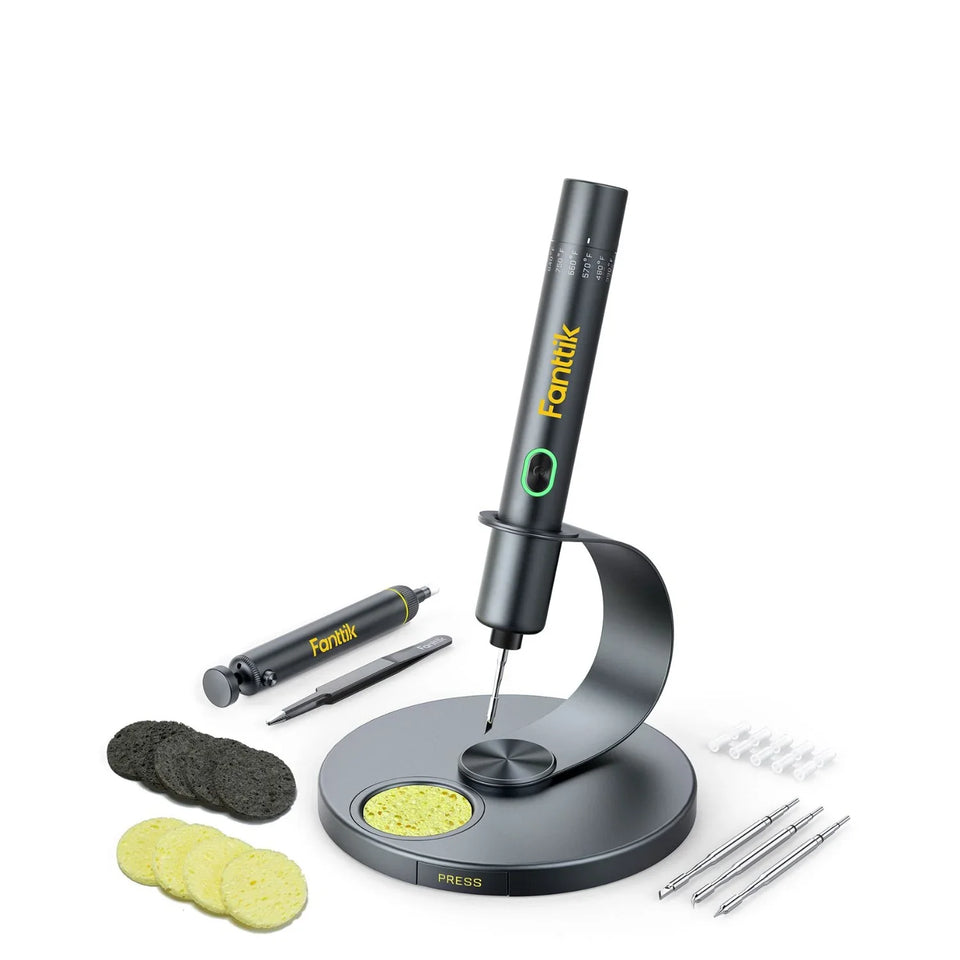 How to Set Up a Home Electronics Soldering Workstation for Beginners
A practical walkthrough for assembling a beginner soldering workstation, matching tools to the task, and tinning the tip...
How to Set Up a Home Electronics Soldering Workstation for Beginners
A practical walkthrough for assembling a beginner soldering workstation, matching tools to the task, and tinning the tip...
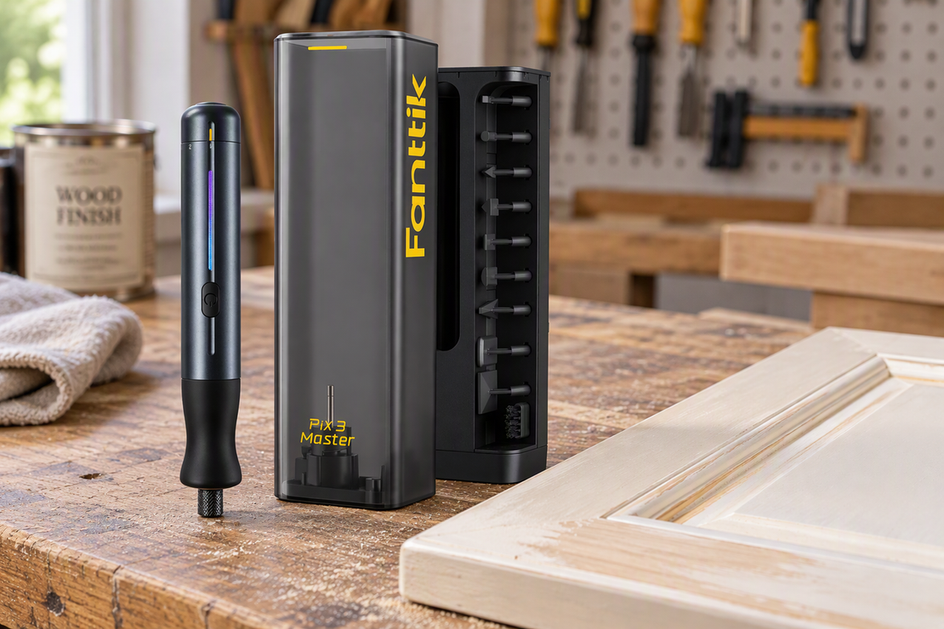 Detail Sander Buying Guide: Compact Sanding for Corners, Trim, and Furniture
Match each furniture surface to the right sanding approach, sand mixed pieces in a sensible order, and check...
Detail Sander Buying Guide: Compact Sanding for Corners, Trim, and Furniture
Match each furniture surface to the right sanding approach, sand mixed pieces in a sensible order, and check...
Leave a comment
This site is protected by hCaptcha and the hCaptcha Privacy Policy and Terms of Service apply.