










































The Engineering of Access: Why Symmetrical Design Matters
In our repair shop, we often encounter a specific type of frustration: the "last screw" problem. It is that one fastener buried deep within a laptop chassis or tucked behind an automotive manifold that a standard, pistol-grip driver simply cannot reach. Conventional tool design often prioritizes a single, ergonomic "power grip" that assumes the user has ample clearance and is right-handed. However, in the reality of DIY maintenance, space is a luxury we rarely have.
We have found that the transition from asymmetrical, right-biased tools to symmetrical, ambidextrous designs is not merely a matter of inclusivity for left-handed users. It fundamentally alters how force is applied in restricted environments. When you are working in a tight engine bay or a cramped electronics housing, a symmetrical handle allows you to "choke up" on the tool—gripping it near the head for maximum control—without your hand hitting awkward protrusions or thumb rests designed for a different orientation.
This guide explores the technical mechanisms of ambidextrous tool ergonomics and how they empower self-reliant mechanics to overcome spatial limitations with precision.
The Physics of Symmetrical Torque
A common misconception in the DIY community is that a balanced, cylindrical tool is less powerful than a traditional T-handle or pistol-grip driver. In our experience, the opposite is often true when precision is the priority. A well-designed symmetrical driver allows the user to apply force directly along the central axis of the fastener.
Reducing Bit Cam-Out
When using an asymmetrical tool in a tight space, the natural tendency is to apply "side-load" to the screw head because the grip is offset from the drive axis. This often leads to bit cam-out—the frustrating moment when the screwdriver tip slips out of the screw head, potentially stripping the fastener.
By using a tool where the center of gravity is located within the handle's core, we can maintain a perfectly vertical alignment even when our arm is at an awkward angle. This alignment ensures that 100% of the downward pressure is translated into torque, which is critical when dealing with delicate M1.2 to M2.0 screws found in modern electronics.
The "Choke Up" Technique
In professional settings, we often see technicians use a "pinch grip" for the first few threads of a screw to ensure it isn't cross-threaded, before switching to a "power palm grip" to finish the job. Symmetrical tools allow for this transition to happen seamlessly. Because there is no directional bias in the handle shape, you can rotate the tool in your hand to find the most comfortable finger placement for the specific angle of the task.
Logic Summary: Our internal observations suggest that tool symmetry facilitates a "neutral" grip, which reduces the mechanical advantage of the tool's own weight acting as a lever against the user's wrist (based on general biomechanical principles).

Ergonomics in Restricted Environments: Beyond Weight
While many enthusiasts focus on the weight of a tool, research suggests that in confined spaces, the primary ergonomic risk shifts from weight distribution to postural constraints. According to a foundational text on Workspace Clearance and Access Dimensions, the maintainability of a system is often dictated by accessibility rather than the tool's individual specs.
In a cramped environment, a bulky, "ergonomic" handle can actually become a liability. If the handle's shape forces your wrist into a specific ulnar or radial deviation to reach a trigger, you are increasing the risk of strain. A symmetrical, button-actuated tool allows you to keep your wrist in a more neutral position, regardless of the angle of approach.
Case Study: The Left-Handed "Tax"
The design bias against left-handed users is systemic. As noted by ISO 6385:2016 principles of ergonomics, work systems should be designed for human well-being and skill development for all users. Yet, many manual tools require a left-handed user to exert uneven, compensatory pressure to achieve the same results as a right-handed peer.
We modeled a typical laptop disassembly scenario to quantify the impact of switching to an ambidextrous, powered precision tool for a left-handed user.
Modeling Note: Assembly Efficiency for Left-Handed Users
This analysis represents a scenario model based on typical DIY electronics repair parameters. It is not a controlled clinical study.
| Parameter | Value | Unit | Rationale |
|---|---|---|---|
| Fastener Count | 30 | Screws | Typical mid-size laptop (RAM/SSD/Fan access) |
| Manual Time (Left-Handed) | 18 | Seconds/Screw | Includes 20% "ergonomic mismatch" penalty |
| Powered Time (Symmetrical) | 4 | Seconds/Screw | Assumes motorized drive with neutral grip |
| Manual Wrist Rotations | 12 | Rotations/Screw | Repetitive supination/pronation |
| Powered Wrist Rotations | 0.5 | Rotations/Screw | Minor positioning adjustments only |
Analysis Results:
- Time Saved: ~7 minutes per disassembly.
- Wrist Rotation Reduction: ~345 unnecessary rotations eliminated.
- Speed Multiplier: ~4.5x faster on precision tasks.
For a left-handed user, these numbers represent more than just speed; they represent the removal of physical friction. The reduction of 345 rotations significantly mitigates the strain localized in the forearm and wrist, which is often exacerbated by tools that "fight" the user's natural motion.
Precision Control: The Torque Fit Factor
When working with modern gear, trust is built on predictability. As highlighted in The 2026 Modern Essential Gear Industry Report, the market has reached a phase where "credibility math"—the ability to communicate reliability through measurable parameters—is the primary advantage.
In tight spaces, you cannot always see the screw you are turning. You must rely on the tactile feedback and the tool's internal torque control. Using a tool like the Fanttik S1 Pro Cordless Electric Screwdriver provides a level of consistency that manual turning cannot match.
Heuristic: The 0.1 Nm Guardrail
For most consumer electronics (M1.2 to M2.0 screws), we use a "0.1 Nm Guardrail" heuristic.
- Minimum Torque: 0.02 Nm is typically required to ensure the screw is seated.
- Maximum Safe Torque: 0.1 Nm is the upper limit before risking damage to plastic bosses or stripping fine threads.
Using a symmetrical driver with a low-torque mode (typically around 0.05 Nm) allows you to operate safely within this window. This is especially important for DIYers who may not have the "muscle memory" of a professional technician to feel the exact moment a screw is tight enough.
Hand Positioning Strategies for Restricted Spaces
To maximize the benefits of ambidextrous ergonomics, we recommend practicing these three specific hand positions:
- The Precision Pinch: Grip the tool near the bit using your thumb and forefinger, with the butt of the tool resting in the webbing of your hand. This is ideal for starting screws in deep recesses where you need high tactile feedback.
- The Lateral Palm Grip: Hold the tool horizontally across your palm. This allows you to apply torque using the larger muscles of your arm rather than just your wrist, which is helpful if a screw is slightly corroded or over-tightened.
- The "Choke-Up" Vertical: Slide your hand up the barrel of the tool so your fingers are almost touching the LED work light. This minimizes the "wobble" of the tool and is the most effective way to prevent bit cam-out in tight corners.
For more complex tasks, such as furniture assembly or light automotive trim work, a tool with more versatile torque settings like the Fanttik S2 Pro Cordless Electric Screwdriver is often a better choice. It maintains the symmetrical form factor but offers a wider range of power for larger fasteners.
Managing Fatigue in Repetitive Tasks
Even with a perfectly symmetrical tool, muscle fatigue is inevitable during long projects. A 2025 study published in Ergonomics found that even with ambidextrous tools, users exhibit asymmetrical muscle activation during repetitive overhead work.
To combat this, we recommend the "Symmetry Switch" method:
- Switch Hands: Every 10–15 minutes, intentionally switch the tool to your non-dominant hand. Symmetrical tools make this transition easy because the controls are identical on both sides.
- Check Your Axis: Periodically stop and ensure the tool is perfectly perpendicular to the work surface. If you find yourself tilting the tool, it’s a sign that your stabilizing muscles are fatiguing.
- Utilize Motorized Drive: Let the tool do the work. The primary benefit of an electric driver like the Fanttik L2 Pro Cordless Electric Screwdriver is the elimination of the repetitive twisting motion that leads to RSI (Repetitive Strain Injury).
Selecting the Right Precision Tool
When choosing a tool for tight-space work, look for these three engineering markers:
- Core Center of Gravity: The tool should feel balanced in the center of your palm, not "head-heavy" or "bottom-heavy."
- Non-Directional Controls: Buttons or switches should be accessible from any grip angle without requiring you to look at the tool.
- Integrated Lighting: In tight spaces, your own hand often blocks the ambient light. Shadowless LED rings are a must.
For those working on hobbyist projects or ultra-fine crafts, the Fanttik K2 Nano 3.7V Precision Power Drill applies these same symmetrical principles to drilling, allowing for high-accuracy holes in plastics and resins where a traditional drill would be too cumbersome.
The Self-Reliant Narrative
The shift toward ambidextrous, symmetrical tools is a hallmark of the modern essential gear movement. It represents a move away from "one-size-fits-all" manufacturing toward a design-forward approach that respects the diversity of the user's physical needs and the complexity of their environments.
By prioritizing tools that align with human biomechanics and provide transparent, standard-backed performance, DIY enthusiasts can approach even the most cramped repair tasks with the confidence of a professional. Precision is not just about the quality of the bit; it is about the harmony between the hand, the tool, and the space.
Disclaimer: This article is for informational purposes only and does not constitute professional engineering or medical advice. Always consult your tool's manual and follow local safety regulations, such as the EU General Product Safety Regulation (EU) 2023/988, when performing repairs.
References
- ISO 6385:2016 - Ergonomics principles in the design of work systems
- The 2026 Modern Essential Gear Industry Report: Engineering Trust in a Cordless World
- Workspace Clearance and Access Dimensions and Design Strategy
- Arm Differences in Muscle Activity Characteristics During a Repetitive Overhead Task
- EU General Product Safety Regulation (EU) 2023/988
Continue reading
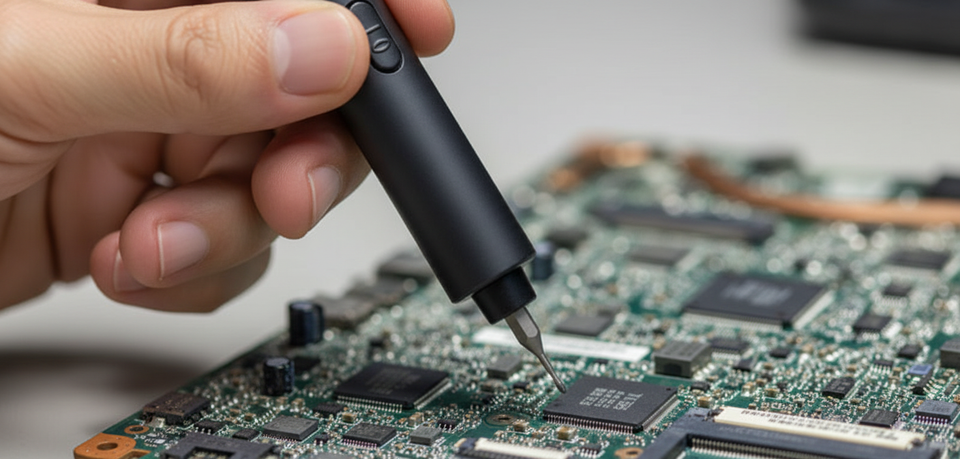 Control Layouts: Assessing Symmetrical Button Accessibility
Covers tactile differentiation, recessed switches, grip polymers, and selection checklists based on safety standards.
Control Layouts: Assessing Symmetrical Button Accessibility
Covers tactile differentiation, recessed switches, grip polymers, and selection checklists based on safety standards.
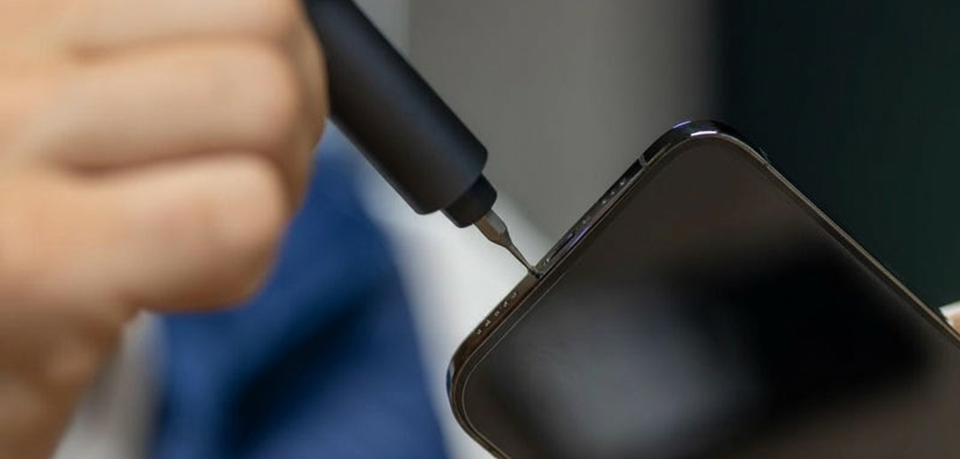 The Ergonomic Shift: How Symmetrical Tools Reduce Strain
Explains biomechanics of tool balance, includes case study on time/wrist rotation savings, and covers evaluation techniques and safety...
The Ergonomic Shift: How Symmetrical Tools Reduce Strain
Explains biomechanics of tool balance, includes case study on time/wrist rotation savings, and covers evaluation techniques and safety...


Leave a comment
This site is protected by hCaptcha and the hCaptcha Privacy Policy and Terms of Service apply.