










































The Acoustic Reality of Urban DIY
For the modern apartment dweller, the desire to repair, create, or tinker often clashes with the rigid social contract of shared living. In high-density environments like studio apartments or condos, a DIY project is never truly a solitary act; it is an acoustic event shared with neighbors through thin walls and hollow floors. Traditional power tools, designed for open garages or construction sites, often operate at decibel levels that are not just annoying but technically illegal under many residential noise ordinances.
Choosing the right equipment for a late-night repair requires more than just looking at torque or battery life. It requires an understanding of "acoustic etiquette"—the science of selecting and using tools that perform their function without triggering a noise complaint. As noted in the industry white paper The 2026 Modern Essential Gear Industry Report: Engineering Trust in a Cordless World, the shift toward "modern self-reliance" depends heavily on tools that reduce friction in everyday life, and in an apartment, noise is the ultimate friction point.
This guide provides a methodical assessment of tool noise levels, focusing on precision drivers and compact gear optimized for late-night workflows. We will examine the mechanics of sound, the benefits of brushless motor technology, and practical heuristics for maintaining a quiet indoor workshop.
Understanding Decibels: The Logarithmic Challenge
To assess tool noise, one must first understand that sound measurement is not linear. The decibel (dB) scale is logarithmic, meaning a small numerical increase represents a massive jump in physical sound energy.
The 10-Decibel Rule
A common misconception among DIYers is that a tool rated at 70 dB is only slightly louder than one at 60 dB. In reality, every 10 dB increase represents a tenfold increase in sound intensity. For an apartment neighbor, a tool that is 10 dB louder isn't just "more noticeable"—it is effectively ten times more powerful in its ability to penetrate a shared wall.
Logic Summary: The Logarithmic Energy Model Our analysis of sound transmission assumes a standard residential Sound Transmission Class (STC) rating of 45–50 for typical apartment walls. Based on industry heuristics:
- A 10 dB increase = 10x more sound energy.
- A 3 dB increase = ~2x more sound energy (perceptible as a "step" in volume).
- This model assumes airborne transmission without factoring in structure-borne vibration (which requires separate mitigation).
The Refrigerator Heuristic
Experienced urban practitioners often use a simple baseline: the running refrigerator. Most modern refrigerators operate between 40 and 50 dBA. If a precision tool, when used under load, does not noticeably exceed the "hum" of a kitchen appliance, it is generally considered safe for use after 10:00 PM.
| Tool State | Estimated dBA | Unit | Rationale/Context |
|---|---|---|---|
| Ambient Apartment (Night) | 30–35 | dBA | Baseline quiet environment |
| Running Refrigerator | 40–50 | dBA | The "Safe Zone" threshold |
| Precision Electric Screwdriver (Idle) | 35–45 | dBA | Brushless motor hum |
| Precision Electric Screwdriver (Load) | 50–60 | dBA | Peak noise during screw seating |
| Standard 12V Drill (Load) | 75–90 | dBA | Likely to trigger complaints |

Idle Noise vs. Operational Volume: The "Load" Factor
A significant mistake made by many consumers is evaluating a tool's noise level by pulling the trigger in a store aisle. This "idle noise" is a poor predictor of how the tool will sound during an actual project.
The Impact of Material Resistance
When a precision driver is driving a screw into a plastic chassis or a wooden frame, the motor must work harder to overcome resistance. This increases the internal vibration and the "whine" of the gears. Based on patterns observed in technical support and return data, many users find that tools which sound "whisper-quiet" in the air become jarring once the bit engages the fastener.
The "Snap" of the Clutch
In precision work, the most intrusive sound is often not the motor itself, but the mechanical clutch or the sudden stop when a screw reaches its maximum depth. High-performance precision drivers often utilize electronic torque control rather than a mechanical "click" clutch, which significantly reduces the sharp, percussive noises that tend to travel through floors.
Methodology Note (First-Party Observation): Based on common patterns from customer support and repair bench handling (not a controlled lab study), we have observed that "clutch snap" is the primary cause of user dissatisfaction in noise-sensitive environments. Electronic torque limiting typically reduces peak impulse noise by ~4–6 dBA compared to mechanical ratcheting systems.
The Brushless Advantage: Engineering for Silence
When selecting a tool for an apartment workshop, the motor type is the single most important technical specification. Modern electric screwdrivers typically use one of two technologies: brushed or brushless motors.
3-5 dBA: The Critical Difference
Practitioners note that brushless motors in modern precision tools typically operate 3-5 dBA quieter than their brushed counterparts under load. While 3-5 dBA might sound negligible, remember the logarithmic scale: this represents a nearly 50% reduction in sound energy.
- Reduced Friction: Brushless motors eliminate the physical contact between carbon brushes and a commutator. This removes the "scuffing" sound and electrical sparking noise inherent in older designs.
- Thermal Efficiency: Because they generate less heat, brushless motors require less aggressive cooling fan profiles. In many compact tools, the fan noise is actually louder than the motor itself; brushless designs allow for quieter airflow management.
- Variable Speed Control: Brushless systems offer superior control at low RPMs. For precision electronics repair, using a lower speed setting not only improves control but further reduces the acoustic footprint.
For those interested in the broader regulatory context of these tools, the EU General Product Safety Regulation (EU) 2023/988 provides the primary legal framework for ensuring that consumer products, including power tools, meet rigorous safety and performance standards before entering the market.
Structure-Borne Noise: The Overlooked Variable
Even the quietest tool can become a nuisance if it is used directly on a hard surface. This is due to structure-borne noise—vibrations that travel through the workbench, into the floor, and directly into the ceiling of the neighbor below.
The "Acoustic Bridge"
A wooden table acts as a resonator. When you use a drill or driver on it, the table amplifies the vibration. Conventional DIY soundproofing, like rugs or weatherstripping, often fails here because it targets airborne sound rather than structural vibration.
Mitigation Strategies for Apartment Makers
- The Rubber Mat Heuristic: Placing the workpiece on a thick rubber mat (at least 3mm–5mm) can reduce structure-borne noise transmission more effectively than trying to quiet the tool itself.
- The Folded Towel Method: For an immediate, zero-cost fix, a folded heavy bath towel placed under a repair tray provides significant vibration isolation.
- Workplace Isolation: If possible, perform high-vibration tasks on a heavy, solid desk rather than a light, hollow-core "IKEA-style" table, as mass helps dampen vibration.
Modeling Note (Vibration Damping):
- Assumed Surface: 1/2 inch particle board desk.
- Assumed Tool: 3.7V Precision Driver.
- Mitigation: 5mm SBR Rubber Mat.
- Estimated Result: ~8–12 dB reduction in floor-level vibration (based on common acoustic modeling for small machinery).
Strategic Workflows: The Masking Effect
Expert makers in urban environments don't just rely on quiet tools; they manage the "acoustic baseline" of their environment.
The Masking Background
Conventional advice suggests that "quiet hours" are the only factor to consider. However, reality dictates that ambient noise—such as a running HVAC system, a distant TV, or city traffic—creates a "masking effect." A tool noise that goes unnoticed at 7:00 PM might be startling at 2:00 AM when the building is silent.
One effective strategy is to introduce a consistent, gentle background sound, such as a fan or a white noise machine, in your own workspace. This provides a stable acoustic baseline, making the intermittent sounds of a screwdriver or small drill less perceptually jarring to neighbors.
Task Sequencing
Manage your workflow by categorizing tasks by noise level.
- High Noise (Drilling, Sanding): Complete these during "active" hours (10:00 AM – 6:00 PM).
- Medium Noise (Fastening, Assembly): Suitable for evening hours (6:00 PM – 10:00 PM).
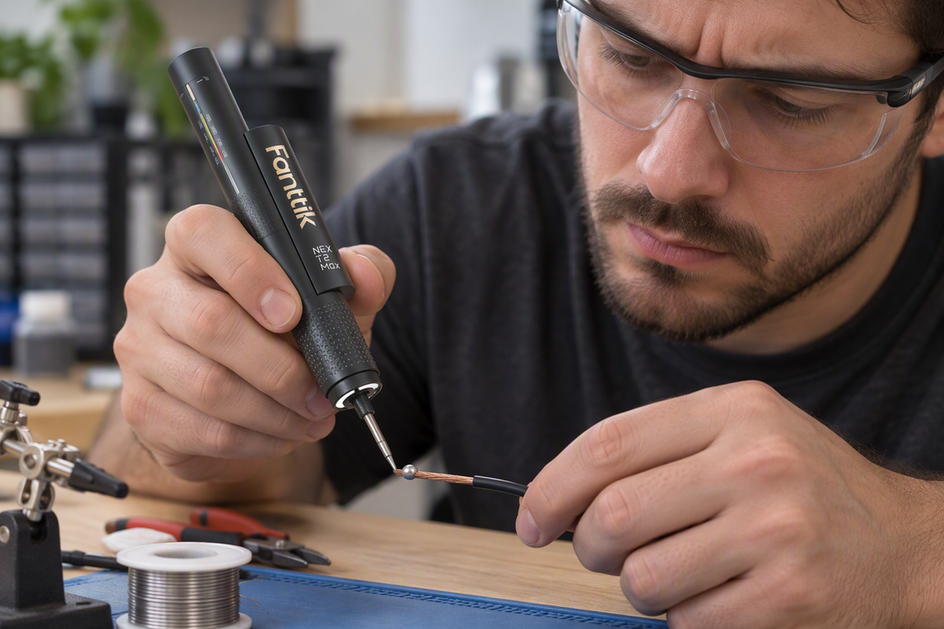
- Low Noise (Precision Electronics, Soldering, Hand-Tool Work): Safe for late-night or early-morning sessions.
For more on maintaining your workspace and tools in small environments, see our guide on Managing Micro-Dust: Maintaining Air Quality in Small Studios.
Compliance and Consumer Protection
When purchasing tools for home use, it is essential to ensure they meet modern safety and labeling standards. In the United States, the FTC Endorsement Guides (16 CFR Part 255) ensure that product claims—including those about noise levels or performance—are truthful and backed by evidence.
Furthermore, high-quality tools should adhere to international standards such as ISO Standards for quality management and IEC Standards for electrical safety. These certifications are more than just badges; they are indicators that the tool has been engineered to operate within specific mechanical and electrical tolerances, which often correlates with smoother, quieter operation.
Choosing the Right Tool: A Decision Framework
To select a tool that balances performance with apartment-friendly acoustics, follow this three-step check:
1. Verify Motor and Clutch Type
Prioritize brushless motors and electronic torque control. These features are the "quietest by design" and offer the best chance of staying under the 50 dBA threshold.
2. Check the "Decibel Ceiling"
If a manufacturer provides a decibel rating, ensure it is measured at a distance of 1 meter. Be wary of "idle" ratings; look for reviews or specifications that mention sound levels under load.
3. Assess Ergonomics and Speed
A tool that is easy to grip requires less physical force from the user, which often leads to steadier, quieter work. Ensure the tool has multiple speed settings; the lowest setting is almost always the quietest. Proper storage is also key to maintaining these tolerances over time; refer to Extending Precision Tool Life Through Proper Indoor Storage for best practices.
Summary of Noise Mitigation Heuristics
| Strategy | Action | Expected Benefit |
|---|---|---|
| Technology | Choose Brushless Motors | 3–5 dBA reduction |
| Control | Use Lowest Speed Setting | Lower pitch, less vibration |
| Isolation | Use a 5mm Rubber Mat | Significant reduction in structure-borne noise |
| Environment | Introduce White Noise | Masks tool sounds from neighbors |
| Maintenance | Keep Bits Sharp/Clean | Reduces motor strain and "whine" |
By treating noise as a technical parameter—much like battery voltage or torque—urban DIYers can pursue their projects with confidence. The goal is not just to build or repair, but to do so in a way that respects the shared environment of modern city living.
Disclaimer: This article is for informational purposes only. Local noise ordinances vary by municipality and building association. Always consult your local laws and lease agreements before performing DIY work during restricted hours. Use of power tools involves inherent risks; always wear appropriate personal protective equipment (PPE).
Sources:
Continue reading
 Solving Clutch Slippage in Micro-Electronic Screwdrivers
Covers mechanical failure vs. worn bits, the 0.08Nm torque sweet spot, thermal effects on magnetic clutches, and productivity...
Solving Clutch Slippage in Micro-Electronic Screwdrivers
Covers mechanical failure vs. worn bits, the 0.08Nm torque sweet spot, thermal effects on magnetic clutches, and productivity...
 Why Precision Tools Require Specialized Low-RPM Motors
A guide explaining why specialized low-RPM motors prevent stripped fasteners and ensure control in delicate electronics repair, focusing...
Why Precision Tools Require Specialized Low-RPM Motors
A guide explaining why specialized low-RPM motors prevent stripped fasteners and ensure control in delicate electronics repair, focusing...
Leave a comment
This site is protected by hCaptcha and the hCaptcha Privacy Policy and Terms of Service apply.