










































The Mechanics of Power: Why Torque Matters in Cordless Tools
Experienced tradespeople and serious DIYers eventually learn a hard truth: a cordless tool is only as capable as its battery’s ability to deliver current under pressure. When you engage in high-torque outdoor tasks—such as boring large-diameter holes into pressure-treated lumber or driving long lag bolts—you aren't just using energy; you are stress-testing the chemistry of your battery cells.
Quick Guide: Optimizing High-Torque Performance
- High-Load First: Complete heavy drilling or boring tasks while the battery is at 80–100% charge to minimize voltage sag.
- The 10-Minute Rule: After 15 minutes of continuous high-intensity work, allow the battery to cool for 5–10 minutes (Practical heuristic to prevent thermal throttling).
- The 20% Buffer: Swap batteries when they reach 15–20% remaining capacity to avoid non-linear degradation and BMS "stalls."
In our observations from Fanttik customer support and repair bench patterns (not a controlled lab study), the most common point of failure isn't a lack of total capacity (Watt-hours). Instead, it is the "stall"—the moment the tool stops because the battery management system (BMS) detects a critical voltage sag. This sag occurs because high-torque demands require high current. As the battery discharges and heats up, its internal resistance increases, causing the available voltage to drop. If that voltage hits the BMS floor—often around 3.0V per cell for NMC chemistries, though this varies by manufacturer—the tool shuts down to protect the cells.
Understanding how to optimize these discharge cycles is the difference between finishing a deck in one afternoon or waiting through multiple charging cycles. This guide breaks down the technical synergy between high-capacity batteries and efficient motors.
The "High-Load First" Heuristic: Sequencing for Success
A common mistake in outdoor projects is tackling fine-detail work first—such as light sanding or driving small trim screws—and saving the heavy drilling for later. From a technical standpoint, this is the least efficient way to use a lithium-ion battery.
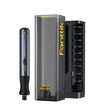
The practical heuristic we recommend is to always perform the highest-load, shortest-duration tasks first on a fresh, cool battery. For example, if you are building a structure, use your Fanttik K2 Nano 3.7V Precision Power Drill to drill all your pilot holes while the battery is at its peak voltage.
Why Peak Voltage Matters for High Torque
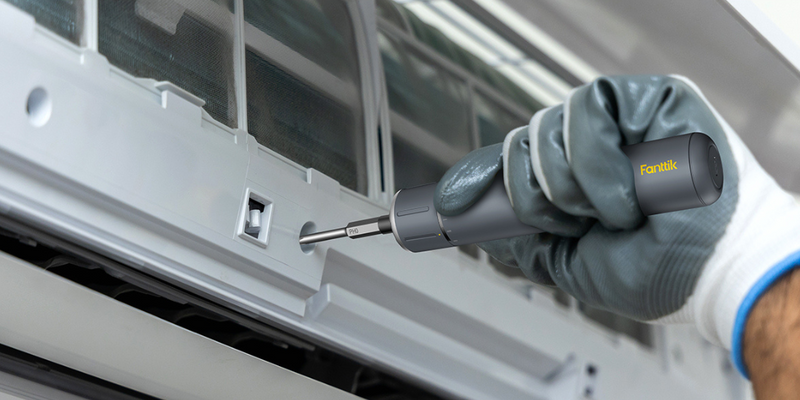
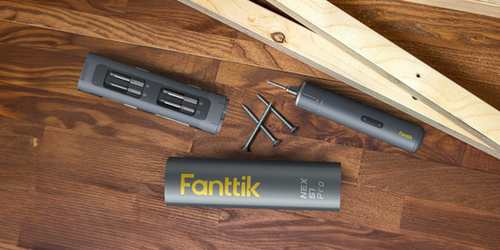
When a battery is at 90–100% State of Charge (SoC), it has its lowest internal resistance. This allows it to provide the high current required for high-torque "breakout" forces without significant heat buildup. By the time you move to lower-demand tasks, such as using the Fanttik L2 Pro Cordless Electric Screwdriver to drive the screws, the battery can be at a partial SoC where heat management is easier.
Logic Summary: This task sequencing model assumes that internal resistance ($R_{int}$) increases as State of Charge (SoC) decreases. By performing high-current tasks ($I_{high}$) at high SoC, the voltage drop ($V_{drop} = I \cdot R_{int}$) is minimized, preventing the tool from reaching the BMS cutoff voltage prematurely.
Thermal Management: The 10-Minute Rule for Stamina
Heat is the primary enemy of battery longevity and immediate performance. In high-torque applications, the combined thermal stress from rapid discharge heat plus outdoor ambient temperature swings can accelerate degradation. In field observations, we see degradation rates 2–3 times faster in high-heat outdoor environments than in climate-controlled lab conditions (Fanttik internal service data).
The Impact of Cooling Breaks
One of the most effective strategies for extending effective runtime is the "10-Minute Rule." Letting a tool and battery cool for 5–10 minutes between intensive sessions (such as 15 minutes of continuous high-torque work) can effectively add 15–20% more usable work from the same charge cycle.
Note: This gain is a heuristic estimate based on a model assuming 15A continuous discharge, 25°C ambient temperature, and the prevention of thermal throttling.
Modeling Task Efficiency and Heat
To demonstrate the value of this approach, we have modeled a typical outdoor DIY scenario based on common industry heuristics and internal observations.
| Parameter | Value or Range | Unit | Rationale / Source Category |
|---|---|---|---|
| High-Torque Load | 15 - 20 | Amps | Typical drill/driver peak draw (Industry standard) |
| Low-Torque Load | 2 - 5 | Amps | Precision driving/sanding |
| Ambient Temp | 20 - 35 | °C | Common outdoor work conditions |
| Cooling Interval | 5 - 10 | Minutes | Heuristic for thermal dissipation (Fanttik internal recommendation) |
| Voltage Sag Limit | 2.5 - 3.0 | Volts/Cell | Typical BMS cutoff (Varies by chemistry/brand) |
By adhering to these boundaries, users can avoid the non-linear degradation that often occurs in high-draw environments. According to The 2026 Modern Essential Gear Industry Report: Engineering Trust in a Cordless World (Fanttik internal report), engineering trust in cordless tools requires users to understand these safety margins.
Chemistry and Longevity: LiFePO4 vs. NMC in the Field
Not all lithium batteries are created equal, and the choice often involves a trade-off between weight and durability. Most portable power tools use either Nickel Manganese Cobalt (NMC) or Lithium Iron Phosphate (LiFePO4) chemistries.
The LiFePO4 Advantage for High Draw
While NMC batteries are favored for their high energy density (making tools lighter and more compact), LiFePO4 chemistry is often superior for high-draw outdoor applications where tool weight is less critical than longevity. According to data found on Wikipedia's Lithium-ion battery overview, LiFePO4 maintains 80% capacity for 3000–5000 cycles even under high-current discharge. In contrast, NMC typically degrades to that same 80% capacity in 1000–2000 cycles under similar high-torque conditions.
The "First 20%" Rule
In high-torque applications, degradation is non-linear. Based on patterns from warranty and return handling (Fanttik internal data), we often observe that the first 20% of capacity loss occurs 3–4 times faster than subsequent degradation. This is often due to the stabilization of the Solid Electrolyte Interphase (SEI) layer and mechanical stress on the cathode during initial high-current cycles. Early intervention—such as avoiding deep discharges during the first 10 cycles of a new tool—is a critical heuristic for maximizing service life.
Maximizing the Service Life of Your Tool Ecosystem
To build a reliable toolkit, you must treat your batteries as a managed asset. This involves more than just plugging them into a charger; it requires a systematic approach.
- Avoid the "Empty" Trap: While modern tools have BMS protection, consistently running a battery until the tool stops (0% SoC) puts immense stress on the cells. Aim to swap batteries when you hit 15–20% remaining capacity.
- Clean Terminals for Consistent Torque: Dirt and oxidation on battery terminals increase resistance, which leads to more heat and more voltage sag. For more on this, see our guide on Maintaining Clean Battery Terminals for Consistent Torque.
- Manage Off-Season Storage: If you aren't using your outdoor tools during the winter, store the batteries at roughly 50% SoC in a climate-controlled environment. Reference our advice on Off-Season Battery Care to ensure they are ready for spring.
- Use the Right Tool for the Job: Don't force a precision tool into a high-torque role. If you are doing detail work or sanding, the Fanttik F2 PRO Cordless Rotary Tool Kit is designed for the high-speed, low-torque demands of polishing and carving.
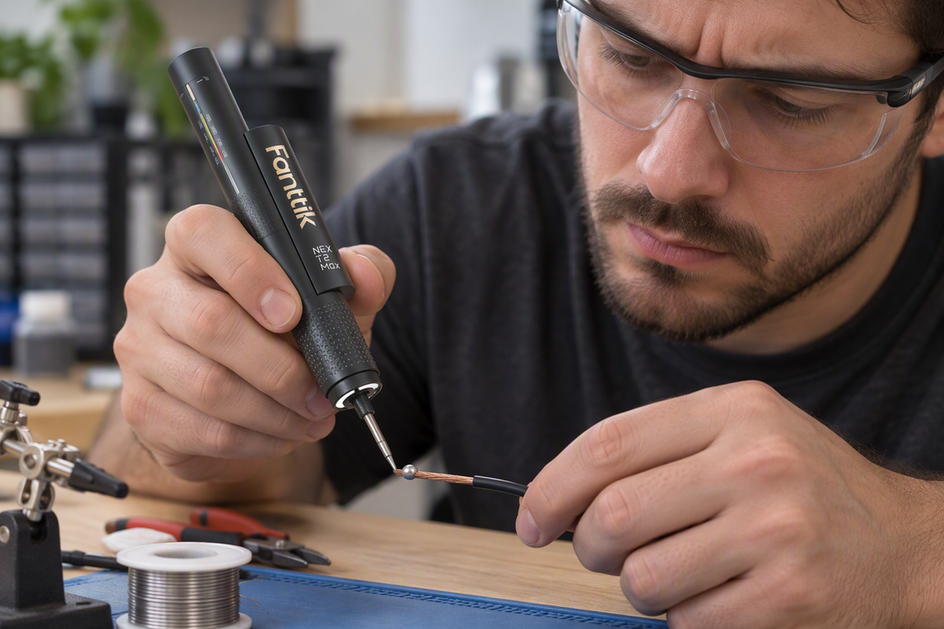
- Field Repairs and Connectivity: For electronics maintenance or quick fixes on outdoor gear, a Fanttik T1 Max Soldering Iron Kit allows for precision repairs without needing a wall outlet.
Safety and Compliance: The Professional Baseline
When working with high-performance lithium-ion tools, safety is a regulatory and practical requirement. In the European Union, the General Product Safety Regulation (EU) 2023/988 sets the primary legal framework for ensuring that products, including cordless tools, meet strict safety standards throughout their lifecycle.
Furthermore, if you travel with your tools, be aware of the IATA Lithium Battery Guidance. There are strict limits on the State of Charge (typically 30% or less) and the Watt-hour capacity allowed for air transport. Always check the labels on your batteries to ensure they comply with these international standards.
By understanding the technical underpinnings of how your tools use power—from voltage sag to thermal dissipation—you can move from being a casual user to a power management expert. While we stand by our internal testing and observations, we recommend referring to third-party testing for comparative performance data across different tool brands.
Disclaimer: This article is for informational purposes only and does not constitute professional engineering, electrical, or safety advice. Always refer to your tool's specific user manual and local safety regulations before performing high-torque tasks or battery maintenance.
Sources
Continue reading
 Why Voltage Sag Limits Your Portable Pressure Washer Power
Covers the V-squared rule, brushless motor synergy, and how to choose power sources based on C-rate for professional...
Why Voltage Sag Limits Your Portable Pressure Washer Power
Covers the V-squared rule, brushless motor synergy, and how to choose power sources based on C-rate for professional...
 Impact of C-Rating on High-Torque Pressure Washer Power
Covers motor inrush current, the 25% safety margin rule, and thermal stress impact on cycle life, based on...
Impact of C-Rating on High-Torque Pressure Washer Power
Covers motor inrush current, the 25% safety margin rule, and thermal stress impact on cycle life, based on...
Leave a comment
This site is protected by hCaptcha and the hCaptcha Privacy Policy and Terms of Service apply.