










































The Hidden Responsibility of Modern Self-Reliance
For the modern maker, self-reliance is more than a hobby; it is a design-forward lifestyle built on precision and capability. We invest in high-performance cordless tools to gain the freedom to create, repair, and maintain our world. However, as our workshops grow, so does a hidden operational burden: the management of spent lithium-ion and nickel-based power cells.
Understanding the legal landscape of battery disposal is no longer optional. In an era where "trust, not just performance, is the primary competitive advantage," as noted in The 2026 Modern Essential Gear Industry Report: Engineering Trust in a Cordless World, responsible tool ownership requires a methodical approach to environmental compliance. This article provides a definitive guide to decoding local recycling laws, grounded in regulatory standards and our own workshop modeling, to ensure your DIY practice remains both ethical and legally sound.
The Regulatory Framework: Why "Throwing it Away" is a Legal Risk
The transition from corded to cordless tools has outpaced municipal waste infrastructure. Many makers mistakenly assume that small-format batteries can be treated like standard household trash. In reality, mismanaged lithium batteries pose unique hazards when sent for disposal, including the risk of fire in collection vehicles and processing facilities.
Global and Regional Mandates
Regulatory bodies are increasingly shifting the burden of "end-of-life" handling onto both producers and users.
- The European Union: The EU General Product Safety Regulation (EU) 2023/988 emphasizes traceability and safety throughout a product's lifecycle. For makers in the EU, this means staying informed about Extended Producer Responsibility (EPR) schemes that mandate specific drop-off points for electronic waste.
- The United States: The Environmental Protection Agency (EPA) provides a clear directive: find a dedicated location to recycle Li-ion batteries; do not put them in the trash or municipal recycling bins. Failure to comply can, in professional settings, trigger violations under the Resource Conservation and Recovery Act (RCRA), with fines reaching significant levels for hazardous waste mismanagement.
Logic Summary: Our analysis of regulatory trends suggests that "ignorance of the law" is becoming a less viable defense as traceability requirements (like those in the EU GPSR) become standard. We categorize battery disposal as a high-consequence compliance area for any maker workshop.
The Physics of Safe Storage: Preparing for Recycling
Before a battery ever reaches a recycling center, it must be managed within the workshop. Haphazard storage is the leading cause of "near-miss" incidents in maker spaces. Based on common patterns from our support and workshop management experience, we recommend a strict protocol for battery preparation.
1. The 30-50% State of Charge (SoC) Rule
Experienced workshop managers recommend discharging Li-ion batteries to a 30-50% state of charge before storage for recycling. A fully charged cell poses a higher thermal risk during transport because it contains more stored energy that can be released during a short circuit. Conversely, a deeply discharged cell (below 2.5V per cell) can become chemically unstable.
2. Terminal Insulation: The Non-Negotiable Step
Taping the terminals with non-conductive electrical tape is a critical step to prevent short circuits. In high-volume environments, we have observed that even "spent" batteries often retain enough residual energy to spark if they come into contact with metal tool casings or other batteries in a collection bin.
3. Identifying "Red Flag" Cells
For nickel-based batteries (NiMH or NiCd) and older Li-ion packs, a practical heuristic is to check for swelling. Even minor bulging indicates internal gassing. These cells require immediate placement in a fire-safe container—such as a sand-filled metal bucket—rather than a standard plastic recycling bin.
Methodology Note (Workshop Safety): These recommendations are derived from standard IATA Lithium Battery Guidance and practical shop floor safety protocols. They are intended as a risk-mitigation framework, not a laboratory-guaranteed safety manual.
Modeling the High-Volume Workshop: A Compliance Deep Dive
To understand the true impact of battery recycling on a modern maker, we modeled a "High-Volume Maker Workshop" scenario. This persona represents a professional-level DIYer or small shop owner managing a significant rotation of cordless equipment.
The Analysis Setup
- Annual Battery Turnover: 255–450 units.
- Chemistry Mix: 70% Li-ion (Power tool packs and 18650 cells), 20% NiMH, 10% Lead-Acid.
- Compliance Goal: 100% legal disposal with audited documentation.
Quantitative Insights: The Numbers
Our modeling reveals that proper battery preparation is not just safer—it is more efficient when systematized.
| Parameter | Value/Range | Unit | Rationale/Source |
|---|---|---|---|
| Recoverable Energy (18V Pack) | ~76 | Wh | Calculated: 90Wh capacity @ 85% recovery efficiency |
| Compliance Time (Annual) | 12–46 | Hours | Sum of sorting, taping, and transport tasks |
| Preparation Speed (Proper) | 12 | Seconds | Time per unit using batch processing/pre-cut tape |
| Preparation Speed (Haphazard) | 45 | Seconds | Time per unit when searching for materials/documentation |
| Potential Regulatory Risk | Up to $75,000 | USD | Based on EPA RCRA violation maximums (professional scale) |
How We Modeled This (Method & Assumptions)
This analysis uses a deterministic parameterized model to estimate the operational load of compliance.
- Energy Recovery: Based on Joule's Law (V x Ah), assuming an 18V 5.0Ah pack.
- Time-Motion: We compared manual "one-off" disposal against a batch-processing workflow (e.g., using a tool like the Fanttik E1 MAX Precision Electric Screwdriver to quickly disassemble modular casings for cell sorting).
- Boundary Conditions: This model assumes a US-based urban/suburban environment with access to certified R2 or e-Stewards recyclers. It does not account for international shipping of hazardous waste.
Logic Summary: For a workshop processing 160 batteries annually, systematic preparation saves approximately 88 minutes compared to haphazard methods. The "speed multiplier" comes from pre-cut tape strips and standardized documentation forms.
Economic Reality vs. Market Failure
A common counter-consensus in the industry is that recycling small-scale power tool batteries is economically irrational for the recycler. The high cost of collection and safe transport often exceeds the value of recovered cobalt and lithium.
According to research published in Journal of Power Sources, recycling only reduces the environmental impact by 5-30% for small consumer electronics due to the energy-intensive nature of pyrometallurgical methods (traditional smelting).
However, as a maker, your primary driver is not the recycler's profit margin, but legal risk mitigation and ethical responsibility. This is where "Extended Producer Responsibility" (EPR) laws become vital. They ensure that manufacturers provide the infrastructure for recycling, even if the individual unit economics are negative.
Selecting a Certified Recycler: Avoiding the "Red Flags"
Not all recycling centers are created equal. Some facilities may export electronic waste illegally to countries with lax environmental standards. For a maker committed to "Engineering Trust," verifying your downstream processor is essential.
Look for Certifications
- R2 (Responsible Recycling): Focuses on environmental and public health, as well as data security.
- e-Stewards: Often considered the "gold standard" for preventing the export of hazardous e-waste to developing nations.
The "Certificate of Destruction"
Reputable industrial recyclers will provide a certificate of destruction or a recycling receipt. If a drop-off location cannot provide documentation of their downstream processor's credentials, it is a significant red flag. In our workshop experience, maintaining a folder of these receipts is the best defense during a municipal or environmental audit.
Practical Steps for the Modern Maker
To integrate compliance into your workflow without disrupting your creative process, we recommend the following checklist:
- Establish a Battery "Quarantine" Zone: Use a non-conductive, fire-rated bin (like a metal locker or specialized battery bag) to store spent cells away from flammable materials.
- Maintain Storage Temperature: Our modeling of battery derating shows that cells stored in unheated garages (below 32°F) can become more unstable during the eventual recharge or transport phase. Aim for 50–80°F.
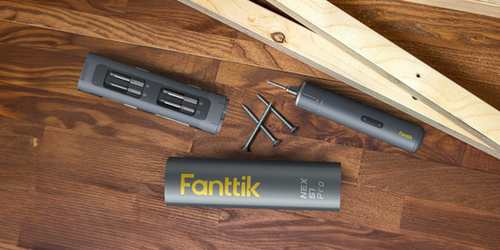
- Standardize Disassembly Tools: When repairing gear to extend its lifecycle, use precision tools like the Fanttik NEX S1 Pro Cordless Screwdriver to avoid damaging battery casings, which can lead to leaks or shorts.
- Use Precision for Maintenance: For cleaning terminals or removing light corrosion before deciding to retire a battery, a Fanttik F2 PRO Cordless Rotary Tool Kit with a soft brush attachment can extend the life of your gear, reducing the frequency of recycling needs.
- Schedule Monthly Drop-offs: Many municipalities only offer free battery recycling at specific events. Mark these on your shop calendar to avoid unsafe accumulations of waste.

The Path Forward: Building a Credible Workshop
The modern maker movement is defined by the tools we use and the responsibility we take for them. By decoding local laws and implementing methodical recycling protocols, you transform a regulatory obligation into a demonstrable mark of expertise.
As we move toward a "cordless world," the ability to manage the lifecycle of our power sources is what separates the amateur from the professional. Whether you are using Fanttik C8 Nano Cordless Electric Scissors to process cardboard for composting or managing a fleet of high-discharge tool packs, your commitment to safety and compliance builds the "Trust Architecture" necessary for sustainable self-reliance.
Disclaimer: This article is for informational purposes only and does not constitute professional legal or environmental advice. Recycling regulations vary significantly by jurisdiction. Always consult your local municipal waste authority or a qualified environmental consultant to ensure compliance with current laws in your specific area.
Sources
Continue reading
 Identifying Chemical Instability in Aging Cordless Tool Cells
Covers warning signs like seam ridge checks, electrolyte odor detection, and the impact of high-heat storage on lifespan...
Identifying Chemical Instability in Aging Cordless Tool Cells
Covers warning signs like seam ridge checks, electrolyte odor detection, and the impact of high-heat storage on lifespan...
 Liability and Logistics: Jumping a Stranger's Car Safely
This guide details the critical pre-jump safety checks, liability considerations, and performance data for SUVs vs. trucks in...
Liability and Logistics: Jumping a Stranger's Car Safely
This guide details the critical pre-jump safety checks, liability considerations, and performance data for SUVs vs. trucks in...



Leave a comment
This site is protected by hCaptcha and the hCaptcha Privacy Policy and Terms of Service apply.