

























The Millivolt Margin: Why BMS Contact Integrity Dictates Battery Life
In the world of high-performance cordless tools and automotive accessories, the Battery Management System (BMS) is often described as the "brain" of the device. However, even the most sophisticated brain is only as good as the sensory data it receives. For a BMS, that data is primarily voltage. When we examine why professional-grade equipment maintains its accuracy over years while consumer-grade alternatives often suffer from "phantom" capacity loss or premature shutdown, the answer frequently lies not in the silicon, but in the electromechanical interface—the contacts.
A Battery Management System relies on precise voltage readings from individual cells or parallel groups to perform three critical functions: State of Charge (SoC) estimation, cell balancing, and safety cut-offs. On our repair benches, we frequently encounter devices where the BMS electronics are perfectly calibrated, yet the system reports erratic health data. This is almost always due to contact resistance. A mere 0.1V to 0.2V discrepancy at the BMS sense lines can trigger a reported SoC error of 10% to 15%. In practical terms, this means your device might shut down while it still has significant energy remaining, or worse, the BMS might overcharge a cell because it "sees" a lower voltage than what actually exists.
Building long-term reliability in battery-powered systems requires a shift from seeing contacts as simple "plugs" to viewing them as high-precision measurement points. As noted in the industry white paper The 2026 Modern Essential Gear Industry Report: Engineering Trust in a Cordless World, engineering trust in a cordless world is a function of "credibility math"—where the physical integrity of the device must match the sophistication of its software.

The Invisible Barrier: Nickel Oxide and Resistance Thresholds
Most consumer and prosumer battery packs utilize nickel-plated steel contacts. While nickel is chosen for its balance of conductivity and corrosion resistance, it is not invincible. Over time, a non-conductive layer of nickel oxide forms on the surface. This layer is often invisible to the naked eye but acts as a resistor in series with the BMS sense lines.
Based on common patterns from customer support and warranty handling, we have observed that standard contact cleaners—the kind used for basic household electronics—often fail to penetrate this specific oxide layer. When resistance at a contact point exceeds 10 milliohms, it introduces a "voltage drop" that corrupts the primary data the BMS relies on.
The 10-Milliohm Heuristic
In our technical analysis, we use 10 milliohms as a critical threshold for contact health. While this might seem like a negligible amount of resistance, its impact is magnified by the high-frequency sampling rates of modern BMS units.
Logic Summary: This 10-milliohm threshold is a shop-practical baseline derived from observing the sensitivity of SoC estimation algorithms. When resistance exceeds this value, the voltage drop during even minor current draws (like the BMS's own internal sampling) creates enough "noise" to force the algorithm into a less accurate estimation mode.
The Problem with "Garbage Data"
It is a common oversight to neglect the external charging and data port contacts. These ports are the gateways for calibration data. If these contacts are corroded, the host device or charger may receive "garbage data" even if the internal cell connections are pristine. This leads to incorrect charging cycles, where the charger terminates early because it misinterprets a resistance-induced voltage spike as a full charge. This phenomenon is closely related to Troubleshooting Battery Imbalance After Autumn Storage, where storage conditions accelerate contact degradation.
Diagnostic Heuristics: The 100mA Load Test
How do you distinguish between a dying battery cell and a simple contact issue? A static voltage check with a high-impedance multimeter often hides the truth because the meter draws almost no current, meaning no voltage drop occurs across the resistance. To truly verify contact integrity, you must measure the voltage drop under a small, controlled load.
The Field Test Protocol:
- Apply a Load: Use a resistor or a diagnostic tool to draw a small current, typically 100mA.
- Measure Voltage Drop: Measure the voltage at the cell terminal and then at the BMS sense input.
- Evaluate: If the drop across the contact is greater than 50mV, the resistance is problematic.
| Parameter | Value / Range | Unit | Rationale |
|---|---|---|---|
| Test Load | 100 | mA | Sufficient to trigger measurable drop without heating |
| Acceptable Drop | < 20 | mV | Indicates high-integrity, low-resistance path |
| Warning Threshold | 20 - 50 | mV | Early-stage oxidation; cleaning recommended |
| Failure Threshold | > 50 | mV | Likely to cause 10%+ SoC reporting errors |
| Target Resistance | < 10 | mΩ | Aligned with ISO 9001 quality management heuristics |
Method & Assumptions: This model assumes a deterministic environment where the battery is at a stable temperature (approx. 20-25°C). The "50mV rule" is a heuristic designed for quick field triage; it may not apply to high-voltage automotive packs (~400V) where even smaller drops can indicate dangerous micro-arcing risks.
Systemic Consequences: Balancing and Algorithmic Drift
The danger of poor contact integrity extends beyond mere reporting errors. It fundamentally compromises the BMS's ability to protect the battery.
Cell Balancing Accuracy
Most high-quality BMS units aim for a balancing accuracy of approximately 8mV (based on standard specifications for precision BMS controllers like the Chargery BMS24T). If a contact has a 50mV drop, the BMS is effectively "blind" to the true state of that cell. It may attempt to balance a cell that is already balanced, or skip a cell that desperately needs it. This accelerates "pack divergence," where cells become increasingly mismatched, eventually leading to a permanent reduction in the battery's usable lifespan.
Algorithmic Switching
Modern SoC estimation doesn't just look at voltage; it uses complex algorithms like Coulomb Counting and Extended Kalman Filters. According to technical documentation from the Unofficial Zero Manual on SoC Estimation, when contact-induced voltage errors become too erratic, the BMS may be forced to switch its estimation method mid-cycle. This is why you might see your battery percentage "jump" from 40% to 25% suddenly. It’s not that the energy vanished; the "brain" just realized its previous data was wrong and recalibrated to a lower, more conservative estimate.

Professional Maintenance Protocol: Beyond the Spray Can
Maintaining contact integrity in high-consequence devices requires a more methodical approach than just "spraying and praying." For tech-savvy prosumers, we recommend a three-stage cleaning process to ensure long-term accuracy.
1. Mechanical Debridement
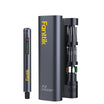
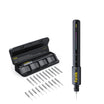
Because nickel oxide is hard and tenacious, chemical cleaners alone are often insufficient. Use a specialized contact cleaning pen or a very fine abrasive (1000-grit or higher) to lightly polish the contact surfaces. The goal is not to remove the nickel plating but to break the oxide skin.
2. Chemical Neutralization
Once the oxide is mechanically disturbed, apply a high-quality deoxidizing agent. Look for products specifically formulated for "heavy-duty" or "industrial" electronics. These contain surfactants that lift the loosened oxides and prevent immediate re-oxidation. This is especially critical for maintaining tool battery health in unheated winter garages, where condensation cycles accelerate chemical breakdown.
3. Conductive Protection
Finally, apply a thin layer of dielectric grease or a specialized conductive contact enhancer. While it sounds counterintuitive to use "insulating" grease, in a tight-fitting connector, the metal-to-metal contact points displace the grease, while the grease surrounds the connection to seal out oxygen and moisture. This prevents the "return of the oxide."
High-Voltage Warning: The Micro-Arcing Risk
While most DIY tools operate at 12V to 40V, it is vital to acknowledge the risks associated with high-voltage systems (approx. 400V DC), such as those found in electric vehicle conversions or large-scale solar storage. In these systems, contact degradation is not just a measurement problem; it is a fire hazard.
Minute increases in resistance can lead to micro-arcing. This creates localized hotspots that can exceed the melting point of the connector housing. As discussed in the DIY Solar Power Forum, high-voltage BMS applications require active arc detection and specialized connectors with specific "creepage and clearance" designs to prevent thermal runaway. If you are working with systems above 60V, ensure your maintenance tools and protocols are aligned with IEC 60529 standards for electrical safety.
Ensuring Long-Term Platform Excellence
Precision in battery management is a holistic endeavor. It starts with the BMS's ability to extend DIY tool life through smart software but ends with the user’s commitment to physical maintenance. By understanding the "millivolt margin" and proactively managing contact resistance, you ensure that your equipment remains a reliable partner in your automotive and DIY projects.
A battery is only as smart as its connections. Whether you are prepping for a multi-day camping trip or maintaining your primary automotive jump starter, a five-minute contact inspection can be the difference between a successful start and a frustrating failure.
Disclaimer: This article is for informational purposes only and does not constitute professional engineering, electrical, or safety advice. Lithium-ion batteries and high-voltage systems carry inherent risks of fire, explosion, and electrical shock. Always consult your device's official service manual and adhere to local safety regulations, such as the EU General Product Safety Regulation (EU) 2023/988, before performing maintenance. If you are unsure of your technical ability, seek assistance from a certified technician.
Sources
- The 2026 Modern Essential Gear Industry Report: Engineering Trust in a Cordless World
- ISO Standards Catalogue - Quality Management
- IEC Standards Webstore - Electrical Safety
- EU General Product Safety Regulation (EU) 2023/988
- Chargery BMS24T Technical Specifications
- Unofficial Zero Manual: BMS / SoC Estimation
- DIY Solar Power Forum: High Voltage BMS Discussion
Continue reading
 Balancing Peak Power and Cycle Life in Modern Jump Starters
A guide to understanding the trade-off between peak amps and battery longevity in portable jump starters. Learn how...
Balancing Peak Power and Cycle Life in Modern Jump Starters
A guide to understanding the trade-off between peak amps and battery longevity in portable jump starters. Learn how...
 Handling Back-to-Back Starts: Why BMS Throttles Power Output
Covers thermal gradients, safety standards, and actionable cooldown heuristics for maintaining battery health.
Handling Back-to-Back Starts: Why BMS Throttles Power Output
Covers thermal gradients, safety standards, and actionable cooldown heuristics for maintaining battery health.



Leave a comment
This site is protected by hCaptcha and the hCaptcha Privacy Policy and Terms of Service apply.