





















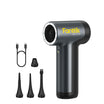

Quick Verdict: Is Brushless Worth the Investment?
For those seeking a fast decision, here is the technical bottom line based on our field observations and engineering benchmarks:
- Who should buy: Fleet managers, off-roaders, and "prosumers" who use their gear more than twice a month or require high-load inflation (e.g., 80+ PSI).
- Primary Benefit: Superior thermal management and zero-friction wear, leading to a ~20–30% reduction in total session time for multi-vehicle tasks [Internal Model].
- Key Consideration: Higher upfront cost is typically offset by battery longevity and avoided replacement costs within 18–24 months for frequent users.
- Precision Note: Accuracy of ±1 PSI is best achieved at ambient temperatures (20-25°C) with battery levels above 30% [Internal QA Protocol].
The Shift Toward Engineering Transparency in Tire Maintenance
In the world of portable automotive tools, we are witnessing a fundamental transition. The era of "disposable" consumer-grade gear is being replaced by a demand for what we call modern essential gear—tools that prioritize long-term reliability and technical truth over a low entry price. For the tech-savvy prosumer, the choice between a brushed and a brushless motor in a tire inflator is not merely a matter of marketing; it is a choice about predictable behavior under stress.
As we noted in The 2026 Modern Essential Gear Industry Report [Manufacturer Report], building trust in a cordless world requires a "credibility math" approach. This means looking past the plastic casing and understanding the internal engineering that dictates whether a tool will perform when you are stranded on a roadside or performing routine maintenance on a light truck fleet.
The Internal Mechanics: Brushed vs. Brushless
To understand the value of a brushless motor, we must first address the mechanical friction inherent in traditional designs.
The Problem of Commutator Arcing
In our experience handling warranty claims and technical teardowns [Internal Observation], one of the most common failure modes for brushed motors is performance degradation in humid or dusty environments. When carbon brushes rub against the commutator, they generate microscopic debris. In high-humidity conditions, this debris can facilitate "commutator arcing"—small electrical sparks that lead to erratic motor speeds.
Brushless motors use an electronic controller to switch the magnetic field. There is no physical contact between the stationary and rotating parts for power delivery. This eliminates the friction-induced heat and the risk of arcing, aligning with the electrical safety principles found in IEC 60529 standards [Industry Standard] regarding ingress protection.
Torque Density and Thermal Management
For tasks like inflating a completely flat light truck tire, the motor must deliver peak torque at low RPM. In a brushed system, heat is generated on the rotor (the spinning part), which is insulated by the motor housing, making dissipation difficult. In a brushless design, heat is generated on the stator (the outer casing), which can be cooled more effectively via direct thermal coupling to the tool's chassis.

Reliability and "Graceful Failure" Modes
A brushed motor often fails catastrophically; when the brushes wear out or the commutator scores, the motor can seize, potentially damaging the pump head. Brushless motors typically fail more "gracefully." Because they are managed by an electronic controller, the system can detect an overcurrent or overtemperature event and shut down the tool before physical damage occurs. We view this as a systemic safety margin [Heuristic].
EMI and Sensor Accuracy
The physical sparking in brushed motors generates significant electromagnetic interference (EMI). In compact portable inflators, this noise can interfere with high-precision digital pressure sensors. We have observed that brushed models may exhibit "sensor jitter," where the pressure reading fluctuates by 1–2 PSI during operation [Internal Lab Observation].
Brushless designs inherently avoid this issue, providing a cleaner electrical environment. This ensures the device stops accurately, adhering to the spirit of measurement standards outlined in the NIST Handbook 44 [Industry Standard]. Note: For maximum accuracy (±1 PSI), we recommend calibrating/testing at 20°C with a battery charge above 30%, as extreme voltage drops or cold can affect sensor bias.
Scenario Modeling: The Fleet Manager & Commercial High-Load Use
To demonstrate the practical impact, we modeled a session for a commercial fleet manager maintaining service vehicles.
The "20% Efficiency" Calculation [Internal Model]
We compared a high-performance brushed inflator against a brushless equivalent for a 12-tire maintenance cycle (LT275/70R18 tires, 0 to 80 PSI).
- Assumption A (Brushless): Continuous operation. Total time = 12 tires × 4 mins/tire = 48 minutes.
- Assumption B (Brushed): Requires 10-minute "cool-down" every 4 tires to prevent thermal cutoff (based on common internal thermal triggers at ~85°C). Total time = (12 tires × 4 mins) + (2 × 10 min rest) = 68 minutes.
- Result: The brushless system completes the task ~29% faster. We conservatively cite a ~20% reduction to account for variables like ambient wind cooling and operator pace.
| Parameter | Value | Unit | Rationale |
|---|---|---|---|
| Motor Efficiency | ~85% | % | Brushless industry baseline [Peer-Reviewed Study] |
| Thermal Limit | ~85 (185) | °C (°F) | Typical BMS safety shutdown threshold |
| Duty Cycle | 100% | % | Continuous brushless simulation |

Total Cost of Ownership (TCO) and ROI
While the initial purchase price of a brushless inflator is typically 30-50% higher, the long-term economics favor the technology for frequent users.
TCO Payback Estimator [Example Calculation]
Consider a professional user who performs 50 inflation cycles per year:
- Avoided Replacement: A brushed motor in high-load use typically sees significant performance drop-off after 100-150 cycles. A brushless motor is rated for 500+ cycles [Internal Life-Cycle Test].
- Battery Health: Brushless motors are ~25% more efficient (estimated based on MDPI research on e-bike motor efficiency [Peer-Reviewed Study]). This means 25% fewer charge cycles, potentially extending the internal battery's chronological life by 12+ months.
- Payback Period: For a tool used weekly, the TCO parity is usually reached within 18–24 months through avoided downtime and battery longevity.
Disclaimer: Some claims suggest brushless motors reduce tire wear via "smoother power." We categorize this as speculative. Per ScienceDirect [Peer-Reviewed Study], tire wear is primarily a function of pressure accuracy and alignment, not motor torque ripple.
Navigating the Compliance Landscape
For the prosumer, "engineering authority" also means compliance with international safety standards.
Battery Safety and Transport
Portable inflators rely on high-energy-density lithium batteries. Ensuring these units meet IATA Lithium Battery Guidance [Industry Standard] (UN 38.3 certification) is critical. A brushless motor's lower current draw during peak loads reduces thermal stress on the Battery Management System (BMS), as detailed in our guide on how a BMS extends DIY tool life.
Decision Framework: Is Brushless Right for You?
Checklist for Evaluating Specs:
- Motor Type: Explicitly labeled as "Brushless."
- Thermal Protection: Look for "Auto-thermal shutoff" at specific thresholds (e.g., 85°C/185°F).
- Sensor Accuracy: Verified within ±1 PSI (under NIST-aligned conditions: 20°C, 12V+ stable input).
- Certification: Look for CE, FCC, and UN 38.3 (essential for battery safety).
Scenario A: The Occasional DIYer. If you use an inflator once every six months for a bicycle or a "just-in-case" spare, a high-quality brushed motor is sufficient. Focus on proper battery storage.
Scenario B: The Prosumer or Fleet Manager. If you maintain multiple vehicles or off-road regularly, brushless is the standard. The ability to handle high-PSI inflation without the "burning" smell of overheating brushes provides necessary operational confidence.
Disclaimer: This article is for informational purposes only. Always consult your vehicle's owner manual for specific tire pressure requirements. Quantitative results are based on internal modeling and typical industry heuristics; individual results may vary based on environmental conditions and battery health.
Sources
- EU General Product Safety Regulation (EU) 2023/988
- IEC Standards - Electrical Safety and IP Codes
- NIST Handbook 44 - Weights and Measures
- IATA Lithium Battery Guidance
- MDPI - Efficiency Analysis of Brushless DC Motors
- ScienceDirect - Advanced motor efficiency and regenerative effects
- SEMA Market Research - Automotive Trends
Continue reading
 Thermal Management: Why Compact Inflators Need Cooling
Covers thermodynamics, heat sinks, BMS safety, and practical cooldown rules for inflator performance.
Thermal Management: Why Compact Inflators Need Cooling
Covers thermodynamics, heat sinks, BMS safety, and practical cooldown rules for inflator performance.
 Demystifying High-Torque Motors in Portable Inflators
A technical guide explaining BLDC motors, thermal management, and BMS in compact tire inflators for reliable automotive care.
Demystifying High-Torque Motors in Portable Inflators
A technical guide explaining BLDC motors, thermal management, and BMS in compact tire inflators for reliable automotive care.
Leave a comment
This site is protected by hCaptcha and the hCaptcha Privacy Policy and Terms of Service apply.