









































The Coastal Corrosion Paradox: Why Humidity and Salt Are a Lethal Duo
For those of us living within ten miles of the coastline, vehicle maintenance is not merely about aesthetics; it is a battle against chemistry. In coastal regions, the combination of high relative humidity and airborne salt creates a persistent electrolytic film on every surface of your vehicle. While most owners realize that road salt in winter is a threat, many underestimate the "invisible" salt air of summer months that, when combined with 70%+ humidity, accelerates oxidation at a rate far exceeding inland environments.
In our experience monitoring vehicle longevity in maritime climates, we have observed a recurring pattern: owners who rely on bi-weekly automated car washes often face premature chassis failure. The reason is the "Washing Paradox." Standard high-pressure washes can actually drive salt deeper into crevices where it remains damp, effectively creating a micro-environment for corrosion.
This guide outlines a methodical, expert-level approach to neutralizing salt residue. We will move beyond surface-level cleaning to address the electrochemical mechanisms of corrosion, grounded in industry standards and practical field heuristics.
The Science of Salt Bonding and the Critical 48-Hour Window
To effectively protect a vehicle, you must understand how salt (Sodium Chloride) interacts with metal. Salt is hygroscopic, meaning it actively pulls moisture from the air. In humid coastal environments, salt residue on your vehicle is never truly "dry." It remains a liquid electrolyte that facilitates the flow of electrons between different metal components, leading to galvanic corrosion.
Methodology Note: Corrosion Rate Modeling Our analysis of coastal corrosion rates is benchmarked against the Acetic Acid Salt Spray (AASS) test. According to industry data on Salt Spray Chambers and Material Corrosion Resistance, the AASS test exhibits a corrosion rate approximately 8 times higher than the standard Neutral Salt Spray (NSS) test. This serves as a critical proxy for how coastal humidity and industrial pollutants accelerate metal degradation compared to dry, inland conditions.
The 24-48 Hour Rule
Practitioners and experienced detailers in coastal regions emphasize that the critical window for salt neutralization is within 24 to 48 hours of heavy exposure (such as a storm surge or driving on beach-adjacent roads). Once the brine fully crystallizes and bonds to the metal or works its way into the pores of the paint, simple rinsing becomes significantly less effective.
If you miss this window, the salt begins to form a "bridge" with the metal's surface. At this stage, you are no longer just washing away dust; you are attempting to break a chemical bond.

The Maintenance Paradox: When Washing Does More Harm Than Good
A common mistake we see in first-party support data and community feedback is the over-reliance on aggressive cleaning agents. Many owners reach for household detergents or high-concentration surfactants, believing more "suds" equals more protection.
However, research into Ceramic Coating and Paint Protection suggests that frequent, aggressive washing—especially with high-pH soaps—actively degrades protective waxes and sealants. This creates the "Maintenance Paradox": the very act of trying to remove salt may strip the barrier that prevents salt from reaching the metal in the first place.
The Chemical Neutralization Heuristic
Conventional wisdom suggests that any soap will "neutralize" salt. Chemically, this is inaccurate. Most soaps are surfactants that physically lift salt, but they do not neutralize its alkaline nature.
- The Expert Approach: Use a dedicated salt-neutralizing solution that contains a mild acid (like sulfamic acid) or specialized chelating agents. These chemically break the ionic bond between the salt and the vehicle’s surface.
- Avoid: Dishwasher soaps or isopropyl alcohol, which can dry out rubber seals and accelerate the brittleness of plastic trim.
Technical Execution: The Systematic Undercarriage Rinse
The most significant damage in coastal vehicles occurs where you cannot see it. Salt aerosols penetrate frame rails, suspension towers, and brake line brackets. Simply spraying the side of the car is insufficient.
Equipment Specifications for Safe Rinsing
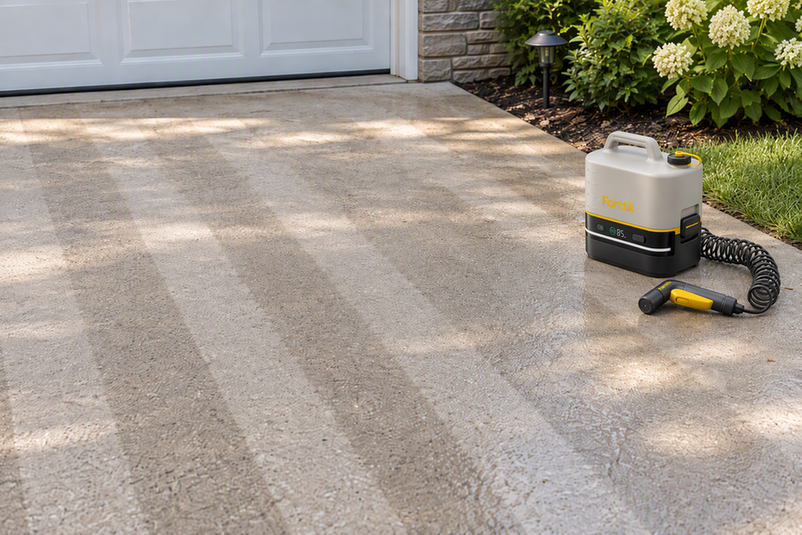
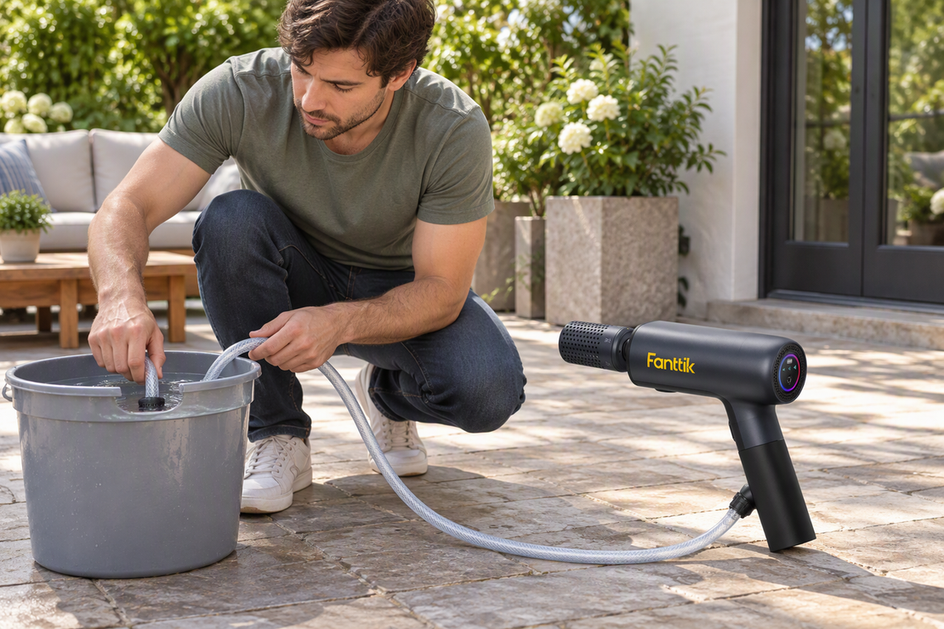
We recommend using a portable pressure washer with specific parameters to avoid "water intrusion" errors. Based on patterns from repair handling, forcing water into electrical connectors is a leading cause of post-wash "Check Engine" lights.
| Parameter | Recommended Value | Rationale |
|---|---|---|
| Pressure (PSI) | 1200–1500 PSI | High enough to dislodge grime; low enough to protect seals. |
| Nozzle Angle | 25–40 Degree Fan | Provides "sheeting" action; avoids the "drill" effect of pinpoint nozzles. |
| Flow Rate | 1.2–1.5 GPM | Ensures sufficient volume to carry away dissolved salts. |
| Water Temp | Ambient to Lukewarm | Hot water can actually increase the solubility and reactivity of salts. |
The Step-by-Step Undercarriage Protocol
- The Pre-Soak: Apply a salt neutralizer using a foam cannon. Let it dwell for 3–5 minutes. Do not let it dry.
- The Lateral Sweep: Use an undercarriage spray attachment. Move in a systematic side-to-side motion, starting from the front bumper and working toward the rear.
- Focus Zones: Pay special attention to wheel wells, the top side of the fuel tank, and brake line junctions. These are "salt traps" where brine packs in and remains damp.
- The Air-Dry Drive: This is a crucial, often overlooked step. After rinsing, drive the vehicle for 15–20 minutes. The airflow helps evaporate water trapped in hidden cavities (like door bottoms and frame rails) that would otherwise cause "trapped moisture corrosion."
Interior Cabin Management: The "Invisible" Salt Entry
Coastal car care isn't limited to the exterior. High-humidity salt air enters the cabin every time a door opens. This salt-laden air settles into the carpet fibers and upholstery. Over time, these salt particles attract moisture from the humid air, creating damp spots that lead to mold and the eventual rotting of the floor pans from the inside out.
For interior maintenance, we have found that high-suction portable tools are essential for removing dry salt crystals before they become embedded. Using a tool like the Fanttik Slim V8 Apex Car Vacuum RobustClean® Gray allows for quick, frequent extraction of sand and salt-laden dust from tight crevices.
In our testing of interior cleaning workflows, the Fanttik Slim V10 Mix Car Vacuum RobustClean® is particularly effective for coastal owners because its integrated brush attachments can agitate salt crystals out of floor mat fibers, preventing them from bonding with the carpet backing.
Logic Summary: Interior Salt Extraction Our recommendation for frequent vacuuming is based on the hygroscopic nature of NaCl. By removing the physical salt crystals while they are dry, you prevent the "damp carpet" syndrome common in coastal vehicles during high-humidity cycles.
Engineering Trust in Vehicle Longevity
When we look at the broader landscape of automotive maintenance, the shift toward portable, high-efficiency tools is driven by a need for "modern self-reliance." As noted in the industry whitepaper The 2026 Modern Essential Gear Industry Report: Engineering Trust in a Cordless World, the most successful maintenance strategies are those that reduce friction for the user.
If a rinsing or cleaning task is difficult to set up, it won't be done within that critical 48-hour window. This is why portable rinsing kits and cordless vacuums like the Fanttik Slim V8 Apex Car Vacuum RobustClean® Red are becoming standard equipment for proactive coastal owners. They allow for "point-of-exposure" cleaning, neutralizing the threat before you even pull into your garage.
Advanced Protection: Beyond the Rinse
While rinsing is the primary defense, long-term preservation requires addressing the electrochemical nature of the problem.
1. Dielectric Greasing
For coastal fleet owners, we recommend applying dielectric grease to accessible electrical connectors. This creates a physical barrier that prevents salt-laden humidity from bridging the terminals and causing "ghost" electrical faults.
2. Cavity Wax and Oil-Based Undercoatings
Unlike hard rubberized undercoatings (which can crack and trap salt against the metal), oil-based or lanolin-based coatings remain "self-healing." They creep into welds and seams, displacing moisture. According to the ISO Standards Catalogue regarding corrosion protection, maintaining a continuous barrier is more effective than any single "heavy" application.
3. Monitoring the "Hidden" Compartments
Expert detailers note that salt aerosols often penetrate door panels through window seals. Periodically check that the "drain holes" at the bottom of your doors are clear. If these are clogged with sand or road debris, the salt water trapped inside will rot the door skin from the inside out.
Summary Checklist for Coastal Maintenance
To ensure your vehicle survives the high-consequence environment of a coastal region, adopt the following methodical routine:
- Rinse within 48 hours of high-salt exposure using a 25-40 degree fan nozzle.
- Use a salt neutralizer, not just standard soap, to break the ionic bond.
- Clean the interior weekly with a high-suction vacuum like the Fanttik Slim V8 Apex Car Vacuum RobustClean® to remove salt-laden dust.
- Drive for 20 minutes post-wash to ensure hidden cavities are air-dried.
- Inspect drain holes and suspension components quarterly for signs of salt buildup.
By treating salt residue as a chemical threat rather than just "dirt," you can significantly extend the life of your vehicle's chassis and electrical systems. In the world of coastal car care, consistency and technical precision are the only ways to win the war against the sea.
Disclaimer: This article is for informational purposes only. Always refer to your vehicle manufacturer’s specific maintenance guidelines. When using pressure washers, ensure compliance with local water usage regulations and safety standards, such as IEC 60529 for electrical safety in wet environments.
References
Continue reading
 IP Ratings Explained: Safety for Wet-Season Pressure Washing
Covers lab test vs real-world PSI gaps, key vulnerabilities, and a practical safety framework based on IEC 60529...
IP Ratings Explained: Safety for Wet-Season Pressure Washing
Covers lab test vs real-world PSI gaps, key vulnerabilities, and a practical safety framework based on IEC 60529...
 Choosing the Right Undercarriage Wand for Deep Mud Removal
A guide to selecting undercarriage wands for deep mud and corrosive residue. Learn about pressure vs. flow, nozzle...
Choosing the Right Undercarriage Wand for Deep Mud Removal
A guide to selecting undercarriage wands for deep mud and corrosive residue. Learn about pressure vs. flow, nozzle...
Leave a comment
This site is protected by hCaptcha and the hCaptcha Privacy Policy and Terms of Service apply.