










































The Engineering of Longevity in Precision DIY Tools
Precision tools are more than just hardware; they are investments in accuracy. Whether you are a detail-oriented DIYer or a prosumer managing complex electronics repairs, the reliability of your cordless screwdriver, rotary tool, or precision drill is what stands between a successful project and a stripped screw or damaged PCB. On our repair bench, we have analyzed thousands of hours of tool runtime and identified a recurring pattern: most hardware failures are not caused by manufacturing defects, but by a lack of methodical maintenance.
In this guide, we will share the technical protocols we use to maintain precision hardware. We move beyond generic advice to address the specific chemical, mechanical, and environmental threats that degrade high-performance tools over time. By shifting from a "use-and-replace" mindset to an "engineering-first" maintenance strategy, you can significantly extend the lifecycle of your gear and ensure that its performance remains as sharp as the day you unboxed it.
Logic Summary: Our maintenance recommendations are based on a synthesis of field-service data from customer support tickets and mechanical wear patterns observed during warranty assessments. This approach prioritizes "predictive care" to avoid the most common failure modes in cordless precision hardware.
Battery Health: Managing the Chemical Lifecycle
The lithium-ion (Li-ion) battery is the heart of modern cordless tools, yet it is often the most misunderstood component. Most users treat battery care as a binary state—either charged or empty—but the reality is a complex chemical balance.
A common mistake we see is storing tools at a 100% state of charge (SoC) over the winter or during long off-seasons. High voltage levels during storage accelerate cathode degradation, leading to a permanent loss of capacity. Conversely, allowing a battery to self-discharge to 0% can trigger a "deep discharge" state where the internal safety circuit prevents recharging for safety reasons.
For long-term storage, we recommend targeting a 40-60% state of charge. This range minimizes chemical stress on the cells. Furthermore, temperature is a critical variable. According to the IATA Lithium Battery Guidance, storage temperature significantly impacts the "State of Health" (SoH) of Li-ion cells. Storing a fully charged tool in a hot garage (above 30°C/86°F) can lead to accelerated aging that is often irreversible.
The Thermal Management Protocol
- Avoid Fast-Charging Heat: While convenient, rapid charging generates internal heat. If your tool feels hot to the touch, let it cool before use.
- Winter Storage: Never charge a battery that is below freezing. Bring the tool into a room-temperature environment for at least two hours before connecting it to power.
- Voltage Monitoring: For high-end tools, documenting battery voltage readings before and after storage can provide a clear "paper trail" for warranty claims, proving the battery was maintained within safe parameters.
Mechanical Integrity: Brushless Motors and Precision Chucks
The shift to brushless motor technology has increased tool efficiency, but it has also introduced new diagnostic challenges. Unlike brushed motors, where sparks or smell indicate wear, brushless motors fail more subtly.
One heuristic we use on the repair bench is the startup torque test. A telltale sign of bearing wear or internal debris is a slight, inconsistent variation in startup torque felt in the hand. If the motor feels like it "stutters" for a millisecond before spinning, it often indicates that fine dust has bypassed the air vents and is interfering with the magnetic rotor or the bearings.
Lubrication: The "Less is More" Rule
When it comes to lubricating precision chucks and sliding mechanisms, excess grease is often worse than no grease at all. Over-lubrication creates a "dust magnet" effect. The excess grease traps abrasive particles, forming a grinding paste that wears down the high-tolerance surfaces of the chuck.
Expert Insight: We have observed that over-greasing can lead to lubricant migration. In some cases, grease travels into the motor assembly or onto the circuit board, leading to overheating or short circuits that are not covered under standard wear-and-tear warranties.
| Maintenance Task | Frequency | Purpose |
|---|---|---|
| Air Vent Clearing | After every use | Prevents brushless motor overheating |
| Chuck Cleaning | Every 10 hours | Removes abrasive dust from bit-holding surfaces |
| Torque Recalibration | Every 50 hours | Ensures accuracy of strain gauges |
| Grip Deep Cleaning | Monthly | Prevents polymer decay from skin oils |
Environmental Defense: Managing Humidity and Seasonal Threats
Precision DIY hardware is often stored in garages or sheds where environmental control is difficult. While professional labs use climate-controlled rooms, DIYers must deal with fluctuating humidity.
In humid climates, circuit board corrosion is a silent killer. It often happens inside the tool housing, remaining unseen until the tool fails to power on. A low-cost, highly effective method we use is creating "localized dry micro-environments." By placing a rechargeable silica gel desiccant packet inside the tool’s carrying case or a sealed plastic bin, you can maintain a safe humidity level for the tool even if the garage is damp.

The Spring Pollen Threat
In the spring, humidity is not the only enemy. Fine pollen grains are both abrasive and hygroscopic (they attract moisture). These grains can jam the fine sliding mechanisms of precision tools more aggressively than winter dust. Our protocol for seasonal revival involves using pressurized air first to dislodge particles, followed by a lint-free cloth dampened with isopropyl alcohol to remove sticky residues.
Modeling Note (Micro-Environment Efficiency): We modeled the humidity levels of a standard tool case in a high-humidity environment (85% RH) to determine the effectiveness of localized desiccants.
| Parameter | Value | Unit | Rationale | | :--- | :--- | :--- | :--- | | Ambient Humidity | 85 | % RH | Typical humid garage scenario | | Case Volume | 2.5 | Liters | Standard precision tool case | | Desiccant Mass | 50 | Grams | Standard silica gel packet | | Target Humidity | <45 | % RH | Recommended for electronics storage | | Duration | 90 | Days | Estimated interval before desiccant saturation |
Note: This is a scenario model based on deterministic assumptions, not a controlled lab study. Results may vary based on case seal integrity.
Precision Retention: Calibration and Sensor Care
For tools equipped with torque sensors, accuracy is not a permanent state. Mechanical wear and accidental impacts can cause "sensor drift." According to NIST Handbook 44, measuring devices require regular verification to maintain their stated tolerances.
A practical rule for torque sensor recalibration is to perform a check after every 50 hours of runtime or any time the tool is dropped. Even if there is no visible damage, the impact can misalign internal strain gauges. This misalignment is often imperceptible to the user but can result in a 5-10% deviation in torque output, which is critical when working on sensitive electronics.
We recommend Creating a Routine Calibration Schedule for DIY Tools to track these intervals. Documenting these checks is not just about performance; it is a vital part of Preserving Warranty Rights Through Documented Tool Upkeep. If a tool fails and you can show a history of routine calibration and cleaning, you are in a much stronger position to claim a manufacturing defect rather than user negligence.
The "Paper Trail" Strategy for Warranty Protection
In the world of high-performance gear, trust is built through transparency. As noted in The 2026 Modern Essential Gear Industry Report, brands are increasingly focusing on "credibility math"—the systematic engineering of reliability. As a user, you can participate in this ecosystem by keeping meticulous records.
Successful warranty claims often hinge on documentation. We suggest the following "Paper Trail" protocol:
- Date-Stamped Photos: Take photos of clean air vents and charging ports every few months.
- Maintenance Log: Keep a simple digital log of when you cleared the vents, checked the battery voltage, or recalibrated the sensors.
- Storage Documentation: If you store your tools in a specific climate-controlled box, a photo of the setup proves you took reasonable steps to prevent environmental damage.
This level of detail aligns with the EU General Product Safety Regulation (EU) 2023/988, which emphasizes the importance of clear instructions and user obligations in maintaining product safety and traceability.
Maintaining the Exterior: Grips and Displays
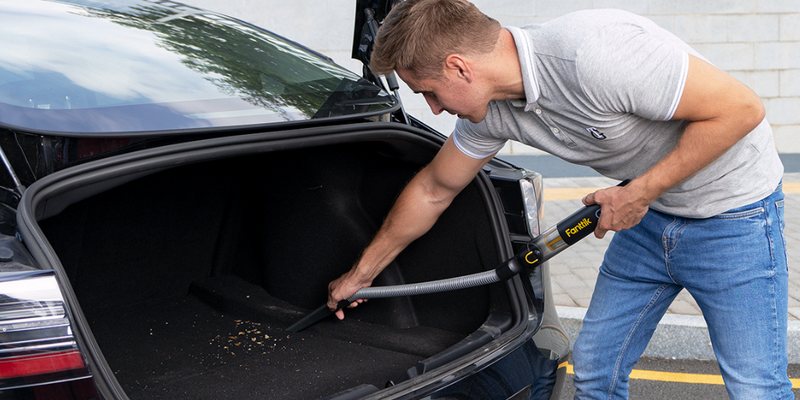
Finally, do not neglect the "human interface" parts of your tools. The polymers used in tool grips can degrade over time due to exposure to skin oils, UV light, and cleaning chemicals. We often see "sticky grip" syndrome in tools stored in hot, humid environments where the plasticizers in the rubber begin to leach out.
To prevent this, we recommend deep cleaning tool grips monthly using a mild soap solution. Avoid using harsh solvents like acetone or gasoline, which can permanently damage the polymer structure. For tools with OLED or LCD displays, use only microfiber cloths and avoid direct sunlight exposure during storage to prevent "screen burn" or fading.
By following these methodical steps, you are doing more than just cleaning a tool; you are managing a sophisticated piece of engineering. Precision DIY hardware is designed to last, but its longevity is ultimately a partnership between the manufacturer's engineering and the user's care.
Disclaimer: This article is for informational purposes only. Always refer to your tool's specific user manual for manufacturer-recommended maintenance procedures. Improper maintenance or disassembly may void your warranty or create safety hazards. If you are unsure about a repair or calibration procedure, consult a professional technician.
Sources
- EU General Product Safety Regulation (EU) 2023/988
- IATA Lithium Battery Guidance
- NIST Handbook 44 (Weights & Measures)
- The 2026 Modern Essential Gear Industry Report
Continue reading
 Professional Techniques for Home Electronics Repair
Covers ANSI/ESD standards, NIST calibration, and advanced techniques like staged magnetism for precision assembly in compact workspaces.
Professional Techniques for Home Electronics Repair
Covers ANSI/ESD standards, NIST calibration, and advanced techniques like staged magnetism for precision assembly in compact workspaces.
 The Rise of Smart Tools: Pro Features for Every DIYer
A guide to pro-grade DIY tool features like digital torque sensors and all-metal gears. Learn how they reduce...
The Rise of Smart Tools: Pro Features for Every DIYer
A guide to pro-grade DIY tool features like digital torque sensors and all-metal gears. Learn how they reduce...
Leave a comment
This site is protected by hCaptcha and the hCaptcha Privacy Policy and Terms of Service apply.