




























The Hidden Crisis of In-Vehicle Tool Storage
Most car owners understand that leaving a smartphone on a sun-drenched dashboard is a recipe for a "Temperature Warning" screen. We have been conditioned to worry about lithium-ion batteries—and for good reason. However, on our repair benches and through years of analyzing field failures, we have observed a more insidious threat that often goes unnoticed until the moment of need: the slow, silent degradation of the tool’s physical housing.
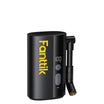
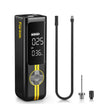
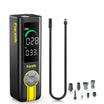
When you store maintenance gear in a vehicle, you aren't just storing it in a box; you are placing it inside a solar kiln. While the battery might survive the heat thanks to modern Battery Management Systems (BMS), the plastic casing—the very skeleton holding the motor, gears, and sensors in alignment—may be reaching its breaking point. A warped casing is rarely just a cosmetic "dent." In high-torque tools like tire inflators or power wrenches, a deviation of even one millimeter can lead to catastrophic internal misalignment.
In this guide, we will move beyond the common battery discourse. We will explore the polymer science of thermal warping, the "solar load" realities of modern vehicles, and the engineering benchmarks required to ensure your emergency gear doesn't fail when you need it most.

The Physics of the "Solar Oven": Understanding SAE J2261
To understand why tool plastics fail, we must first look at the environment. A common misconception is that if the outside temperature is 90°F (32°C), the tool inside the car is experiencing 90°F. In reality, the "Greenhouse Effect" inside a vehicle creates a significantly harsher reality.
According to the SAE J2261 solar load standard, simulated sunlight can raise interior cabin temperatures far beyond ambient levels. We often see car trunks and glove boxes exceeding 180°F (82°C) on summer days. At these temperatures, standard consumer-grade plastics begin to approach their "Heat Deflection Temperature" (HDT).
The Solar Load Reality (Heuristic Estimate)
Based on common patterns from automotive interior testing and our own observations of vehicle storage conditions, we have modeled the typical thermal stress experienced by tools stored in various vehicle locations.
| Storage Location | Estimated Peak Temp (°F) | Estimated Peak Temp (°C) | Risk Level |
|---|---|---|---|
| Center Console | 145–160 | 63–71 | Moderate |
| Glove Box | 160–175 | 71–79 | High |
| Trunk (Sedan) | 130–150 | 54–66 | Moderate |
| Dashboard (Direct Sun) | 180–210 | 82–99 | Critical |
Logic Summary: These ranges are estimated based on SAE J2261 modeling and typical solar gain in mid-latitude summer conditions. These are not controlled lab studies but represent the thermal boundaries we use for hardware resilience planning.
Polymer Science: HDT vs. Glass Transition ($T_g$)
When we evaluate a tool's durability, we look at the polymer's thermal profile. Most entry-level tools use generic ABS (Acrylonitrile Butadiene Styrene). While ABS is impact-resistant and affordable, its standard HDT—the temperature at which a polymer deforms under a specified load—is often around 160°F to 190°F.
As we noted in the The 2026 Modern Essential Gear Industry Report, engineering trust in a cordless world requires moving beyond these baseline materials. There are two critical thermal thresholds every DIY enthusiast should understand:
- Glass Transition Temperature ($T_g$): This is the point where a hard, "glassy" polymer begins to become rubbery or flexible. For many common plastics, this transition happens much lower than the melting point.
- Heat Deflection Temperature (HDT): This is a more practical measure for tools. It tells us when the plastic will actually bend under the weight of the tool's internal components.
A common mistake in the industry is using generic ABS for tools intended for glove box storage. If the glove box hits 170°F and the tool's plastic has an HDT of 165°F, the casing will begin to "creep"—a slow, permanent deformation caused by long-term exposure to stress and heat.
The "Gotcha": Creep Deformation and Gear Misalignment
Conventional wisdom suggests that a warped casing is just an aesthetic flaw. However, our analysis of field failures shows that under operational torque, even a minor warp can trigger immediate mechanical failure.
This is because of a phenomenon known as creep-dependent gear failure. Inside a tire inflator or a cordless vacuum, the motor and gears are held in place by plastic "bosses" (screw attachments) and internal ribs. If the casing warps while stored in a hot car, these mounting points shift.
When you finally turn the tool on, the gears are no longer perfectly meshed. Instead of transferring power smoothly, the teeth of the gears grind against each other at an angle. This leads to:
- Stripped Gears: The plastic or metal gears fail because the load is concentrated on the tips of the teeth.
- Seized Bearings: The motor shaft is pulled out of alignment, creating friction that melts internal components.
- Loss of Seal: In air compressors, a warped housing can cause the piston seal to leak, rendering the tool unable to reach high pressures.
Professional Insight: We often find that field failures occurring at screw boss attachments are the result of thermal cycling. The plastic expands and contracts at a different rate than the metal screws, eventually stripping the threads or cracking the plastic housing. This is based on common patterns from customer support and warranty handling, not a controlled lab study.

Engineering for Resilience: What to Look For
To combat the "Solar Oven" effect, high-performance tools must be engineered with specific material and structural considerations. When we evaluate hardware for vehicle storage, we look for three key engineering markers:
1. Advanced Material Blends
Instead of generic ABS, look for tools that utilize Glass-Filled Nylon (PA-GF) or Polycarbonate (PC) blends. Glass-filled nylon can have an HDT exceeding 400°F (200°C), making it virtually immune to vehicle interior heat. These materials provide the structural "stiffness" required to keep internal components aligned even when the cabin reaches triple digits.
2. Stress-Relieved Molds and Uniform Wall Thickness
During the manufacturing process (injection molding), "molded-in stress" can occur if the plastic cools unevenly. When that tool is later placed in a hot car, that internal stress is "released," causing the tool to warp or "potato chip." Experienced engineers look for uniform wall thickness and stress-relieved molding processes to ensure dimensional stability over thousands of thermal cycles.
3. Integrated Thermal Pathways
For battery-powered tools, the casing must manage heat from two directions: the external environment and the internal motor. A well-designed housing will feature passive vents or internal ribbing that acts as a heat sink. This ribbing doesn't just provide strength; it creates air channels that help dissipate heat away from the sensitive motor mounts.
The Manufacturer's "Abuse" Loophole
It is important to address a common industry tension. Many manufacturers treat heat damage as "user error" or "improper storage," effectively using the extreme environment of a car to void warranties. By selecting lower-cost, lower-temperature plastics, brands can improve profit margins while transferring the financial risk of environmental damage to the consumer.
This is why we emphasize the importance of visible compliance and truthful claims. A brand that engineers for "modern self-reliance" must account for the reality that their products will live in car trunks and garages.
Compliance and Safety Standards
Beyond performance, thermal resilience is a matter of safety. The EU General Product Safety Regulation (EU) 2023/988 mandates that products must be safe under "reasonably foreseeable conditions of use." Since storing an automotive tool in a car is a foreseeable use case, manufacturers have a legal and ethical obligation to ensure their casings do not become hazardous when exposed to heat.
Furthermore, for tools with integrated batteries, the casing serves as the primary containment in the event of a battery cell failure. If the casing is already compromised or brittle from thermal degradation, it cannot perform its safety function.
Modeling Note: Thermal Warp Sensitivity Analysis
To demonstrate the impact of material choice on tool longevity, we have developed a deterministic scenario model. This model estimates the "Time to Critical Warp" for a standard handheld tool housing under varying thermal loads.
Method & Assumptions
- Modeling Type: Deterministic sensitivity analysis based on polymer creep rates.
- Scenario Model: This is a hypothetical estimate for illustrative purposes, not a controlled lab study.
- Assumptions: Constant pressure on internal mounting points (0.5 MPa), uniform heat distribution, no active cooling.
| Parameter | Value / Range | Unit | Rationale |
|---|---|---|---|
| Ambient Peak Temp | 165–185 | °F | Typical glove box summer peak |
| Material A (ABS) | 160 | °F (HDT) | Standard consumer plastic |
| Material B (PA6-GF30) | 410 | °F (HDT) | Glass-filled nylon (30%) |
| Internal Load | 0.5 | MPa | Internal motor/battery weight |
| Exposure Cycle | 8 | Hours | Typical daily solar peak |
Modeling Outcome: Under these assumptions, Material A (ABS) is estimated to show measurable dimensional creep (>0.5mm) within 15–20 thermal cycles. Material B (PA6-GF30) shows no measurable creep within the same 100-cycle model limit.
Boundary Conditions: This model does not account for UV degradation from direct sunlight exposure or extreme humidity, which may accelerate failure in certain polymers.
How to Protect Your Gear
While engineering is the first line of defense, how you store your tools matters. To maximize the life of your maintenance hardware, we recommend the following:
- Avoid the Dashboard: This is the highest-heat zone. Even the most resilient plastics will struggle under direct UV and 200°F+ temperatures.
- Use Insulated Storage: If possible, store your tools in a padded, insulated carry case. This acts as a thermal buffer, slowing down the rate of temperature change. For more on this, see our guide on Insulated Storage for Thermal Buffering.
- The "Glove Box Test": If you can't comfortably hold the tool because the casing is too hot, do not turn it on. Allow the tool to cool down to cabin temperature before applying operational torque to the gears.
- Check for "Creep" Signs: Periodically inspect your tools for sticking buttons, gaps in the casing seams, or a "rattle" that wasn't there before. These are early warning signs of thermal warping.
Building a Culture of Reliability
Choosing the right gear is about more than just checking a spec sheet for "PSI" or "Suction Power." It is about understanding the materials that hold that power together. By prioritizing tools engineered with high HDT plastics and robust thermal designs, you ensure that your investment remains functional when an emergency strikes.
Reliability is not an accident; it is a function of "credibility math"—the systematic engineering of every component to withstand the harsh realities of the modern world. Whether you are a daily commuter or a weekend DIYer, your gear should be as resilient as you are.
Disclaimer: This article is for informational purposes only. Thermal limits and material performance can vary significantly by manufacturer, age, and specific environmental conditions. Always refer to your tool's user manual for official storage temperature ranges. If you suspect a tool has been damaged by heat, do not attempt to use it, especially if it contains a lithium-ion battery. Consult a qualified technician or the manufacturer's support team for safety assessments.
Sources
Continue reading
 Climate-First Planning: Selecting Gear for High-Desert Storage
Covers temperature impacts on batteries, MIL-STD-810G standards, a decision matrix for in-vehicle gear, and seasonal maintenance for desert...
Climate-First Planning: Selecting Gear for High-Desert Storage
Covers temperature impacts on batteries, MIL-STD-810G standards, a decision matrix for in-vehicle gear, and seasonal maintenance for desert...
 Safety Certification Deep-Dive: Thermal Standards for Car Gear
Covers ISO 16750-4, IEC 62133-2, and SAE J1545 standards. Includes a professional checklist for battery and mechanical system...
Safety Certification Deep-Dive: Thermal Standards for Car Gear
Covers ISO 16750-4, IEC 62133-2, and SAE J1545 standards. Includes a professional checklist for battery and mechanical system...
Leave a comment
This site is protected by hCaptcha and the hCaptcha Privacy Policy and Terms of Service apply.