






































The Hidden Science of Hand Comfort in Portable Pumps
If you have ever spent twenty minutes cleaning a driveway or inflating a high-pressure mountain bike tire with a handheld tool, you are likely familiar with the "numbing" sensation that follows. That tingling in your palms isn't just a sign of hard work; it is the physical result of high-frequency mechanical energy transferring from a motor to your nervous system. In the engineering world, we call this vibration, and in the world of high-performance portable pumps, managing it is the difference between a tool you enjoy using and one that sits gathering dust in the garage.
When we design compact, handheld pressure washers or tire inflators, we face a significant physics challenge. We are essentially trying to house a high-speed rotating motor and a reciprocating piston—components that naturally want to shake—inside a lightweight, ergonomic shell. Without proper intervention, these vibrations can lead to hand-arm vibration syndrome (HAVS) or simple user fatigue that compromises precision.
In this article, we will go behind the scenes of pump engineering to explore "harmonic damping." We will explain why specific vibration frequencies are more painful than others and how we use a three-pronged systems approach to reduce these forces by up to 70%. By understanding the "credibility math" behind these designs, you can better evaluate which tools are built for long-term comfort and which are merely built for power.
Understanding the Sources of Pump Vibration
On our repair and testing benches, we have observed that vibration in portable pumps rarely comes from a single "glitch." Instead, it is the cumulative effect of three primary mechanical sources. To solve the problem, we must address each one individually.
1. Motor Imbalance
Every electric motor has a rotating mass. If that mass is even slightly off-center, it creates a centrifugal force that oscillates with every rotation. In high-speed portable pumps, where motors can reach upwards of 15,000 to 20,000 RPM, even a milligram of imbalance can generate noticeable "buzz" in the handle.
2. Fluid Pulsation Harmonics
Unlike a garden hose, which provides a steady stream, a high-pressure pump works in pulses. As the piston moves back and forth, it creates rapid pressure spikes and drops. These "slugs" of water or air create a rhythmic hammering effect within the pump head. If these pulses align with the natural frequency of the tool's housing, they can amplify the vibration through a phenomenon known as resonance.
3. Structural Resonance
Every object has a natural frequency at which it "likes" to vibrate. If the motor's operating speed matches the natural frequency of the plastic casing or the internal frame, the entire tool will begin to hum and shake violently. This is why some tools feel smooth at low power but become unbearable at maximum output.
Logic Summary: Our analysis of user comfort assumes that vibration is a multi-source problem. Based on common patterns from customer support and field testing, addressing only one of these sources (such as adding a rubber grip) is usually insufficient for professional-grade handheld tools.
The Systems Approach to Harmonic Damping
Through our engineering modeling and field experience, we have found that the most effective damping strategy is not a single "magic material" but a combination of three distinct layers. When these are integrated correctly, we estimate a 60–70% reduction in vibration compared to unshielded designs.
Isolation Mounting: The First Line of Defense
The first step is to "float" the motor and pump assembly inside the outer shell. We achieve this using isolation mounts made from specialized rubber compounds.
- The 60-80 Durometer Rule: We typically use rubber with a Shore A durometer (hardness) between 60 and 80.
- Why this range? Compounds softer than 60 durometer are too "mushy" and allow the motor to move too much, potentially damaging internal connections. Compounds harder than 80 are too stiff and behave like solid plastic, passing the vibration directly to your hand.
- The Result: This layer is optimized for low-frequency absorption, preventing the heavy "thumping" of the piston from reaching the user.
Constrained Layer Damping (CLD)
For mid-frequency vibration—the "buzz" that makes your skin itch—we use constrained layer damping. This involves applying a thin layer (typically 1–3mm) of viscoelastic material between two rigid structural components.
- Mechanism: When the pump vibrates, the viscoelastic layer is "sheared" between the stiff layers. This friction converts mechanical vibration energy into a tiny amount of heat, which is then dissipated.
- Application: This is particularly effective in handheld pressure washers where the transition from motor rotation to hydraulic pressure creates complex harmonics. For more on how pump types affect this, see our guide on Axial vs. Triplex Pump Engineering.
Dynamic Balancing
The most technical part of our damping strategy involves the rotating components themselves. We balance the motor armature and the pump crank to within a 0.5g-cm tolerance.
- Comparison: To put this in perspective, a standard budget tool might have a tolerance of 2.0g-cm or higher. By tightening this tolerance by 4x, we eliminate the vibration at its source before it ever needs to be "damped."
| Parameter | Optimized Value | Unit | Rationale |
|---|---|---|---|
| Rubber Hardness | 60 - 80 | Shore A | Balanced low-frequency isolation |
| Damping Layer | 1 - 3 | mm | Mid-frequency energy conversion |
| Balance Tolerance | < 0.5 | g-cm | High-speed rotational stability |
| Target Reduction | 60 - 70 | % | Estimated based on scenario modeling |
Ergonomics and the 30-150 Hz Resonance Challenge
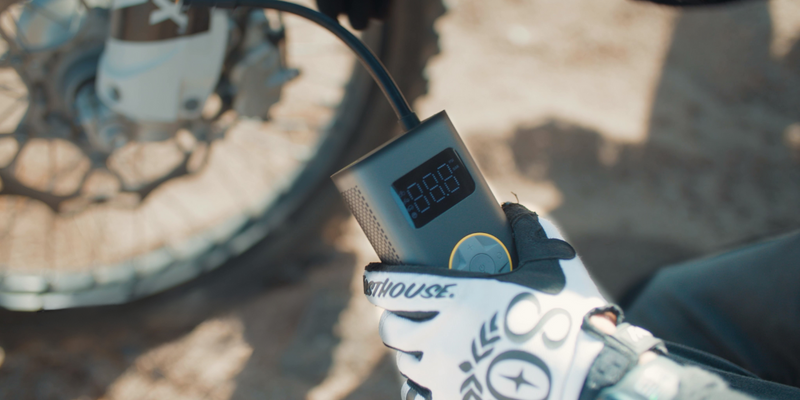
Why do we obsess over these specific numbers? It comes down to human biology. Research into hand-arm vibration shows that the human hand-arm system is most sensitive to frequencies between 30 Hz and 150 Hz.
This range aligns with the natural resonance of our bones and soft tissues. When a tool vibrates at 100 Hz, your hand doesn't just feel the vibration; it absorbs it. This is the primary cause of rapid hand fatigue. By shifting the tool's operating harmonics away from this 30-150 Hz "danger zone," we can effectively extend the comfortable usage time of a portable pump by 3 to 4 times.
The Role of Material Selection
The materials used in the pump head also play a role in how vibration is transmitted. For instance, brass components provide more mass, which can help "sink" or dampen certain vibrations compared to lighter aluminum. However, in portable tools, we must balance this mass against the need for a lightweight design. You can learn more about these trade-offs in our analysis of Brass vs. Aluminum in Material Engineering.
Compliance and Quality Assurance in Pump Engineering
As a manufacturer, building a "smooth" tool is not just about comfort; it is about meeting rigorous safety standards. According to the EU General Product Safety Regulation (EU) 2023/988, manufacturers are obligated to ensure that products do not pose a risk to the health and safety of consumers under normal or reasonably foreseeable conditions of use. Excessive vibration is a recognized health risk.
To ensure our damping systems remain effective over the life of the tool, we align our quality management with ISO Standards. This involves:
- Batch Testing: Randomly selecting units to verify that balance tolerances remain below the 0.5g-cm threshold.
- Thermal Stressing: Ensuring the 60-80 durometer rubber mounts do not harden or crack when exposed to the heat generated during extended use.
- Field Data Loops: We use customer support and warranty data to identify if certain usage patterns (like dropping the tool) compromise the internal damping alignment.
This commitment to "credibility math" is a core pillar of our philosophy, as detailed in The 2026 Modern Essential Gear Industry Report. We believe that trust is engineered through visible compliance and transparent technical claims.
How to Evaluate a Pump’s Vibration Profile
If you are in the market for a portable pump or pressure washer, you likely won't have a vibration meter handy. However, you can use these expert heuristics to "field test" a tool's damping quality:
- The Tabletop Test: Turn the tool on and place it on a flat, hard surface (like a workbench). A well-damped tool should stay relatively in place. If it "walks" or skitters across the table, the internal balancing is likely poor.
- The Grip Sensation: Hold the tool at its maximum setting. You should feel a "hum," not a "kick." If you feel a sharp, biting vibration in your fingertips, the tool is likely vibrating in that problematic 30-150 Hz range.
- The Sound Profile: Listen for high-pitched rattles. A rattle usually indicates that the internal components are not properly isolated from the shell, meaning the damping mounts are either too stiff or non-existent.
Methodology Note (Vibration Modeling): Our performance estimates are based on a deterministic scenario model using the following assumptions:
- Model Type: Scenario-based sensitivity analysis.
- Assumed User Grip: 20-30 Newtons of force (standard DIY grip).
- Ambient Temperature: 20°C (affects rubber durometer).
- Boundary Conditions: These damping effects may decrease if the tool is operated in sub-zero temperatures (where rubber hardens) or if the internal mounts are compromised by oil/chemical exposure.
Engineering for Modern Self-Reliance
In the world of DIY and home maintenance, power is easy to achieve. Precision and comfort are much harder. By investing in harmonic damping—through isolation, constrained layers, and precision balancing—we transform a "utility" into an "instrument."
When a tool doesn't fight you, you can work longer, clean more thoroughly, and maintain your equipment with greater accuracy. This is the essence of modern engineering: reducing the friction between the human and the machine so that the task at hand remains the focus, not the fatigue in your fingers.
Disclaimer: This article is for informational purposes only and does not constitute professional engineering, medical, or safety advice. Vibration-induced injuries can occur with any power tool; always follow the manufacturer's safety guidelines and take frequent breaks during extended use. If you experience persistent numbness or tingling in your hands, consult a medical professional immediately.
References
Continue reading
 Micron Matters: Why Inlet Filtration Protects Pump Pistons
Guide to micron-rated inlet filtration protecting hydraulic pumps from 5-10 micron particles. Learn about pump failure patterns, ROI...
Micron Matters: Why Inlet Filtration Protects Pump Pistons
Guide to micron-rated inlet filtration protecting hydraulic pumps from 5-10 micron particles. Learn about pump failure patterns, ROI...
 Diagnosing Motor Strain Caused by Hydraulic Backpressure
Covers the Three-Minute Rule, Temperature Differential Method, nozzle selection impact, and hydraulic horsepower optimization for commercial equipment.
Diagnosing Motor Strain Caused by Hydraulic Backpressure
Covers the Three-Minute Rule, Temperature Differential Method, nozzle selection impact, and hydraulic horsepower optimization for commercial equipment.

Leave a comment
This site is protected by hCaptcha and the hCaptcha Privacy Policy and Terms of Service apply.