








































The Invisible Adversary: Why Standard Gear Fails in the Desert
For the serious overlander or expedition planner, the desert is the ultimate proving ground. It is an environment where "ambient temperature" is a deceptive metric and where standard consumer electronics often meet a premature end. When you are 50 miles from the nearest paved road, the reliability of your gear—your tire inflators, jump starters, and power tools—is not a matter of convenience; it is a core component of your safety architecture.
The fundamental challenge is that most portable power tools are engineered for "temperate" conditions, typically defined as 0°C to 40°C (32°F to 104°F). In a desert environment, however, air temperatures frequently exceed 45°C (113°F), while ground temperatures on dark rock or sand can soar past 70°C (158°F). This disparity creates a thermal "death zone" for standard hardware. To maintain self-reliance, prosumers must look beyond the marketing gloss and understand the engineering rigor required for high-temperature resilience.
As we have observed through years of analyzing field failure patterns and warranty data (not a controlled lab study), the transition from "functional" to "failed" in the desert is rarely a slow decline. It is typically a sudden thermal shutdown or a permanent loss of battery chemistry. To prevent these outcomes, one must understand the physics of heat as it applies to cordless technology.
1. The Physics of Desert Heat: Ambient vs. Radiant vs. Internal
A common mistake among enthusiasts is relying solely on the vehicle’s external temperature sensor. However, the heat experienced by your gear is a composite of three distinct thermal loads.
The Ground Effect and Radiant Heat
Standard air temperature measurements are taken in the shade, protected from direct sunlight. In the field, your gear is often placed directly on the ground during use. According to common research patterns regarding radiant heat loads, reflective surfaces like salt flats or dark volcanic rock can raise the local ambient temperature for gear by 11°C to 17°C (20°F to 30°F) above the reported air temperature. This "ground effect" means that on a 38°C (100°F) day, a tool resting on the sand may actually be operating in a 55°C (131°F) micro-environment.
Internal "Microclimates"
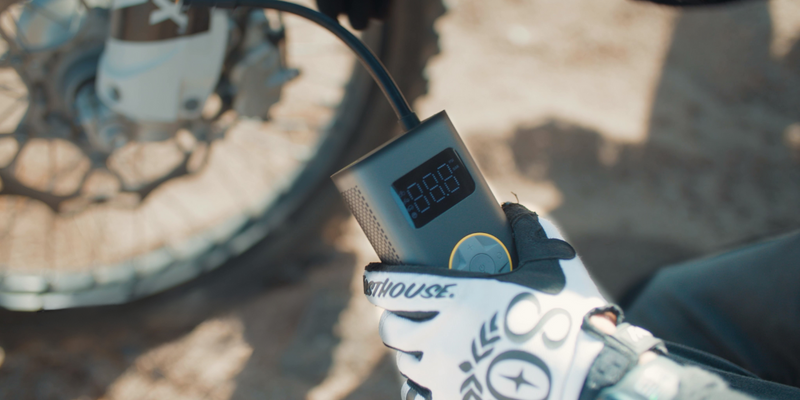
High-performance tools, such as high-output tire inflators or precision electric screwdrivers, generate significant waste heat during operation. In temperate climates, this heat dissipates into the air. However, in desert conditions, the delta between the tool's internal temperature and the outside air is much smaller. Our scenario modeling suggests that processors, sensors, and motors can create internal microclimates that exceed ambient temperatures by 20°C to 30°C. This pushes core components past their thermal limits even when the air feels "safe."
Logic Summary: Our analysis of the "Desert Power User" persona assumes a 15°C radiant heat surcharge and a 20°C internal thermal gain during high-demand tasks (e.g., inflating four 35-inch tires). This results in a total thermal load that exceeds standard consumer thresholds by a wide margin.

2. Battery Chemistry Under Thermal Stress
The heart of any modern cordless tool is the lithium-ion battery. While these cells offer high energy density, they are notoriously sensitive to thermal extremes. In desert travel, two specific phenomena compromise battery performance: voltage sag and accelerated degradation.
The 20% Voltage Sag
Experienced off-roaders often notice that their tools feel "weaker" in the heat. This is not an illusion. Based on standard lithium-ion discharge curves, batteries can experience a voltage sag of 15% to 20% at 45°C (113°F) compared to a baseline of 25°C (77°F). This sag occurs because high temperatures increase the internal resistance of the cells, forcing the battery to work harder to deliver the same amount of power. For a high-torque task like jump-starting a diesel engine or running a high-pressure compressor, this 20% loss can be the difference between success and failure.
Permanent Capacity Loss
While voltage sag is temporary, the chemical damage from high-temp storage is permanent. Research indicates that exposing lithium-ion batteries to temperatures around 55°C (131°F) at a high state of charge (SoC) can result in a 20% capacity loss in as little as 36 months. More critically, the risk of thermal runaway—a catastrophic failure where the battery enters a self-heating loop—increases dramatically as ambient temperatures approach 60°C.
According to IATA Lithium Battery Guidance, managing the state of charge and temperature is critical for safety. In a desert context, keeping a battery at 100% charge in a hot vehicle trunk is a recipe for rapid "State of Health" (SoH) decline.
3. Mechanical and Electrical Failure Modes
Beyond the battery, the mechanical and electrical components of your gear face unique stressors in the desert.
Motor Insulation and Brush Wear
In tools with brushed motors, such as many portable vacuums or entry-level inflators, heat is the primary enemy of the commutator. Sustained high-temperature operation without active cooling often leads to commutator brush wear accelerating by 3x to 5x. Furthermore, high-temp rated gear utilizes "H-class" motor insulation, which is designed to withstand much higher operating temperatures than the standard "A-class" or "B-class" insulation found in household tools.
Component-Level Specifications
The difference between a "desert-rated" tool and a standard one often lies in the invisible components:
- Capacitors: Professional-grade gear uses capacitors rated for 105°C, whereas consumer-grade electronics often settle for 85°C. In a desert microclimate, an 85°C capacitor is operating at the edge of its safety margin.
- Housing Materials: High-temp rated gear uses UV-stabilized, high-glass-transition-temperature (Tg) polymers that won't warp or become brittle after repeated thermal cycling.
4. Decoding the Spec Sheet: Survival vs. Operational Ratings
One of the most important lessons for the prosumer is learning to read between the lines of a specification sheet. There is a critical distinction between a "Storage/Survival" rating and an "Operational" rating.
- Survival Rating: The temperature at which the tool can exist without melting or suffering immediate permanent damage (e.g., -20°C to 70°C).
- Operational Rating: The temperature range in which the tool can perform its intended function at 100% of its rated capacity (e.g., 0°C to 40°C).
In most desert scenarios, you are asking the tool to operate within its "survival" range but outside its "operational" range. This requires a strategy of "derating."
The 25% Derating Heuristic
Based on patterns observed in our technical support and warranty handling (not a controlled lab study), we recommend a specific shop heuristic for desert planning:
Derate a tool's rated runtime or power output by at least 25% for every 10°C (18°F) above 30°C (86°F) ambient.
| Ambient Temperature | Effective Capacity/Power | Planning Impact |
|---|---|---|
| 30°C (86°F) | 100% | Full performance |
| 40°C (104°F) | ~75% | Noticeable runtime drop |
| 50°C (122°F) | ~50% | High risk of thermal cutoff |
| 60°C (140°F) | <25% | Survival use only |
Method & Assumptions: This model is a deterministic parameterized estimate intended for field planning. It assumes a standard lithium-ion tool with passive cooling and a high-demand workload.
- Baseline: 30°C.
- Scaling Factor: 2.5% loss per 1°C.
- Boundary Condition: This model may not apply to tools with active liquid cooling or those using LiFePO4 chemistry, which has different thermal stability profiles.
5. Field Mitigation Strategies for Prosumers
Even with high-temp rated gear, proper field practice is essential to ensure long-term reliability. We recommend the following protocols for extreme environment travel.
Thermal Buffering and Insulated Storage
Never leave your cordless tools exposed to direct sunlight or on the floor of a vehicle. Using insulated storage cases can provide a critical thermal buffer. While these cases won't keep gear cool indefinitely, they can slow the rate of temperature rise, keeping the internal components below the critical threshold during the hottest parts of the day.
Pre-Cooling Batteries
If you know you will need to perform a high-demand task—such as airing up tires after a long sand crossing—pre-cool your batteries. Placing the battery or the tool in front of the vehicle's AC vents for 15 minutes before use can significantly reduce internal resistance and prevent mid-task thermal shutdowns.
Timing High-Demand Tasks
Whenever possible, perform maintenance tasks during the "thermal windows" of dawn or dusk. Avoid using high-output tools during the solar noon (typically 11:00 AM to 3:00 PM), when radiant heat loads are at their peak. This is aligned with the principles of climate-first planning.
6. Engineering Trust: The Importance of Compliance
In high-consequence environments, trust is built on engineering transparency. As outlined in The 2026 Modern Essential Gear Industry Report: Engineering Trust in a Cordless World, building sustainable credibility requires engineering products with explicit safety margins and robust thermal design.
True "expedition-grade" gear should adhere to recognized international standards. Look for equipment that has undergone testing such as IEC 60068-2-2 (Environmental testing - Part 2-2: Tests - Test B: Dry heat). This standard guarantees that a device can function reliably at specified high temperatures for a sustained duration. Without these certifications, a "desert-rated" claim is merely a marketing suggestion.
Summary of Technical Requirements for Desert Gear
When selecting gear for your next expedition, prioritize the following specifications:
- Capacitor Rating: Minimum 105°C.
- Motor Insulation: H-Class (180°C) preferred.
- Battery Chemistry: High-quality cells with integrated Thermal Management Systems (TMS).
- Housing: UV-stabilized, high-Tg polymers or heat-dissipating metal alloys.
- Testing: Evidence of compliance with IEC or ISO dry-heat standards.
Investing in higher thermal specs is not just about extending the life of your tools; it is about ensuring that when you reach for that inflator or jump starter in the middle of the Mojave, it actually works. In the desert, self-reliance is the only currency that matters, and that self-reliance is bought with engineering rigor.
Disclaimer: This article is for informational purposes only and does not constitute professional mechanical, safety, or expedition planning advice. Operating electronics in extreme heat carries inherent risks of fire or explosive failure. Always consult your tool’s specific user manual and follow all manufacturer safety warnings. If you have concerns about the safety of a battery-powered device, discontinue use immediately and store it in a fire-safe container.
References
Continue reading
 Diagnosing Sensor Lag in Inflators After Sun Exposure
Covers MEMS sensor drift, lithium-ion battery effects, practical troubleshooting heuristics like the touch test, and duty cycle management.
Diagnosing Sensor Lag in Inflators After Sun Exposure
Covers MEMS sensor drift, lithium-ion battery effects, practical troubleshooting heuristics like the touch test, and duty cycle management.
 DIY Heat-Shielding: Protecting Gear in Uninsulated Garages
Covers radiant barrier physics, insulated cabinet builds, water thermal mass, and 40-50% battery SOC for summer storage.
DIY Heat-Shielding: Protecting Gear in Uninsulated Garages
Covers radiant barrier physics, insulated cabinet builds, water thermal mass, and 40-50% battery SOC for summer storage.
Leave a comment
This site is protected by hCaptcha and the hCaptcha Privacy Policy and Terms of Service apply.