




















Identifying Calibration Drift: When to Renew Your Precision Gear
Precision is not a static state; it is a perishable commodity. For professionals and serious DIY enthusiasts, the integrity of a project often rests on a few millimeters or a fraction of a Newton-meter. However, even the highest-quality precision tools are subject to the laws of physics. Over time, internal sensors and mechanical components undergo a process known as calibration drift—a subtle, often invisible shift in measurement or output accuracy that can compromise the quality of your work.
Note: This guide is authored by the Fanttik engineering team, drawing on internal quality-control data, repair logs, and laboratory testing of precision fastening tools.
Quick Verdict: The Calibration Checklist
If you are looking for an immediate decision, use this heuristic based on your usage environment:
- Workshop/Professional: If your manual rework rate (screws needing adjustment) increases by >5%, or if you notice inconsistent seating depths across 10 consecutive fasteners, seek professional calibration or renewal immediately.
- Electronics Lab: In climate-controlled settings, verify tools every 18–24 months.
- DIY/Occasional Use: For tools under $200, renewal is typically more cost-effective than professional calibration if the tool shows signs of thermal sensitivity or physical impact.
The Mechanics of Calibration Drift
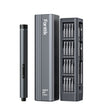
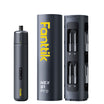
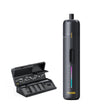
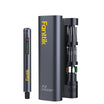
Calibration drift is the gradual deviation of a tool's performance from its specified accuracy. In cordless precision tools, such as the Fanttik E1 Max Electric Screwdriver, this drift typically originates from mechanical wear, sensor aging, and environmental stress.
Mechanical Fatigue and Component Wear
Every time a torque clutch engages, microscopic amounts of material are displaced. In precision screwdrivers, the internal spring-loaded clutches or electronic Hall-effect sensors rely on tight tolerances. As these components wear, the "break-away" torque—the point at which the tool stops driving—can shift. According to the ISO 10012:2003 standard for measurement management systems, maintaining a documented measurement uncertainty budget is essential for ensuring that these shifts do not exceed acceptable limits.
Sensor Degradation in Electronic Drivers
Modern precision tools frequently use electronic sensors to monitor torque and RPM. These sensors can "drift" due to the degradation of internal circuitry or the accumulation of magnetic interference. Based on patterns identified in Fanttik’s repair logs, a common symptom is a 5–10% increase in manual rework for cross-threaded or unevenly seated screws, indicating the driver's output is no longer predictable.
Environmental Catalysts
Precision tools are sensitive to their surroundings. Shops with significant daily temperature swings or high particulate dust (such as carbon fiber or wood dust) see accelerated drift. For example, NIST Handbook 44 highlights how environmental factors impact the tolerances of measuring devices. A tool used daily in a non-climate-controlled environment may require verification every 6–12 months, whereas one in a stable lab environment might remain accurate for longer.

Quantitative Impact: The Cost of "Good Enough"
Continuing to use a tool that has drifted is an economic gamble. To demonstrate this, we modeled a scenario involving a professional electronics assembly technician.
Scenario Modeling: The Assembly Productivity Gap
This model illustrates the impact of a performance slowdown caused by calibration drift. When a tool drifts, the technician often loses confidence, leading to "hesitation cycles" where they manually verify the seating of every screw.
| Parameter | Value | Unit | Rationale / Assumption |
|---|---|---|---|
| Daily Screw Count | 200 | count | Typical mid-volume electronics assembly workload |
| Optimal Drive Time | 3 | s | Baseline from Fanttik E1 Max lab specs |
| Drifted Drive Time | 5 | s | Estimated 20% performance/confidence degradation |
| Manual Verification | 12 | rotations | Heuristic: 2 full turns per screw to "feel" the torque |
| Productive Time Lost | ~43 | min/day | Calculated: (200 screws × 2s delay) + (200 × 10s verification) |
Modeling Note: This analysis is a representative scenario based on industrial engineering time-motion principles. It assumes a linear relationship between tool drift and technician hesitation. Actual results vary based on material hardness and operator skill.
Over a 250-day work year, this "minor" drift can result in approximately 180 hours of lost productivity. Furthermore, the ergonomic cost is significant. The need for manual verification increases wrist rotations from near-zero to roughly 2,400 additional rotations daily, increasing the risk of repetitive strain injuries.
Identifying the Symptoms of Tool Aging
How do you know if your tool is drifting without a laboratory-grade torque tester? We recommend looking for these specific "red flags."
1. The "Cam-Out" Pattern
If you notice that bits are slipping out of screw heads (cam-out) more frequently on the same torque setting that used to work perfectly, the tool’s torque delivery has likely become inconsistent. This is often caused by the clutch failing to disengage at the precise threshold.
2. Uneven Seating in Multi-Screw Patterns
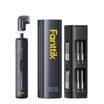
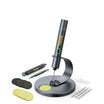
When assembling a device with multiple fasteners, look for variations in screw head depth. If a tool like the Fanttik S1 Pro Cordless Electric Screwdriver is set to a specific level but leaves some screws proud while over-tightening others, the internal metrology may be failing.
3. Thermal Sensitivity
Does the tool perform differently at 9:00 AM than it does at 3:00 PM? Heat expansion can cause sensor drift. If your "strip risk" increases as the shop warms up, the tool's internal compensation circuitry may be reaching its limit.
Field Observation: These symptoms reflect the tool's inability to maintain a stable "measurement uncertainty budget." This is aligned with the Fanttik 2026 Modern Essential Gear Industry Report, which emphasizes that professional trust is a function of predictable performance.
DIY Verification: The "Check-Block" Method
To independently verify if your tool has drifted beyond acceptable limits, perform this simple test:
- Tools Needed: A manual torque wrench (with a current calibration certificate), a test block (hardwood or metal with pre-drilled holes), and 10 new fasteners.
- Step 1: Use your electric driver to drive 10 screws into the block at a specific torque setting.
- Step 2: Use the manual torque wrench to measure the "breakout torque" (the force required to move the screw further).
- Acceptable Tolerance: For prosumer tools, the average breakout torque should be within ±10% of the tool's rated setting. If the variance exceeds 15% or the standard deviation across 10 screws is high, the tool requires service or replacement.

The Decision Framework: Calibrate or Renew?
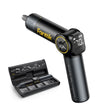
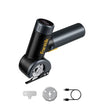
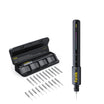
When drift is confirmed, you face a choice: send the tool for professional calibration or replace it with a new unit, such as the Fanttik S2 Pro Cordless Electric Screwdriver.
The Cost-Benefit Threshold
For high-end industrial torque drivers costing upwards of $2,000, professional calibration is the logical path, typically costing 5–15% of the replacement value. However, for prosumer and mid-range precision tools, the math changes significantly.
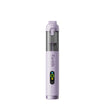
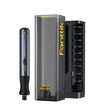
Industry estimates suggest that professional calibration for a tool under $200 often costs between $75 and $150. This represents 40–75% of the tool's replacement cost. When you factor in the downtime and the fact that newer models—like the Fanttik K2 Nano 3.7V Precision Power Drill—often feature improved battery technology and more refined motor control, renewal is often the more pragmatic choice.
When Renewal is Mandatory
We recommend immediate renewal in the following cases:
- Battery Degradation: If accuracy drift is accompanied by a significant drop in battery runtime, voltage fluctuations may be destabilizing the sensors.
- Physical Impact: If a precision tool has been dropped from a height of more than one meter onto a hard surface, internal mechanical alignment is likely compromised.
- Compliance Requirements: For work covered by the EU General Product Safety Regulation (EU) 2023/988, using tools with verified traceability is a baseline requirement for liability management.
Best Practices for Extending Tool Life
While all tools eventually drift, you can slow the process by adhering to these protocols:
- Stable Storage: Store gear in a climate-controlled environment. Avoid leaving tools in vehicles where temperature cycles accelerate component fatigue.
- Particulate Management: Use low-pressure compressed air to clear dust from the chuck. Particulate ingress is a leading cause of mechanical friction that mimics torque drift.
- Torque Setting Hygiene: If using a mechanical clutch, avoid storing the tool at its maximum torque setting for long periods to prevent spring fatigue.
Engineering Trust in Your Toolkit
The transition from a reliable tool to a liability is often quiet. By recognizing the subtle signs of calibration drift—the lost "click," the increased rework, and the thermal inconsistency—you protect the quality of your craft. For the modern professional, renewing gear is not just an expense; it is a strategic reinvestment in accuracy.
As noted in the Fanttik 2026 Modern Essential Gear Industry Report, the primary competitive advantage in a cordless world is trust. When the metrology fails, the most professional action is to recognize the limit and upgrade to a tool that can once again deliver repeatable, verifiable results.
Disclaimer: This article is for informational purposes only and does not constitute professional engineering or metrological advice. Tool calibration and safety requirements vary by industry and region; always consult your equipment's manual and local safety regulations before performing high-stakes assembly.
References
- EU General Product Safety Regulation (EU) 2023/988
- ISO 10012:2003 Measurement Management Systems
- NIST Handbook 44: Specifications, Tolerances, and Other Technical Requirements for Weighing and Measuring Devices
- The 2026 Modern Essential Gear Industry Report: Engineering Trust in a Cordless World
- ICH Q9 Guideline on Quality Risk Management
Continue reading
 Why Metrology Accuracy is Vital for Electronics Safety Compliance
Covers ISO standards, torque error impact modeling, tool selection credibility, and weekly calibration for lithium-ion battery safety.
Why Metrology Accuracy is Vital for Electronics Safety Compliance
Covers ISO standards, torque error impact modeling, tool selection credibility, and weekly calibration for lithium-ion battery safety.
 Digital vs. Mechanical: Evaluating Torque Consistency in Tools
A guide to digital sensors vs. mechanical clutches in tools, covering calibration drift, cold sensitivity, and using industry...
Digital vs. Mechanical: Evaluating Torque Consistency in Tools
A guide to digital sensors vs. mechanical clutches in tools, covering calibration drift, cold sensitivity, and using industry...
Leave a comment
This site is protected by hCaptcha and the hCaptcha Privacy Policy and Terms of Service apply.