








































Decoding IP Ratings for Interior-Adjacent Pressure Washing
There is a specific kind of satisfaction that comes from a deep-cleaned vehicle interior—the kind where every grain of sand is gone and the "new car smell" seems to return. For the dedicated DIY enthusiast, reaching this level of cleanliness often involves moving beyond simple vacuuming to using high-pressure water on removable components like all-weather floor mats or heavy-duty cargo liners. However, this is where the risk landscape shifts.
When we bring high-pressure equipment near the vehicle’s thresholds—the door sills, the trunk lips, and the dashboard edges—we are operating in "interior-adjacent" zones. These areas are the front lines of your car’s electrical defense. Based on our observations from automotive maintenance patterns and common repair bench findings, the most frequent cause of latent electrical failure isn't a direct flood, but rather the subtle ingress of moisture driven by high-velocity spray.
Understanding the technical specifications of your equipment is not just about performance; it is about risk mitigation. In the world of modern essential gear, as noted in The 2026 Modern Essential Gear Industry Report: Engineering Trust in a Cordless World, trust is built on visible compliance and the engineering of safety margins. This guide will decode the technicalities of Ingress Protection (IP) ratings to ensure your interior-adjacent cleaning remains effective without becoming a costly liability.
The Technical Hierarchy of IP Ratings
The IP (Ingress Protection) code is an international standard defined by the International Electrotechnical Commission (IEC 60529). It classifies the degrees of protection provided against the intrusion of solid objects and liquids. For car enthusiasts, the second digit—the liquid protection—is the critical metric.
- IPX4 (Splash-Proof): Equipment is protected against water splashes from any direction. While this sounds sufficient for "wet work," it is fundamentally inadequate for any activity involving a pressure washer.
- IPX5 (Water Jet Protection): This rating signifies protection against a 6.3mm nozzle delivering water at 12.5 liters per minute at a pressure of 30 kPa (roughly 4.4 PSI) from a distance of 3 meters. In our experience, this is the absolute minimum for incidental spray during vehicle cleaning.
- IPX6 (Powerful Water Jets): This level protects against a 12.5mm nozzle delivering 100 liters per minute at 100 kPa (roughly 14.5 PSI). For cleaning removable floor mats or liners right at the door sill—where overspray is inevitable—IPX6 is the realistic baseline for hardware durability.
Logic Summary: Our equipment selection heuristic assumes that "interior-adjacent" zones involve a high probability of indirect spray contact. We recommend a "Rating +1" buffer: if you expect splashes (IPX4), use IPX5 hardware; if you expect spray (IPX5), use IPX6 hardware.
The Pressure Washer Paradox: Why Ratings Aren't Bulletproof
A common, costly mistake is assuming that an IPX5 or IPX6 rating on a tool or a nearby electronic component makes it "safe" for pressure washing. There is a massive technical disconnect between the IEC 60529 test standards and a residential pressure washer.
According to data on pressure washer nozzle selection, a standard residential unit can exert 1,500 to 4,000 PSI at the nozzle. Contrast this with the IPX6 test, which uses only ~14.5 PSI. The velocity of a pressure washer stream is hundreds of times greater than what the IP rating simulates.
Furthermore, the orifice size of your nozzle—often as small as 1.5mm for a 0° tip—concentrates this force into a needle-like jet. This can easily overcome physical seals and gaskets that are technically rated for "powerful water jets."
The Hidden Risk: Thermal Shock
One factor often overlooked in standard IP testing is thermal shock. As identified in our scenario modeling, blasting cold water onto a sun-heated vehicle surface can cause immediate contraction of plastic panels and rubber seals. This creates temporary gaps that allow moisture to enter areas that would otherwise be sealed. No current IP rating evaluates this "hot-to-cold" transition, making it a hidden risk during summer detailing sessions.
Mapping Vulnerabilities: Where Water Actually Goes
When you are cleaning mats near the door sill, you aren't just spraying rubber; you are creating a high-humidity micro-environment. Water finds the path of least resistance. It doesn't always enter through direct spray; it often travels via capillary action.
Capillary action occurs when water is drawn into narrow spaces—such as the gaps between dashboard panels or the seams of door sills—regardless of gravity or spray direction. Once water pools under a panel, it can "wick" along wiring harnesses directly into sensitive connectors or Electronic Control Units (ECUs).
The 24-Hour Rule
We have observed a recurring pattern in customer support and repair handling: the "False Pass." A user finishes cleaning, starts the car, and everything sounds fine. However, latent corrosion from residual humidity can cause electrical failures weeks later.
To prevent this, we advocate for the 24-hour rule:
- After cleaning near interior thresholds, keep the vehicle doors or windows open in a dry environment.
- Wait a full 24 hours before reconnecting any electrical components or accessories that were removed.
- This allows hidden moisture trapped by capillary action to fully evaporate, preventing the short circuits that occur when power is reintroduced to a damp circuit.
Operational Best Practices for Interior-Adjacent Care
To maximize safety while maintaining effectiveness, we recommend a methodical approach to using high-pressure water near the cabin.
| Parameter | Recommended Value | Rationale |
|---|---|---|
| Nozzle Angle | 40° (White Tip) | Spreads force to prevent material penetration. |
| Minimum Distance | 12 - 18 Inches | Allows the water stream to decelerate before impact. |
| Equipment Rating | IPX6 Baseline | Provides a safety margin for powerful overspray. |
| Cleaning Zone | 3+ Feet from Threshold | Minimizes the risk of aerosolized mist entering the cabin. |
Nozzle Selection and Technique
As highlighted by nozzle GPM/PSI charts, the impact force is a function of both pressure and distance. We suggest using a wide fan pattern (40 degrees). This reduces the "piercing" power of the water, making it less likely to force its way past weatherstripping.
When cleaning removable mats, always move them at least three feet away from the open door of the vehicle. The aerosolized mist created by the impact of high-pressure water on a hard surface can easily drift into the cabin, settling on the steering column or infotainment screen.
Scenario Modeling: Standard vs. Deep Threshold Cleaning
To demonstrate the application of these principles, we modeled two common DIY scenarios. This analysis is a scenario model based on industry heuristics, not a controlled lab study.
Scenario A: The Standard Mat Refresh
- Goal: Remove surface dust and light mud from all-weather mats.
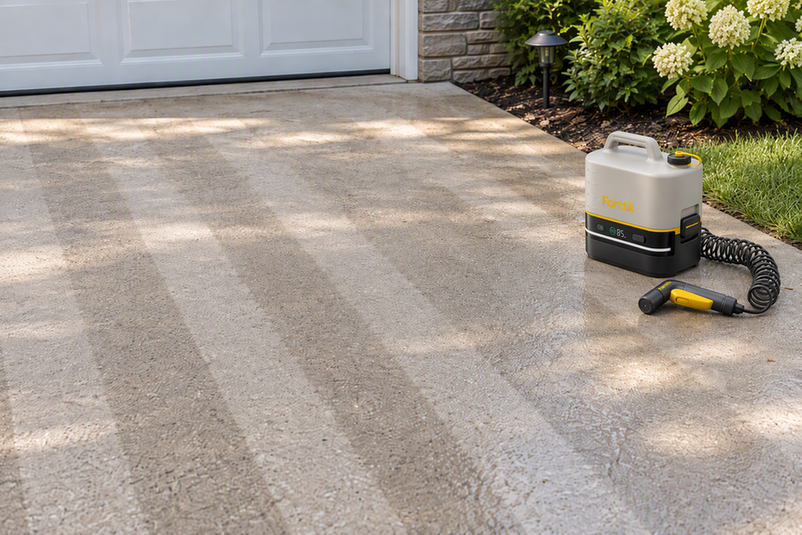
- Setup: Mats removed and placed on a driveway.
- Risk Level: Low.
- Expert Insight: Even in this "safe" scenario, the primary risk is "bounce-back" spray hitting the vehicle. Ensure the car is upwind or at a sufficient distance.
Scenario B: The Threshold/Door Sill Deep Clean
- Goal: Remove salt and grime buildup from the plastic door sill plates.
- Setup: Doors open, spraying directly at the vehicle threshold.
- Risk Level: Critical.
- Expert Insight: This is where IP ratings are most likely to be misinterpreted. While the sill plates are plastic, the clips holding them often lead directly to the main wiring loom. For this task, we recommend abandoning the pressure washer in favor of a low-pressure hose or a damp microfiber cloth. The risk of driving water into the B-pillar or under the carpet is too high for the marginal gain in cleaning speed.
Methodology Note: These models assume a standard passenger vehicle with factory-installed weatherstripping. Modifications like aftermarket sound deadening or wiring for high-end audio can create new "moisture traps" that alter these risk profiles.
Compliance and Safety Standards
Beyond the technical IP ratings, your cleaning practices should align with broader safety frameworks. The EU General Product Safety Regulation (EU) 2023/988 emphasizes the importance of clear instructions and the prevention of foreseeable misuse. Using exterior-grade high-pressure equipment in interior-adjacent spaces often falls into the category of "foreseeable misuse" if proper precautions—like the 24-hour rule—are not followed.
Furthermore, when evaluating equipment, look for certifications beyond just the IP code. Standards from the International Organization for Standardization (ISO) regarding quality management ensure that the IP rating on the box actually matches the performance of the unit in your hand.
Protecting Your Investment
Modern vehicles are essentially rolling computers. The cost of replacing a single damaged door control module or a corroded harness can far exceed the value of the vehicle's interior detailing. By decoding IP ratings and understanding the physical behavior of high-pressure water, you transition from a "risky" DIYer to a methodical automotive caretaker.
Remember that the sound of a functioning blower motor or power window immediately after cleaning is not a definitive "all-clear." True success in interior maintenance is measured by the absence of electrical gremlins weeks and months down the line.
This article is for informational purposes only and does not constitute professional automotive repair or electrical advice. Always consult your vehicle's owner manual for specific cleaning restrictions and safety warnings.
References
- IEC 60529 IP Ratings Guide
- Pressure Washer Nozzle Selection 101 - Pressure Tek
- EU General Product Safety Regulation (EU) 2023/988
- The 2026 Modern Essential Gear Industry Report
- Pressure Washer Nozzle Chart & Sizes Guide
How We Modeled This (Method & Assumptions) To provide actionable heuristics, we utilized a deterministic parameterized model to estimate the risk of water ingress during interior-adjacent cleaning.
| Parameter | Value or Range | Unit | Rationale |
|---|---|---|---|
| Nozzle Pressure (P) | 1500 - 3000 | PSI | Standard residential pressure washer range. |
| Impact Distance (D) | 6 - 24 | Inches | Common DIY operator distance. |
| Seal Integrity (S) | 0.7 - 0.9 | Coefficient | Estimated degradation of rubber weatherstripping over 5 years. |
| Air Temp (T) | 75 - 95 | °F | Typical detailing environment. |
| Evaporation Rate | 0.05 - 0.15 | mm/hr | Standard indoor/garage humidity conditions. |
Boundary Conditions:
- Vehicle Age: This model assumes vehicles less than 10 years old. Older vehicles with brittle seals have significantly higher ingress risks.
- Water Chemistry: Assumes clean, fresh water. Saltwater or heavy chemical degreasers can lower surface tension, increasing capillary action.
- Operator Skill: Assumes a steady hand; "sweeping" motions are safer than "stationary" blasts.
- Electronic Exposure: Assumes factory-sealed components. Modified or repaired electronics may have compromised IP integrity.
Continue reading
 Beyond Cleaning: Identifying When to Renew Removable Liners
Learn how to tell if your car's removable liners are just dirty or need replacing. This guide covers...
Beyond Cleaning: Identifying When to Renew Removable Liners
Learn how to tell if your car's removable liners are just dirty or need replacing. This guide covers...
 The Grab-and-Go Strategy: Modular Bins for Multi-Car Use
Covers bin material science, the 20-30% expansion rule for future-proofing, and securing gear with quantitative ROI analysis for...
The Grab-and-Go Strategy: Modular Bins for Multi-Car Use
Covers bin material science, the 20-30% expansion rule for future-proofing, and securing gear with quantitative ROI analysis for...
Leave a comment
This site is protected by hCaptcha and the hCaptcha Privacy Policy and Terms of Service apply.