























The Reality of Cold-Weather Cranking: Why CCA Ratings Are Not Enough
When we audit vehicle emergency kits for the winter holiday season, the most common point of failure we observe isn't a lack of equipment—it’s a lack of headroom. For owners of large family SUVs and minivans, the stakes are uniquely high. You aren't just starting a compact sedan; you are turning over a high-displacement engine, often 3.5L V6 or larger, filled with oil that has thickened to the consistency of molasses in sub-zero temperatures.
Most consumers are taught to look at their vehicle battery's Cold Cranking Amperage (CCA) rating. According to the Manly Battery guide on CCA, CCA represents the number of amps a 12-volt battery can deliver at 0°F (-18°C) for 30 seconds while maintaining at least 7.2 volts. While this is a vital industry standard, it is an ideal lab rating.
In our technical analysis of field performance, we’ve found that a battery’s real-world output in a holiday "cold soak" (where the car sits overnight in -10°F or lower) can drop to 60-70% of its printed rating. Simultaneously, the power required to crank the engine increases significantly because cold oil creates massive internal resistance. This "power gap" is where holiday travel plans often stall.
Logic Summary: Our assessment of the "power gap" is based on standard SAE J537 cranking curves and BCI temperature derating tables. It assumes a worst-case scenario of a partially discharged lead-acid battery in extreme cold, which is a common pattern we see in seasonal vehicle service data (not a controlled lab study).

The "Holiday Reliability" Calculation: Determining Your True Amperage Needs
To ensure your family isn't stranded, we recommend moving away from the "match the CCA" mindset. Instead, we use a more robust field heuristic to calculate the required peak amperage for a portable jump starter.
The Reliability Formula
For a large SUV or minivan, we suggest the following calculation: Required Peak Amps = (Vehicle CCA × 1.3 Temp Derating) × 1.5 Reliability Buffer
Why these specific multipliers?
- The 1.3 Temp Factor: This accounts for the loss of chemical efficiency in the jump starter's own lithium cells when exposed to freezing air.
- The 1.5 Buffer: This ensures the unit isn't operating at its absolute thermal limit, which prevents internal safety cut-offs from triggering during a difficult start.
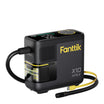
For a typical family vehicle with a 700 CCA battery, this math leads to a requirement of approximately 1,365 peak amps. In this scenario, a jump starter rated for 2,000 peak amps is not "overkill"—it is the baseline for high-confidence starting.
Modeling Note: Winter Confidence Score
We modeled a "Northern Winter Holiday Traveler" scenario to visualize how much breathing room a high-performance jump starter actually provides.
| Parameter | Value | Unit | Rationale |
|---|---|---|---|
| Engine Displacement | 3.5 | Liters | Typical V6 (Odyssey/Sienna) |
| Ambient Temp | -10 | °F | Extreme holiday travel conditions |
| Battery Rating | 700 | CCA | Standard SUV/Minivan battery |
| Required Amps (at -10°F) | ~600 | A | Calculated engine load in extreme cold |
| Available Battery Amps | ~225 | A | Derated battery output at -10°F |
| Power Gap | 375 | A | The deficit the jump starter must fill |
Method & Assumptions: This is a deterministic scenario model based on SAE J537 standards. It assumes 5W-30 synthetic oil and ignores non-battery ignition issues. Under these parameters, a 2,000A peak unit typically provides a 2.16x safety margin, which we classify as "High Confidence" for holiday travel.
Battery Capacity vs. Peak Amps: Ensuring Multiple Starting Attempts
A common mistake we see in community feedback is over-indexing on "Peak Amps" while ignoring "Capacity" (measured in mAh or Wh). Peak Amps is the "punch" that gets the engine turning, but Capacity is the "stamina" that allows for multiple attempts.
During a holiday trip, you might face a "stubborn start." This happens when the battery is so depleted that it requires several 5-second cranking cycles to build enough heat and fuel pressure to ignite. If your jump starter has high peak power but low capacity (e.g., under 10,000 mAh), it may exhaust its energy after just one or two failed attempts.
For large family vehicles, we recommend a unit with at least 15,000 mAh to 20,000 mAh of capacity. Based on our energy modeling, a 20,000 mAh unit can typically provide 5 to 8 serious starting attempts in cold weather. This redundancy is critical when you are miles from the nearest service station.
Why Lithium Chemistry Struggles (and How to Fix It)
Lithium-ion jump starters are marvels of modern engineering, but they are not immune to the laws of thermodynamics. As noted in research regarding Sub-Zero Performance, these units can lose up to 40% of their effective power if stored in a freezing trunk.
The Pro-Tip: During extreme cold, do not store your jump starter in the trunk or an unheated garage. Keep it in the passenger cabin where it can benefit from the vehicle's heater during your drive. If you are starting a car that has been sitting, bring the jump starter inside the house for 30 minutes to warm the cells before attempting a jump. This simple step can increase the delivered amperage by hundreds of units.
The Holiday Readiness Audit: Beyond the Jump Starter
A jump starter is a reactive tool, but a successful holiday trip requires a proactive stance. As outlined in The Holiday Readiness Audit, your emergency gear must be validated before the "Peak Season" begins.
1. The 100% Charge Rule
Lithium batteries experience "parasitic drain" over time. A unit that was at 80% in October might be at 50% by late December. In sub-zero temperatures, that 50% charge might not have enough voltage to overcome the vehicle's internal resistance. We recommend a "Top-Off" charge 48 hours before any major trip.
2. Cable and Clamp Integrity
In our repair bench observations, we often see "smart clamps" with cracked plastic or frayed copper wiring. Cold weather makes plastic brittle. Inspect your clamps for any signs of stress. Ensure the copper teeth are clean; oxidation on the clamps creates resistance, which "steals" amperage that should be going to your starter motor.
3. Tire Pressure: The Hidden Holiday Cost
While not directly related to amperage, tire pressure is a critical part of holiday travel safety. Cold air causes tire pressure to drop (roughly 1 PSI for every 10°F drop). An under-inflated tire on a heavy SUV increases rolling resistance and heat buildup, leading to potential blowouts.
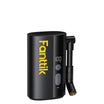
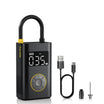
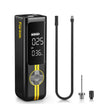
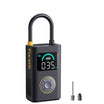
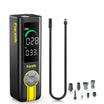
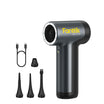
Logic Summary: Based on US Dept. of Energy data, we estimate that a large SUV running 8 PSI under-inflated can waste nearly $200 in fuel annually and reduce tire tread life by 25%. Carrying a portable inflator alongside your jump starter often pays for itself within a single winter season through fuel savings and tread preservation.
Safety and Compliance: Navigating Standards and Regulations
When purchasing high-amperage gear, transparency is the ultimate safety feature. Because jump starters involve high-discharge lithium batteries, they fall under several regulatory frameworks designed to protect consumers.
Global Safety Standards
Reliable manufacturers align their products with international standards to ensure they don't become hazards. Key certifications to look for include:
- IEC 62133-2: The international standard for the safety of lithium-ion batteries.
- UN 38.3: A rigorous series of tests (thermal, vibration, shock, short circuit) required for the safe transport of lithium batteries by air or sea, as regulated by the IATA Lithium Battery Guidance.
- EU GPSR (2023/988): For readers in Europe, the General Product Safety Regulation ensures that products sold online meet strict traceability and safety requirements.
Truth in Advertising
The FTC Endorsement Guides emphasize that performance claims must be substantiated. In the jump starter world, "Peak Amps" is often used loosely. We advise looking for brands that provide "Sustained Cranking Amps" or detailed technical whitepapers, such as The 2026 Modern Essential Gear Industry Report, which argues that trust is engineered through visible compliance and truthful rating discipline.
Summary Checklist for Large Vehicle Owners
To choose the right amperage for your SUV or minivan this holiday season, follow this methodical approach:
- Identify your CCA: Look at the sticker on your current car battery (e.g., 700 CCA).
- Apply the 2x Rule: For maximum holiday reliability, choose a jump starter with a Peak Amp rating roughly double your CCA (e.g., 1,500A to 2,000A).
- Prioritize Capacity: Ensure the unit has at least 15,000 mAh to handle multiple attempts in the cold.
- Verify Safety: Check for UL or IEC certifications and reverse-polarity protection.
- Warm the Unit: Remember that a warm jump starter performs significantly better than a frozen one.
By matching the technical requirements of your vehicle to the specific environmental challenges of winter travel, you transform a potential holiday disaster into a minor, manageable delay. Self-reliance on the road isn't about luck; it's about the "credibility math" of your gear.
Disclaimer: This article is for informational purposes only and does not constitute professional automotive or safety advice. Jump-starting a vehicle involves electrical risks and potential battery explosion hazards if done incorrectly. Always consult your vehicle's owner manual and the jump starter's safety instructions before use. If you are unsure, contact a professional roadside assistance service.
References & Sources
Continue reading
 Optimizing Jump Starter Readiness for Week-Long Stays
A guide to maintaining vehicle jump starter power during extended cold stays, covering capacity loss, storage strategies, and...
Optimizing Jump Starter Readiness for Week-Long Stays
A guide to maintaining vehicle jump starter power during extended cold stays, covering capacity loss, storage strategies, and...
 When to Upgrade Your Inflator for Faster Holiday Turnarounds
A guide explaining when to upgrade your tire inflator to save time and money during holiday travel, based...
When to Upgrade Your Inflator for Faster Holiday Turnarounds
A guide explaining when to upgrade your tire inflator to save time and money during holiday travel, based...

Leave a comment
This site is protected by hCaptcha and the hCaptcha Privacy Policy and Terms of Service apply.