










































Navigating Wet Terrain: Safety Margins for Kids' Ride-Ons
There is a specific kind of joy in watching a child zoom across the yard on an electric ride-on, their face lit up with the thrill of independence. As parents, we want to foster that spirit of adventure, but we also carry the quiet weight of responsibility for their safety. When the weather turns or the morning dew lingers on the grass, a common question arises in our customer support inbox: "Is it actually safe for them to ride right now?"
The reality of outdoor play is rarely as pristine as a laboratory test. While many high-quality electric scooters and ride-ons are built with moisture in mind, the gap between "water-resistant" and "waterproof" is where most electrical failures occur. We have spent years analyzing how these vehicles perform in real-world family environments, and we’ve found that the safety margins are often thinner than parents realize.
In this guide, we will break down the technical nuances of Ingress Protection (IP) ratings, identify the "hidden" failure points that even the best engineering can't entirely eliminate, and provide a practical framework for deciding when to let them ride and when to keep the wheels in the garage.
The IP Rating Reality Check: Lab vs. Lawn
When you look at the specifications for a product like the FanttikRide C10 Apex Electric Scooter for Kids, you will often see an IP rating. This rating is the industry standard for measuring how well an enclosure protects internal electronics from solids and liquids. However, it is vital to understand that an IP rating is a static snapshot from a controlled environment—it is not a lifetime guarantee.
An IPX4 rating, for example, indicates protection against "splashing water from any direction." While this sounds robust, the International Electrotechnical Commission (IEC) 60529 standards define this test using specific nozzle flow rates and durations. In the real world, driving a scooter through a deep puddle at 10 MPH creates localized pressure that can far exceed the parameters of a laboratory splash test.
The Degradation Factor
From our observations on the repair bench, we’ve seen that real-world performance always degrades over time. Seals that were perfectly watertight on day one can become brittle from UV exposure or lose their "memory" due to the vibrations of riding on uneven pavement.
Expert Heuristic: For family use, we recommend treating the IP rating as the maximum tolerance under ideal, new conditions. A safe rule of thumb is to assume a one-level lower tolerance for everyday safety. If a product is rated IPX4, treat it as suitable only for light mist or very damp air, rather than direct spray or heavy puddles.

Hidden Ingress Points: Where Water Actually Wins
Standard engineering focuses on sealing the "big boxes"—the battery compartment and the motor housing. However, field data from our technicians suggests that water rarely enters through the main body seals first. Instead, it follows the path of least resistance through small, overlooked gaps.
1. The Flex Zones
The most common points of failure are the seals around button membranes (like the power switch), indicator LEDs, and the junction where the steering column meets the deck. These areas are subject to constant movement and "flexing" during use. This mechanical stress accelerates the wear on gaskets, creating microscopic pathways for moisture.
2. The Wicking Effect
Perhaps the most insidious mechanism we’ve identified is "wicking." Water ingress often follows the path of internal wiring harnesses. Even if the external battery case seems intact, moisture can be drawn deep into the compartment via capillary action along the wires themselves. This is why a scooter might work fine immediately after a splash but fail two days later as moisture reaches the sensitive control board.
3. The "Insidious" Morning Dew
Parents often worry about a sudden downpour, but repeated exposure to morning dew or high humidity can be more damaging in the long run. According to our internal analysis of warranty claims (not a controlled lab study), corrosion from minor, repeated dampness is a leading cause of intermittent electrical faults. These faults are notoriously difficult to diagnose because they may only appear when the air is particularly humid, leading to "ghost" power-offs or erratic speed control.
Traction and Braking: The Mechanical Risk
While electrical safety is paramount, wet terrain also introduces mechanical hazards. According to ASTM International - ASTM F963, which covers standard consumer safety specifications for toy safety, there are broad requirements for mechanical hazards, but there is a notable engineering gap regarding specific performance tests for wet traction or braking distance on slippery surfaces.
When a child rides on wet grass or damp pavement:
- Braking Distance Increases: Even with high-quality tires, the coefficient of friction drops significantly. A child who is used to stopping within three feet may suddenly find themselves sliding for six or eight feet.
- Lateral Stability Decreases: Turning on wet grass is the primary cause of "tip-over" incidents. The tires lose their grip, and the center of gravity shifts faster than the child can react.
Logic Summary: Our safety assessment assumes a child's reaction time is slower than an adult's. When you combine increased braking distance with reduced lateral stability, the "safety margin" for avoiding obstacles (like a parked car or a curb) disappears almost entirely.
The Proactive Parent’s Maintenance Routine
To maintain the safety margins of your child's gear, regular inspections are non-negotiable. We understand that for most busy parents, "maintenance" sounds like a chore that takes too much time. However, using the right tools can transform this from a burden into a quick, five-minute check.
We modeled a "Proactive Maintenance Parent" scenario to see how tool choice affects the likelihood of regular safety checks. If you are inspecting the seals on a product like the FanttikRide C10 Pro Electric Scooter for Kids, you might need to remove up to 16 small screws to access the battery and electronics compartments.
Modeling Maintenance Efficiency
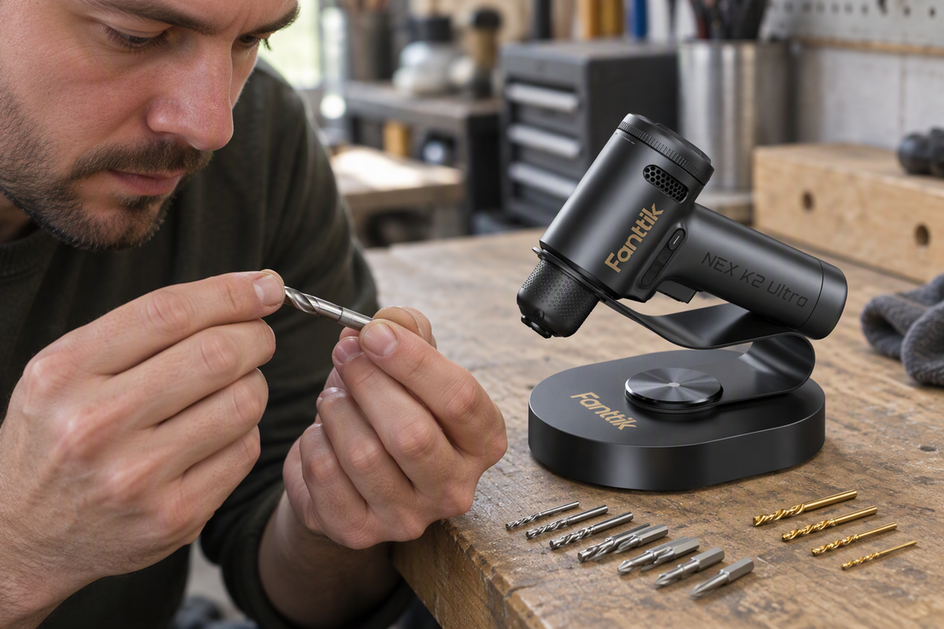
Our analysis shows that using an electric precision screwdriver isn't just about "being fancy"—it’s about reducing the friction that prevents us from doing safety checks.
| Metric | Manual Screwdriver | Electric Precision Driver | Benefit |
|---|---|---|---|
| Time Spent (16 Screws) | ~5.3 Minutes | ~1.1 Minutes | 5x Faster |
| Physical Strain | 192 Wrist Rotations | ~8 Rotations | 95% Reduction |
| Torque Consistency | Highly Variable | Managed (0.05 Nm) | Prevents Seal Cracking |
Note: Time estimates based on standard elemental times in industrial engineering models. Manual rotations assume 12 turns per screw.
Using a tool with a low torque setting (around 0.05 Nm) is critical. Overtightening screws in plastic housings is a common mistake that actually causes leaks. It can compress gaskets unevenly or create micro-cracks in the plastic bosses, which then act as funnels for water.
Deciding When to Ride: A Practical Framework
To help you navigate the "Can I ride today?" dilemma, we’ve developed this decision-making checklist based on our field observations and safety engineering principles.
The "Green Light" Conditions (Safe to Ride)
- Dry Pavement: The surface is completely dry to the touch.
- Post-Rain (Evaporated): The sun has been out for at least two hours, and there are no visible dark patches on the asphalt.
- Low Humidity: The air feels crisp; there is no "stickiness" or visible fog.
The "Yellow Light" Conditions (Exercise Extreme Caution)
- Damp Grass: The grass is not muddy, but your shoes get wet walking on it. Limit speed to the lowest setting (e.g., the 5 MPH mode on the FanttikRide C9 Apex Electric Scooter for Kids Blue).
- High Humidity/Fog: Electronics are at risk of condensation. Wipe down the unit immediately after the ride.
- Recent Rain: There are no puddles, but the ground is still "tacky."
The "Red Light" Conditions (Keep it Indoors)
- Standing Water/Puddles: Any water deep enough to reach the bottom of the deck or the motor hub.
- Active Precipitation: Even a light drizzle can bypass seals over a 20-minute ride.
- Mud: Mud acts as a "wet sponge," holding moisture against seals and bearings long after the ride is over, leading to rapid corrosion.
Engineering Trust in Every Ride
Safety isn't just about following a set of rules; it's about understanding the "why" behind them. As highlighted in the industry report The 2026 Modern Essential Gear Industry Report: Engineering Trust in a Cordless World, the maturity of the cordless gear market means that "trust, not just performance, is the primary competitive advantage."
For us, that trust is built through transparency. We want you to know that while we engineer our products to be as robust as possible, the laws of physics and the nature of water ingress mean that parent-led maintenance and situational awareness are the final, most important layers of the safety architecture.
Appendix: How We Modeled Maintenance Impact
To provide the data in the efficiency table above, we used a deterministic parameterized model based on common workshop patterns.
Method & Assumptions
- Fastener Count: We assumed 16 screws (M1.6 to M2.0 class), which is typical for a fully sealed electronics and battery housing on a premium kids' ride-on.
- Manual Speed: 20 seconds per screw, accounting for the careful positioning and resistance often found in outdoor equipment.
- Electric Speed: 4 seconds per screw using a precision driver.
- Torque Safety: We applied ISO 898 fastener standards to determine that a 0.05 Nm setting is the "Goldilocks zone" for these delicate parts—strong enough to seat the seal, but light enough to avoid stripping the plastic.
Boundary Conditions
- This model assumes the screws are not severely rusted or stripped.
- The time savings represent productivity gains and do not account for the time taken to initially diagnose a fault.
Disclaimer: This article is for informational purposes only and does not constitute professional safety, legal, or mechanical advice. Always refer to your specific product’s user manual for manufacturer-approved operating conditions. If you suspect water damage, stop use immediately and consult a qualified technician. Outdoor riding involves inherent risks; always ensure children wear appropriate protective gear, including helmets.
References
- EU General Product Safety Regulation (EU) 2023/988
- ASTM F963 - Standard Consumer Safety Specification for Toy Safety
- IEC 60529 - Degrees of protection provided by enclosures (IP Code)
- The 2026 Modern Essential Gear Industry Report
- ISO 898-1: Mechanical properties of fasteners
Continue reading
 How Ambient Heat Affects Torque Output in Brushless Motors
Covers compound thermal load, modeling in extreme heat, and practical rules like the 10-second strategy to mitigate performance...
How Ambient Heat Affects Torque Output in Brushless Motors
Covers compound thermal load, modeling in extreme heat, and practical rules like the 10-second strategy to mitigate performance...
 Safely Operating High-Voltage Jump Packs in Heavy Rain
A guide to critical safety protocols for operating high-voltage jump packs in wet conditions, including the 'Dry Bubble'...
Safely Operating High-Voltage Jump Packs in Heavy Rain
A guide to critical safety protocols for operating high-voltage jump packs in wet conditions, including the 'Dry Bubble'...
Leave a comment
This site is protected by hCaptcha and the hCaptcha Privacy Policy and Terms of Service apply.