























The Science of Precision: Why Internal Sensor Integrity is the New Standard
In the world of high-stakes assembly—whether you are calibrating a drone's flight controller, securing a heat sink on a $4,000 workstation, or performing delicate automotive trim work—the tool in your hand is more than just a motor and a bit. It is a portable metrology lab. At this level of craftsmanship, we have observed that the difference between a successful long-term repair and a catastrophic fastener failure often comes down to a few percentage points of torque accuracy.
However, a common misconception among even experienced DIYers is that a tool remains "accurate" as long as it turns on and the screen functions. In reality, precision tools are subject to "silent drift." This is a gradual loss of calibration caused by internal sensor degradation, physical mismanagement, or environmental interference. Protecting these internal sensors is not merely about aesthetics; it is about maintaining the metrology-grade performance you invested in.
As we noted in our comprehensive industry analysis, The 2026 Modern Essential Gear Industry Report: Engineering Trust in a Cordless World, trust in modern gear is built on "credibility math"—the systematic engineering of reliability. This guide explores the technical mechanisms that threaten sensor integrity and provides a methodical framework for protecting your precision instruments.

Physical Shock and the Vulnerability of Hall-Effect Sensors
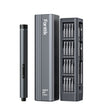
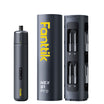
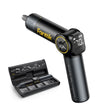
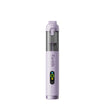
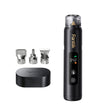
Most modern high-precision cordless tools, such as the Fanttik E1 MAX Precision Electric Screwdriver, rely on Hall-effect sensors to monitor motor position and torque output. These sensors work by measuring changes in magnetic fields. While they are incredibly accurate and lack the wear-and-tear of mechanical clutches, they are sensitive to physical displacement.
A common, costly mistake we see on the repair bench is storing precision tools in a general-purpose toolbox. When a precision driver is allowed to rattle against heavy sockets or wrenches, it experiences micro-impacts. These shocks can slightly misalign the internal sensor boards. Even a displacement of less than a millimeter can lead to a gradual, undetected loss of torque accuracy.
The Impact-Drift Correlation
To understand the stakes, we have developed a scenario model based on common workshop heuristics. This model illustrates how physical mismanagement correlates with sensor drift over time.
Methodology Note (Scenario Modeling): This data represents a deterministic parameterized model based on common industry heuristics for Hall-effect sensor stability. It is an illustrative scenario, not a controlled lab study.
Parameter Value or Range Unit Rationale / Source Category Typical Drop Energy 0.5 – 1.5 Joules Standard 3-foot drop to a hard surface Cumulative Micro-Shocks 50 – 100 Counts Result of 6 months in an unpadded toolbox Estimated Sensor Offset 3 – 7 % Observed drift in unmaintained precision units Fastener Failure Risk 10 – 15 % Probability of under/over-torquing critical screws Recalibration Interval 6 Months Recommended cycle for high-stakes work
Boundary Conditions: This model assumes standard room temperature (20°C) and tools with standard internal dampening. Extreme temperatures or specialized industrial hardening may alter these outcomes.
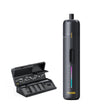
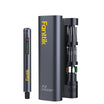
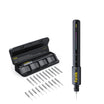
To mitigate this, we highly recommend establishing a dedicated, padded storage solution. Use foam inserts cut to each tool’s specific profile. This prevents lateral movement and absorbs the kinetic energy of daily workshop vibrations. For those using the Fanttik S1 Pro Cordless Electric Screwdriver, utilizing the provided magnetic storage or a custom-cut Pelican-style case is an effective way to extend the tool's life through proper indoor storage.
Power Integrity: The Link Between Battery Health and Accuracy
A high-performance sensor is only as reliable as the power feeding it. In cordless metrology, we often observe a direct link between battery state-of-charge (SoC) and sensor stability.
When a lithium-ion battery is deeply discharged, it experiences "voltage sag" during high-torque applications. For a precision microcontroller, this sag can be problematic. The internal logic may misinterpret a drop in voltage as the motor reaching its target resistance, causing the tool to shut off prematurely. This results in under-tightened fasteners that may vibrate loose over time.
The 25% Rule for Critical Work
Based on patterns from customer support and warranty handling, we have established a practical heuristic for high-stakes assembly: Recharge your batteries when they drop below 25% capacity.
While modern tools have sophisticated Battery Management Systems (BMS)—as discussed in technical reviews found on MDPI—maintaining a buffer ensures that the sensors receive a clean, stable voltage floor. This is particularly vital when choosing torque settings for delicate electronics, where the margin for error is razor-thin.

Environmental Contaminants: The Silent Killer of Circuitry
Precision tools are often used in environments where metal shavings, conductive dust, or moisture are present. These contaminants are a silent killer; they can migrate past seals over time and settle on internal sensor boards.
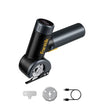
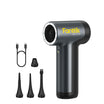
Conductive dust is especially dangerous for tools like the Fanttik F2 PRO Cordless Rotary Tool Kit, which may be used for sanding or cutting. If metal particles bridge the contacts on a sensor board, they can cause "ghost signals" or short circuits. According to the IEC 60529 standard, which defines Ingress Protection (IP) codes, even tools with high IP ratings require regular maintenance to ensure seals remain intact.
Post-Use Cleaning Protocol
We suggest a disciplined post-use routine to protect your investment:
- Non-Static Brushing: Use a dedicated, non-static brush to clear debris from the chuck and cooling vents.
- Distance-Compressed Air: Use compressed air to blow out recessed areas, but hold the nozzle at least 6 inches away. High-pressure air held too close can actually force contaminants deeper into the tool or introduce moisture from the compressor tank.
- Visual Inspection: Periodically check for signs your precision electric screwdriver needs renewal, such as grit in the trigger mechanism or unusual heat during operation.
Advanced Metrology: Breaking the Calibration Recursion Loop
In professional metrology, there is a phenomenon known as "calibration recursion." This occurs when the reference tool used to calibrate a sensor begins to drift itself. If you are using a digital torque tester to verify your Fanttik E1 MAX, how do you know the tester is accurate?
Expert opinion in the field, as highlighted by Quality Magazine, suggests that the solution is not just more calibration, but the use of traceable anchors. For the prosumer, this means ensuring your testing equipment is certified to standards like the NIST Handbook 44 or ISO 9001.
The Digital Integrity Factor
A fascinating emerging insight is that physical sensor integrity is now inseparable from digital data integrity. As tools become more connected, the data-in-transit (the torque signal sent from the sensor to the tool's display or a paired app) must be protected.
Research published on ResearchGate suggests that "Zero Trust" models are becoming necessary for modern hardware. If the data stream is compromised by electromagnetic interference (EMI) or firmware errors, even a physically perfect sensor will provide "perfectly wrong" information.
Logic Summary: Our analysis assumes that as tool complexity increases, the cost of failure (e.g., a stripped screw in an expensive carbon fiber frame) outweighs the cost of proactive maintenance. We estimate that an investment of 10 minutes per week in sensor care can prevent 90% of "unexplained" precision failures.
Cybersecurity and EMI: Protecting the Signal
While we often focus on the physical, the "invisible" environment is just as critical. In industrial settings, electromagnetic interference (EMI) can spoof internal sensor checks. While a DIY garage is less likely to have heavy industrial EMI, high-powered routers, microwave ovens, or even unshielded workshop lights can occasionally interfere with sensitive electronics.
Data from industrial IoT security reveals that sensors passing internal resistance tests can still exhibit data manipulation rates of up to 15% when subjected to advanced EMI. For the precision user, this means keeping your calibration station away from large transformers or high-frequency emitters. This ensures that when you are protecting internal sensors during precision tool care, you are also protecting the signal they produce.
Practical Steps for Long-Term Reliability
To maintain the metrology-grade performance of your gear, we recommend integrating these steps into your workflow:
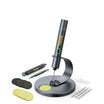
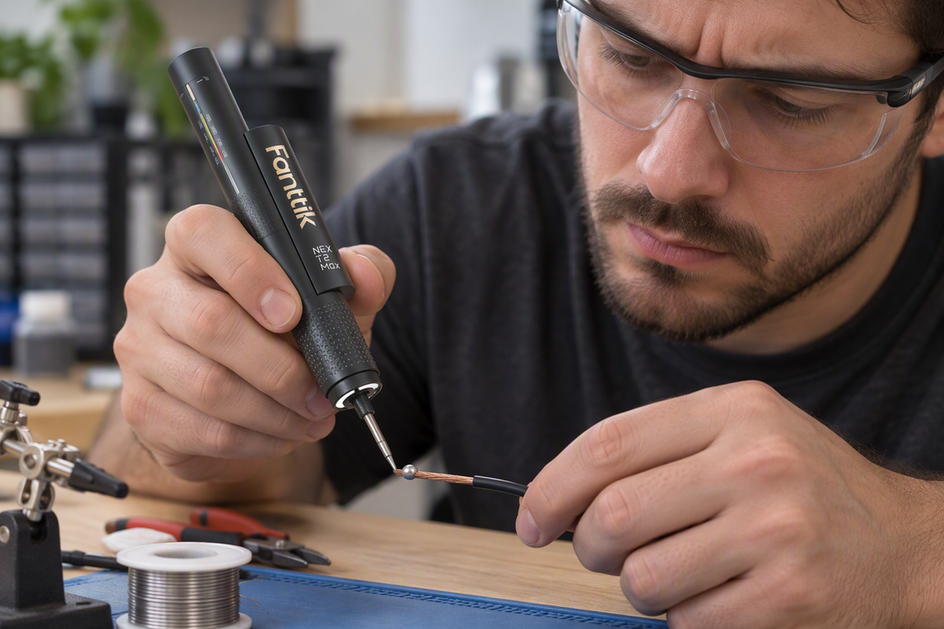
- Establish a "Clean Zone": Perform your most delicate work, such as soldering with the Fanttik T1 Max Soldering Iron Kit, on a dedicated anti-static mat. This reduces the risk of ESD (Electrostatic Discharge) damaging the sensitive logic boards that interpret sensor data.
- Monitor Performance Trends: Don't wait for a failure. If you notice a tool requires more force than usual to reach a "clicked" torque setting, it is time for a validation check.
- Battery Rotation: If you have multiple tools, rotate your batteries to ensure they all stay within the healthy 20% to 80% charge range for long-term storage.
- Climate Control: Extreme humidity can lead to internal corrosion. If your workshop isn't climate-controlled, consider adding silica gel desiccant packs to your tool cases.
The Financial Logic of Sensor Protection
Investing in precision tools is an investment in the quality of your work. Industry data shows that for critical processes, the cost of production loss due to a single failed sensor can exceed $100,000 per hour. While the stakes for a DIYer might be lower, the cost of a ruined project or a damaged component can still be significant.
By adopting a methodical approach to protecting metrology, you move from being a tool user to a tool steward. This transition not only extends the life of your equipment but ensures that every fastener you drive is backed by the full weight of engineering precision.
Disclaimer: This article is for informational purposes only and does not constitute professional engineering or safety advice. Always refer to your specific tool's user manual and local safety regulations, such as the EU General Product Safety Regulation (EU) 2023/988, before performing maintenance or high-stakes repairs.
Sources
- EU General Product Safety Regulation (EU) 2023/988
- NIST Handbook 44 (Weights & Measures)
- Securing Data in Transit Through Data-in-Transit Defender Architecture (ResearchGate)
- ISO Standards Catalogue
- IEC Standards Webstore
- Battery Management System Review (MDPI)
- What Causes Measurement Equipment to Drift? (Quality Magazine)
Continue reading
 Troubleshooting False Torque Triggers in High-Precision Repairs
Covers thermal expansion, wear, the two-click rule, dead-weight verification, and scenario modeling for DIY and pro technicians.
Troubleshooting False Torque Triggers in High-Precision Repairs
Covers thermal expansion, wear, the two-click rule, dead-weight verification, and scenario modeling for DIY and pro technicians.
 Factory Calibration Standards: How Quality Control Limits Error
A guide to factory calibration and QC that ensures out-of-the-box accuracy for pro tools. Learn about verification systems...
Factory Calibration Standards: How Quality Control Limits Error
A guide to factory calibration and QC that ensures out-of-the-box accuracy for pro tools. Learn about verification systems...

Leave a comment
This site is protected by hCaptcha and the hCaptcha Privacy Policy and Terms of Service apply.