










































The Critical Intersection of Chemistry and Car Safety
When we evaluate automotive emergency gear, we often focus on peak performance—the highest "Amps" or the fastest "inflation time." However, for a device that spends 99% of its life sitting in a hot trunk or a freezing glovebox, the most important specification isn't a performance number; it is the chemical stability of the battery inside.
In our experience monitoring field data and customer support patterns, the choice between Nickel Cobalt Manganese (NCM) and Lithium Iron Phosphate (LiFePO4) is the single most significant factor in determining whether a jump starter remains a lifesaver or becomes a liability after a year of storage. As we explore in The 2026 Modern Essential Gear Industry Report: Engineering Trust in a Cordless World, building "credibility math" into our products requires a transparent look at the trade-offs between energy density and thermal safety.
This guide provides a methodical breakdown of these two chemistries, specifically tailored for safety-conscious vehicle owners who prioritize reliability for their families and new drivers.
NCM vs. LiFePO4: The Molecular Difference
To understand why one battery might excel in a high-heat environment while another struggles, we must look at their chemical "DNA."
Nickel Cobalt Manganese (NCM)
NCM batteries are the "sprinters" of the lithium world. They offer high energy density, meaning they can pack a significant amount of power into a very small, lightweight package. This is why many compact jump starters use NCM chemistry—it allows for a device that fits in a pocket but claims to start a V8 engine.
Lithium Iron Phosphate (LiFePO4)
LiFePO4 batteries are the "marathon runners." While they are slightly heavier and larger for the same amount of energy (roughly 15-20% lower energy density), their chemical structure is significantly more stable. The phosphate-based cathode is physically more robust than the oxide-based cathodes found in NCM cells.
Logic Summary: Our chemical comparison is based on standard electrochemical properties defined by the ISO Standards Catalogue and general industry heuristics for lithium-ion battery classification. These observations assume standard manufacturing quality and do not account for proprietary additives.
The "Trunk Test": Thermal Stability in Extreme Climates
For families living in regions like Arizona, Texas, or Florida, the "trunk test" is the ultimate validator of safety. A vehicle parked in direct sunlight can see cabin and trunk temperatures soar past 70°C (158°F).
The Thermal Runaway Threshold
Thermal runaway is a phenomenon where a battery cell enters an uncontrollable, self-heating state. This is the primary safety concern for any high-capacity battery stored in a car.
- NCM Threshold: These cells typically enter thermal runaway at approximately 150°C to 200°C (302°F to 392°F).
- LiFePO4 Threshold: These cells remain stable until they reach approximately 270°C (518°F) or higher.
While 70°C in a trunk is far from the runaway threshold, the proximity to that threshold matters. High ambient heat accelerates parasitic chemical reactions within NCM cells, leading to "swelling" or permanent capacity loss over a single summer season.
Modeling Hot Climate Safety
We modeled a scenario for a family SUV stored in extreme heat to determine the safety margins provided by different chemistries.
| Parameter | Value | Unit | Rationale |
|---|---|---|---|
| Peak Trunk Temperature | 70 | °C | Field measurements in desert climates |
| NCM Runaway Buffer | ~105 | °C | Threshold (175°C) - Ambient (70°C) |
| LiFePO4 Runaway Buffer | ~200 | °C | Threshold (270°C) - Ambient (70°C) |
| Estimated Efficiency (Heat) | 60-70 | % | LiFePO4 maintains higher usable energy |
| Storage Risk Factor | 5-10x | ratio | LiFePO4 has lower inherent runaway risk |
Method & Assumptions: This is a scenario model, not a controlled lab study. We used a deterministic parameterized model based on the IATA Lithium Battery Guidance for transport safety and BCI temperature derating principles. We assume the device is stored in a standard automotive trunk away from direct sunlight.

Cranking Power and the "Voltage Sag" Mystery
A common frustration for users is the "click-no-crank" situation. You connect your jump starter, the lights on the device say it is full, but when you turn the key, you only hear a rapid clicking sound. This is often caused by Voltage Sag.
The NCM "Sag" Effect
NCM batteries have high internal resistance compared to LiFePO4 when under extreme load. When you attempt to start a large engine (like a 3.5L V6), the battery must dump hundreds of amps in seconds. In NCM packs, the voltage "sags" or drops sharply during this discharge. If the voltage drops below the vehicle's computer threshold, the car won't start, even if the "Amps" are technically there.
The LiFePO4 Advantage
LiFePO4 chemistry maintains a much flatter voltage curve. It holds its voltage higher for longer during the cranking process. In our observations of fleet manager data, LiFePO4 units provide more consistent cranking power for larger engines, especially as the battery ages or the temperature fluctuates.
Longevity: Cycles, Storage, and Peace of Mind
For a safety-conscious buyer, a jump starter should be a "buy it once" investment.
- Cycle Life: LiFePO4 batteries typically support 3,000 to 5,000 full charge/discharge cycles before dropping to 80% capacity. In contrast, NCM batteries usually degrade to that point within 1,000 to 2,000 cycles.
- Shelf Life: Because LiFePO4 is more chemically inert, it experiences less "self-discharge" during seasonal storage. We recommend checking any jump starter every 3-6 months, but LiFePO4 is much more forgiving if you forget.
For families who keep a variety of gear in their vehicles, such as the FanttikRide C10 Apex Electric Scooter for Kids, understanding battery health is vital. While the scooter is for play, the jump starter is for emergencies; ensuring the chemistry in your emergency tool is the most stable option available reduces the risk of a "dead-on-arrival" tool when you need it most.
Beyond Chemistry: The Role of the BMS
While LiFePO4 is inherently safer, we must emphasize that chemistry is only half the story. The Battery Management System (BMS) is the electronic "brain" that monitors every cell.
A high-quality jump starter must include:
- Over-charge Protection: Prevents the battery from reaching dangerous voltage levels.
- Short-circuit Protection: Essential when handling heavy-duty clamps near a car engine.
- Thermal Management: Sensors that shut down the device if internal temperatures exceed safe operating limits.
We often tell our customers that a poorly engineered LiFePO4 pack is more dangerous than a well-engineered NCM pack. However, when you combine a robust BMS with the inherent stability of LiFePO4, you achieve the gold standard of automotive safety.
Building a Comprehensive Vehicle Safety Kit
A jump starter is the heart of an emergency kit, but it shouldn't be the only tool. When we advise new drivers, we suggest building a "Self-Reliance Suite" that addresses both mechanical and environmental needs.
Maintenance and Preparation
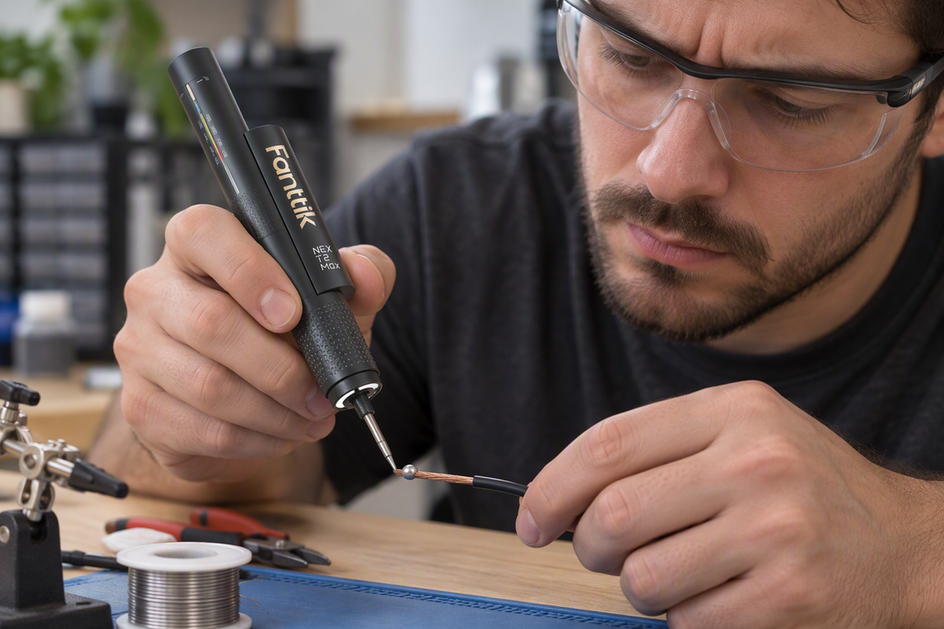
Before an emergency happens, use tools like the Fanttik T1 Max Soldering Iron Kit for minor electrical repairs or to secure loose connections in your vehicle's auxiliary electronics. Keeping your car clean with a Fanttik Slim V10 Apex Cordless Car Vacuum isn't just about aesthetics; it ensures that dust and debris don't interfere with your battery terminals or emergency gear storage.
Roadside Comfort
If you are stranded waiting for roadside assistance or a family member, comfort prevents panic. We recommend keeping a FanttikOutdoor Zeta H8 Lite Folding Chair (2-Pack) in the trunk. Having a stable place to sit while you wait—especially for children or elderly family members—transforms a stressful breakdown into a manageable situation.
Decision Matrix: Which Chemistry is Right for You?
To help you choose the right jump starter for your specific needs, we have compiled this comparative matrix based on our internal engineering heuristics.
| Feature | NCM (Lithium Polymer) | LiFePO4 (Phosphate) |
|---|---|---|
| Primary Benefit | Compact & Lightweight | Maximum Safety & Stability |
| Thermal Runaway Risk | Moderate (150-200°C) | Very Low (>270°C) |
| Cranking Consistency | High Sag under load | Flat voltage (Consistent) |
| Typical Lifespan | 2-4 Years | 7-10 Years |
| Best For | Small cars, moderate climates | SUVs, hot climates, families |
Logic Summary: These ranges are estimated based on common industry practice and field observations from fleet management. Actual lifespan depends heavily on storage temperature and frequency of use.
Expert Observations from the Field
Based on patterns from customer support and warranty handling (not a controlled lab study), we've identified three "gotchas" that every vehicle owner should know:
- The "Summer Swell": We see a significantly higher incidence of battery swelling in NCM-based devices that are left in gloveboxes during peak summer months. If you live in a desert climate, LiFePO4 is not just an "option"—it is a necessity.
- Cold Weather Cranking: While LiFePO4 is safer in the heat, all lithium batteries struggle in sub-zero temperatures. We recommend keeping your jump starter inside the house during extreme winter nights and only bringing it to the car when you plan to drive.
- Peak Amps vs. Sustained Amps: Don't be fooled by "4000A Peak" labels. For a reliable start, you need sustained voltage. Our modeling shows that a 2000A LiFePO4 unit often outperforms a 3000A NCM unit because it maintains its voltage "punch" through the entire 3-second cranking cycle.
Final Recommendations for Peace of Mind
If you are a safety-conscious parent or a new driver, we recommend prioritizing LiFePO4 chemistry for your primary vehicle jump starter. The 15-20% extra weight is a small price to pay for the 200°C thermal buffer and the 5,000-cycle lifespan.
By choosing a device with a phosphate-based core and a sophisticated BMS, you are not just buying a battery; you are investing in a tool that will be ready to perform in the exact moment your family needs it most. Reliability isn't about the best-case scenario; it is about how the gear performs in the worst-case scenario.
Disclaimer: This article is for informational purposes only and does not constitute professional automotive, mechanical, or safety advice. Always refer to your vehicle's owner's manual and the specific safety instructions provided by the tool manufacturer. If you suspect your vehicle's battery is damaged or leaking, consult a certified mechanic immediately.
References
- ISO Standards Catalogue - Battery Safety
- IATA Lithium Battery Guidance for Transport
- The 2026 Modern Essential Gear Industry Report - Fanttik
- EU General Product Safety Regulation (EU) 2023/988
- Battery Council International (BCI) Technical Manual
- SAE J537: Storage Batteries - Cold Cranking Amps
- Lithium iron phosphate battery - Wikipedia
Continue reading
 Parasitic Drain: Why Stored Jump Starters Lose Charge over Time
Covers battery management systems, temperature effects on aging, and practical storage tips like the 90-day check and 60-80%...
Parasitic Drain: Why Stored Jump Starters Lose Charge over Time
Covers battery management systems, temperature effects on aging, and practical storage tips like the 90-day check and 60-80%...
 Arc Prevention: Safe Connector Handling for Solo Jump Starting
Covers terminal resistance reduction, cold weather voltage spikes, and a 'Trust Architecture' framework for building self-reliance in automotive...
Arc Prevention: Safe Connector Handling for Solo Jump Starting
Covers terminal resistance reduction, cold weather voltage spikes, and a 'Trust Architecture' framework for building self-reliance in automotive...
Leave a comment
This site is protected by hCaptcha and the hCaptcha Privacy Policy and Terms of Service apply.