










































Decoding Thermal Specs: Reading Operating vs. Storage Ratings
When we store maintenance tools in our vehicles—whether it is a tire inflator for road trips or a jump starter for winter emergencies—we often treat them as "set it and forget it" gear. However, the interior of a parked car is one of the most hostile environments for modern electronics. On a typical summer day with an ambient temperature of 32°C (90°F), a vehicle’s cabin can soar to 60°C (140°F) within an hour. In extreme regions like Arizona or the Middle East, these temperatures frequently touch 70°C (158°F).
Understanding the difference between "operating temperature" and "storage temperature" is not just about technical literacy; it is a critical safety requirement. Misinterpreting these specs can lead to premature battery failure, cracked plastic housings, or even thermal runaway. In this guide, we will break down the engineering logic behind these ratings and provide a framework for choosing gear that survives the "cabin kiln."
The Technical Dichotomy: Operating vs. Storage
To the casual observer, these two ratings might seem interchangeable. In reality, they describe two fundamentally different states of hardware existence.
Operating Temperature
This rating defines the thermal range in which a device can be safely powered on and used. It accounts for the internal heat generated by the device itself—such as the friction in a compressor’s gearbox or the electrical resistance in a battery—on top of the ambient environment. If a tool is rated for an operating maximum of 45°C (113°F), using it in a 45°C desert sun may push internal components past their "absolute maximum" thresholds.
Storage Temperature
This rating defines the environment where the device can sit while powered off. While many assume storage ranges are wider and more "forgiving," our engineering observations suggest the opposite for long-term reliability. Extended storage aims to prevent latent chemical degradation. According to the International Electrotechnical Commission (IEC), standards like IEC 60068-2-1 and 60068-2-2 provide the testing protocols for these states, ensuring that "dormant" equipment does not undergo irreversible material changes.
Logic Summary: We define "Operating" as a dynamic state where internal heat is being generated, and "Storage" as a static state where the device must resist environmental degradation. Our analysis assumes that storage ratings prioritize the preservation of chemical and physical integrity over years, not just hours.
The Silent Physics of In-Vehicle Storage
Leaving a tool in a trunk involves more than just heat; it involves "calendar aging" and "thermal cycling." These are the silent killers of automotive mobility essentials.
1. Lithium-Ion Calendar Aging
Lithium-ion batteries are electrochemically active even when they are not in use. Research indicates that battery degradation occurs linearly even at 20°C (68°F), but this process accelerates exponentially as temperatures rise.
- The 30°C Threshold: Once storage temperatures exceed 30°C (86°F), the chemical breakdown of the electrolyte accelerates.
- The Double-Rate Rule: Based on common observations in battery maintenance (though not a universal lab law), capacity loss can potentially double for every 10°C increase in sustained storage temperature. A jump starter left in a 50°C (122°F) trunk for a full summer may lose 15-20% of its total capacity in a single season.
2. Thermal Cycling and Material Fatigue
The real danger for plastics and seals isn't just the heat—it's the change in heat. A car parked outside undergoes a daily cycle of expansion (day) and contraction (night). This is known as thermal cycling.
Engineering standards like JESD22-A104 are designed specifically to test how materials handle these fluctuations. For the plastics used in tool housings, repeated cycling can cause micro-fractures at high-stress points like screw posts or hinge joints. These fractures are often invisible to the naked eye until the moment the tool is dropped or put under the pressure of operation, at which point the housing may fail catastrophically.
3. Lubricant Migration and Viscosity
Inside the gearboxes of tire inflators and vacuums, silicone-based greases ensure smooth operation. In extreme heat, these greases can separate or migrate away from critical contact points. Conversely, in extreme cold, they can become highly viscous (thick). This increases the "startup torque" required by the motor. If you try to use a frozen inflator, the motor may strain or blow an internal fuse simply trying to move the thickened grease.
Modeling the Extreme Climate: A Phoenix Case Study
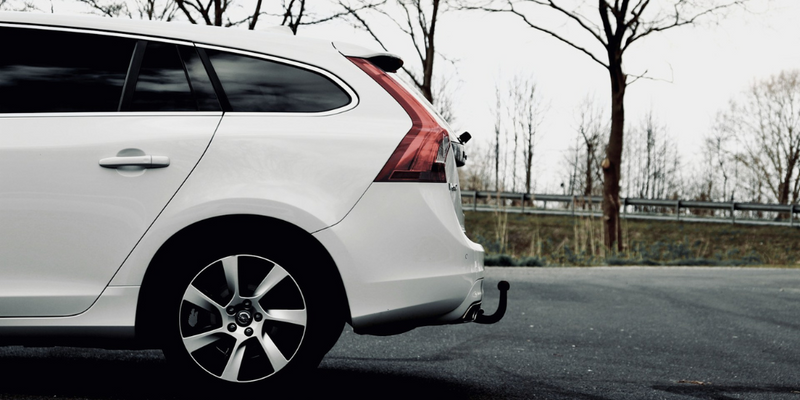
To demonstrate the stakes, we modeled a scenario involving a mid-size SUV owner in Phoenix, Arizona—a region famous for thermal extremes. This analysis helps us visualize how "paper specs" translate into real-world survival.
Scenario A: The Summer Inflation Stress Test
In this model, the user attempts to inflate four tires from 28 to 36 PSI on a 45°C (113°F) day.
- The Adiabatic Heating Effect: As air is compressed, it naturally heats up. Based on the Ideal Gas Law and adiabatic compression models, the exit temperature of the air can reach ~180°C (356°F).
- The Conflict: If the ambient air is already 45°C, the device has a very narrow "thermal window" to dissipate that 180°C internal heat. This creates a massive temperature swing (135°C rise) that tests the limits of every seal and plastic component in the tool.
Scenario B: The Winter Jump-Start Power Gap
In this model, the same user travels north to a -23°C (-10°F) environment. Their vehicle's lead-acid battery is struggling.
- The Power Gap: A typical 3.5L engine requires roughly 600A to crank at these temperatures. However, a standard battery's available power drops to about 40% at 0°F.
- The Tool's Burden: The jump starter must bridge a ~420A power gap. If the jump starter itself has been stored in the cold trunk, its own internal lithium chemistry is "sluggish," providing significantly less current than it would at room temperature.
Modeling Transparency: Phoenix SUV Scenario
| Parameter | Value | Unit | Rationale |
|---|---|---|---|
| Ambient Summer Temp | 45 | °C | Phoenix peak cabin extreme |
| Ambient Winter Temp | -10 | °F | Northern travel extreme |
| Engine Displacement | 3.5 | L | Typical mid-size SUV (V6) |
| Est. Exit Air Temp | ~180 | °C | Theoretical adiabatic max |
| Battery Power @ 0°F | 40 | % | BCI standard derating |
Methodology Note: This is a deterministic scenario model, not a controlled lab study. We used SAE J537 cranking standards and BCI temperature derating curves to estimate the "power gap." Actual results vary based on vehicle health and specific tool efficiency.
How to Read the Label Like an Engineer
When you are shopping for vehicle maintenance tools, you shouldn't just look for the highest PSI or the most Peak Amps. You must look for the thermal resilience that matches your geography.
The "70°C Rule" (A Practical Heuristic)
If you live in a region where summer temperatures regularly exceed 35°C (95°F), your vehicle’s interior will reach 70°C (158°F). We recommend a simple heuristic: If a product’s rated storage temperature does not comfortably exceed 70°C, it is not a "leave-in-the-car" solution for summer months.
Identifying "Absolute Maximum" Ratings
Many datasheets list "Absolute Maximum Ratings." These are not recommended operating conditions; they are "breaking points." Operating a device at its absolute maximum for extended periods is a leading cause of premature failure. Always look for the "Recommended Operating Range," which is typically narrower and safer.
Compliance and Standards
Trustworthy gear often cites compliance with international standards. Look for references to:
- UN 38.3: This ensures the lithium batteries are safe for transport and can withstand thermal variations without catching fire.
- ISO 9001: Indicates the manufacturer follows a consistent quality management system, reducing the risk of "dud" units with weak seals.
- EU General Product Safety Regulation (GPSR): For European users, compliance with the EU GPSR (2023/988) ensures the product meets high safety benchmarks for consumer use.

Mitigating Thermal Risk: Best Practices for Car Owners
Even with high-quality gear, you can take steps to extend the life of your tools and ensure they work when you need them most.
1. Use Insulated Storage
Storing your tools in an insulated "thermal bag" or a padded hard case can provide a significant buffer. While it won't stop the heat entirely, it slows down the rate of temperature change. This reduces the severity of the thermal cycling mentioned earlier. Choosing protective cases for thermal buffering is one of the most effective ways to preserve battery health.
2. The "Floorboard" Strategy
The trunk is often the hottest part of a car. The floorboards, especially under the front seats, tend to stay several degrees cooler because they are shielded from direct sunlight and are closer to the chassis, which acts as a heat sink.
3. Observe Duty Cycles
In summer, never run a tire inflator for its maximum rated time. If a tool says "40 minutes continuous runtime," we recommend stopping at 20 minutes if the ambient temperature is above 30°C. This allows the internal components to dissipate heat before the adiabatic effects cause damage.
4. Seasonal Check-ups
We recommend a "Two-Season Audit":
- Pre-Summer: Ensure your tools are fully charged. High heat increases self-discharge rates.
- Pre-Winter: Test your jump starter. Cold temperatures will expose a weak battery that seemed fine in the autumn.
Engineering Trust in Your Gear
As we move toward a more cordless world, our reliance on portable power increases. However, as noted in the 2026 Modern Essential Gear Industry Report, trust is a function of "credibility math." This means choosing products where the engineering margins are visible and the claims are bounded by reality.
A tool that works in a climate-controlled laboratory may fail in a Phoenix parking lot. By decoding the thermal specs on the box, you are doing more than just protecting an investment; you are ensuring that when you are stranded on a 45°C highway or a -20°C snowy shoulder, your gear has the "thermal stamina" to get you home.
Disclaimer: This article is for informational purposes only and does not constitute professional automotive, legal, or safety advice. Always refer to your specific product’s user manual and local safety regulations. If you suspect a battery has been compromised by extreme heat (e.g., swelling, leaking, or unusual odors), cease use immediately and consult a professional.
References
Continue reading
 BMS Thermal Logic: How Smart Hardware Prevents Solar Overheating
A guide to how Battery Management Systems prevent cordless tool damage from extreme heat in car cabins, covering...
BMS Thermal Logic: How Smart Hardware Prevents Solar Overheating
A guide to how Battery Management Systems prevent cordless tool damage from extreme heat in car cabins, covering...
 Thermal Fuse Engineering: Internal Fail-Safes for Parked Cars
Covers thermal cut-offs, PPTC fuses, solid-state capacitors, and engineering pitfalls like the 5mm gap for tools in extreme...
Thermal Fuse Engineering: Internal Fail-Safes for Parked Cars
Covers thermal cut-offs, PPTC fuses, solid-state capacitors, and engineering pitfalls like the 5mm gap for tools in extreme...


Leave a comment
This site is protected by hCaptcha and the hCaptcha Privacy Policy and Terms of Service apply.