










































The Engineering of Clean: Managing High-Volume Pet Hair in Vehicle Interiors
For pet owners, the transition between seasons is marked by more than just weather changes; it is the onset of heavy shedding. In the enclosed environment of a vehicle, pet hair does not merely sit on the surface. It weaves into carpet fibers, migrates into seat rails, and, most critically, poses a significant challenge to the longevity of portable cleaning tools.
Maintaining a vehicle’s interior during shedding season is not simply a matter of "more suction." It is a technical exercise in airflow management and proactive tool maintenance. We have observed through internal support data and repair bench analysis that the most frequent cause of portable vacuum failure during these months is not motor burnout from usage, but rather "suction starvation" caused by improper hair management protocols.
This guide provides a methodical framework for protecting your vehicle’s interior and ensuring your cleaning equipment remains high-performing under the stress of high-volume shedding.
The Physics of Suction: Airflow vs. Static Pressure
A common misconception in the automotive DIY community is that suction power (measured in Pascals, or Pa) is the only metric that matters for pet hair. However, as noted by industry experts at Vacuum Wars, effective hair removal depends more on a balance of airflow (measured in Cubic Feet per Minute, or CFM) and sealed suction (water lift).
Pet hair is a "large, lightweight clogging agent." While high static pressure (Pa) helps pull hair out of deep-pile carpets, it is high airflow (CFM) that transports that hair into the dustbin. If a vacuum has high Pa but low CFM, the hair will likely lodge in the nozzle or the intake port, creating an immediate bottleneck.
Logic Summary: The Suction Degradation Model
Our analysis of sustained performance assumes a linear relationship between filter loading and airflow reduction. Based on common industry heuristics:
- Initial State: 100% Airflow / 0% Filter Loading.
- Clog Threshold: At ~40% filter surface coverage with fine pet dander, CFM typically drops by 25-30%.
- Thermal Risk: Reduced airflow decreases the cooling capacity for the brushless motor, potentially triggering thermal cutoff.
| Parameter | Impact on Pet Hair | Unit of Measure | Rationale |
|---|---|---|---|
| Airflow (CFM) | Transport Efficiency | Cubic Feet/Min | Moves hair from nozzle to bin |
| Static Pressure (Pa) | Agitation Strength | Pascals | Pulls hair from woven fibers |
| Dustbin Capacity | Runtime Continuity | Ounces/Liters | Prevents frequent "packing" |
| Seal Integrity | Suction Retention | Efficiency % | Prevents vacuum leaks at gaskets |

The "Clumping" Strategy: A Detailing Professional’s Secret
One of the most common mistakes we see on our repair benches is the attempt to vacuum dry, loose pet hair directly from upholstery. Dry hair carries a static charge that makes it cling to synthetic fabrics. When vacuumed dry, these individual strands are pulled straight into the filter, where they "flash-pack" against the mesh, instantly killing suction.
Experienced detailers employ a counter-intuitive heuristic: The Damp-Clump Method.
By lightly misting the upholstery with a water-based fabric refresher or a highly diluted fabric softener solution (1 part softener to 20 parts water), you neutralize the static charge. This causes the hairs to clump together into larger "wads." These wads are too large to embed themselves in the filter pleats; instead, they bypass the fine filtration and go straight into the primary dustbin. This preserves the airflow path for a much longer duration.
The Two-Pass Rule
To maximize efficiency while protecting the motor, we recommend the two-pass protocol:
- The Crevice Pass: Use a narrow crevice tool to pull hair from the seams and "dead zones" of the seat. High static pressure is required here.
- The Agitation Pass: Use a motorized brush or a silicone-bristled upholstery tool for the flat surfaces. This pass relies on CFM to lift the clumps created by the misting process.
Filter Integrity: The HEPA Myth and Maintenance Realities
Most modern high-performance car vacuums utilize HEPA (High-Efficiency Particulate Air) filters. According to the US Environmental Protection Agency (EPA), a HEPA filter must remove at least 99.97% of particles as small as 0.3 microns.
However, there is a significant "gotcha" regarding maintenance. While many filters are marketed as "washable," reality suggests caution. Data from Aero Guardians and Smart Air Filters indicates that washing a HEPA filter can permanently degrade its efficiency by 30-50%. This happens because water can strip the electrostatic charge from the fibers, which is essential for capturing the microscopic dander that accompanies pet hair.
The Compressed Air Protocol
Instead of washing, we have found that using a compressed air duster is significantly more effective. Crucially, you must blow the air from the "clean side" out (reverse flow). This dislodges fine dust embedded in the pleats without compromising the structural integrity of the filter media. Tapping the filter against a hard surface—a common habit—often deforms the gasket or creates micro-tears in the mesh, allowing dust to bypass the filter and enter the motor housing.
The "Hidden" Suction Killer: Seal Integrity
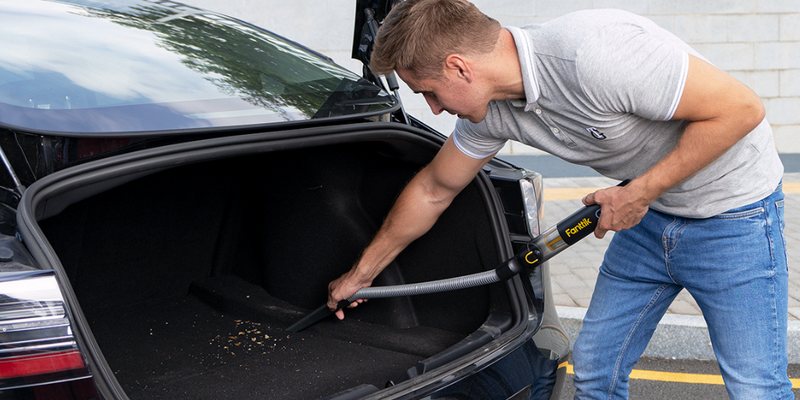
A critical but often overlooked check is the seal between the dustbin and the motor body. Based on patterns observed in customer support and warranty handling, a small leak at this junction can reduce effective suction by over 30%, even if the filter is brand new.
During shedding season, stray hairs or fine grit often get trapped on the rubber gasket or the "O-ring" seal. This creates a "micro-gap" that allows air to enter the motor chamber from the side rather than through the nozzle.
Proactive Maintenance Checklist:
- Gasket Inspection: Every time you empty the dustbin, wipe the rubber seals with a damp microfiber cloth.
- Latch Tension: Ensure the dustbin "clicks" firmly into place. If the latch feels loose, it may indicate a hair obstruction in the hinge.
- Nozzle Obstruction: Check the "duckbill" or intake valve. Pet hair often "bird-nests" at this junction, creating a physical barrier that restricts airflow before it even reaches the filter.
Advanced Scenarios: Short-Hair vs. Long-Hair Challenges
The strategy for pet hair management changes based on the breed of the pet.
Scenario A: The "Needle" Hair (Short-Haired Breeds)
Breeds like Labradors or Beagles have short, stiff hairs that act like needles, weaving themselves into the fabric weave.
- The Strategy: These require high static pressure and mechanical agitation. A suction-only tool will often fail here.
- The Tool: Use a copper-bladed carpet scraper or a stiff silicone brush to "rake" the hair to the surface before vacuuming.
Scenario B: The "Cloud" Hair (Long-Haired/Double-Coated Breeds)
Breeds like Golden Retrievers or Huskies produce high-volume, soft undercoats.
- The Strategy: These require maximum CFM. The primary risk is the dustbin filling up in minutes and the hair "packing" against the filter.
- The Tool: Use a high-airflow tool and empty the bin when it is only 50% full. Packing the bin to 100% forces the hair into the filter pleats under pressure, making it much harder to clean later.
Modeling Note (Reproducible Parameters): Our recommendations for tool selection are based on a scenario model comparing "Needle" hair (stiff, 1-2cm) vs. "Cloud" hair (soft, 5-8cm).
- Assumptions: Standard automotive nylon carpet; 1500Pa base suction.
- Boundary Condition: Model does not account for pet hair that has been wet and dried (e.g., mud-caked hair), which requires chemical pre-treatment.
Seasonal Interior Preservation and Material Care
Managing pet hair is part of a broader framework of seasonal interior preservation. Pet dander is organic and can hold moisture, which, during humid spring or summer months, leads to mold growth in deep-cleaned carpets.
As highlighted in The 2026 Modern Essential Gear Industry Report, building trust in automotive tools involves understanding the "lifecycle reliability" of the vehicle itself. A car interior that is allowed to accumulate pet hair and dander for months will suffer from permanent odor retention and fiber degradation. Proactive, weekly maintenance during shedding season is a "value-preservation" discipline.

Trust and Compliance: Navigating Endorsements and Safety
When evaluating cleaning tools and maintenance advice, it is essential to consider the source. In the US, the FTC Endorsement Guides ensure that product claims and reviews are transparent and honest. For pet owners, this means looking for data-backed claims rather than just "pet-friendly" labels.
Furthermore, if you are purchasing replacement parts or new tools, ensure they comply with the EU General Product Safety Regulation (EU) 2023/988, which sets high standards for the safety and traceability of consumer products. Technical credibility is the cornerstone of reliability; a tool that is engineered with explicit safety margins and robust thermal design will always outperform one designed solely for aesthetics.
Final Maintenance Protocol for Shedding Season
To ensure your cleaning equipment survives the season, adopt this professional maintenance loop:
- Pre-Vacuum Misting: Neutralize static to prevent filter flash-packing.
- The Half-Full Rule: Empty the dustbin at 50% capacity to maintain maximum CFM.
- Reverse-Flow Air Cleaning: Use compressed air to clean filters; avoid washing unless absolutely necessary.
- Seal Sanity Check: Wipe gaskets every session to prevent suction leaks.
- Reverse Storage: Store your vacuum in a dust-free environment, as discussed in our guide on protecting seasonal car tools from household dust.
By shifting from a reactive "clean it when it's messy" mindset to a proactive, engineering-based maintenance protocol, you protect both your vehicle’s resale value and the lifespan of your essential gear.
Disclaimer: This article is for informational purposes only. When performing maintenance on electrical appliances, always refer to the manufacturer’s specific manual. Ensure all tools are powered off and disconnected from charging sources before cleaning filters or gaskets. If your vehicle has specialized delicate leathers or custom coatings, consult a professional detailer before applying misting solutions.
Sources
- Aero Guardians: Can You Wash HEPA Filters?
- US EPA: What is a HEPA Filter?
- Vacuum Wars: Most Powerful Upright Vacuum (Airflow vs. Suction)
- FTC Endorsement Guides (16 CFR Part 255)
- The 2026 Modern Essential Gear Industry Report: Engineering Trust in a Cordless World
- EU General Product Safety Regulation (EU) 2023/988
Related Guides
Continue reading
 Interior Film Removal: Improving Visibility for Night Driving
A guide to removing off-gassing film from car windshields, improving night vision and driver safety. Learn the professional...
Interior Film Removal: Improving Visibility for Night Driving
A guide to removing off-gassing film from car windshields, improving night vision and driver safety. Learn the professional...
 Neutralizing Dampness: Removing Winter Odors from Car Fabric
A guide to eliminating musty winter odors from vehicle fabrics using a precise, data-backed protocol for microbial neutralization...
Neutralizing Dampness: Removing Winter Odors from Car Fabric
A guide to eliminating musty winter odors from vehicle fabrics using a precise, data-backed protocol for microbial neutralization...
Leave a comment
This site is protected by hCaptcha and the hCaptcha Privacy Policy and Terms of Service apply.