
























The Power Conflict: Balancing Entertainment and Emergency Readiness
We have all been there. You are four hours into a mountain road trip, the scenery is breathtaking, but the backseat is a different story. The kids’ tablets are hitting the dreaded 5% battery mark, the portable gaming consoles are dead, and your phone is working overtime as a GPS and jukebox. In the modern family vehicle, electricity is the currency of peace. However, as we plug in more chargers and run more accessories, we often forget that the very same energy we use to keep the kids quiet is the energy we might need to get the car moving again if things go sideways.
This creates a "Power Conflict." For a parent, the priority is a smooth, stress-free journey, but the underlying responsibility is safety. If you use your portable power source to charge three tablets and two phones, do you still have enough "cranking amps" to jump-start a V6 engine in a freezing trailhead parking lot? If you notice a low-tire pressure light at dusk, does your device have the stamina to run a high-pressure compressor for six minutes straight?
Understanding how to budget this energy is not just about technical specs; it is about building a safety net that survives the reality of family travel. As noted in The 2026 Modern Essential Gear Industry Report: Engineering Trust in a Cordless World, true reliability in automotive gear is a function of "credibility math"—calculating exactly what your tools can do before you are stranded in the dark.
The Hidden Drain: Why Batteries Die While You Sleep
One of the most common mistakes we see among seasoned road-trippers is underestimating "vampire drain." Modern vehicles are never truly "off." Even when parked at a campsite for two days, the infotainment system, dashcams, and built-in security sensors continue to sip power from the starter battery.
Based on common patterns from customer support and warranty handling, many families find themselves with a "clicking" starter after a weekend of camping, even if they never left the lights on. This issue is compounded by the fact that many families plug their portable jump starters into the car's USB ports to keep them topped off, unknowingly creating a loop that can drain the car's primary battery faster.
The 10-15% Emergency Heuristic
To combat this, we recommend a simple rule of thumb: For every 24 hours your vehicle is parked with minor accessories running (like a dashcam or a phone charging on a 12V port), budget a 10-15% reserve in your portable jump starter's capacity.
This reserve should be treated as "sacred" energy—untouchable for charging tablets or powering LED camp lights. If your jump starter has a 20,000mAh capacity, you should consider 3,000mAh of that to be your "engine-only" fund. This ensures that even if the car’s main battery drops below the threshold required to turn the alternator, you have the specialized high-discharge power ready to go.

The Physics of the Cold: Why "Full" Isn't Always Enough
If your road trip takes you into the mountains or through winter corridors, the math changes. Lithium-ion batteries—the kind found in almost all modern portable jump starters and tire inflators—are chemically sensitive to temperature.
Real-world modeling in cold climates (below 40°F/4°C) shows that these compact tools can deliver 20-30% less peak cranking amps than their warm-weather ratings. This isn't a defect; it's physics. Cold slows down the chemical reactions inside the battery cells.
Winter Confidence and Cranking Amps
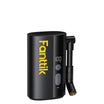
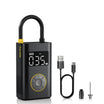
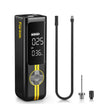
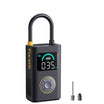
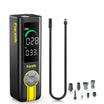
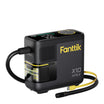
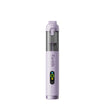
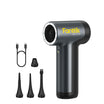
When you are trying to start a cold-soaked 3.5L V6 engine, you need a massive burst of energy. According to the Battery Council International (BCI), a battery's ability to deliver current drops significantly as the mercury falls. While a device like the Fanttik X9 APEX Tire Inflator is designed for high-performance inflation, it’s the jump-starting side of your gear that faces the toughest test in the cold.
In our scenario modeling for a 3.5L family SUV at 20°F, we found that a high-quality jump starter provides a substantial safety margin, but only if it is kept relatively warm. If you leave your emergency gear in a freezing trunk overnight, that 20% performance hit could be the difference between a successful start and a call for a tow truck.
Logic Summary: Our analysis assumes a 3.5L engine displacement and a 20°F ambient temperature. We estimate the performance loss based on standard lithium-ion discharge curves at low temperatures.
The Time Factor: Why Tire Emergencies Take Longer Than You Think
Tire pressure is another critical safety pillar. A drop in temperature of just 10°F can result in a 1 PSI loss in tire pressure. On a long drive, a moderately underinflated tire (around 20 PSI) can lead to increased heat, poor fuel economy, and a higher risk of a blowout.
However, the "cost" of fixing this isn't just battery power—it's time. Many parents assume that a portable inflator works like the massive industrial compressors at a gas station. In reality, compact motors take time to move air.
The 6-Minute Rule
Based on our precision inflation modeling for a standard SUV tire (245/60R18), it takes approximately 6 minutes to go from 20 PSI up to the recommended 35 PSI. If you have to do this for all four tires, you are looking at 24 minutes of standing by the roadside.
This duration is significant for two reasons:
- Parental Stress: Twenty-four minutes is a long time to keep children calm and safe inside a vehicle on a busy highway shoulder.
- Heat Management: Compressing air generates heat. Our modeling shows that air temperature can rise by over 110°C during this process. This is why tools like the Fanttik X9 APEX Tire Inflator are engineered with specific duty cycles.
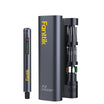
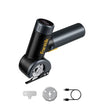
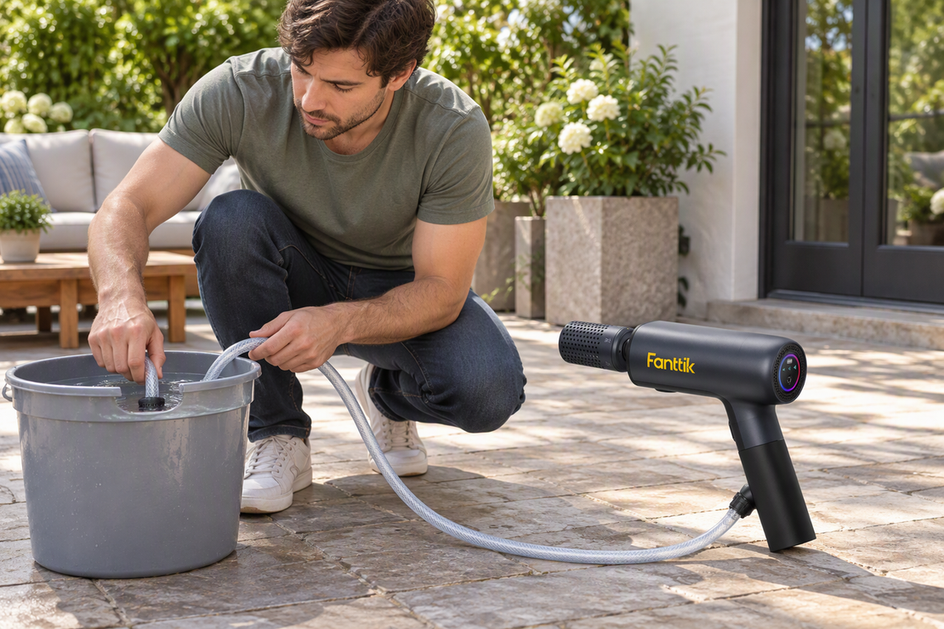
For a parent, the takeaway is clear: do not wait until you are on the highway to check your tires. Use a precision tool like the Fanttik X9 Ace Bike Pump or the Fanttik X10 Ace Tiny Mini Bike Pump for smaller inflatables or bikes, but keep the heavy-duty APEX unit ready for the vehicle's primary tires.

Engineering Trust: Standards and Safety
When you are choosing gear for a family trip, certifications matter more than marketing claims. Because these devices handle high currents and pressurized air, they fall under strict safety regulations.
Compliance and Peace of Mind
In Europe, the EU General Product Safety Regulation (EU) 2023/988 ensures that products sold on the market meet rigorous safety standards. For electrical components, look for references to IEC Standards (International Electrotechnical Commission) or ISO Standards. These certifications mean the device has been tested for thermal stability and electrical protection.
One non-obvious feature that dramatically reduces user error is reverse polarity protection. In a high-stress emergency—perhaps in the rain or dark with kids crying—it is easy to mix up the red and black clamps. A safety-engineered jump starter will simply refuse to spark if connected incorrectly, protecting both you and your car's sensitive electronics.
Practical Power Budgeting: A Step-by-Step Guide
To ensure you always have the energy you need, follow this priority-based charging plan:
- The Morning Check: Before leaving, ensure your emergency jump starter/inflator is at 100%.
- The "Sacred" Reserve: Mentally (or via the device's LED display) mark the 20% level. Once the device hits 20%, it is no longer a phone charger; it is an emergency tool only.
- High-Draw Priority: If you have a low tire and a dead phone, inflate the tire first. Inflation draws consistent, high current that generates heat. It is better to do this while the battery is full and the motor is cool.
- Passenger Management: Use the car’s built-in USB ports for tablets while the engine is running. Use the portable power bank only as a last resort or when the car is off, keeping the 10-15% vampire drain buffer in mind.
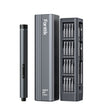
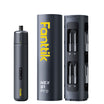
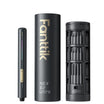
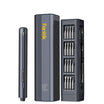
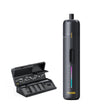
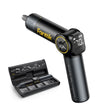
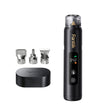
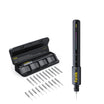
- Precision Maintenance: For small tasks, like tightening a loose interior trim screw or a battery terminal cover, use a dedicated tool like the Fanttik E2 MAX Precision Electric Screwdriver. Having the right tool for the right job prevents you from over-taxing your multi-purpose emergency gear.
Methodology & Modeling Transparency
To provide these recommendations, we used a deterministic parameterized model to simulate a typical family road trip scenario. This is a scenario model, not a controlled lab study, and results may vary based on specific vehicle health and environmental extremes.
Modeling Note (Reproducible Parameters)
| Parameter | Value | Unit | Rationale / Source |
|---|---|---|---|
| Engine Displacement | 3.5 | Liters | Typical mid-size family SUV (V6) |
| Ambient Temp | 20 | °F | Standard cold-weather mountain trip |
| Tire Size | 245/60R18 | ISO | Standard SUV tire dimensions |
| Jump Starter Capacity | 20 | Ah | High-capacity consumer jump pack |
| Cranking Duration | 4 | Seconds | Standard engine start attempt |
Methodology: Our "Winter Confidence Score" is aligned with SAE J537 cranking standards and BCI temperature derating curves. The inflation times are calculated using a pressure-dependent flow decay model calibrated to high-performance portable compressors.
Scope Limits
These calculations assume a healthy, relatively modern vehicle. If your car battery is more than 3-4 years old, the "vampire drain" effect will be significantly more pronounced, and your starter battery’s capacity to hold a charge in the cold will be lower. Always consult your vehicle's manual for specific jump-starting and tire pressure requirements.
Readiness is a Choice
A successful family road trip isn't just about the destination; it’s about the confidence you feel along the way. By understanding the "Power Conflict" and budgeting your energy reserves, you transform a potential roadside crisis into a minor, manageable pause.
Reserving that 10-15% of energy for your engine and tires is a small trade-off for the peace of mind it provides. When you are miles from the nearest service station and the temperature is dropping, you won't care that the kids’ tablets are dead—you’ll only care that your engine turns over and your tires are firm.
Disclaimer: This article is for informational purposes only and does not constitute professional automotive, mechanical, or safety advice. Always refer to your vehicle manufacturer’s guidelines and local safety regulations. If you are unsure about performing a jump-start or tire inflation, contact a professional roadside assistance service.
References
- The 2026 Modern Essential Gear Industry Report: Engineering Trust in a Cordless World
- EU General Product Safety Regulation (EU) 2023/988
- Battery Council International (BCI) Technical Resources
- SAE International - J537 Storage Batteries
- IATA Lithium Battery Shipping Guidelines
Author Note: As a technical strategist who has spent years analyzing automotive recovery patterns and customer safety data, I have seen firsthand how a little bit of "power math" can save a vacation. The goal isn't to be a physicist; it's to be a prepared parent.
Continue reading
 Assessing Post-Sale Support for High-Stakes Family Gear
Covers support maturity, warranty audits, and parts ecosystems to ensure long-term reliability for high-stakes family gear like jump...
Assessing Post-Sale Support for High-Stakes Family Gear
Covers support maturity, warranty audits, and parts ecosystems to ensure long-term reliability for high-stakes family gear like jump...
 Choosing Emergency Gear with Integrated Family Safety Locks
Covers safety lock mechanisms, compliance standards, environmental stress testing, and a layered security framework for family vehicles.
Choosing Emergency Gear with Integrated Family Safety Locks
Covers safety lock mechanisms, compliance standards, environmental stress testing, and a layered security framework for family vehicles.

Leave a comment
This site is protected by hCaptcha and the hCaptcha Privacy Policy and Terms of Service apply.