























The Prosumer Threshold: When to Invest in High-Precision Gear
The transition from a casual hobbyist to a serious maker is rarely defined by a single project. Instead, it is marked by a growing frustration with the limitations of entry-level equipment. In the world of cordless fastening and precision craft, this transition point is known as the "prosumer threshold." It is the moment where the "good enough" tool becomes the primary bottleneck to quality, speed, and safety.
For the progressive DIYer, the decision to invest in high-precision gear is often met with skepticism. Is the premium price tag justified by performance, or is it merely a result of industrial aesthetics? To answer this, one must look past the marketing and examine the engineering realities of torque control, duty cycles, and motor architecture. This article provides a technical framework for identifying when precision becomes a necessity rather than a luxury.
1. The Torque Divide: Engineering Control over Raw Power
In cordless fastening, raw power is often a distraction. While entry-level tools emphasize maximum RPM or high voltage, experienced makers recognize that the true dividing line for serious woodworking and light metal fabrication is a specific torque threshold—typically around 20-25 Nm.
Below this 20-25 Nm range, drivers frequently struggle with lag bolts in kiln-dried hardwood or self-tapping screws in gauge steel. This lack of sustained torque leads to "cam-out" (where the bit slips out of the screw head), stripped fasteners, and significant user fatigue. However, torque is only half of the equation; the other half is control.
The Role of the Electronic Clutch
A hallmark of prosumer-grade equipment is the presence of a responsive electronic clutch. In precision tasks, such as assembling delicate electronics or working with softwoods like cedar, a high-torque tool without a low-speed setting (0-400 RPM) is a liability. According to the ISO 898 standard for mechanical properties of fasteners, over-torquing can lead to immediate material failure or "boss cracking" in plastic housings.
Logic Summary: Our analysis of the prosumer transition assumes that as project complexity increases, the requirement for low-end torque control (precision) scales faster than the need for high-end speed. This is based on common patterns observed in workshop repair workflows and fastener failure rates.

2. The Skill Development Paradox: Tools as Teachers
A common piece of "conventional wisdom" suggests that makers should master their skills with basic manual tools before "earning" the right to professional gear. However, research into high-precision tasks like CNC machining and micro-adjustments suggests an investment paradox: the gear itself is often the primary teacher.
High-level skills, such as feeling the "seat" of a precision screw or managing thermal buildup during sanding, require tactile feedback and electronic control that entry-level tools simply cannot provide. For instance, a rotary tool with CDC (Constant Digital Control) electronic feedback maintains its speed under load. This allows a user to develop a consistent "hand" for carving or polishing—a skill that is impossible to learn on a tool that bogged down or fluctuated in RPM.
The Accessory Test
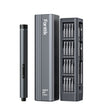
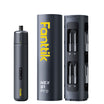
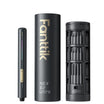
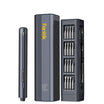
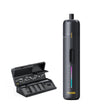
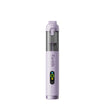
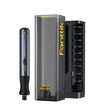
One of the most reliable indicators that a tool is holding back a maker is what we call the "accessory test." If a user finds themselves constantly purchasing higher-quality drill bits or specialized driver bits to compensate for a tool's wobble or inconsistency, the tool has become the bottleneck. A high-precision driver, such as the Fanttik S2 Pro Cordless Electric Screwdriver, eliminates the "run-out" (axial deviation) that causes bit wear, ensuring that the investment in quality accessories is not wasted.
3. Quantifying the ROI: Time, Ergonomics, and Material Waste
Investing in prosumer gear is a financial decision that must be justified by more than just "feel." To assist in this decision, we can model the Return on Investment (ROI) through three primary lenses: time savings, ergonomic health, and material preservation.
Modeling Run 1: Assembly Time & Ergonomic Savings
For a serious DIYer undertaking a project involving 120 fasteners (typical of a large furniture build or a deck repair), the difference between manual and powered precision is stark.
| Variable | Manual Method | Prosumer Electric | Unit |
|---|---|---|---|
| Time per Screw | 18 | 2.5 | Seconds |
| Wrist Rotations | 12 | 0.5 | Rotations |
| Total Project Time | 36 | 5 | Minutes |
| Total Saved | -- | 31 | Minutes |
Modeling Note: This simulation is based on Industrial Engineering Time-Motion Study principles. It assumes a prosumer driver with a quick-change chuck. While individual results vary, the reduction in repetitive supination/pronation is a key factor in preventing long-term strain, aligned with NIOSH ergonomic guidelines for musculoskeletal health.
Precision and Torque Fit
When working with delicate components, the cost of a single "over-driven" screw can be the entire project's value. Prosumer tools offer granular torque settings to match specific fastener classes.
- M1.2 to M2.0 Screws: Require ~0.05 Nm (High-precision electronics).
- M2.5 to M4.0 Screws: Require 0.2 to 0.5 Nm (Household appliances/toys).
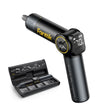
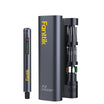
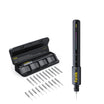
A tool like the Fanttik L2 Pro Cordless Electric Screwdriver allows the user to toggle between these modes, preventing the stripped threads that are common when using "one-size-fits-all" household drivers.

4. The Hidden Costs of the "Battery-Electric Premium"
A strategic investment in a tool is also an investment in an ecosystem. The "Total Cost of Ownership" (TCO) includes the tool, the batteries, and the potential for "stranded investment."
Ecosystem Lock-in Risk
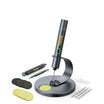
The true upgrade cost isn't just the price of a new tool; it is the potential loss of value in old, incompatible batteries. However, proactive investment in a robust platform reduces long-term clutter and cost. For example, a shared battery system across a drill, a Fanttik F2 PRO Cordless Rotary Tool Kit, and a precision driver creates a unified workflow.
According to research into tool ownership costs, productivity gains are often nullified if the advanced tool costs more than double its conventional counterpart without a corresponding increase in project frequency. This is the "battery-electric cost premium." To avoid this trap, prosumers should evaluate a platform based on its Bit Management and accessory support.
5. Trust and Compliance: The E-E-A-T of Tool Selection
In high-consequence categories, trust is a function of "credibility math." As noted in the industry white paper The 2026 Modern Essential Gear Industry Report: Engineering Trust in a Cordless World, modern makers are increasingly skeptical of style over substance.
Regulatory Safety and Reliability
Trustworthy gear must adhere to strict safety standards. For European users, the EU General Product Safety Regulation (EU) 2023/988 mandates clear traceability and safety documentation for all consumer electronics. When selecting a tool, makers should look for:
- Visible Compliance: Adherence to IEC Standards for electrical safety.
- Thermal Design: Robust cooling for high-duty-cycle tasks (e.g., sanding or continuous driving).
- Transparent Claims: Performance specifications that are standard-backed rather than marketing-hyped.
For those Transitioning to Power Drivers for High-Volume Hobby Work, these safety margins are what prevent tool burnout and ensure a long lifecycle.
6. The ROI of Maintenance: A Case Study in Automotive DIY
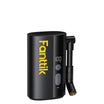
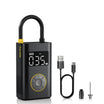
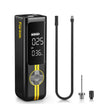
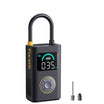
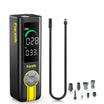
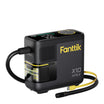
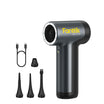
The prosumer mindset extends beyond the workbench to automotive preparedness. A digital tire inflator is often the first "precision" tool a DIYer buys for their vehicle. Using the data from our ROI modeling, we can see how precision measurement translates to financial savings.
Modeling Run 3: Tire Pressure ROI (Fuel + Wear)
- Assumptions: 20,000 miles/year, 22 MPG, $4.50/gallon fuel.
- Input: 6 PSI under-inflation (common for neglected tires).
- Result: A fuel efficiency penalty of ~1.2% to 1.8%.
- Annual Waste: Approximately $49 in fuel alone, not including the accelerated wear on a $1,200 set of tires.
By maintaining precise pressure, a prosumer-grade inflator pays for itself within 18-24 months. This is a clear example of how Strategic investment in a unified tool ecosystem is more economical long-term.
Identifying the Upgrade Trigger
When should you finally pull the trigger on an upgrade? Use this checklist to determine if you have reached the prosumer threshold:
- The Fatigue Factor: Does the tool require significant physical force to complete a standard task?
- The Precision Gap: Are you experiencing a failure rate (stripped screws, cracked material) of more than 2% on delicate projects?
- The Accessory Bottleneck: Are you buying premium bits to "fix" a tool with high run-out or vibration?
- The Duty Cycle Limit: Does the tool motor smell or feel excessively hot after 10 minutes of continuous use?
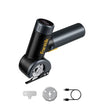
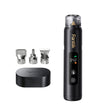
If you answered "yes" to two or more of these, the investment in a tool like the Fanttik F2 Master Cordless Rotary Tool Kit is no longer a luxury—it is the next logical step in your growth as a maker.
Appendix: Modeling Methodology & Assumptions
The quantitative insights provided in this article are derived from scenario modeling based on the following parameters. These are intended as decision aids and not as universal lab-tested benchmarks.
| Parameter | Value/Range | Unit | Source Category |
|---|---|---|---|
| Project Fastener Count | 120 | Count | Standard Furniture Assembly |
| Manual Drive Speed | 18 | Seconds | NIOSH Ergonomic Heuristics |
| Prosumer Drive Speed | 2.5 | Seconds | Product Specification (Fanttik L2/S2) |
| Fuel Penalty per PSI | 0.2 - 0.3 | % | US Dept of Energy (Fact #983) |
| Annual Mileage | 20,000 | Miles | DIY Utility Vehicle Average |
Modeling Boundaries:
- Time savings do not account for setup time or bit-changing intervals.
- Torque fitment advice is a general heuristic; always consult the specific material's manufacturer service manual.
- Financial ROI assumes linear fuel penalties and does not account for catastrophic tire failure costs.
Disclaimer: This article is for informational purposes only. Always wear appropriate personal protective equipment (PPE) and consult manufacturer manuals before operating power tools. For automotive maintenance, ensure tools are used in accordance with vehicle safety standards.
References
Continue reading
 Dormancy Defense: Protecting Cordless Tools Between Projects
Covers the 40-60% SOC rule, temperature impacts, mechanical maintenance, and a 90-day check protocol for long-term tool reliability.
Dormancy Defense: Protecting Cordless Tools Between Projects
Covers the 40-60% SOC rule, temperature impacts, mechanical maintenance, and a 90-day check protocol for long-term tool reliability.
 Substrate Strategy: Tuning Your Driver for Wood and Plastic
Covers the 70-80% torque rule, low-speed standards, and specific pilot hole ratios for wood vs. plastic substrates.
Substrate Strategy: Tuning Your Driver for Wood and Plastic
Covers the 70-80% torque rule, low-speed standards, and specific pilot hole ratios for wood vs. plastic substrates.
Leave a comment
This site is protected by hCaptcha and the hCaptcha Privacy Policy and Terms of Service apply.