











































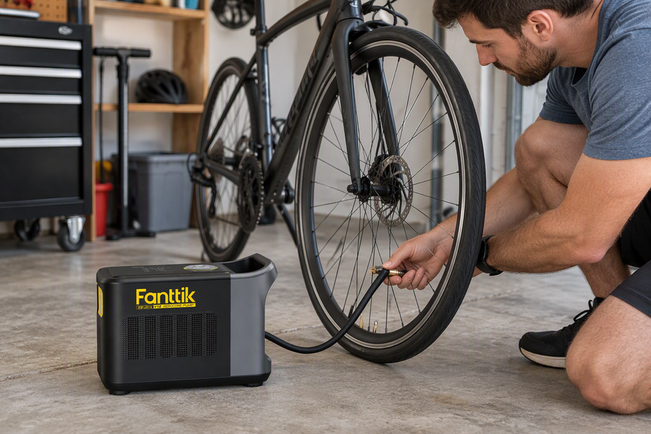
To reinflate a bike tire after replacing an inner tube, start by matching your pump head to the valve. Then check that the new tube isn't caught under the tire, and add air slowly while you watch the tire bead on both sides of the rim. Once the bead sits evenly, pump to your working pressure without going over any maximum marked on the tire or wheel.

Pressure is only half the job. A tube caught between the tire and rim can cause another flat. That's why bike tire reinflation comes down to two separate checks: seating first, then pressure.
How to Reinflate a Bike Tire After Installing a New Tube
These steps work the same in your garage or on the side of the road. Do them in order, because each step prepares you for the next one.
- Identify the valve and match the pump head. Michelin's Presta valve pump-head guidance explains that a Presta valve needs a pump head made for Presta. Schrader valves are wider and use the same format as car tire valves. Whether you use a floor pump or a portable bike pump, push the head fully onto the valve before you start pumping.
- Look along the tire edges before adding air. REI advises you to check that the tube is not caught between the tire and rim by looking along the edges, because a pinched tube could cause another flat. Go all the way around the wheel on both sides.
- Add a little air, then stop and inspect. Keep the tire soft while you run the seating and valve checks in the next section. If something is wrong, it's easier to fix at this stage.
- Keep pumping only after the bead passes. If the bead sits evenly all the way around, keep inflating until you reach the final pressure covered below. If it doesn't, follow the correction steps before you add more air.
- Read the gauge and remove the pump head. Confirm the final number on your pump's gauge. Then detach the head and put the valve cap back on if your tube has one.
How to Check and Correct Tire-Bead Seating
The bead is the stiff edge of the tire that locks into the rim. When it's seated, it sits firmly in the rim all the way around, on both sides of the wheel.
- Check both sides as the tire firms up. REI's guidance is to inflate slowly while checking both sides of the rim so the bead stays firmly seated. Turn the wheel slowly and look at one full side, then flip the bike or move to the other side and check that one too.
- Keep an eye on the valve. REI also says to double-check the valve as you inflate so it stays straight. If the valve starts to lean, stop pumping and look again before you add more air.
- Stop if the tire looks uneven or the tube shows. Don't keep pumping toward riding pressure. Deflate slightly, push the tire bead inward to ensure no part of the tube is caught under it, press the bead back into the rim channel, and restart slow inflation.
- Get help if it still won't seat. If the bead remains uneven or the tube stays visible after resetting it, stop pumping and do not ride on the wheel. Take it to a local bike shop for assistance.

How to Choose Final Tire Pressure
Set your final pressure from guidance for your tire and your riding, not from the biggest number printed on the tire. Michelin explains that the tire-sidewall maximum pressure is the most the tire can handle, not the recommended operating pressure. Michelin's guide works out a pressure from rider weight, tire width, riding type, and setup.
Your wheel has limits too. Giant warns never to inflate over the maximum pressure marked on the rim, tire, or rim tape, and it points out that maximum pressure is not the recommended pressure. Look for markings on each of those parts before you do your final pumping.
For your actual working number, start with the recommended pressure or range from your tire or your bike's owner's manual, if either lists one. Our bike tire pressure guide covers starting PSI by riding style, tire width, rider weight, and terrain. It also lists the tire and rim limits worth checking before a ride. When you finish reinflating the bike tire, the gauge should read within that working range and below every marked maximum.
What to Do if the Tire Loses Air Again
Find the cause before you add more air. Pumping the tire up again won't fix a leak, and it hides whatever let the air out.
- Inspect the tube for obvious damage. Take out the tube and look for a clear puncture or blowout.
- Test for escaping air if nothing is visible. If you see no obvious puncture or blowout, REI advises that you check the tube for escaping air. Inflate the tube by itself and listen or feel along it for a leak.
- Look closely at the valve stem and base. REI notes that a valve stem or base that is cut, cracked, or severely worn may be leaking. If you notice visible wear or tears there, that damage may be allowing air to escape rather than an issue with how you attached the pump.
Once you know whether the leak is in the tube body or the valve, you can patch it or install another tube, then repeat the full bike tire reinflation sequence from the top.
FAQs
How do I let air out if I pumped the tire too high?
That depends on your valve. Michelin notes that you release air from a Presta valve by unscrewing its small shell at the tip, not by pressing a pin. Schrader valves use the car-style format, so you let air out by pressing the center pin. Let a little out at a time and check the gauge until you're back in your working range.
Do these steps apply to tubeless tires?
No. This sequence is for wheels with an inner tube, where the main risk is the tube getting caught under the tire bead. A tubeless setup has no tube, so the tire itself has to seal against the rim. If you run tubeless, follow our walkthrough on seating tubeless MTB tire beads.
What if the rim or rim tape lists a lower maximum than the tire?
Treat the lowest marked maximum as your ceiling. Giant's guidance is never to inflate over the maximum shown on the rim, the tire, or the rim tape. If one of those parts lists a lower number, going above it breaks that rule even when you're still under the tire's limit. Pick your working pressure below that lowest figure.
Continue reading
 Cordless Pressure Washer Not Drawing Water? Checks to Try
A step-by-step water-path check for the NB8 Ultra: source, weighted filter, kinks, inlet screen, and a short prime,...
 Bike Tire After a Tube Change: What to Check Before Riding
Inflating a new tube doesn't prove the repair worked. Here is how to confirm the tire seats evenly,...
Leave a comment
This site is protected by hCaptcha and the hCaptcha Privacy Policy and Terms of Service apply.