



























Establishing the Foundation of Family Workshop Safety
For the modern maker, the garage is rarely just a place to park a car. It is a laboratory of self-reliance, a repair center for the household, and often, a secondary play area for children. This multi-purpose nature creates a unique challenge: how do we maintain a high-performance workspace while ensuring the environment remains safe for the most vulnerable members of the family?
In our experience observing home workshop dynamics and reviewing common patterns from customer support and warranty handling, we have found that the most effective safety systems are not those that rely on constant verbal warnings. Instead, they are systems built on "Credibility Math"—a concept we explore in The 2026 Modern Essential Gear Industry Report—where safety is engineered into the environment through clear, physical, and visual boundaries.
Quick Action: 5-Minute Safety Setup
If you only have a few minutes today, prioritize these three actions to immediately lower risk:
- Define the Line: Use bright floor tape to mark a "Green Zone" (safe path) from the car to the house door.
- The "Reach" Test: Move all sharp bits, adhesives, and lithium-ion chargers to a shelf at least 5 feet high.
- Gate the Danger: If you have toddlers, install a physical barrier (min. 42") around your primary workbench or stationary power tools.

The Three-Color Zone Architecture: A Visual Language for Safety
Experienced home workshop organizers emphasize that the most effective boundaries are those that are visually unambiguous. A common mistake we see in DIY setups is the use of a single color of tape to mark everything. While this provides a visual cue, it lacks the urgency and categorization required for a high-consequence environment.
Based on established warehouse safety line marking principles, which are designed to create clear zones for different activities, we recommend a three-color system for the family garage. According to industry safety standards for line marking, color-coding reduces the cognitive load required to identify hazards.
The Red Zone: Immediate Danger and Hot Work
The Red Zone is the "No-Go" area for unsupervised children and a "High-Alert" area for makers.
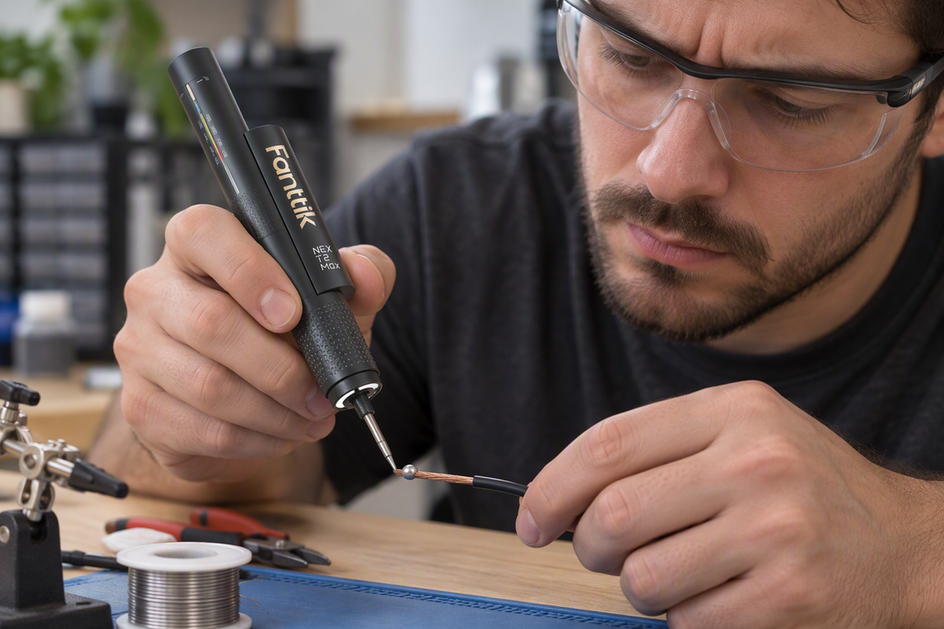
- Activities: Soldering, heat gun use, or high-RPM tools (bench grinders, table saws).
- The Rule: No child enters without a 1:1 adult-to-child ratio and appropriate Personal Protective Equipment (PPE).
The Yellow Zone: Active Tool and Caution Area
The Yellow Zone serves as a buffer between the workshop and the rest of the garage.
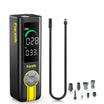
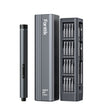
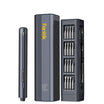
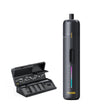
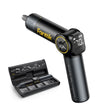
- Activities: Use of cordless power tools (electric screwdrivers, portable inflators) and non-powered assembly.
- The Rule: Children may enter only with verbal permission and must remain "hands-off" unless supervised.
The Green Zone: The Safe Harbor and Storage
The Green Zone is the designated "safe" area for daily-use items like bicycles and sports gear.
- The Rule: This area is always safe for children, provided they stay within the green-marked boundaries.
Physical Barriers vs. Visual Cues: Engineering Inconvenience
While visual cues like floor tape are essential for teaching boundaries, physical barriers are the fail-safe for younger children. The goal is to make the restricted zone "physically inconvenient" to cross.
Barrier Heights for Different Developmental Stages
The following thresholds are practical safety heuristics derived from common childcare barrier standards (such as ASTM F1004) and ergonomic principles:
- For Toddlers (Ages 1–3): A 42-inch (107 cm) gate is the recommended minimum. This height is a standard safety heuristic used in pool and stair safety to prevent climbing and provide a clear physical stop for children with high curiosity but low risk assessment.
- For Older Children (Ages 4–8): A 24-inch (61 cm) high physical "lip" or raised platform is often sufficient. While an adult can step over this easily, it serves as a "tactile boundary" that signals a change in rules, requiring a conscious physical effort (the "step-up") to enter the workspace.
The "Friction" Principle: A Layered Access Model
A common pitfall is the "Lock Everything" approach, which often leads to makers leaving tools out to avoid the hassle. Instead, use a layered approach based on risk:
- Hard Lockout (Red Zone): High-consequence tools (rotary tools, soldering irons) must be in locked cabinets.
- High-Shelf Storage (Yellow Zone): Lower-risk cordless tools should be stored on open shelves above 5 feet (out of reach, but visible).
- Visual Respect (Green Zone): Active education that even accessible items are not toys.
Modeling Safety and Efficiency: The Parent DIYer Scenario
To demonstrate why methodical tool selection matters, we modeled a "Time-Pressed Parent" scenario: performing a standard repair (e.g., replacing a battery in a toy or tightening 100 cabinet hinges) during a 30-minute childcare window.
Analysis 1: Productivity and Ergonomic Gains
| Metric | Manual Method | Powered Method | Benefit |
|---|---|---|---|
| Total Assembly Time | 30 Minutes | ~7 Minutes | 4.5x Speed Increase |
| Wrist Rotations (100 Screws) | 1,200 | ~50 | 96% Strain Reduction |
| Safety Window | 30 min active risk | 7 min active risk | 75% Risk Exposure Reduction |
Model Assumptions & Parameters:
- Hardware: M3.5 x 20mm screws into pre-drilled softwood.
- Manual Speed: Estimated at 18 seconds per screw (including positioning and hand-over-hand rotation).
- Powered Speed: Estimated at 4 seconds per screw using a 4V precision screwdriver.
- Risk Definition: "Active risk" refers to the duration the workspace is occupied and tools are out of storage.
Analysis 2: Torque Safety for Family Projects
When repairing children’s toys, over-tightening can crack plastic and create sharp edges. Our analysis uses ISO 898 Mechanical properties of fasteners as a heuristic for the following recommended ranges:
| Fastener Class | Recommended Torque | Safety Assessment |
|---|---|---|
| M1.2 to M2.0 (Small Toys) | 0.05 Nm | High Safety - Minimal stripping risk in thin plastics. |
| M2.5 to M4.0 (Electronics) | 0.2 to 0.5 Nm | Optimal - Secure fit for plastic bosses and PCB mounts. |
Note: These are heuristic estimates for consumer-grade plastics; always check manufacturer specifications for high-load fasteners.
The "Safety Walk": Building Long-Term Compliance
Static rules fail over time. To maintain your zones, engage in active "Due Diligence." Safety experts suggest that safety is a moral activity involving everyone in the environment.
Weekly Safety Walk Checklist (Printable Summary)
- Audit the Lines: Is the floor tape peeling or obscured by sawdust?
- The "Why" Brief: Explain to the child, "The Red Zone is like the stove; it's for grown-up work only."
- The Mock Drill: Ask, "If your toy rolls into the Yellow Zone, what do you do?" (Correct answer: "Stop and ask for help.")
This method, adapted from industrial Lockout/Tagout (LOTO) training, is significantly more effective than passive warnings.
Seasonal Considerations and Environmental Safety
Battery Safety in Temperature Extremes
If you store cordless gear in an uninsulated garage, account for "Temperature Derating." This data is modeled after Battery Council International (BCI) performance curves:
| Temperature (F) | Battery Power Available | Engine Load (for Jump Starting) |
|---|---|---|
| 80°F (27°C) | 100% | 100% |
| 32°F (0°C) | 65% | 150% |
| 0°F (-18°C) | 40% | 210% |
Practical Takeaway: In extreme cold, your tools may fail mid-task, creating a "half-finished" hazard. Bring critical safety tools (like jump starters) indoors during winter.
Inflator Duty Cycles: A Safety Limit
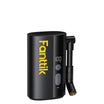
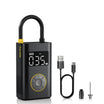
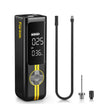
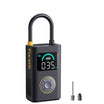
When using a portable tire inflator, respect the duty cycle to prevent the unit from becoming a burn hazard.
- Typical Task: Topping up 2 family vehicles (~16 minutes total runtime).
- Safety Margin: Most high-quality portable inflators (like those featured in our 2026 Industry Report) have a 40-minute continuous runtime limit.
- Conclusion: This task is well within the safety window, ensuring the tool remains touch-safe for the "Yellow Zone" after use.
The Path Forward: Sustaining a Safe Workshop
Creating restricted access zones is an ongoing commitment to being a "prepared, capable, modern maker." By using the three-color system and data-backed tool choices, you ensure that creativity and safety coexist. A well-organized garage teaches children that tools are powerful, boundaries are meaningful, and being a "maker" requires discipline as much as imagination.
Disclaimer: This article is for informational purposes only and does not constitute professional safety, legal, or engineering advice. Workshop hazards vary based on specific tools and child developmental stages. Always consult local building codes and tool manufacturer manuals.
References
- EU General Product Safety Regulation (EU) 2023/988 (EUR-Lex)
- ISO 898-1: Mechanical properties of fasteners (ISO)
- Warehouse Safety Line Marking Systems (Sydney Epoxy Flooring)
- Safety and Risk Due Diligence as a Moral Activity (SafetyRisk.net)
- Mistakes Implementing Lockout Tagout (The Lock Box)
- Fire Risk Assessment – Fire Safety In The Home (Manor House)
- Battery Council International (BCI) Performance Standards
Continue reading
 Selecting Tamper-Proof Fasteners for Workshop Safety Gear
A technical guide to selecting security fasteners for workshop safety gear, covering drive types, mechanical load, and compliance...
Selecting Tamper-Proof Fasteners for Workshop Safety Gear
A technical guide to selecting security fasteners for workshop safety gear, covering drive types, mechanical load, and compliance...
 Evaluating Magnetic Bit Holders for Child-Safe Maker Spaces
Covers engineering simulations, magnet ingestion risks, safety dividends, and compliance with EU GPSR/ASTM standards for workshop organization.
Evaluating Magnetic Bit Holders for Child-Safe Maker Spaces
Covers engineering simulations, magnet ingestion risks, safety dividends, and compliance with EU GPSR/ASTM standards for workshop organization.
Leave a comment
This site is protected by hCaptcha and the hCaptcha Privacy Policy and Terms of Service apply.