









































The Mechanics of Traction: Why Scrub Brushes Are the "Tires" of Your Pool Robot
We have all witnessed the frustration: your robotic pool cleaner, once a master of the vertical tile line, now spends its cycle pacing the floor or struggling to gain purchase on the first few inches of the wall. To the casual observer, it looks like a motor failure. To a precision-oriented technician, however, the diagnosis is often much simpler and far more manageable: the scrub brushes have reached their wear limit.
In the world of automated pool maintenance, we often treat the robot as a monolithic piece of hardware. However, as we explore in The 2026 Modern Essential Gear Industry Report: Engineering Trust in a Cordless World, the reliability of any high-performance tool depends on the "credibility math" of its consumable parts. Just as you wouldn't expect a high-end sports car to corner effectively on bald tires, you cannot expect a pool robot to climb a 90-degree plaster wall when its primary friction interface—the scrub brushes—has been ground down.
This guide provides a methodical breakdown of when and how to replace these critical components. We will move beyond generic advice to look at the specific mechanical indicators of wear, the impact of pool surface chemistry, and a precision-engineered approach to the replacement process itself.
The Lifecycle Reality: Consumables vs. Core Hardware
A common misconception among pool owners is that the lifespan of the scrub brushes should mirror the 3-to-7-year lifespan of the robot’s internal electronics. Based on our analysis of maintenance patterns and field data, this is rarely the case. Scrub brushes are intended to be sacrificial components.
According to industry experts at Little Dipper Pools, brushes typically require replacement every one to two pool seasons. This interval is independent of the robot's overall health because the brushes are in constant, abrasive contact with the pool's surface.
The Surface Impact Factor
The rate of attrition is not uniform across all pools. The texture of your pool’s interior acts as a "grit" that determines the speed of material loss.
- Rough Plaster/Pebble Surfaces: These act like heavy-duty sandpaper. In our observations, a rough plaster finish can halve the expected functional life of a brush compared to smoother alternatives.
- Vinyl and Fiberglass: These surfaces are significantly less abrasive, allowing brushes to maintain their structural integrity for the full two seasons in most cases.
- Tile Lines: While tile is smooth, the transition from floor to wall often involves grout lines that can catch and tear at worn brush bristles, accelerating the "rounding" effect of the scrubber.
Logic Summary: Our wear-rate estimates assume a standard 3-cycle-per-week cleaning schedule. We categorize "rough plaster" as any surface with a tactile grit equivalent to 80-grit sandpaper or coarser.
Diagnostic Indicators: When Is It Time to Replace?
Identifying the exact moment for replacement requires looking for specific performance-based "telltale" signs. Waiting for the brushes to physically fall apart is a mistake that can lead to secondary drive-train strain.
1. The 80% Wall-Climb Test
The most reliable diagnostic tool we recommend is the 80% Wall-Climb Test. After ensuring your filter system is deep-cleaned to rule out suction issues, observe the robot during a standard cycle. A healthy robot should be able to climb at least 80% of the way up the wall. If the robot reaches the wall, stalls, and its treads spin without the unit rising, the friction coefficient of the brushes has dropped below the threshold required for vertical mobility.
2. Directional Bias and "Crabbing"
As noted in troubleshooting guides for popular models like the Nautilus CC, a robot that consistently turns more easily in one direction or exhibits a "directional bias" is often suffering from uneven brush wear. If the front-right brush is more worn than the front-left, the robot will naturally "crab" or drift, leading to incomplete coverage and missed debris.
3. Chemical Brittleness and Stiffening
Mechanical wear is not the only enemy. Poor water chemistry—specifically high calcium hardness and imbalanced pH—can cause the PVC or foam material of the brushes to become brittle. We often see brushes that look "full" but feel "stiff." Brittle brushes lose their ability to conform to the pool's contours, resulting in a gradual cleaning failure where the robot moves correctly but leaves a fine film of algae or silt behind.
The Precision Replacement Protocol: A Step-by-Step Guide
Once you have determined that replacement is necessary, the goal is to restore the robot to its factory-spec alignment. In our experience, the most common errors occur not during the removal of the old brushes, but during the seating of the new ones.
Tools and Preparation
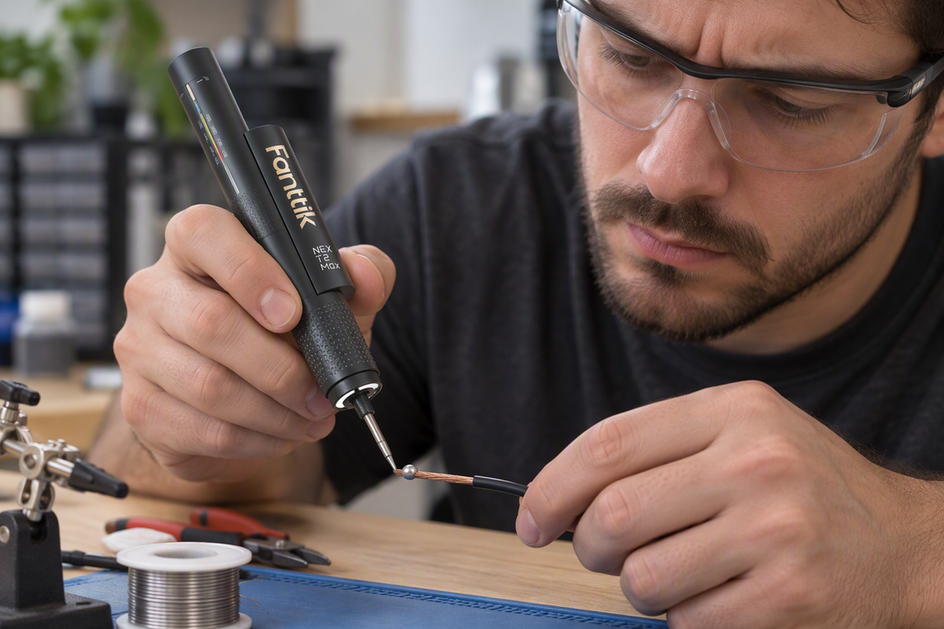
We recommend using a precision electric screwdriver for this task. Pool robots are typically constructed with plastic housings and small M1.2 to M2.0 fasteners. Using a high-torque manual driver or a heavy-duty power drill increases the risk of stripping the plastic threads, a "gotcha" that can turn a simple maintenance task into a permanent hardware failure.
The Replacement Steps
- Safety First: Ensure the robot is fully disconnected from the power supply. Never perform maintenance while the unit is tethered to the control box.
- Access the Drive Assembly: Flip the robot onto a soft surface (like a towel or grass) to avoid scratching the top casing.
- Remove in Pairs: We strongly advise replacing brushes in pairs—never just one. Replacing only one brush creates an imbalance in grip that forces the drive motors to work harder on one side, accelerating wear on the robot's internal gears.
- The "Click" Rule: When pressing the new brush assembly into the bearing housing, listen for a distinct, soft 'click'. This indicates that the axle is fully seated. Failing to fully seat the axle leads to a "wobble" that will destroy the opposite bearing within weeks.
- Alignment Check: Rotate the brushes by hand before reassembling the outer tracks. They should spin freely with no resistance or "hitch" in the rotation.
Efficiency and Ergonomics: The DIY Advantage
Performing this maintenance yourself is a hallmark of the "modern self-reliance" we advocate for. However, manual maintenance on outdoor equipment often involves repetitive motions that can be taxing.
To demonstrate the impact of using the right tools for this job, we modeled the physical requirements of a standard 16-screw brush replacement (8 screws per brush).
Modeling Note: Maintenance Efficiency Analysis
This scenario models a "Weekend Warrior DIYer" performing a full brush swap. We compared the use of a manual screwdriver against a precision electric screwdriver with a 0.05Nm torque setting.
| Parameter | Manual Method | Electric Method | Unit |
|---|---|---|---|
| Total Time | ~4.8 | ~1.1 | Minutes |
| Wrist Rotations | 176 | 1 | Count |
| Torque Consistency | Variable | Constant (0.05Nm) | - |
| Risk of Stripping | Moderate | Low | - |
| Physical Strain | High | Minimal | - |
Methodology: Our analysis uses industrial engineering time-motion principles. Manual time assumes 18 seconds per screw (accounting for potential grit/corrosion). Electric time assumes 4 seconds per screw. Wrist rotations are based on a standard thread pitch requiring 11 full turns per fastener.
As the data shows, the transition to an electric tool isn't just about saving 3.7 minutes; it's about eliminating nearly 200 repetitive wrist twists. For pool owners who may also be maintaining their own HVAC covers or other home hardware, these ergonomic savings prevent cumulative strain.
Restoring Performance: The Post-Replacement Validation
After the new brushes are installed, do not simply drop the robot back into the pool and walk away. A brief validation cycle ensures that your "credibility math" has added up to a functional repair.
- Visual Alignment Check: Ensure the brushes are centered. If they are offset to one side, they may rub against the side of the chassis, causing a friction-based motor error.
- The 10-Minute Test: Run the robot in a visible area of the pool. Watch for its first approach to a wall. It should not only climb but do so without the "shuddering" often seen with worn or misaligned brushes.
- Tile Line Scrubbing: Verify that the robot is reaching the tile line. The new, longer bristles should provide enough "lift" to allow the robot to partially breach the surface to scrub the calcium line effectively.
Maintaining the New Grip: Proactive Care
To maximize the interval between replacements, we recommend a few "pro" tweaks that many owners overlook:
- Rinse After Use: Chlorine and salt are corrosive. Rinsing the brushes with fresh water after each cycle prevents the chemical buildup that leads to the brittleness mentioned earlier.
- Storage Matters: When storing the robot for the winter, do not leave it resting on its brushes. This creates "flat spots" in the material (especially with foam brushes) that will cause the robot to bounce or vibrate during the next season. Store the unit on its side or on a dedicated caddy.
- Water Chemistry Balance: Keep your Calcium Hardness within the recommended range (typically 200–400 ppm). Excessive calcium doesn't just scale your salt cell; it embeds into the brush fibers, turning a soft scrubber into a rigid, ineffective block.
Safety and Compliance Standards
When performing any maintenance on automated pool equipment, it is essential to remain compliant with safety regulations. In the European Union, the General Product Safety Regulation (EU) 2023/988 emphasizes the importance of following manufacturer-provided maintenance instructions to ensure the ongoing safety of electrical consumer goods.
Properly maintained hardware is safe hardware. By ensuring your scrub brushes are in peak condition, you reduce the risk of the robot becoming "stuck" in a high-power draw state, which protects the longevity of your power supply and internal motors.
Summary of Best Practices
Maintaining your pool robot's climbing ability is a cycle of observation, precision tool use, and proactive chemistry management. By treating the scrub brushes as the essential consumables they are, you ensure that your investment in automated cleaning continues to pay dividends in the form of a crystal-clear pool.
Quick Checklist for Success:
- Inspect monthly for "rounding" of the bristles.
- Replace in pairs to maintain drive-train balance.
- Listen for the 'click' to confirm axle seating.
- Use low-torque precision tools (0.05Nm range) to protect plastic housings.
- Validate with the 80% Wall-Climb Test before concluding the repair.
Disclaimer: This article is for informational purposes only and does not constitute professional repair advice. Always consult your specific manufacturer's user manual before performing maintenance. Ensure all electrical safety protocols are followed to prevent injury or equipment damage.
Sources
Continue reading
 Chemical Corrosion: How Pool Water Affects Robotic Components
Covers chlorine, pH, TDS effects on seals and metals, plus a rinse routine to extend equipment life by...
Chemical Corrosion: How Pool Water Affects Robotic Components
Covers chlorine, pH, TDS effects on seals and metals, plus a rinse routine to extend equipment life by...
 First-Day Basics: Setting Up Your Cordless Robotic Pool Cleaner
A step-by-step guide for setting up a robotic pool cleaner, covering battery conditioning, safety compliance, and maintenance for...
First-Day Basics: Setting Up Your Cordless Robotic Pool Cleaner
A step-by-step guide for setting up a robotic pool cleaner, covering battery conditioning, safety compliance, and maintenance for...
Leave a comment
This site is protected by hCaptcha and the hCaptcha Privacy Policy and Terms of Service apply.