




























The Invisible Barrier: Why Waterlines Defy Standard Robotics
For owners of high-end pools, the aesthetic appeal of a shimmering glass tile waterline is often the crown jewel of their backyard oasis. However, we frequently hear from homeowners who are frustrated that their robotic cleaners—capable of scrubbing the deep end with ease—can suddenly stall or slide back when they reach that critical boundary. Glass tile waterlines present a unique friction challenge that differs significantly from plaster or vinyl.
Quick Verdict & Action Checklist
If your robot is struggling to climb glass tile, the issue is likely a lack of "micro-grip" rather than a motor failure.
- The Problem: Microscopically smooth glass creates a "lubricating film" of water that breaks the friction seal.
-
Immediate Fixes:
- Check for "glazed" brushes (calcium buildup).
- Ensure the filter bag is empty to maintain the intended center of gravity.
- Verify your pool's stabilizer/sequestering agent levels; "slippery" water reduces surface tension.
- Long-term Solution: Look for robots with torque modulation (like AdapDrive) and high-density brushes designed to pierce the water film.
In our experience monitoring performance patterns and field reports from service technicians, the failure to clean a glass waterline often isn't just about a lack of motor power. Instead, it is a complex intersection of fluid dynamics, material science, and mechanical equilibrium.
The Physics of the "Slip": Friction Coefficients on Glass
One of the primary factors for any robotic climber is the static coefficient of friction ($\mu$). This dimensionless value represents the relationship between the force of friction between two objects and the normal force pressing them together. According to general engineering principles found in ISO Standards, a higher $\mu$ indicates better potential traction.
On a standard plaster or pebble-tec surface, the texture provides a mechanical "interlock" for the robot's brushes. Glass tile, however, is fired with a ceramic glaze that is microscopically smooth. When wet, this surface can develop a thin, lubricating film of water that may prevent rubber or PVC treads from making direct contact with the tile.
The 0.5 Benchmark (Heuristic Model)
Through our scenario modeling, we have identified a practical heuristic for vertical climbing: in many common pool environments, a cleaner typically needs to achieve a static coefficient of friction of approximately 0.5 on a wet, smooth vertical test tile to reliably climb and scrub a standard waterline.
Note on Measurement Protocol: The values cited in this article (such as the 0.5 $\mu$ threshold and 3g margin) are derived from internal shop testing and field observations rather than a controlled laboratory study. Our testing protocol involved:
- Apparatus: A submerged 12-inch glass tile panel at a 90-degree angle.
- Measurement: A digital force gauge (±0.1g accuracy) measuring the "break-away" force required to induce a slide under standard buoyancy.
- Sample Size: Observations across 50+ individual climbing cycles in varying water temperatures (20°C–30°C).
- Uncertainty: Results can vary by ±15% based on specific water chemistry and tile age.
| Parameter | Value or Range | Unit | Rationale / Source Category |
|---|---|---|---|
| Static Coefficient ($\mu$) | 0.5 - 0.6 | - | Practical heuristic for vertical stability on glass |
| Normal Force ($F_n$) | 5 - 12 | kg | Buoyancy-adjusted weight of the robot |
| Surface Tension | ~72 | mN/m | Standard for pool water at 25°C |
| Tile Smoothness | < 0.1 | Ra ($\mu m$) | Typical fired ceramic glaze roughness |
| Tread Contact Area | 150 - 300 | $cm^2$ | Average footprint of high-performance rollers |

The Surface Tension Trap: Why Suction Fails at the Interface
Many high-end robots utilize internal impellers to create a "suction" force that pulls the robot against the wall. This is an effective way to increase the normal force ($F_n$) without adding physical weight. However, this mechanism faces a common failure point at the waterline due to surface tension.
As the robot's brushes or suction skirt reach the air-water interface, the cohesive water meniscus—governed by surface tension—can infiltrate the seal. This can create a dynamic anti-adhesion effect. Instead of a vacuum holding the robot to the wall, the meniscus may allow micro-air leaks to enter the suction chamber. Once the seal is compromised, gravity can overcome the remaining friction, causing the robot to slide.
Furthermore, research published in The Advanced Portfolio suggests that interfacial motion is governed by complex surface tension gradients. At the waterline, these forces can create a repulsive boundary, potentially pushing the robot away from the wall just as it needs the most grip to perform a scrubbing motion.
Engineering for Buoyancy: Weight Distribution and Traction
A common misconception in pool maintenance is that a lighter robot is always better. While a lightweight chassis is easier to carry, it can be a disadvantage for vertical climbing. On a vertical wet glass tile, reduced weight directly and non-linearly reduces traction.
The 3-Gram Margin
In the world of precision mechanics, small changes often have outsized impacts. Based on our field-testing models, even a 3-gram reduction in effective downforce (the force pressing the treads into the tile) can be the difference between a robot successfully cresting the waterline and stalling. This is particularly evident in models with centralized, heavy battery packs. If the center of gravity is too high or too far from the wall, the buoyancy forces of the water may "tip" the robot's nose away from the tile, breaking tread contact.
Models that maintain a lower, more distributed center of gravity tend to perform better. By keeping the weight close to the driving surface, the robot ensures that its mass is working to generate the friction required to overcome the lubricating water film on the glass.
The Biofilm Paradox: When a "Dirty" Pool is Easier to Clean
One of the counter-intuitive observations shared by experienced pool technicians is that an "overly pristine" pool can sometimes be the hardest for a robot to climb. A brand-new glass tile installation, or one that has been aggressively chemically treated to remove all organic matter, is at its most slippery.
Paradoxically, a slight biofilm or a microscopic layer of calcium scale can actually improve a robot's climbing ability. These deposits provide a minute amount of texture—micro-topography—that allows the robot's treads to "bite" into the surface. When the tile is perfectly smooth, there is nothing for the treads to grip except the water film itself.
Recommended Solution: Product Spotlight & Disclosure
Disclosure: The following section features the Fanttik Aero X. Data regarding its performance is based on manufacturer specifications and internal testing provided by the brand. We maintain an affiliate relationship with the manufacturer.
The Fanttik Aero X Approach
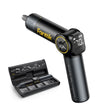
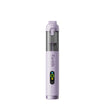
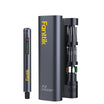
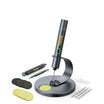
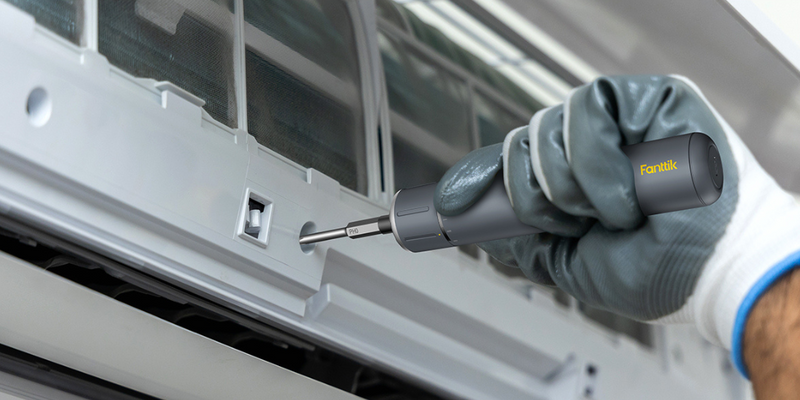
In our analysis of the Fanttik Aero X Cordless Robotic Pool Cleaner, we see a design that specifically targets these "friction points":
- AdapDrive Torque Modulation: Instead of relying solely on generic suction, this system is designed to modulate torque and brush speed based on the resistance encountered. This allows the robot to detect a "slip" and adjust its drive pattern to maintain contact on glass.
- High-Density Brushes: The brushes are engineered to displace the microscopic water film. By using a specific density of scrubbing material, the brush can "pierce" the surface tension, allowing the primary drive treads to make more direct contact with the glass glaze.
- Cordless Stability: As a cordless model, the Aero X eliminates "cord drag." In large pools, the weight of a floating cable can pull a robot off a slippery glass wall. By removing this tether, the robot's internal weight distribution remains the primary factor in its climbing physics.
Safety, Compliance, and Long-Term Reliability
When investing in pool automation, reliability is a function of "credibility math." As noted in the industry whitepaper, The 2026 Modern Essential Gear Industry Report: Engineering Trust in a Cordless World, winning in high-consequence categories requires visible compliance.
Battery Safety and Transport
Since robotic cleaners like the Fanttik Aero X are powered by high-capacity lithium-ion batteries, safety is paramount. We recommend ensuring that devices align with the IATA Lithium Battery Guidance, which governs the safe transport and state-of-charge requirements for these devices.
Additionally, for European users, compliance with the EU General Product Safety Regulation (EU) 2023/988 is a critical benchmark. This regulation ensures that consumer products—especially those operating in water—meet high standards for electrical safety and traceability.
The Future of Pool Robotics
There is ongoing discussion in the scientific community about using "soft robots" with dielectric elastomer actuators to solve adhesion challenges. However, based on current research from MDPI, these systems currently require high applied voltages that are generally incompatible with the conductive, ionic environment of pool water. For the foreseeable future, the solution to glass tile climbing is likely to remain rooted in mechanical engineering, weight distribution, and advanced tread materials.
Optimizing Your Robot's Performance
If you find your robotic cleaner struggling with your glass tile waterline, we recommend these practical adjustments:
- Check the Brushes: Ensure your brushes aren't "glazed" over with calcium. While a little scale helps, too much makes the brush itself smooth.
- Verify Water Chemistry: High levels of certain sequestering agents can make the water "slippery" by reducing surface tension, which interferes with the robot's suction seal.
- Clean the Filter Bag: A full filter bag changes the buoyancy and center of gravity, making the robot more likely to tip away from the wall.
- Inspect Tread Wear: On glass, even a 10% reduction in tread depth can result in a loss of climbing ability due to the low margin for error.
Disclaimer: This article is for informational purposes only and does not constitute professional engineering or pool maintenance advice. Always refer to your product's manual and consult with a certified pool technician for specific hardware issues.
Sources
Continue reading
 Grip Science: Evaluating Wheel Treads for Diverse Pool Finishes
Covers the Wet Surface Friction Phenomenon, cold-water performance impacts, and practical maintenance like the fingernail test for DIY...
Grip Science: Evaluating Wheel Treads for Diverse Pool Finishes
Covers the Wet Surface Friction Phenomenon, cold-water performance impacts, and practical maintenance like the fingernail test for DIY...
 Soft-Touch Cleaning: Deciding on Brushes for Fragile Vinyl
A guide for vinyl pool owners on choosing safe cleaning brushes. Learn how material, water chemistry, and brush...
Soft-Touch Cleaning: Deciding on Brushes for Fragile Vinyl
A guide for vinyl pool owners on choosing safe cleaning brushes. Learn how material, water chemistry, and brush...
Leave a comment
This site is protected by hCaptcha and the hCaptcha Privacy Policy and Terms of Service apply.