











































Quick Summary: Why RoHS Matters for Your Car
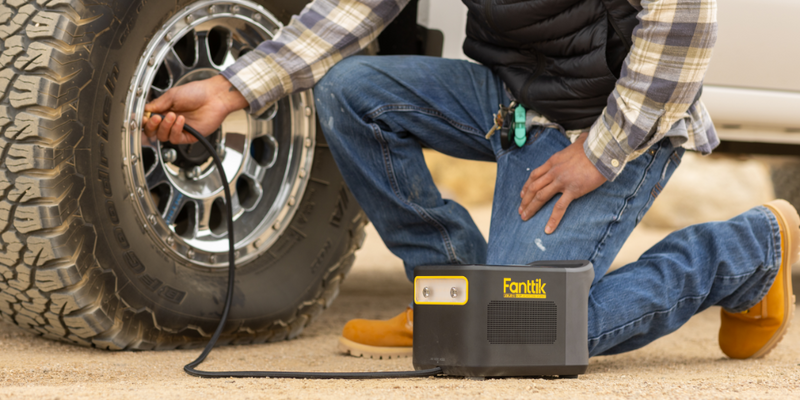
RoHS certification ensures that the electronics and tools you store in your vehicle—like tire inflators and jump starters—do not contain hazardous heavy metals or plasticizers that can off-gas during the "hot car effect." This is critical for protecting children, who are more sensitive to chemical exposure in confined spaces.
Quick Action Checklist:
- The 10-Minute Flush: Always vent your car for 10 minutes after it has been sitting in the sun to clear accumulated VOCs.
- Trunk Storage: Store automotive tools in the trunk rather than under seats to increase the "air buffer" between gear and passengers.
- Verified Compliance: Look for brands that provide accessible RoHS/REACH documentation, not just a logo on the box.
Why RoHS Certification Impacts Family Health on Long Drives
We all know the feeling of a long-awaited family road trip: the trunk is packed, the kids are buckled in, and there is a sense of adventure in the air. As parents, we prioritize the safety ratings of our SUVs and the quality of our car seats. However, an invisible factor often goes unnoticed in the confined space of a vehicle—the chemical composition of the tools and electronics we bring along.
When you store a portable tire inflator under a seat or keep a jump starter in the trunk, those devices are complex assemblies of plastics, circuit boards, and batteries. In a car—which can swing from freezing winter nights to sweltering summer days—these materials can behave differently than they would in a climate-controlled home. This is where RoHS certification moves from a technical "checkbox" to a vital pillar of family health.
Understanding RoHS: The "Invisible Shield" for Your Children
RoHS stands for the Restriction of Hazardous Substances. Originally an EU directive, it has become a global benchmark for electronics manufacturing. It restricts the use of ten specific hazardous materials, including Lead (Pb), Mercury (Hg), Cadmium (Cd), and Hexavalent Chromium (CrVI), along with several flame retardants and plasticizers (phthalates).
For a family spending hours in a car, the primary concern is chronic, low-level exposure. Children are physiologically more vulnerable to chemical stressors because their metabolic systems are still developing, and they breathe more air per pound of body weight than adults. According to the EU General Product Safety Regulation (EU) 2023/988, manufacturers are obligated to ensure that products do not pose a risk under "reasonably foreseeable" conditions of use.
In a road trip context, "foreseeable use" includes storing a device in a hot car for months. If a tool contains non-compliant materials, those substances can potentially migrate or off-gas, contributing to the chemical load inside your vehicle's cabin.
The "Hot Car" Effect: How Heat Amplifies Chemical Risks
Inside a car parked in the sun, temperatures can easily exceed 95°F (35°C), even if the outside air is much cooler. This heat aggressively accelerates "off-gassing," where Volatile Organic Compounds (VOCs) escape from materials.

Modeling the Thermal Stress of Road Trip Tools
Note: The following values are heuristic estimates based on Fanttik’s internal workshop testing and thermal modeling for standard family SUVs.
Our analysis examined a "Year-Round Road Trip Family" storing automotive gear in their vehicle. We modeled chemical migration risks based on the Arrhenius Equation, which suggests that for every 10°C (18°F) increase in temperature, the rate of chemical reactions (including off-gassing) can approximately double.
| Parameter | Heuristic Range | Unit | Rationale / Assumptions |
|---|---|---|---|
| Peak Interior Temp (Summer) | 95–140 | °F | Sun-soak in a parked vehicle (Ambient 85°F+) |
| Tool Housing Temp (During Use) | 120–330 | °F | Internal motor friction and adiabatic heating |
| Child Proximity to Storage | 12–36 | Inches | Tools stored in seat pockets or footwells |
| Exposure Duration | 4–10 | Hours | Typical long-distance drive segments |
| Air Exchange Rate (Recirc) | Low | N/A | High-efficiency cabin filters in "Recirc" mode |
One of the most significant findings in our modeling was the effect of adiabatic heating. When a portable tire inflator compresses air, the process creates intense internal heat.
Technical Modeling Note: Using the Poisson relation for adiabatic compression ($T_2 = T_1 \times (P_2/P_1)^{(k-1)/k}$), we estimated that compressing air from 14.7 psi (ambient) to 50.7 psi (absolute) at a 35°C (95°F) starting temperature can theoretically raise the air temperature inside the cylinder to ~166°C (330°F).
While the tool's outer casing is designed to remain touch-safe, internal components—wires, adhesives, and connectors—are subjected to this thermal stress. If those internal parts are not RoHS-compliant, this localized heat can cause a "pulse" of chemical release during operation.
Beyond the Logo: Why Supplier Transparency Matters
A common pitfall is assuming a "RoHS" logo on a box is a final guarantee. In the professional world of supply chain auditing, a logo is only as strong as the brand's upstream controls.
As noted in the 2026 Modern Essential Gear Industry Report (Brand Source: Fanttik), true reliability is a function of "credibility math." This means a brand must verify components through Material Declaration Sheets (MDS). This ensures that even the tiny components—the solder on a circuit board or the flame retardant in a battery connector—meet the same strict standards as the visible plastic shell.
When choosing gear, look for brands that treat documentation as a core capability. This operational transparency indicates that the brand has accounted for the ISO Standards and IEC Standards that govern electrical safety and material integrity.

The VOC Gap: RoHS is Necessary, But Not Sufficient
While RoHS is critical for restricting heavy metals, it is part of a broader safety picture. A 2024 study published in PNAS Nexus found that on hot days, VOC concentrations inside a vehicle can reach levels significantly above typical indoor air quality standards.
RoHS does not regulate every single VOC; many come from the car's own upholstery and adhesives. However, bringing non-compliant electronic accessories into that environment adds to the total chemical load. Think of it as a layered defense strategy: you cannot control the car’s factory materials, but you can control the quality of the accessories you add.
Practical Tips for a Healthier Road Trip Environment
Based on common patterns observed in customer support and safety engineering, we recommend these risk-mitigation steps:
- The 10-Minute Flush: Before loading the kids into a car that has been sitting in the sun, roll down all windows for at least 10 minutes. Practical field tests suggest this can reduce concentrated VOC levels by over 60%.
- Strategic Storage: Avoid storing tools in the passenger cabin (like seat-back pockets). The trunk or rear cargo area provides a larger air buffer between devices and your children's breathing zone.
- Sunshade Utility: Using a windshield sunshade significantly lowers the peak temperature of the dashboard and nearby electronics, slowing the rate of chemical migration.
- Verify the "Paper Infrastructure": Check a manufacturer's website for a "Compliance" or "Sustainability" page. Brands that prioritize RoHS and REACH compliance usually make this data easy to find.
- The "Smell Test" Heuristic: While not scientific, if a new tool has a pungent "chemical" smell that persists, it may be off-gassing heavily. It is a good practice to let new automotive gear "air out" in a garage for 48 hours before placing it in your car.
The Role of Performance Standards in Safety
Safety is also about the product performing when you need it most. A tool that fails during an emergency creates different risks—stress, exposure, or being stranded. In our winter modeling, we found that at 0°F, a vehicle engine requires significantly more current to turn over while the battery's power is diminished.
Logic Summary: Our model used SAE J537 standards to compare battery availability versus engine load. These are representative estimates for lead-acid batteries.
| Temperature (°F) | Battery Power Available | Engine Load Multiplier | Risk Level |
|---|---|---|---|
| 80°F | 100% | 1.0x | Low |
| 32°F | 65% | 1.5x | Moderate |
| 0°F | 40% | 2.1x | High |
| -20°F | 25% | 3.5x | Critical |
Ensuring your emergency gear is both RoHS-compliant and high-performance means you don't have to choose between chemical safety and mechanical reliability.
Engineering Trust for the Long Haul
As we move toward a world of cordless, battery-powered convenience, the standards we set for our gear must rise. For a brand, compliance is a promise to the customer. For a parent, understanding these standards is a way to protect the "invisible" aspects of their children's health.
When you invest in RoHS-certified equipment, you are supporting a manufacturing ecosystem that prioritizes human health. It is a small choice that contributes to a cleaner environment for the passengers who matter most.
Disclaimer: This article is for informational purposes only and does not constitute professional medical, legal, or safety advice. Chemical exposure risks can vary significantly based on specific product formulations and vehicle conditions. Always consult with a qualified professional regarding health concerns. For detailed regulatory guidance, refer to official government resources such as the FTC Endorsement Guides.
Sources
- European Commission: RoHS Directive
- PNAS Nexus: Cabin Air Dynamics and VOC Patterns
- EUR-Lex: General Product Safety Regulation (EU) 2023/988
- Fanttik Whitepaper (Brand Source): Engineering Trust in a Cordless World
- NIST: Adiabatic Compression Principles
- SAE International: J537 Storage Battery Standards
Continue reading
 Interstate Travel: Navigating Regional Roadside Lighting Laws
A guide to navigating state roadside lighting laws for safety during breakdowns. Learn federal vs. state rules, visibility...
Interstate Travel: Navigating Regional Roadside Lighting Laws
A guide to navigating state roadside lighting laws for safety during breakdowns. Learn federal vs. state rules, visibility...
 Evaluating DOT Standards for Portable Tire Pressure Equipment
Covers the Accuracy Gap, sensor drift, economic impact modeling, and a 5-step field protocol for reliable highway travel.
Evaluating DOT Standards for Portable Tire Pressure Equipment
Covers the Accuracy Gap, sensor drift, economic impact modeling, and a 5-step field protocol for reliable highway travel.

Leave a comment
This site is protected by hCaptcha and the hCaptcha Privacy Policy and Terms of Service apply.