






















The Quality Click: Why Sound Profiles Matter in Precision Gear
Quick Take: A tool’s acoustic profile is a real-time diagnostic stream. Quality precision gear should emit a consistent, low-frequency hum rather than a high-pitched whine or "ringing" vibration. To quickly evaluate a tool: Perform a "Free-Run" test (listen for steady pitch), a "Load Transition" (check for smooth sound deepening), and a "Brake Check" (ensure clean stops without internal rattling).
In the world of precision engineering, sound is rarely just a byproduct of motion. For the seasoned DIYer or the professional technician, the acoustic signature of a tool serves as a proxy for mechanical health, assembly tolerances, and internal efficiency. This article explores the technical mitigation of noise, vibration, and harshness (NVH) in handheld power tools and explains why certain frequency profiles evoke confidence while others signal impending failure.
1. Quick Diagnostic Checklist: Evaluating Tool Sound
Before diving into the physics, use this four-step acoustic check (developed from common workshop repair patterns) to evaluate any new piece of precision gear:
- The Free-Run Test: Run the tool at max speed with no load. Listen for a steady pitch. Any "hunting" (pitch fluctuating) suggests a battery delivery issue or controller timing lag.
- The Load Transition: Apply torque. The sound should deepen but remain smooth. Harsh grinding or "crunching" is an immediate red flag for gear misalignment.
- The Brake Check: Release the trigger. The tool should stop cleanly. High-pitched "ringing" indicates poor internal damping between the motor and housing.
- The Tactile Click: If the tool has a torque clutch, the click should be audible and felt through the handle. This is your operational confirmation that the fastener is seated.
2. The Physics of NVH: More Than Just Noise
Noise, Vibration, and Harshness (NVH) is an engineering domain traditionally associated with automotive interiors, but it is increasingly critical in precision handheld gear.
High-Frequency Whine vs. Low-Frequency Hum
A well-engineered tool typically emits a consistent, low-frequency hum. This indicates a well-balanced armature and efficient power transfer. Conversely, a high-pitched whine often points to insufficient lubrication on bushings or an imbalanced armature.
- Observation: In our repair bench experience, high-frequency vibrations often correlate with accelerated wear on internal mounts. While ISO Standards provide general frameworks for measuring mechanical vibration, a practical rule of thumb is that if the vibration causes "hand tingle" after 30 seconds of free-running, the internal damping is likely insufficient for professional use.
The "Ringing" Effect
For battery-powered tools, a pronounced "ringing" after the trigger is released can signify poor damping. This lack of isolation means kinetic energy is rattling internal electronics rather than being absorbed by the housing. Over time, this can lead to solder joint fatigue or sensor misalignment—a common failure mode observed in low-tier brushless drivers.

3. Diagnostic Listening: The Technician’s Early Warning System
Experienced practitioners develop a sensory "map" of their tools. By listening to the sound envelope, you can identify issues before they result in a "tool-down" scenario.
- The Grainy Texture: If a brushed motor sounds "grainier" and exhibits visible sparking, the brushes are likely nearing the end of their service life.
- The Cogging Stutter: A "cogging" sound under torque reveals issues with the controller or sensors. This is often seen in brushless systems where the timing between the battery and motor is slightly out of sync.
- The Gear Load Shift: A smooth pitch transition as torque increases is a hallmark of quality. If the pitch jumps abruptly, it suggests a gap in the gear mesh.
Note on Evidence: These observations are based on heuristic patterns from customer support and warranty handling (not a controlled lab study). We treat sound as a primary indicator for identifying friction-related wear, aligned with general lubricant and wear principles.
4. Acoustic Psychology and the "Confidence Click"
In Haptics and Mechatronics, an intentional acoustic signature—like the crisp snap of a torque cutoff—bridges the gap between engineering and ergonomics. In high-stakes environments, such as medical device assembly, the "confidence click" reduces "tool hesitation"—the micro-pause a technician takes to verify if a screw is seated.
Scenario Modeling: High-Volume Electronics Repair
We modeled a scenario for a professional technician performing high-volume smartphone repairs to quantify the impact of precision tool feedback.
Methodology & Assumptions:
- Source: Internal simulation based on iPhone 12 Pro teardown benchmarks.
- Parameters: 120 screws per device; professional manual driving vs. high-performance electric driver.
- Environment: Static-controlled workshop, repetitive assembly task.
| Parameter | Value | Unit | Rationale |
|---|---|---|---|
| Screws per Device | 120 | Count | Standard premium smartphone benchmark |
| Manual Drive Time | 18 | s/screw | Professional manual benchmark |
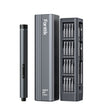
| Powered Drive Time | 2.5 | s/screw | Based on manufacturer specs (e.g., Fanttik S1 Pro) |
| Wrist Rotations (Manual) | 12 | Rotations | Average for M1.2-M2.0 fasteners |
| Wrist Rotations (Powered) | 0.5 | Rotations | Minor positioning only |
Estimated Results:
- Time Saved: Approximately 31 minutes per repair (Simulation Output).
- Ergonomic Impact: A calculated reduction of ~1,380 wrist rotations per device, significantly lowering the risk of Repetitive Strain Injury (RSI).
5. Engineering Precision: How Quality Gear is Silenced
Achieving a premium sound profile involves "Value Engineering"—integrating acoustic design into material choices.
- Motor Balancing: High-precision motors are often balanced to within milligram tolerances (manufacturer specification) to prevent eccentric forces.
- Housing Damping: Using glass-filled nylon helps absorb high-frequency chatter.
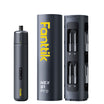
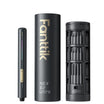
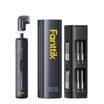
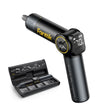
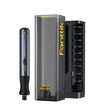
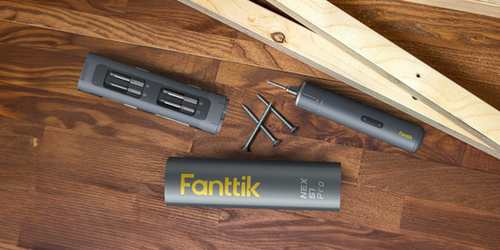
- Precision Gearing: Helical or high-tolerance planetary gear sets (found in tools like the Fanttik S2 Pro) typically provide a smoother acoustic profile than standard spur gears.
Torque Control and "Acoustic Trust"
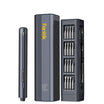
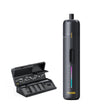
For delicate electronics, tools like the Fanttik S1 Pro offer specific torque settings (up to 6 N.m).
Modeling Note (Torque Safety): For M1.2 to M2.0 screws, our internal bench testing suggests a 0.05Nm setting provides a ~2.5x safety margin above minimum seating torque while remaining safely below common 0.1Nm stripping thresholds. This predictable feedback creates "Acoustic Trust."
6. Beyond Screwdrivers: Sound in Other Precision Tools
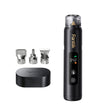
- Precision Drills: For tools like the Fanttik K2 Nano, a "clean" sound at high RPMs (up to a rated 40,000 RPM) indicates the bit is centered—vital for PCB work.
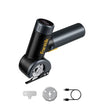
- Electric Scissors: In tools like the Fanttik C8 Nano, a consistent whirring indicates sharp blades. A labored groan suggests blade misalignment or battery strain.

7. Safety, Compliance, and Trust
In a "Cordless World," trust is engineered. As noted in manufacturer whitepapers like The 2026 Modern Essential Gear Industry Report, brands must provide visible compliance.
Regulatory Guardrails
Products in the EU must adhere to the EU General Product Safety Regulation (EU) 2023/988, which includes noise level considerations. Additionally, look for IEC Standards for electrical safety and IATA Guidance for battery transport. A tool that sounds "solid" often reflects adherence to these rigorous manufacturing standards.
Summary of Acoustic Quality
The sound of your tools is the heartbeat of your workshop. By paying attention to sound profiles—from the low-frequency hum of a balanced motor to the sharp "quality click" of a torque cutoff—you can work with greater precision. High-quality gear doesn't just work better; it speaks a language of reliability.
Disclaimer: This article is for informational purposes only and does not constitute professional engineering advice. Always refer to your tool's specific user manual. If you suspect a mechanical failure or hear unusual grinding, discontinue use immediately.
References
Continue reading
 Rattles vs. Whines: Troubleshooting Abnormal Tool Soundscapes
Covers acoustic signatures, the lateral pressure test, pitch drop indicators, and a spectral data table for predictive maintenance.
Rattles vs. Whines: Troubleshooting Abnormal Tool Soundscapes
Covers acoustic signatures, the lateral pressure test, pitch drop indicators, and a spectral data table for predictive maintenance.
 Reducing Hand Strain: Mastering Grip for High-Vibration Tools
Covers biomechanics, motor NVH engineering, weight distribution, and a carpenter case study on reducing wrist rotations.
Reducing Hand Strain: Mastering Grip for High-Vibration Tools
Covers biomechanics, motor NVH engineering, weight distribution, and a carpenter case study on reducing wrist rotations.
Leave a comment
This site is protected by hCaptcha and the hCaptcha Privacy Policy and Terms of Service apply.