










































The Hidden Risk of Substandard Emergency Gear
In the high-stakes environment of a roadside emergency, the equipment you carry serves as your primary line of defense. Whether it is a jump starter for a dead battery in sub-zero temperatures or a portable inflator for a flat tire on a dark highway, the reliability of these tools is non-negotiable. However, the market is currently saturated with products that bear the visual hallmarks of safety without the underlying engineering to back them up.
We have observed a growing trend where aesthetics and low price points mask critical failures in safety compliance. According to The 2026 Modern Essential Gear Industry Report: Engineering Trust in a Cordless World, trust in the modern tools category is now a function of "credibility math"—the systematic verification of safety claims. For the average consumer, this means looking past the logo and understanding the technical and regulatory frameworks that differentiate a life-saving tool from a potential hazard.

Decoding the Anatomy of Safety Marks
Safety marks like CE, UL, and ETL are not merely stickers; they are symbols of a manufacturer's commitment to rigorous testing protocols. However, counterfeiters have become adept at replicating these marks, creating a dangerous illusion of safety.
The CE Mark vs. The "China Export" Deception
One of the most persistent issues we encounter is the confusion between the legitimate European Conformity (CE) mark and the "China Export" mark. While they look nearly identical, their meanings are worlds apart.
- Legitimate CE Mark: This indicates that the product meets the health, safety, and environmental protection standards for products sold within the European Economic Area (EEA). Crucially, for high-risk products like lithium-ion jump starters, the CE mark must be accompanied by a four-digit identification number of a "Notified Body"—the independent organization that verified the compliance.
- The Spacing Trick: In a genuine CE mark, there is a distinct gap between the 'C' and the 'E'. If you were to complete the circle of the 'C', it would just touch the 'E'. In many counterfeits (often referred to as the "China Export" mark), the letters are much closer together. This subtle geometric difference is a hallmark of products that have bypassed formal EU safety assessments.
UL and ETL: Third-Party Validation
Unlike the CE mark, which can be a manufacturer's self-declaration under certain conditions, UL (Underwriters Laboratories) and ETL (Intertek) marks indicate that a product has been tested by a third-party laboratory.
- The Scratch Test: On our repair benches, we often use a simple "scratch test" to verify label authenticity. Genuine UL or ETL labels are typically deeply embossed or printed on high-durability materials that are difficult to remove or smear. Counterfeits are often simple paper stickers that peel away easily.
- Control Numbers: Every authentic UL or ETL mark includes a unique Control Number. Professionals verify these by searching the UL Product iQ database. If the number does not match the manufacturer or the specific product category, the mark is fraudulent.
Engineering Indicators: Thermal Management and Power Realities
Beyond the label, the physical performance of the device provides indirect evidence of its safety certification status. Authentic safety-certified gear undergoes rigorous "abuse testing" to ensure it does not fail catastrophically under stress.
The 70°F Thermal Heuristic
A key indicator of proper engineering is how a device manages heat. High-power devices like jump starters or tire inflators generate significant thermal energy during operation.
Expert Observation: Based on patterns we see in hardware auditing (not a controlled lab study), if a compact jump starter remains relatively cool to the touch during a full-duty cycle in a 70°F (21°C) environment, it suggests a sophisticated thermal management system. Conversely, devices that overheat quickly or smell of ozone often lack the internal heat sinks or high-quality MOSFETs required by standards like IEC 60529.
Sustained vs. Peak Current
Counterfeiters often exploit "Peak Amps" as a marketing metric. A device may claim "3000A Peak," but this often refers to a millisecond-long burst that is insufficient to crank an engine. Certified equipment focuses on sustained cranking amps. Based on our scenario modeling, a certified 2000A unit typically provides ~800A of sustained current, whereas an uncertified unit claiming the same peak might deliver less than 400A under load, failing to start a vehicle in cold weather.
Scenario Modeling: The Winter Roadtripper
To illustrate the consequences of using uncertified gear, we modeled a high-risk scenario: a family traveling in a 3.0L turbo-diesel SUV through extreme northern winter conditions (-20°F).
Run 1: Winter Starting Confidence Gap
At -20°F, a diesel engine's power requirement spikes due to increased oil viscosity and compression resistance. Simultaneously, the vehicle's lead-acid battery loses approximately 75% of its available power.
| Parameter | Value | Unit | Source Category |
|---|---|---|---|
| Ambient Temperature | -20 | °F | Extreme Winter Scenario |
| Engine Displacement | 3.0 | L | Diesel SUV Standard |
| Required Cranking Amps | ~1,280 | A | SAE J537 Standards |
| Battery Available Power | 25 | % | BCI Derating Curves |
| Power Gap to Fill | 1,094 | A | Calculated Requirement |
Modeling Note: This is a deterministic scenario model based on standard industry heuristics (SAE J537 and BCI curves). It assumes a healthy but cold electrical system and does not account for specific mechanical wear.
In this scenario, a counterfeit jump starter with overstated specs would likely fail within the first two seconds. Certified equipment is designed with a "safety margin" to handle these exact extremes, ensuring that the sustained output meets the 1,094A deficit.
Run 2: Inflator Duty-Cycle and Adiabatic Heating
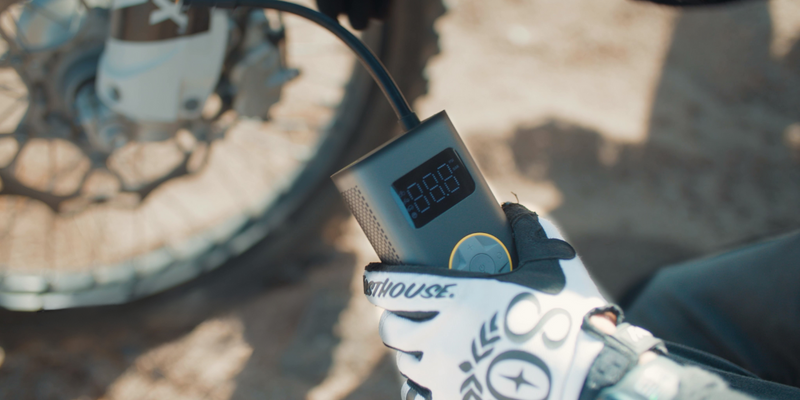
Winter also causes tire pressures to drop significantly. Inflating four large SUV tires from 25psi to 36psi in -10°C conditions requires approximately 60 minutes of cumulative runtime.
- The Risk: Most certified portable inflators have a maximum continuous duty cycle of 40 minutes before requiring a cooldown.
- The Counterfeit Failure: Uncertified units often lack thermal shutdown sensors. As the internal air temperature rises (reaching an estimated ~112°C due to adiabatic compression), the plastic components or internal gaskets in a counterfeit unit can melt, leading to total failure before the fourth tire is finished.
Verifying Documentation and Compliance
The regulatory landscape for automotive gear is becoming increasingly transparent, providing consumers with more tools for verification.
EU General Product Safety Regulation (GPSR)
The EU General Product Safety Regulation (EU) 2023/988 has introduced strict obligations for manufacturers and online marketplaces. Under this regulation, products must be traceable. If you cannot find the manufacturer's address, a batch number, or a clear "Declaration of Conformity" on the manufacturer's website, the product is likely non-compliant.
FTC Endorsement and Claims
In the United States, the FTC Endorsement Guides require that claims about product performance be truthful and substantiated. We recommend being wary of products that use absolute language like "guaranteed to start any car" or "best in the world." Legitimate manufacturers use bounded claims, such as "up to 8.0L gas engines," which align with specific test data.
Practical Checklist for Spotting Counterfeits
Before your next road trip, perform this multi-point inspection on your emergency gear.
- Check the Logo Geometry: Use a magnifying glass to check the spacing of the CE mark. Ensure the font matches the official European Commission guidelines.
- Verify the Notified Body: If a CE mark is present on a jump starter, look for the four-digit number next to it. Cross-reference this number in the NANDO (New Approach Notified and Designated Organisations) database.
- The Scratch and Peel Test: Attempt to scratch the corner of the UL or ETL label with a fingernail. If the ink smears or the sticker peels away easily, treat it as a red flag.
- Weight and Density: While not a perfect science, uncertified lithium-ion devices are often suspiciously light. High-capacity, high-discharge cells and the necessary copper busbars and heat sinks add significant weight. If a "2000A" jump starter feels like a hollow plastic toy, it likely lacks the internal components to deliver that power.
- Documentation Audit: Check the user manual for technical specifications. Does it cite specific standards like ISO 9001 or IEC 62133? Does it provide a physical address for the manufacturer?
The Cost of "Saving" Money on Safety
The allure of a $40 jump starter is understandable, but the true cost of counterfeit gear is only realized in the moment of failure. A failure during a winter roadside emergency is not just a financial loss; it is a safety risk for you and your family. By prioritizing gear that demonstrates visible compliance and rigorous engineering, you are not just buying a tool—you are investing in a predictable outcome when you need it most.
Disclaimer: This article is for informational purposes only and does not constitute professional automotive, legal, or safety advice. Always consult your vehicle's owner manual and follow all manufacturer safety instructions when using emergency gear. If you suspect a product is counterfeit or unsafe, report it to the CBP or your local consumer protection agency.
Sources
Continue reading
 Navigating Interstate Battery Laws for Safe Road Trip Travel
Covers federal regulations, Wh vs. Ah distinction, safety margins for cold weather, and practical traveler checklists for automotive...
Navigating Interstate Battery Laws for Safe Road Trip Travel
Covers federal regulations, Wh vs. Ah distinction, safety margins for cold weather, and practical traveler checklists for automotive...
 How FCC Standards Prevent Device Interference on Long Drives
Covers EMI risks, vehicle resonance, technical compliance, and winter/summer safety scenarios for road trip preparedness.
How FCC Standards Prevent Device Interference on Long Drives
Covers EMI risks, vehicle resonance, technical compliance, and winter/summer safety scenarios for road trip preparedness.


Leave a comment
This site is protected by hCaptcha and the hCaptcha Privacy Policy and Terms of Service apply.