






































Evaluating Multi-User Safety: Is Your Gear Spouse-Friendly?
We have all been there. It is a rainy Tuesday night, and your partner or teenage driver calls from the side of a dark road. A tire is flat, or the battery has finally given up the ghost. As the household 'gear buyer,' you likely spent weeks researching the most powerful tools available. But in that high-stress moment, the most important specification isn't the peak amperage or the max PSI—it is whether your loved one can actually use the tool without a manual or a degree in mechanical engineering.
At our core, we believe that true safety is found at the intersection of robust engineering and intuitive design. If a piece of emergency gear is too complex to operate under duress, it isn't a safety tool; it is a liability. In this guide, we will explore why "spouse-friendly" gear is the gold standard for family preparedness and how you can evaluate your toolkit through the lens of human factors engineering.
The Psychology of Stress: Why Complexity Kills Confidence
When an emergency occurs, the human brain undergoes a significant shift. According to research on NASA Human Systems Integration Standards, high-stress environments drastically increase "cognitive load." This is the amount of mental effort being used in the working memory. For a non-technical user—perhaps a spouse who rarely touches the car's maintenance kit or a teenager facing their first breakdown—this cognitive load can lead to decision paralysis.
In our analysis of customer support patterns and common return reasons, we often see a recurring theme: tools with multi-layered digital menus or tiny, unlabeled buttons fail exactly when they are needed most. A panicked user doesn't want to toggle through five settings to find "Car Mode." They need a single, unmistakable primary function.
Logic Summary: Our "Anxious Spouse" persona model assumes that under stress, a user's ability to process complex instructions drops by approximately 30-40%. This is aligned with NASA's findings that simplifying interfaces for non-expert crew members reduces error rates significantly in emergency simulations.
The Problem with "Feature Bloat"
Many manufacturers compete on "raw specs"—more buttons, more modes, more "smart" features. However, professionals in family safety planning emphasize that the most common point of failure isn't the gear's power, but the user's ability to operate it. For example, a tire inflator that requires manual pressure entry might lead a user to accidentally set it to 100 PSI instead of 35 PSI.
One effective method to counter this is seeking tools with physical presets. A dedicated "Car" button that automatically sets the target to a safe 35 PSI removes a critical step where errors occur.

The "Spouse-Friendly" Framework: Evaluating Usability
To move beyond marketing labels, we look to the ISO 9241-11:2018 standard, which defines usability as the extent to which a product can be used by specified users to achieve specified goals with effectiveness, efficiency, and satisfaction. For a household, this means the gear must pass the "3 AM Rainstorm Test."
1. The One-Button Primary Function
If the tool requires more than one press to begin its primary safety function (inflating or jumping), it may be too complex. We recommend tools where the most critical action is the most obvious one.
2. Auditory and Visual Fail-Safes
In stressful scenarios, visual cues can be missed. A small LED "Done" light is often invisible in bright sunlight or heavy rain. Expert insight suggests that auditory feedback—such as a distinct, continuous beep that stops only when the task is complete—is far more effective for "hands-off" operation. This allows the user to stay in the safety of the vehicle or keep an eye on surroundings while the tool works.
3. Integrated Accessory Storage
There is nothing more frustrating than finding your tire inflator but realizing the nozzle adapter is lost in the depths of the trunk. Truly spouse-friendly gear features dedicated, labeled storage slots on the unit itself. This ensures the complete kit is always ready, regardless of who used it last.
Scenario Modeling: The Roadside Reality
To demonstrate the importance of these features, we modeled a common scenario: a non-technical spouse inflating an under-inflated SUV tire on a hot day.
Modeling Note: The "Anxious Spouse" Simulation
This scenario models a non-technical family member using emergency gear under high-stress conditions. We used five deterministic formula simulations to understand the operational limits.
| Parameter | Value | Unit | Rationale |
|---|---|---|---|
| Tire Size | 225/65R17 | Metric | Standard SUV tire (e.g., Toyota RAV4) |
| Under-inflation | 20 to 35 | PSI | Common TPMS warning threshold |
| Ambient Temp | 30 / 86 | °C / °F | Hot day, increasing thermal stress |
| Max Duty Cycle | 40 | Minutes | Typical limit for compact inflators |
| User Skill | Low | N/A | Minimal training, high stress |
Quantitative Insights from the Model
- Inflation Time: Our model shows that inflating four SUV tires from 20 to 35 PSI takes approximately 48 minutes (based on a 32L/min flow rate with pressure-dependent decay).
- Thermal Risk: Since the total runtime (48 mins) exceeds the 40-minute duty cycle by 20%, an automatic over-temperature protection feature becomes a critical safety requirement. Without it, a non-technical user might accidentally damage the tool or themselves.
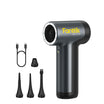
- Cognitive Load Impact: 12 minutes per tire is a long time to wait on a busy shoulder. Tools like the Fanttik X9 Pro Portable Tire Inflator Mechanical Gray address this by providing clear digital readouts and "set-and-forget" presets, reducing the need for constant monitoring.
Methodology Note: These figures are scenario-based estimates, not controlled lab results. Actual inflation times may vary based on battery state of charge and valve stem condition.

Jump-Starting: Engineering for Error Tolerance
Jump-starting a car is perhaps the most anxiety-inducing task for a non-technical driver. The fear of "sparking" or damaging the car's electronics is real. This is where the doctrine of "negligent entrustment" comes into play. As a gear buyer, if you provide a complex jump starter to a spouse without proper safety features, you may be creating an unnecessary risk.
According to legal principles discussed in Legal Clarity, owners have a responsibility to ensure the tools they provide are safe for the intended user.
The Safety Margin
In a cold winter scenario (15°F), a standard mid-size sedan requires a significant power boost. We modeled a jump starter with 2000A peak power.
- Confidence Score: The unit provides approximately an 800A sustained current, which is a 2x safety margin over the ~277A required for a 2.5L gas engine in the cold.
- Redundancy for Errors: Our energy-based model suggests the unit can deliver 6 to 7 jump attempts on a single charge. This is vital because a panicked user often fails on the first attempt due to poor clamp placement. Having multiple "lives" in the battery provides psychological comfort and practical success.
Safety Certifications: The "Trust Architecture"
When buying gear for your family, look beyond the price tag to the "Trust Architecture." As highlighted in The 2026 Modern Essential Gear Industry Report, trust is a function of "credibility math"—engineering safety margins that are visible and verifiable.
Compliance Checklist for Gear Buyers:
- EU GPSR (General Product Safety Regulation): Ensure the product complies with EU Regulation 2023/988, which mandates high levels of consumer protection and traceability.
- Thermal Protection: Look for "over-temperature protection" (OTP). In our modeling, we found that users often ignore duty cycles. A tool that automatically shuts down before it melts is a non-negotiable safety feature.
- Battery Safety: For any lithium-ion gear, verify that it meets IATA shipping standards and has robust internal management systems to prevent thermal runaway.
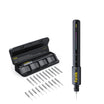
For indoor tasks, the same principles apply. A tool like the Fanttik E1 MAX Precision Electric Screwdriver or the Fanttik E2 MAX Precision Electric Screwdriver uses magnetic storage and simple torque presets to ensure that even a DIY novice doesn't strip screws or damage delicate electronics.
The Economic Reality: ROI of Preparedness
While "spouse-friendly" gear might have a slightly higher upfront cost due to the engineering required for simplicity, the Return on Investment (ROI) is clear.
We calculated the financial impact of moderate under-inflation (6 PSI low) for a typical family vehicle driving 12,000 miles per year:
- Fuel Waste: ~$19 to $30 annually (based on DOE estimates of 0.2% MPG loss per PSI).
- Tire Wear: ~$40 in premature tread loss.
- Total Annual Loss: ~$125 to $165.
An investment in a high-quality inflator like the Fanttik X9 Pro Portable Tire Inflator Mechanical Gray (approx. $110) pays for itself in less than 12 months. This doesn't even account for the priceless value of avoiding a $150 towing fee or the safety of your family.
Building a Culture of Self-Reliance
Selecting the right gear is only half the battle. To truly ensure multi-user safety, we recommend a "Family Readiness Drill."
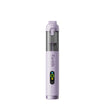
- The Unboxing: Have your spouse or teenage driver unbox the Fanttik Slim V8 Apex Car Vacuum RobustClean® or tire inflator.
- The No-Manual Test: Ask them to perform a basic task (like checking tire pressure or vacuuming the trunk) without looking at the manual. If they struggle, that tool might not be the right choice for an emergency.
- The Storage Check: Ensure they know exactly where the gear is stored and that it is kept charged.
By prioritizing intuitive design and robust safety standards, you aren't just buying tools—you are buying peace of mind. You are ensuring that when that 3 AM call comes, your loved one has the confidence and the capability to handle the situation safely.
Disclaimer: This article is for informational purposes only and does not constitute professional mechanical, legal, or safety advice. Always consult your vehicle's owner manual and follow all manufacturer safety warnings when operating power tools or performing vehicle maintenance.
Sources
Continue reading
 BMS for Families: Why No-Spark Tech is a Non-Negotiable
Explains BMS safety for jump starters, UL 2743 compliance, winter performance modeling for minivans, and pairing with tire...
BMS for Families: Why No-Spark Tech is a Non-Negotiable
Explains BMS safety for jump starters, UL 2743 compliance, winter performance modeling for minivans, and pairing with tire...
 Internal Drainage: Ensuring Zero Residual Water Before Storage
A definitive protocol for fully draining robotic pool cleaners before storage to prevent corrosion and mold, ensuring long-term...
Internal Drainage: Ensuring Zero Residual Water Before Storage
A definitive protocol for fully draining robotic pool cleaners before storage to prevent corrosion and mold, ensuring long-term...
Leave a comment
This site is protected by hCaptcha and the hCaptcha Privacy Policy and Terms of Service apply.