





































Quick Action Summary: Fast-Track Maintenance for Safety Hinges
If your safety cabinet door doesn’t snap shut on its own, your "child-safe" workshop is at risk. Use this 60-second checklist to verify your hardware:
- The Critical Check: Open the door 45 degrees and let go. It must latch fully without help.
- The Golden Rule: Never use WD-40 or grease. They attract sawdust and create a "gummy" jam. Use dry PTFE or Silicone spray only.
- The Tension Limit: Do not exceed two full turns of the adjustment screw. Over-tightening leads to metal fatigue and spring failure.
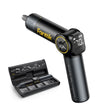
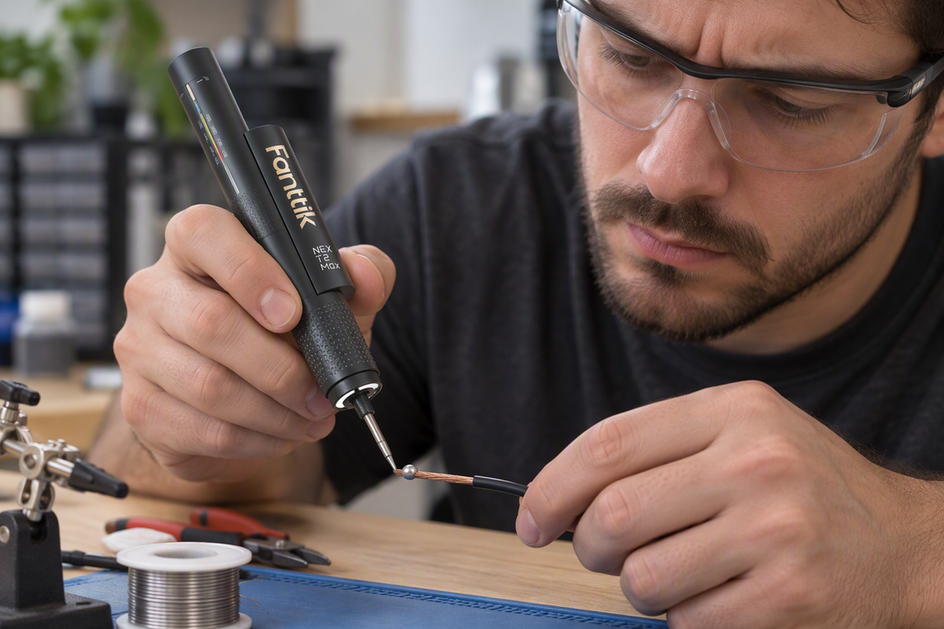
- Pro Tip: Use a precision electric driver set to a low torque (0.2Nm–0.3Nm) to prevent stripping the cabinet’s wood threads during routine checks.
The Critical Role of Automatic Closure in Workshop Safety
A safety cabinet in a home workshop serves one primary purpose: to isolate hazardous materials from unauthorized users, particularly children. However, the integrity of this system relies entirely on the automatic closure mechanism. If a spring-loaded hinge fails to pull the door into a latched position, the cabinet remains a latent hazard.
Maintenance of these hinges is often overlooked because they appear to be "set and forget" hardware. In reality, based on common patterns observed in workshop environments, the mechanical tension and lubrication of these components degrade over time due to environmental stressors like sawdust, humidity, and spring fatigue. Establishing a routine maintenance protocol is a fundamental pillar of workshop access control. According to the strategic insights in The 2026 Modern Essential Gear Industry Report, modern self-reliance requires demonstrable reliability in safety systems to reduce operational risk.
The Lubrication Trap: Why Standard Oils Fail
The most frequent mistake in hinge maintenance is the application of general-purpose oils or common penetrating sprays on hinge springs. While these products provide immediate friction reduction, they are "wet" lubricants that remain tacky.
The Mechanism of Gummy Residue
Wet lubricants act as a magnet for airborne sawdust. Based on general maintenance experience in high-particulate woodshops, a "gummy" residue typically accumulates over a 3 to 6-month cycle. This mixture creates an abrasive paste that increases internal friction, eventually overcoming the spring's closing force.
To maintain optimal action, we recommend Dry PTFE (Polytetrafluoroethylene) sprays or Silicone Lubricants. These provide:
- Tack-Free Film: They leave a dry layer that does not attract wood dust.
- Low-Temperature Stability: Essential for consistent action in unheated garages.
- Friction Reduction: Silicone is specifically effective for metal-on-metal moving parts.
Expert Heuristic: Our preference for dry lubricants is based on the "dust-attraction" principle. By using a non-tacky interface, the mechanical resistance remains constant regardless of how much sawdust is in the air.
Precision Tensioning: The Two-Turn Rule
Spring-loaded hinges allow for tension adjustment, but the adjustment screws are not designed for unlimited travel.
Understanding Spring Fatigue
Most safety cabinet hinges use a torsion spring. Tightening the adjustment screw increases the "preload." A common error is over-tightening to compensate for a door that is sticking due to poor lubrication. This leads to premature spring fatigue or stripped threads.
The Two-Turn Rule: As a practical shop heuristic, never adjust the tension more than two full 360-degree turns from the factory neutral setting.
- [Visual Hint]: Imagine the adjustment screw as a clock face; if you have rotated the "12 o'clock" mark past the top position more than twice, you have reached the safety limit.
- Exception Conditions: If the door is oversized or exceptionally heavy (e.g., custom-reinforced doors), the Two-Turn Rule may be insufficient. In these cases, the hinge itself likely lacks the rated "closing torque" for the door's mass, and a heavier-duty hinge should be installed rather than over-stressing the existing spring.
The Two-Finger Test
To verify calibration, use the Two-Finger Test:
- Open the door to a 45-degree angle.
- Release it.
- A properly tensioned door should latch using only its stored energy.
- The Failure Threshold: If you have to "help" the door with the slight pressure of two fingers, the system requires cleaning or a minor tension increase.
- Note: If the door is warped or the cabinet frame is out of square, this test will fail regardless of tension. Check frame alignment before increasing spring load.
Environmental Audits and Maintenance Intervals
Maintenance frequency is a variable dependent on your shop's "particulate load." The following intervals are estimated heuristics based on typical workshop duty cycles:
| Environment Type | Dust Level | Humidity | Recommended Inspection |
|---|---|---|---|
| Clean Electronics Lab | Low | Controlled | Quarterly |
| General Woodworking | High | Variable | Monthly |
| Metalworking/Grinding | High (Metallic) | High | Bi-Weekly |
| Unheated Garage | Moderate | Seasonal | Monthly |
Precision Tools in Safety Maintenance: An Ergonomic Analysis
Maintaining multiple cabinets involves repetitive tasks that can lead to physical strain. We have modeled the potential benefits of using precision electric tools for these routine safety checks.
Ergonomic Efficiency Modeling (Estimated)
We modeled a scenario involving a standard workshop maintenance session to quantify the benefits of using a precision electric driver (set to a low torque of 0.2Nm) versus a manual screwdriver.
Modeled Quantitative Insights:
- Estimated Time Savings: ~2.1 minutes saved per session (based on an 8-screw cabinet model).
- Wrist Rotation Reduction: Our model projects a reduction of ~92 wrist rotations per session (from 96 manual rotations to 4 powered positioning rotations).
- Torque Consistency: Using a tool with a fixed 0.2Nm–0.3Nm setting ensures screws are secure while staying below the ~0.5Nm threshold where wood threads in MDF or plywood typically strip (based on common fastener pull-out data).
Modeling Transparency (Method & Assumptions)
This analysis is an illustrative scenario model, not a controlled clinical study.
| Parameter | Value | Unit | Rationale |
|---|---|---|---|
| Number of Screws | 8 | count | 2 hinges per cabinet, 4 screws per hinge |
| Manual Drive Time | 20 | sec/screw | Estimated for average manual dexterity |
| Electric Drive Time | 4 | sec/screw | Includes positioning and drive time |
| Manual Rotations | 12 | rotations | Standard M3.5 fastener in wood |
| Electric Rotations | 0.5 | rotations | User-initiated positioning only |
Compliance and Regulatory Frameworks
In the European Union, the General Product Safety Regulation (EU) 2023/988 (GPSR) establishes the framework for ensuring consumer products are safe. For the technical DIYer, referencing industrial standards ensures maintenance meets professional benchmarks:
- ISO 898-1: This standard governs the mechanical properties of fasteners. It reminds us that small hinge screws have a low "torque ceiling."
- ASTM Material Standards: These inform the corrosion resistance of high-quality hinges, helping you choose hardware that resists the specific stressors of a humid workshop.
Step-by-Step Maintenance Protocol
Follow this procedure every quarter (or monthly in dusty environments).
- Clear the Area: Ensure full access to hinges.
- Visual Inspection: Look for "weeping" oil or black grime in the pivot.
- Dry Cleaning: Use a stiff nylon brush or compressed air to remove sawdust.
- Lubrication: Apply a single burst of dry PTFE spray to the pivot pin. Avoid over-application.
- Function Test: Perform the Two-Finger Test.
- Tension Adjustment: If needed, turn the screw clockwise by 1/4 turn. Observe the Two-Turn limit.
- Fastener Check: Use a precision driver. Aligned with ISO 898-1 principles for small-gauge hardware, use a torque setting of 0.2Nm to 0.3Nm to prevent stripping wood fibers.
- Wipe Down: Use a clean, dry cloth to remove any excess.
Building a Culture of Self-Reliance
Routine maintenance is the bridge between owning a safety tool and having a safe environment. By choosing the right lubricants and respecting mechanical limits, you ensure that your "child-safe" workshop remains exactly that. Safety is not a one-time purchase; it is a continuous process of verification.
Disclaimer: This article is for informational purposes only and does not constitute professional safety, legal, or engineering advice. Hard values (e.g., torque, time savings) are estimates based on common workshop scenarios and modeling assumptions. Always refer to the specific manufacturer's instructions for your hardware.
Sources
Continue reading
 Selecting Locked Charging Cabinets for High-Output Batteries
A guide to selecting secure charging cabinets for high-output batteries, addressing thermal risks and access control for home...
Selecting Locked Charging Cabinets for High-Output Batteries
A guide to selecting secure charging cabinets for high-output batteries, addressing thermal risks and access control for home...
 Selecting Tamper-Proof Fasteners for Workshop Safety Gear
A technical guide to selecting security fasteners for workshop safety gear, covering drive types, mechanical load, and compliance...
Selecting Tamper-Proof Fasteners for Workshop Safety Gear
A technical guide to selecting security fasteners for workshop safety gear, covering drive types, mechanical load, and compliance...
Leave a comment
This site is protected by hCaptcha and the hCaptcha Privacy Policy and Terms of Service apply.