











































The Silent Guardian: Understanding Thermal Fuse Integrity in Portable Tools
In the world of high-performance DIY and automotive gear, we often obsess over peak torque, battery watt-hours, and suction power. However, there is a silent, non-resettable component buried deep within your cordless tire inflator or car vacuum that dictates whether your tool is a reliable companion or a potential safety hazard: the thermal fuse.
As experts who have spent years diagnosing tool failures on the repair bench and analyzing field data from thousands of high-intensity use cases, we have observed a phenomenon often overlooked by the average user: thermal fuse fatigue. While a fuse is designed to "blow" and cut power during a catastrophic overheat event, repeated exposure to high-heat cycles can lead to a progressive degradation of its sensitivity. This doesn't just result in a tool that won't turn on; it creates a "drifting" safety threshold that can cause premature shutdowns or, in rare cases, delayed protection.
Understanding when to renew your gear isn't just about performance—it is about maintaining the "Trust Architecture" required for high-consequence automotive and outdoor work. According to the 2026 Modern Essential Gear Industry Report: Engineering Trust in a Cordless World, reliability in these categories is a function of "credibility math," where visible safety engineering and component maturity are the primary variables.
The Physics of Thermal Protection: Drift vs. Destruction
A thermal fuse (or thermal cutoff) is a safety device that opens an electrical circuit when it is heated to a specific temperature. Unlike a standard electrical fuse that reacts to current (amperage), a thermal fuse reacts to ambient heat generated by the motor, battery, or external environment.
Historical Zinc vs. Modern Alloy Engineering
In the past, many thermal links utilized zinc-based elements which were notoriously prone to cyclic degradation. Modern high-quality tools have transitioned to specialized alloys—often involving silver, copper, or tin-based compositions—that offer much higher stability. However, even these advanced materials are subject to the laws of thermodynamics.
We often see a misconception that a fuse is either "good" or "blown." On our repair bench, we have identified a middle ground: Thermal Drift. After 30 to 50 high-heat cycles—specifically where the tool body exceeds 50°C (122°F)—the internal chemistry of the fuse can begin to shift. A component originally engineered to trip at 80°C may begin to trip at 70°C.
Why This Matters in the Field
For a car enthusiast using a portable vacuum in a hot garage or an outdoor user inflating tires on a summer afternoon, this drift manifests as a tool that "quits" halfway through a job. While the user might blame a "weak battery," the reality is often a fatigued safety circuit that no longer trusts the tool's internal temperature.

Identifying the Symptoms of Safety-Circuit Fatigue
Recognizing the signs of a degrading thermal fuse requires a methodical approach. Because these components are usually buried within the housing to ensure they accurately sense motor heat, you cannot inspect them visually without voiding your warranty. Instead, we rely on behavioral pattern recognition.
1. The Premature Shutdown
If your tool previously handled a full vehicle interior cleanup or four tire top-offs without interruption but now shuts down after just a few minutes, fatigue is a likely culprit. This is especially true if the tool housing feels warm but not "scalding."
2. Increased Cool-Down Intervals
A reliable heuristic we use is the 25% Recovery Rule. If the time required for the tool to become operational again after a thermal shutdown has increased by more than 25% compared to when the device was new, the thermal protection circuit is likely losing its original calibration. This indicates that the fuse's trip point has drifted lower, requiring the tool to reach a much cooler state before the circuit allows a restart.
3. The "Summer Day" Failure
Field data suggests that the highest correlation of safety-circuit failure occurs in tools stored in vehicle trunks. Trunk temperatures in the summer can easily exceed 65°C (150°F). These "soak" cycles act as a form of accelerated aging. If a tool stored in a trunk fails to start on a hot day but works perfectly in the evening, the fuse is signaling that its thermal headroom has been permanently reduced.
Methodology Note (Thermal Drift Modeling): The following table represents a deterministic scenario model based on field observations and common industry heuristics for thermal protection in high-draw automotive tools. This is a model, not a controlled longitudinal lab study.
Parameter Value/Range Unit Rationale Critical Ambient Soak >50 / 122 °C / °F Threshold for material expansion stress Fatigue Cycle Count 30 - 50 Cycles Observed point of trip-point shift Trip Point Drift 5 - 10 °C Typical reduction in safety headroom Storage Environment Vehicle Trunk N/A Highest correlation with premature fatigue Recovery Delta >25 % Heuristic for identifying circuit degradation
Environmental Stressors: Why Storage is Strategy
For the safety-conscious DIYer, where you keep your tools is just as important as how you use them. The EU General Product Safety Regulation (EU) 2023/988 emphasizes that products must remain safe throughout their reasonable foreseeable period of use. However, extreme environmental conditions can truncate that period.
The Vehicle Trunk "Oven" Effect
We have found that tools stored in black vehicles or uninsulated trunks undergo hundreds of "mini-cycles" even when not in use. This constant expansion and contraction of the thermal fuse element lead to micro-fractures in the alloy.
Expert Insight: If you live in a region where summer temperatures consistently hit 32°C (90°F), your trunk-stored tools are likely experiencing "thermal aging" at 3x the rate of tools kept in a climate-controlled garage. We recommend using insulated storage cases to provide a thermal buffer, slowing the rate of temperature change and preserving the integrity of the safety links.
High-Altitude and Outdoor Use
Outdoor enthusiasts should also be aware that thin air at high altitudes reduces the efficiency of convection cooling. A tool that operates safely at sea level may reach its thermal limit much faster at 10,000 feet. If the thermal fuse is already fatigued, the tool may become virtually unusable in mountain environments.
Safety Engineering: The "Symptom vs. Cause" Trap
One of the most dangerous mistakes a car enthusiast can make is attempting to "fix" a fatigued thermal fuse by bypassing it or replacing it with a higher-rated component.
Why the Fuse is a Symptom
As noted in research regarding Lithium-ion Battery Energy Storage Systems (BESS), a failing thermal protection device is often a symptom of a systemic issue, such as motor bearing wear, battery internal resistance increases, or poor heat dissipation design.
In modern safety-engineered tools, the thermal fuse is the final line of defense behind the Battery Management System (BMS). The BMS uses thermistors to monitor heat and limit current digitally. If the heat rises so fast or so high that the thermal fuse (a physical, hardware-level cut) has to intervene, the system has reached a critical state.
The Risk of Manual Replacement
Consumer-grade tools are rarely designed for fuse replacement. Attempting a DIY repair on a safety circuit often introduces new risks:
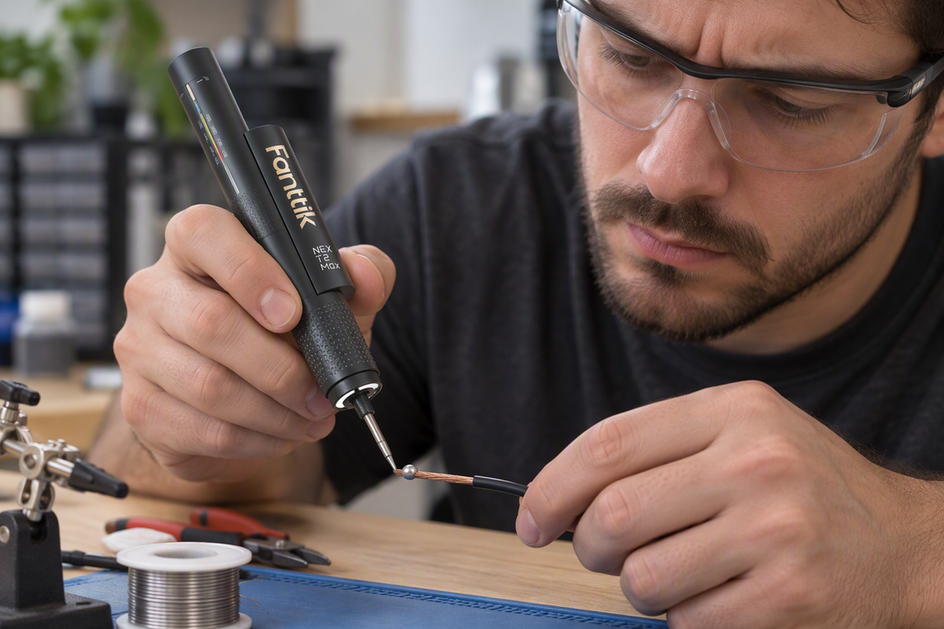
- Cold Solder Joints: Thermal fuses are sensitive to the heat of a soldering iron. Ironically, the act of soldering a new fuse in place can trigger its fatigue or cause it to blow instantly.
- Contact Resistance: Poorly seated fuses create localized "hot spots," causing the new fuse to trip even earlier than the old one.
- Liability: Bypassing safety components violates the core principles of the FTC Endorsement Guides regarding truthful claims about product safety and performance.
Decision Matrix: When to Renew Your Gear
So, when is it time to stop troubleshooting and start looking for a replacement? We use the following decision framework to help users prioritize safety over "sunk cost."
Renew the Tool If:
- The 25% Rule is Triggered: Cool-down times have significantly increased without a change in ambient temperature.
- Visible Housing Deformation: If the plastic near the motor or battery vents shows signs of warping or discoloration, the internal temperatures have exceeded the material's glass transition point. The thermal fuse has likely been "stressed" beyond its reliable calibration.
- Age and Environment: A tool that is over 3 years old and has been stored exclusively in a vehicle trunk in a hot climate should be considered a candidate for renewal, even if it still "works." The probability of safety-circuit drift is high.
- BMS Errors: If the tool features an LED display that shows thermal error codes (e.g., "E1" or "Hot") during routine, low-intensity tasks, the digital and physical safety layers are no longer in sync.
Maintain the Tool If:
- Performance is Consistent: The tool reaches its expected runtime and handles standard tasks (e.g., cleaning a SUV's floor mats) without thermal interruption.
- Storage is Optimized: You have consistently kept the tool in a cool, dry place and avoided "back-to-back" heavy-duty cycles.
- Clean Vents: The shutdown was caused by a simple blockage. Clearing dust from intake vents often restores proper thermal flow, preventing the fuse from reaching its trip point.
| Factor | Repair/Maintain | Renew/Replace |
|---|---|---|
| Shutdown Frequency | Rare (only under extreme load) | Frequent (during routine tasks) |
| Cool-down Time | < 10 Minutes | > 20 Minutes (or increasing) |
| Housing Integrity | Perfect | Warped, Discolored, or Brittle |
| Storage History | Climate Controlled | High-Heat (Trunk/Uninsulated Garage) |
| Battery Health | > 80% Capacity | Rapidly Declining or Swollen |
Best Practices for Prolonging Safety-Circuit Life
To maximize the lifespan of your high-consequence tools, we recommend adopting a "Thermal Management Mindset."
- Avoid the "Deep Soak": Never leave your tools in a direct-sunlight area of your car (like the dashboard or rear shelf). Even an hour of direct UV and infrared exposure can spike internal temperatures to 70°C.
- The "One-Minute" Rule: For high-draw tools like tire inflators, allow the unit to rest for one minute for every five minutes of continuous use. This prevents the heat from "soaking" into the thermal fuse element.
- Monitor Battery Health: As lithium-ion batteries age, their internal resistance increases, generating more heat during discharge. If your battery is getting exceptionally hot during use, it is putting undue stress on the thermal fuse. Check out our guide on when heat cycles mean it's time to renew your battery for more details.
- Use High-Quality Accessories: Ensure that charging cables and power adapters meet the original manufacturer's specifications. Poorly regulated power can cause the charging circuit to overheat, fatiguing the safety fuses before you even turn the tool on.
Conclusion: Engineering Trust in Every Cycle
In the DIY and automotive world, safety is not a "set and forget" feature. It is a dynamic state maintained by quality engineering and informed ownership. A thermal fuse is a small part of a larger Trust Architecture that protects you from the inherent risks of high-energy portable power.
By recognizing the subtle signs of thermal fuse fatigue—the drifting trip points, the longer cool-down times, and the environmental "gotchas"—you empower yourself to make safer decisions. Renewing your gear when these safety margins erode is not an admission of failure; it is a commitment to the self-reliance and preparedness that defines the modern enthusiast.
Stay cool, store smart, and always prioritize the integrity of your safety circuits.
Disclaimer: This article is for informational purposes only and does not constitute professional engineering, safety, or legal advice. Thermal fuses are critical safety components; never attempt to bypass, modify, or repair internal safety circuitry. If you suspect a tool is unsafe, stop using it immediately and consult the manufacturer’s support or a qualified technician. Always follow local regulations regarding the disposal of lithium-ion battery-powered devices.
Sources
Continue reading
 DIY Heat-Shielding: Protecting Gear in Uninsulated Garages
Covers radiant barrier physics, insulated cabinet builds, water thermal mass, and 40-50% battery SOC for summer storage.
DIY Heat-Shielding: Protecting Gear in Uninsulated Garages
Covers radiant barrier physics, insulated cabinet builds, water thermal mass, and 40-50% battery SOC for summer storage.
 How High Ambient Temps Impact Jump Starter Cranking Amps
Covers voltage sag, BMS current limiting, real-world engine scenarios, and cooling strategies for summer preparedness.
How High Ambient Temps Impact Jump Starter Cranking Amps
Covers voltage sag, BMS current limiting, real-world engine scenarios, and cooling strategies for summer preparedness.

Leave a comment
This site is protected by hCaptcha and the hCaptcha Privacy Policy and Terms of Service apply.