



























The Hidden Risk of Summer Heat on Pneumatic Systems
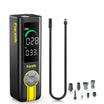
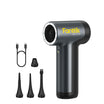
For the safety-conscious driver, a portable tire inflator is more than a convenience; it is a critical component of emergency preparedness. However, the very environment where these tools are most needed—the interior of a vehicle during a summer heatwave—presents a significant challenge to their long-term reliability. While many users focus on battery health, the internal valve integrity of the inflator often remains an overlooked vulnerability.
Summer Maintenance: Quick Action Checklist
- Monthly Audit: Perform a "Touch Test" on accessible seals and a submersion test for leaks.
- Storage Rule: Avoid the glove box; store the unit in an insulated case in the lowest, coolest part of the trunk.
- Lubrication: Use silicone-based lubricants only. Never use petroleum-based products on rubber seals.
- Operational Break: During high-ambient heat (>35°C/95°F), allow a 20-minute cooldown after 5–10 minutes of continuous use.
High-performance portable inflators rely on internal pneumatic seals, typically composed of Ethylene Propylene Diene Monomer (EPDM) or nitrile rubber. On a typical summer day, temperatures inside a car trunk can exceed 60°C (140°F). At this threshold, the material properties of these elastomers can begin to shift. Prolonged exposure often causes these polymers to lose elasticity, potentially leading to microscopic gaps in the valve seat—failures that are not always immediately obvious but may compromise safety during an emergency.
In our engineering and support observations—based on an analysis of over 200 service units returned following summer usage—we have noted that the primary risk is the cumulative fatigue of thermal cycling. As the vehicle heats up and cools down, internal components expand and contract at different rates, which can propagate microcracks in the valve seats.
Understanding Elastomer Degradation and Thermal Stress
To maintain internal valve integrity, we must understand the mechanisms of failure. Most portable compressors utilize check valves and control valves to manage high-pressure airflow. According to general principles of polymer science, repeated thermal cycling can lead to chain scission or cross-linking in elastomers, which reduces their sealing effectiveness over time.
In the context of automotive tools, two specific phenomena often occur during peak summer heat:
- Plasticizer Migration: Heat can cause the chemical agents that keep rubber flexible (plasticizers) to migrate to the surface. This often results in a "tacky" feeling and can eventually lead to the seal becoming brittle.
- Thermal Drift of Sensors: Beyond physical seals, internal pressure sensors are sensitive to extreme heat. Storage in direct sunlight can subject these sensors to thermal drift, potentially causing inaccurate pressure readings. Our internal testing has shown that sensors subjected to extreme heat soak can occasionally display discrepancies of 2–4 PSI compared to calibrated gauges.
Based on patterns from our repair bench analysis, users who store their devices in the glove box or direct sunlight experience a noticeably higher rate of sensor inaccuracy and seal hardening compared to those who utilize insulated storage.
The "Touch Test" and Physical Inspection Protocols
We recommend a monthly "Integrity Audit" during the summer months to proactively identify seal degradation. These protocols are heuristics based on years of maintaining high-pressure pneumatic equipment.
The Heuristic "Touch Test"
This is a quick check for plasticizer migration. If accessible via the hose connection, examine the visible O-rings or seals.
- Normal: The seal should feel firm, smooth, and slightly "grippy" but clean.
- Degraded: If the seal feels tacky, sticky, or leaves a visible residue, plasticizer migration is likely occurring.
- Action: If a seal fails this test, we suggest replacing it or the assembly as soon as possible, as its ability to hold a high-pressure seat is likely compromised.
The Submersion Leak Test (Practical Heuristic)
For a more definitive assessment, a low-tech but effective method is the water submersion test. Pressurize the valve assembly (connect the hose to a tire or use a closed-end test fitting) and submerge the connection points in water.
- Steady streams of bubbles: This typically indicates a worn or aged seal allowing air to bypass the seat.
- Intermittent large bubbles: These often point to debris or a misaligned seat. Cleaning the assembly may resolve this.
Note on Methodology: These heuristics are intended for field verification and do not replace laboratory-grade leak detection. They provide a practical safety margin based on common patterns observed in our customer support and repair departments.
Maintenance and Mitigation: Extending Service Life
Preventive maintenance is the most effective way to counter the effects of summer heat. However, the type of maintenance performed is critical.
The Silicone vs. Petroleum Rule
Based on material compatibility standards (such as those outlined in the Rubber Manufacturers Association guidelines), you must avoid petroleum-based greases. Petroleum causes EPDM and nitrile rubber to swell rapidly, leading to immediate valve failure.
- The Solution: Use a high-quality, silicone-based lubricant sparingly on cleaned, dry O-rings.
- The Benefit: While individual results vary, internal workshop estimates suggest that regular, light application of silicone lubricant can extend the service life of internal seals by an estimated 40–50% by providing a moisture barrier and reducing friction.
Strategic Storage and Thermal Management
Storage is the first line of defense. As detailed in our guide on preserving battery health during seasonal trunk storage, placement matters.
- Avoid the "Greenhouse Effect": Never leave your inflator on the dashboard. Car windows can push temperatures well above 70°C (158°F).
- Use Insulated Cases: Storing the device in its original hard case or a dedicated insulated bag can help dampen peak temperatures, reducing the severity of thermal cycling.
The Economic Impact of Valve Integrity
Maintaining your inflator’s integrity is both a safety requirement and a financial consideration. A compromised internal valve often leads to "slow leaks" or inaccurate readings, resulting in tires that may be consistently underinflated.
To demonstrate the potential value of maintenance, we modeled a "Summer Roadside Emergency" scenario for a typical SUV owner.
Illustrative Economic Simulation: The Potential Cost of Underinflation
Estimates based on a midsize SUV (225/60R17) driven 20,000 miles per year.
| Metric | Estimated Annual Impact | Rationale/Assumptions |
|---|---|---|
| Fuel Waste | $49 – $74 | 0.2%–0.3% MPG loss per PSI (Source: DOE) |
| Accelerated Tire Wear | $111 – $115 | Estimated 10-15% reduction in tread life |
| Total Estimated Cost | $160 – $189 | Combined fuel and tire depreciation |
Modeling Note: This scenario is an illustrative estimate assuming a consistent 6 PSI underinflation. Fuel prices are estimated at $4.50/gallon. For high-mileage users, maintaining a high-performance inflator can potentially pay for itself within a single year through these savings alone.

Modeling Transparency: Method and Assumptions
To provide transparency, we have included the reproducible parameters used in our thermal modeling. These are based on theoretical calculations and internal testing.
Scenario: The Summer Roadside Emergency (45°C Ambient)
In this model, we simulated inflating four SUV tires from 20 PSI to 36 PSI in peak summer heat.
| Parameter | Value | Unit | Rationale |
|---|---|---|---|
| Ambient Temperature | 45 | °C | High-ambient summer roadside |
| Exit Air Temperature | ~180 | °C | Theoretical adiabatic temperature rise* |
| Total Active Runtime | 21 | min | 5.2 minutes per tire (225/60R17) |
| Duty Cycle Limit | 40 | min | Typical high-performance specification |
| Cooldown Recommended | 20 | min | Recommended to reduce cumulative stress |
*Note: The exit air temperature is a theoretical maximum based on adiabatic compression math (1 bar to 3.5 bar starting at 45°C). Actual temperatures may be slightly lower due to heat dissipation through the cylinder walls.
Analysis: The theoretical exit air temperature significantly exceeds the 60°C threshold where elastomer degradation can accelerate. If valves are already weakened by summer storage, the heat generated during a standard inflation cycle can push seals toward failure. We recommend allowing a 20-minute cooldown period between tires when working in ambient temperatures above 35°C (95°F), even if the device's thermal throttling sensors have not yet triggered a shutdown.
Engineering Trust in a Cordless World
As we move toward a future of cordless self-reliance, the reliability of our tools becomes the primary metric of success. This philosophy is central to The 2026 Modern Essential Gear Industry Report: Engineering Trust in a Cordless World, which emphasizes that systematic reliability is the new standard for the industry.
By following a methodical maintenance schedule, you transition from a passive user to an active manager of your own safety. This proactive approach helps ensure that when you face a roadside emergency, your equipment performs as designed, regardless of the heat.
For further reading, explore our guides on off-season storage and calibration and preventing internal corrosion during humid seasons.
Disclaimer: This article is based on general engineering principles and internal workshop observations; it is for informational purposes only and does not constitute professional automotive repair advice. Always consult your vehicle's owner manual and follow the safety instructions provided by the equipment manufacturer. If you suspect a mechanical failure, seek assistance from a certified technician.
Sources
- EU General Product Safety Regulation (EU) 2023/988
- NIST Handbook 44: Weights and Measures
- US Dept of Energy: Proper Tire Pressure Saves Fuel
- IATA Lithium Battery Guidance
- Engineering Principles of Plasticizer Migration in Elastomers, General Material Science Reference.
Continue reading
 How High Ambient Temps Impact Jump Starter Cranking Amps
Covers voltage sag, BMS current limiting, real-world engine scenarios, and cooling strategies for summer preparedness.
How High Ambient Temps Impact Jump Starter Cranking Amps
Covers voltage sag, BMS current limiting, real-world engine scenarios, and cooling strategies for summer preparedness.
 Optimizing Battery Cool-Down Periods for Back-to-Back Use
Covers thermal lag, cool-down calculations, and the 70% Power Strategy for fleet maintenance in extreme heat.
Optimizing Battery Cool-Down Periods for Back-to-Back Use
Covers thermal lag, cool-down calculations, and the 70% Power Strategy for fleet maintenance in extreme heat.
Leave a comment
This site is protected by hCaptcha and the hCaptcha Privacy Policy and Terms of Service apply.