











































Quick Action Checklist: Ensuring Towing Stability
To ensure your vehicle and trailer are safe for the road, follow these primary steps before departing:
- Measure Tongue Weight (TW): Aim for 10–15% of your total loaded trailer weight.
- Calculate Rear Axle Load: Account for the "lever effect" which adds more weight to your rear tires than the static tongue weight alone.
- Consult Load/Inflation Tables: Match your specific axle load to the tire manufacturer’s PSI requirements, rather than relying solely on the door-jamb sticker.
- Set Cold Pressure: Adjust PSI only when tires have been stationary for at least three hours.
The Physics of Tongue Weight: Beyond the 10% Rule
When discussing towing safety, "tongue weight" is often a misunderstood variable. Based on common patterns observed in customer support and workshop repairs, while many owners are aware of the "10–15% rule," few account for how that weight interacts dynamically with the tow vehicle’s tires. Tongue weight is the static force exerted by the trailer coupler onto the hitch ball. According to NHTSA towing guidelines, maintaining this 10–15% ratio is a significant factor in preventing dangerous trailer sway.
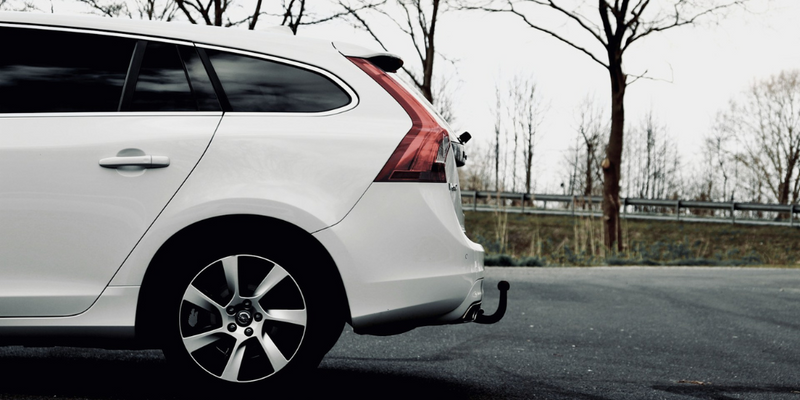
However, the ideal tongue weight is not a universal constant. As noted in technical analyses by Mechanical Elements, it is a dynamic value influenced by the tow vehicle’s wheelbase. Because the hitch ball typically sits several feet behind the rear axle, the tongue weight acts as a lever. This "lever effect" can multiply the load on your rear tires while simultaneously lightening the front steering axle, potentially compromising braking and steering response.
The Tire Pressure Paradox: Why Door Stickers May Be Insufficient
A frequent observation in the field is a strict reliance on the vehicle's door-jamb tire pressure placard. While this sticker provides a PSI (pounds per square inch) recommendation based on the vehicle’s Gross Vehicle Weight Rating (GVWR) for standard use, it often does not account for the concentrated vertical load of a heavy trailer hitch.
The Math of Leverage (Example Calculation)
When you add tongue weight, you aren't just adding that specific number to the vehicle's total mass; you are redistributing it.
- The Formula: $Added\ Rear\ Load = TW \times \frac{Wheelbase + Overhang}{Wheelbase}$
- Example: If you have a 700 lb tongue weight, a 120-inch wheelbase, and a 48-inch overhang (distance from rear axle to hitch ball), the actual load added to the rear axle is: $700 \times \frac{120 + 48}{120} = 980\ lbs$.
In this scenario, the rear tires are supporting nearly 300 lbs more than the static tongue weight suggests. At standard "unloaded" pressures, this can cause excessive sidewall deformation. To find the correct pressure, users should consult the Tire and Rim Association (TRA) standards or specific tire manufacturer load/inflation tables, such as those provided by Goodyear or Michelin.
Sidewall Flex and Thermal Dynamics: The Mechanics of Failure
Under-inflation is widely cited by industry experts as a primary contributing factor to trailer tire blowouts. The mechanism is rooted in heat generation. When a tire is under-inflated for the load it carries, the sidewall flexes excessively with every rotation. This repeated flexing generates internal friction, a process known as hysteresis.
While specific temperature increases vary based on ambient conditions and speed, internal industry observations suggest that even a 10% reduction in required PSI can lead to significant heat spikes. Once the internal temperature exceeds the bonding limits of the rubber and ply layers, the tire is at high risk for a catastrophic structural failure.
Furthermore, increased sidewall flex reduces the tire's "load sensitivity." As a tire is pushed toward its maximum deflection, its ability to provide lateral stability decreases. For the driver, this often manifests as a "squirmy" feeling, making the trailer more susceptible to crosswinds or the air pressure from passing heavy vehicles.
Practical Heuristic: The 60% GVWR Rule for Trailer Tires
If you cannot access a commercial scale immediately, this shop heuristic serves as a practical rule of thumb for estimating a safe minimum pressure for trailer tires (not the tow vehicle):
- Identify Trailer GVWR: Locate the maximum weight rating on the trailer's VIN plate.
- Estimate Axle Load (60% Rule): For common single or dual-axle travel trailers, a conservative estimate assumes approximately 60% of the GVWR is supported by the tires (accounting for weight distribution and tongue load).
- Divide by Number of Tires: Determine the estimated load per tire.
- Check the Table: Find the PSI on a manufacturer’s load/inflation chart that corresponds to that weight.
Note: This is a heuristic for planning purposes and should be verified with actual scale weights whenever possible.
Advanced Load Management: Weight Distribution Hitches (WDH)
When cargo distribution is fixed, such as with a boat or livestock, a Weight Distribution Hitch (WDH) is often employed. As explained by Weigh Safe, a WDH does not "reduce" tongue weight; rather, it uses spring bars to mechanically redistribute that weight across all axles of the tow vehicle and the trailer.
While a WDH improves vehicle leveling, it actually increases the load on the trailer tires by pushing weight back toward them. This reinforces the necessity of precise tire pressure management; ensure your trailer tires are inflated to handle this redistributed mass.
Hard Mechanical Limits
Regardless of pressure adjustments, you must never exceed the lowest of these mechanical limits:
- The vehicle's hitch receiver rating.
- The hitch ball and shank rating.
- The vehicle's Gross Axle Weight Rating (GAWR).
Protocol for Calculating Specific Inflation Needs
Follow this three-step protocol to transition from generic estimates to methodical execution.
Step 1: Measure Actual Tongue Weight
Measure the trailer loaded exactly as it will travel. Liquids (water, fuel) shift the center of gravity. Use a dedicated tongue weight scale or a commercial scale. Ensure the trailer is level; an unlevel trailer can shift weight between axles, leading to inaccurate readings.
Step 2: Determine Axle Loads (The Three-Pass Method)
For the highest precision, use a commercial CAT scale:
- Pass 1: Tow vehicle and trailer with WDH bars engaged.
- Pass 2: Tow vehicle and trailer with WDH bars disconnected.
- Pass 3: Tow vehicle only. By comparing these weights, you can calculate the exact load on each axle.
Step 3: Set Cold Pressure
Always adjust pressure when tires are "cold" (stationary for at least three hours). Driving even a short distance can raise internal pressure by 3–5 PSI, leading to a false "safe" reading.
| Parameter | Value/Range | Unit | Rationale / Source |
|---|---|---|---|
| Target Tongue Weight | 10–15 | % | NHTSA Standard |
| Est. Load on Axles | 60 | % | Practical Shop Heuristic |
| Max Speed (ST Tires) | 65 | MPH | Industry standard for ST-rated tires |
| Pressure Safety Margin | +2 to +5 | PSI | Compensation for gauge variance |
| Temp Sensitivity | ~1 | PSI | Per 10°F ambient change |
Method and Assumptions
These recommendations are derived from deterministic models based on common towing configurations. Our analysis assumes the use of "ST" (Special Trailer) tires and standard Class III or IV hitch receivers. This model is intended for travel trailers under 10,000 lbs GVWR and may not apply to fifth-wheel or gooseneck setups, which typically require a higher tongue weight (20–25%) due to their mounting position over the rear axle.
Disclaimer: This article is for informational purposes only and does not constitute professional mechanical or safety advice. Towing involves inherent risks; always consult your vehicle and trailer owner's manuals and adhere to local traffic laws. If you are unsure about your weight distribution or tire health, consult a certified towing specialist.
Sources
Continue reading
 Tandem Axle Logistics: Efficiently Inflating Multi-Tire Trailers
Covers the Circular Sweep workflow, ST tire specifications, pressure imbalances, ATIS risks, and seasonal storage to prevent flat-spotting.
Tandem Axle Logistics: Efficiently Inflating Multi-Tire Trailers
Covers the Circular Sweep workflow, ST tire specifications, pressure imbalances, ATIS risks, and seasonal storage to prevent flat-spotting.
 Trailer Heat Dynamics: Why Heavy Towing Spikes Tire Pressure
Covers hysteresis physics, TPMS limitations, cold baseline methods, and load/inflation tables for safe trailer towing.
Trailer Heat Dynamics: Why Heavy Towing Spikes Tire Pressure
Covers hysteresis physics, TPMS limitations, cold baseline methods, and load/inflation tables for safe trailer towing.


Leave a comment
This site is protected by hCaptcha and the hCaptcha Privacy Policy and Terms of Service apply.