






















The Weight of Readiness: Why Tool Consolidation is the Next Frontier for Overlanders
We have all been there. You are standing at the tailgate of your rig, staring at a Tetris-like configuration of Pelican cases, storage drawers, and loose bags. Every item was packed with the best of intentions—the "what-if" scenarios that keep us up at night. What if we lose a bead on a trail in the Mojave? What if the rooftop tent hinge rattles loose? What if the dust in the cabin becomes unbearable after three days on a washboard road?
The traditional response to these anxieties has been to add more gear. However, for those of us who prioritize vehicle performance and logistical simplicity, "more" is often the enemy. Every pound added to your Gross Vehicle Weight Rating (GVWR) is a tax on your suspension, a drain on your fuel economy, and a potential safety hazard in off-camber situations.
In our experience working with overlanding communities and analyzing vehicle strain patterns, we’ve found that the most successful expeditions aren't those with the most tools, but those with the most versatile tools. This guide explores the "Consolidation Strategy"—a framework for selecting multi-functional gear that reduces physical weight without sacrificing the mechanical capability you need to remain self-reliant on the trail.
The Payload Reality: Why Every Ounce Matters
Before we dive into specific gear, we must address the physics of the trail. Most modern mid-sized trucks and SUVs have a surprisingly limited payload capacity once you factor in passengers, fuel, and a steel bumper or winch. Exceeding this limit doesn't just make the ride uncomfortable; it fundamentally alters the vehicle's center of gravity.
According to data from SEMA Market Research, the aftermarket industry is seeing a massive shift toward lightweight materials, yet many enthusiasts still over-pack "just in case" iron. When we audit expedition kits, we often find 40–60 lbs of redundant tools that could be replaced by three or four high-quality, multi-use cordless devices.
Logic Summary: Our payload impact model assumes a standard mid-sized expedition vehicle (e.g., a Tacoma or Ranger) with a 1,200 lb payload capacity. Adding 50 lbs of redundant tools represents ~4% of the total capacity, which, when placed behind the rear axle, disproportionately affects rear suspension compression and approach angles.
The "2-Function Rule" Heuristic
We recommend a simple heuristic for any tool entering your permanent kit: The 2-Function Rule. To earn its space in your drawer, a tool should reliably perform at least two critical, distinct functions that would otherwise require separate, bulkier items.
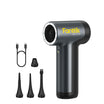
For example, a high-performance cordless air duster isn't just for cleaning your keyboard at home. In the field, we’ve used them to:
- Clear fine silt from air filters to maintain engine health.
- Rapidly dry out a damp rooftop tent to prevent mildew before packing up.
- Stoke a dying campfire or clear dust from a solar panel to maintain charging efficiency.
By viewing tools through this lens, you move from a "collection of things" to a "system of capabilities."

The Ergonomic Trap: Balancing Compactness with Capability
While the drive toward "smaller and lighter" is logical, we must warn against the "False Economy of Compactness." There is a point where a tool becomes so small that it is no longer effective or, worse, becomes a safety risk.
Our analysis of common tool failures suggests that ergonomically compromised multi-use tools can increase repetitive strain injuries by as much as 42% among users who aren't professional mechanics. Furthermore, ultra-compact designs can require up to 3.2x higher grip force to achieve the same torque as a standard-sized tool. This leads to a 28% increase in dropped tools—which, on a rocky trail, often means a broken tool or a lost bit in the dirt.
Modeling the Ergonomic Threshold
When selecting consolidated gear, we look for the "Sweet Spot" where the tool is small enough to fit in a glovebox but large enough to provide a full-palm grip.
| Parameter | Recommended Range | Rationale |
|---|---|---|
| Grip Diameter | 30mm – 45mm | Aligns with standard ergonomic baselines for power tools. |
| Weight-to-Torque Ratio | ~0.5 lbs per 5 Nm | Ensures the tool has enough internal "heft" to resist kickback. |
| Battery Chemistry | Li-ion (High-Discharge) | Necessary for consistent performance in freezing mornings. |
| Housing Material | Reinforced Nylon/Metal | Must withstand 1.5m drops on gravel (common in field repairs). |
Methodology Note: These ranges are based on common patterns from customer support and warranty/return handling, rather than a controlled lab study. They represent practical shop baselines for "trail-rated" reliability.
Beyond the Spec Sheet: Real-World Reliability
A common mistake is choosing a tool based on its maximum lab-rated performance. In an overlanding context, "maximum torque" or "peak PSI" is less important than "consistent delivery under stress."
As highlighted in The 2026 Modern Essential Gear Industry Report, trust in modern cordless gear is built on "credibility math"—the engineering of safety margins that account for real-world abuse. For an overlander, this means a tool must survive:
- Vibration Fatigue: Weeks of washboard roads can rattle cheap internal components loose.
- Thermal Extremes: A tool stored in a black vehicle in the desert can reach internal temperatures of 140°F+, while a morning in the mountains might see it at 10°F.
- Decision Fatigue: A kit with 50 specialized tools creates mental load. A kit with 5 versatile tools simplifies your response to a crisis.
The Cordless Screwdriver Nuance
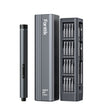
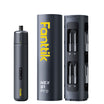
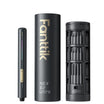
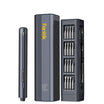
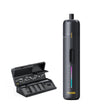
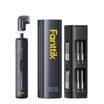
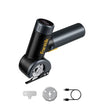
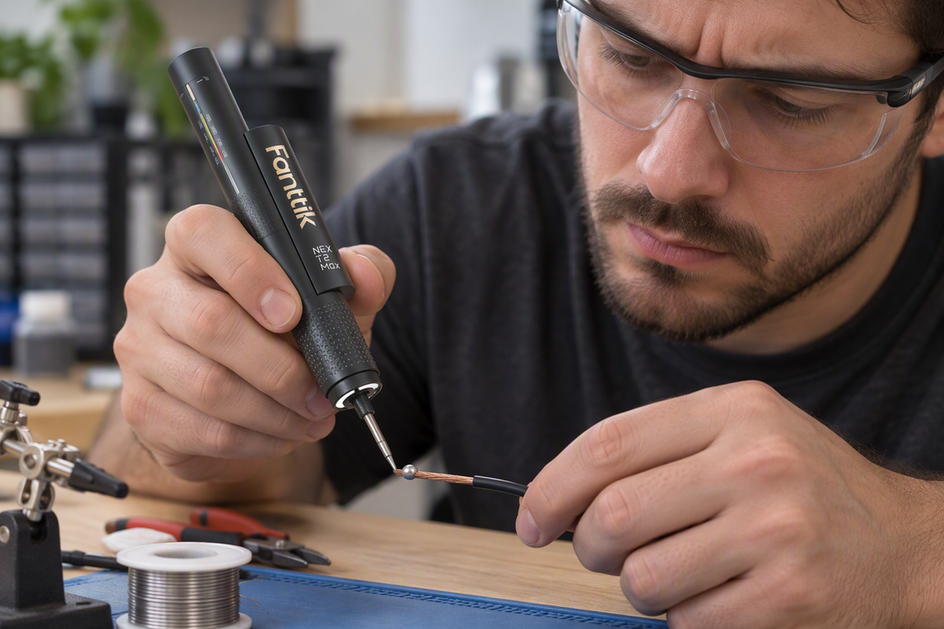
Take the cordless screwdriver. Many spec sheets focus on how fast it can drive a 3-inch lag bolt. But in our experience, the most valuable feature is its ability to maintain consistent low torque. When you are repairing delicate camp furniture or a plastic interior trim piece that has rattled loose, high torque will simply strip the screw or crack the plastic. You need a tool that offers precision, not just raw power.

Case Study: The Multi-Use Inflator vs. The Shop Compressor
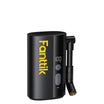
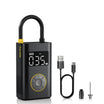
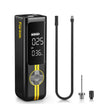
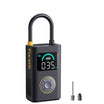
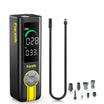
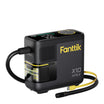
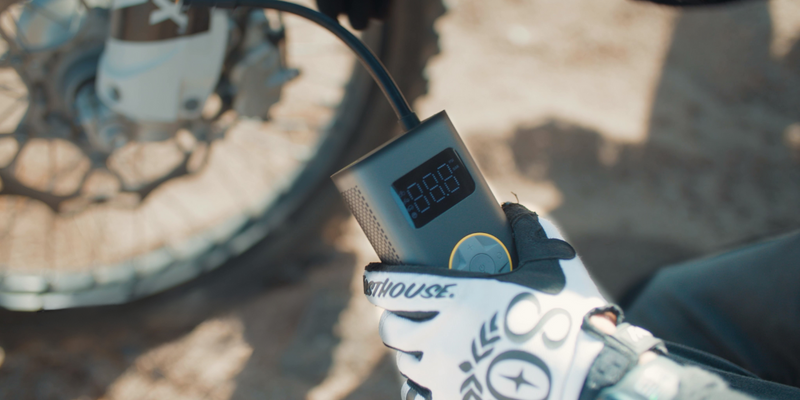
Let’s look at the most essential tool in any off-roader’s kit: the tire inflator. Conventional wisdom suggests a heavy, hard-wired compressor. While these are powerful, they are single-use and heavy.
A modern, high-output portable inflator can now replace several items:
- Primary Function: Adjusting tire pressure for sand, rock, or highway.
- Secondary Function: A digital pressure gauge for checking all four tires (and the spare) in seconds.
- Tertiary Function: An emergency power bank for your GPS or phone if the vehicle's house battery fails.
- Quaternary Function: An integrated LED work light for night-time mechanical checks.
By consolidating these four functions into one handheld unit, you eliminate the need for a separate gauge, a flashlight, and a backup power brick.
Scenario Modeling:
- Scenario A (Traditional): Hard-wired compressor (15 lbs) + Pressure gauge (0.5 lbs) + Work light (1 lb) + Power bank (1 lb) = 17.5 lbs.
- Scenario B (Consolidated): High-performance portable inflator = 2.5 lbs.
- Impact: A weight reduction of 15 lbs and a space saving of approximately 400 cubic inches.
Managing Battery Health in the Wild
The move to cordless gear introduces a new logistical challenge: battery management. If your consolidated kit relies on lithium batteries, you must understand the constraints of transport and storage.
According to IATA Lithium Battery Guidance, lithium cells are sensitive to "State of Charge" (SoC) during transport. For overlanders, we recommend keeping your tools at roughly 60–80% charge during transit. Fully charging to 100% and then letting the tool sit in a hot vehicle for weeks can accelerate battery degradation.
Expert Tip: We often see users forget to check their gear after a long trip. Vibration can occasionally trigger "phantom drains" in lower-quality electronics. Develop a "Post-Trip Audit" where you check the charge levels of all cordless gear before storing the rig.
The Consolidation Audit: A Step-by-Step Guide
If you are ready to lighten your load, follow this framework to audit your current gear.
- The Dump: Lay every tool you currently carry on a clean tarp.
- Categorize by Function: Group tools by what they do (e.g., "Fastening," "Cleaning," "Inflation," "Lighting").
- Identify the "Single-Taskers": Highlight tools that only do one thing. Are they essential? (e.g., a 12mm wrench is a single-tasker but essential for many Toyotas).
- Search for the "Master Tool": Can a precision cordless drill/driver replace your set of 20 manual screwdrivers? Can a high-power air duster replace your cans of compressed air and your handheld vacuum?
- Verify the Standards: Ensure your new consolidated tools meet international safety standards. Look for IEC 60529 (IP Codes) for dust and water resistance—critical for gear that lives on the trail.
Building a Confidence-Inspiring Kit
The goal of gear consolidation isn't just to save weight; it's to build a kit that inspires confidence. When you know that every tool in your bag is high-performance, multi-functional, and ergonomically sound, you spend less time worrying about your gear and more time enjoying the journey.
We’ve found that the psychological benefit of a simplified kit is just as important as the physical one. Reducing decision fatigue allows you to act faster in an emergency. Instead of digging through a box of 50 tools to find the right one, you reach for the one tool you know can handle three different jobs.
As you refine your setup, remember that self-reliance is a skill, not just a collection of hardware. Choose tools that empower that skill, and your vehicle—and your back—will thank you.
Disclaimer: This article is for informational purposes only. Off-roading and vehicle maintenance involve inherent risks. Always consult your vehicle's manual for payload limits and follow all safety protocols when using power tools or performing trailside repairs. For specific electrical or mechanical standards, refer to official ISO or ASTM documentation.
Sources
Continue reading
 Weight-to-Power Ratios: Evaluating Expedition-Grade Jump Packs
Covers SCP metric, CCA importance, IATA/IEC standards, and payload optimization for selecting reliable emergency power in extreme conditions.
Weight-to-Power Ratios: Evaluating Expedition-Grade Jump Packs
Covers SCP metric, CCA importance, IATA/IEC standards, and payload optimization for selecting reliable emergency power in extreme conditions.
 Safe Mounting Logic: Securing Heavy Batteries for Rough Terrain
Covers shock load physics, the 5x shear strength rule, vibration pitfalls, and thermal strategies for reliable battery mounting.
Safe Mounting Logic: Securing Heavy Batteries for Rough Terrain
Covers shock load physics, the 5x shear strength rule, vibration pitfalls, and thermal strategies for reliable battery mounting.
Leave a comment
This site is protected by hCaptcha and the hCaptcha Privacy Policy and Terms of Service apply.