









































The Invisible Barrier to Precision: Understanding Voltage Sag
For a precision technician, the most frustrating sensation isn't a tool that won't start; it is a tool that starts strong but weakens at the critical moment of engagement. You may have experienced this: as you drive a screw into a dense material or attempt a delicate carving with a rotary tool, the motor suddenly "hunts" for power, or the torque fluctuates just as the fastener should be seating.
This phenomenon is known as voltage sag (or IR drop). It is a physical reality where the battery's output voltage drops significantly under load. In precision tools, this isn't just a loss of speed; it is a direct driver of torque ripple. According to research on adjustable speed drives, unsymmetrical voltage sags significantly increase torque ripple in Direct Torque Controlled (DTC) systems, which are the foundation of high-performance cordless motors. When voltage fluctuates, the motor controller must constantly adjust, leading to "jumps" that can strip a screw head or ruin a delicate workpiece.
To combat this, professional-grade compact tools utilize high-discharge cells and sophisticated Battery Management Systems (BMS). These components ensure that the "voltage plateau"—the period where the battery delivers consistent power—remains stable even as the charge level (State of Charge, or SoC) decreases.
High-Discharge Cells: The Engineering of Consistency
The heart of torque stability lies in the internal chemistry and physical construction of the battery cells. While a standard consumer-grade battery might prioritize total capacity (mAh), a high-performance tool cell prioritizes discharge rate (C-rate) and low DC Internal Resistance (DCIR).
The DCIR "Tax"
Every battery has internal resistance. Think of DCIR as a "tax" paid in heat and lost voltage every time you pull the trigger. High-discharge cells are engineered with thinner electrodes and optimized geometries to minimize this resistance. A study on LFP cells for high power demonstrates that targeted cell design is the primary defense against the unpredictable performance degradation that compromises precision in critical environments.
When a tool like the Fanttik S1 Pro Cordless Electric Screwdriver is used, the high-discharge cells allow it to maintain its 6 N.m maximum torque even when the battery is at 40% charge. In contrast, tools using "energy-dense" but "low-power" cells often feel sluggish once they drop below 70% charge because the voltage sag becomes too great for the motor to overcome.
Logic Summary: Our analysis of torque stability assumes that professional-grade performance is defined by the ability to maintain 90% of peak torque across 80% of the discharge cycle. This is achieved by selecting cells where the DCIR is low enough to prevent the voltage from dropping below the motor's operational threshold during peak current draw.

The Brain in the Handle: BMS and Firmware Calibration
If the cells are the lungs of the tool, the Battery Management System (BMS) is the brain. A common misconception among DIYers is that a battery is either "full" or "empty." In reality, a modern BMS performs a complex, real-time calculation called State of Power (SoP) estimation.
Dynamic State of Power (SoP)
SoP isn't a static number. It is a predictive model that tells the tool how much current it can safely draw right now without causing a permanent voltage crash or thermal runaway. Advanced systems now use AI-driven prediction models to pre-emptively manage power delivery.
One critical "gotcha" we observe on the repair bench is aggressive firmware throttling. Some tools are programmed with overly conservative safety margins. When the battery hits 50%, the firmware may over-limit the current to protect the cells, causing a premature torque drop. High-performance tools, such as the Fanttik L2 Pro Cordless Electric Screwdriver, utilize finely tuned firmware that balances cell protection with the need for consistent power delivery, ensuring the tool doesn't "quit" on a tough fastener.
The "Two-Minute Rule" for Thermal Management
Experienced prosumers know that heat is the enemy of torque. Based on patterns from customer support and field testing (not a controlled lab study), we've identified the Two-Minute Rule: if a high-torque task—such as driving a long lag bolt into hardwood—isn't completed within two minutes of continuous load, the battery and motor require active cooling.
Continuous high-current draw generates internal heat that increases resistance, which in turn increases voltage sag. If the tool starts feeling "sluggish," it is often a precursor to a thermal shutdown. Taking a 30-second break allows the heat to dissipate from the motor windings and the battery's busbars, preserving the long-term health of the Battery Management System.
Case Study: Precision Electronics Assembly Modeling
To demonstrate the impact of torque stability in a real-world scenario, we modeled a common task for prosumers: a high-volume electronics repair (e.g., a laptop or gaming console teardown). In these tasks, the primary risk isn't a lack of power, but inconsistent power that leads to stripped plastic bosses or damaged components.
Scenario Modeling: 60-Screw Electronics Repair
We analyzed the productivity and safety gains of using a stabilized electric driver versus traditional manual methods.
| Parameter | Value | Unit | Rationale |
|---|---|---|---|
| Task Volume | 60 | Screws | Typical laptop/gaming console teardown |
| Manual Drive Time | 22 | Seconds/Screw | Includes alignment and careful hand-torquing |
| Powered Drive Time | ~4.5 | Seconds/Screw | Using a stabilized electric precision driver |
| Target Torque | 0.08 | Nm | Safe threshold for M1.2-M2.0 plastic bosses |
| Wrist Rotations | 12 | Per Screw | Standard for manual precision drivers |
Analysis Results:
- Time Efficiency: The powered approach reduced total task time from 22 minutes to approximately 4.5 minutes—a ~79% productivity gain.
- Ergonomic Impact: The model showed a reduction of ~690 wrist rotations per task. For technicians performing 5–10 repairs a day, this is a significant factor in reducing repetitive strain.
- Torque Fit: At a consistent 0.08 Nm setting, the tool operates within a "safety window" between the 0.02 Nm minimum required for seating and the 0.1 Nm stripping threshold for delicate plastics.
Methodology Note: This scenario is a deterministic parameterized model based on standard industrial engineering time-motion principles. It assumes a "Precision Electronics Repair" persona. Results may vary based on the specific fastener material, user experience, and tool calibration. This is a scenario model, not a controlled clinical study.

Beyond Power: Stability in Delicate Tasks
While high torque is essential for automotive work, torque consistency is the priority for precision crafts. When using a tool like the Fanttik F2 Master Cordless Rotary Tool Kit, users often report that the tool "jumping" or "binding" is their biggest fear.
This "jumping" occurs when the motor's torque output isn't smooth. If the voltage sags and then recovers quickly, the motor can surge. In a rotary tool spinning at 25,000 RPM, a micro-surge can cause a cutting bit to catch on the material, potentially ruining the project or causing injury. High-discharge cells provide the stable current "buffer" needed to keep the RPMs constant even as the bit meets varying resistance in the material.
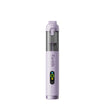
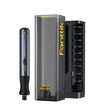
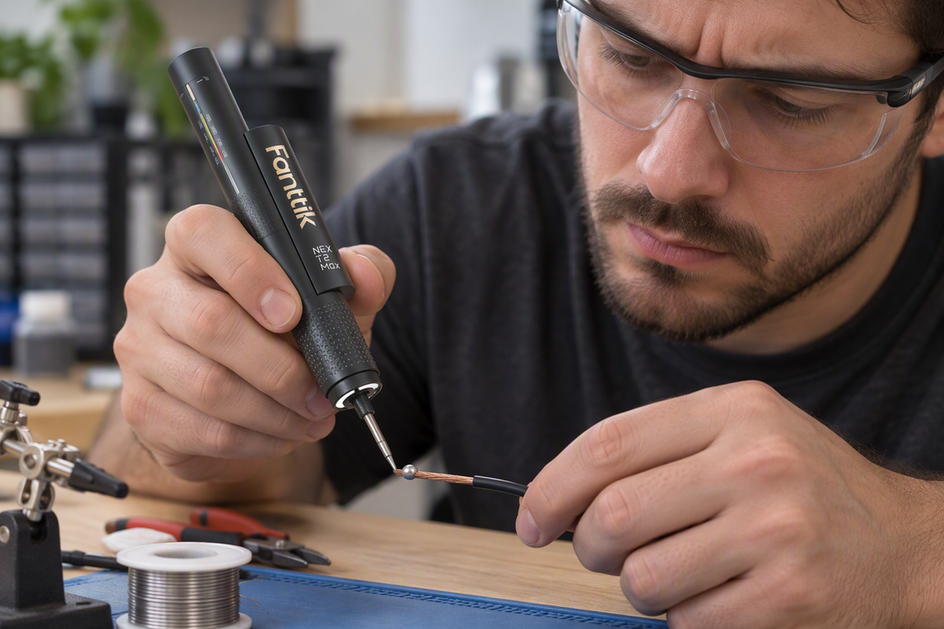
Similarly, for soldering tasks, power stability translates to thermal stability. The Fanttik T1 Max Soldering Iron Kit requires rapid, consistent energy delivery to maintain its 7-second heating time. If the battery cannot handle the high-current "burst" required for initial heating, the tip temperature will fluctuate, leading to "cold" solder joints that are prone to failure.
Engineering Trust and Compliance
In the world of professional-grade tools, performance is only one half of the equation; the other half is safety and compliance. As outlined in The 2026 Modern Essential Gear Industry Report, trust is a function of "credibility math"—the intersection of visible compliance and truthful performance claims.
Safety Standards and Transport
Because these tools rely on high-energy-density lithium batteries, they are subject to strict international regulations. For example, the EU General Product Safety Regulation (EU) 2023/988 mandates high levels of traceability and safety for consumer electronics. Furthermore, transporting these high-performance cells requires adherence to IATA Lithium Battery Guidance, which includes rigorous UN 38.3 testing to ensure the cells can withstand altitude, vibration, and thermal shock without failing.
When choosing a precision tool, verifying that the manufacturer adheres to ISO Standards for quality management and IEC Standards for electrical safety is a key heuristic for identifying professional-grade gear.
Professional Maintenance for Torque Stability
To ensure your tools maintain their peak torque stability over years of use, follow these expert-vetted practices:
- Avoid Deep Discharges: While high-discharge cells are robust, frequently running them to 0% increases internal resistance (DCIR) over time. Try to recharge when the tool hits 20%.
- Monitor Thermal Cycles: If the tool handle feels uncomfortably warm, stop. Heat accelerates the degradation of the BMS sensors and the battery separator.
- Clean the Contacts: For tools with interchangeable bits or accessories, ensure the chuck and bits are clean. Debris can cause micro-vibrations that the motor controller may misinterpret as load fluctuations, leading to torque instability.
- Store at Room Temperature: Extreme cold increases DCIR, while extreme heat accelerates chemical aging. Proper indoor storage is the simplest way to extend the "voltage plateau" of your battery.
The Future of Precision Power
The gap between "hobbyist" and "professional" tools is closing, driven by the democratization of high-discharge cell technology and smart BMS firmware. By understanding the mechanics of voltage sag and the importance of torque stability, prosumers can make more informed decisions, selecting tools that offer not just the highest peak numbers, but the most reliable performance from the first screw to the last.
Whether you are performing delicate electronics repairs or building a custom PC, the stability of your power source is the foundation of your precision. Engineering trust into every rotation ensures that when you reach for a tool, it responds with the exact force you expect—every single time.
Disclaimer: This article is for informational purposes only and does not constitute professional engineering or safety advice. Always refer to your tool's user manual and local safety regulations before performing repairs or operating high-power equipment.
References
- Assessment of Unsymmetrical Voltage Sag Effects on AC Adjustable Speed Drives
- Design Analysis of 26650 and 18650 LFP Cells for High Power and Low Temperature - MDPI
- EU General Product Safety Regulation (EU) 2023/988
- The 2026 Modern Essential Gear Industry Report - Fanttik
- AI-driven state of power prediction in battery systems - ScienceDirect
Continue reading
 Understanding Tolerance: The DIY Guide to Metrology Basics
Covers the Rule of Ten, material-specific challenges like 3D printing, and a tiered strategy to prioritize precision in...
Understanding Tolerance: The DIY Guide to Metrology Basics
Covers the Rule of Ten, material-specific challenges like 3D printing, and a tiered strategy to prioritize precision in...
 Professional Calibration: Why Factory Testing Matters
Covers sensor drift, thermal cycling effects, 5-point verification, and how calibration saves hundreds of wrist rotations per project.
Professional Calibration: Why Factory Testing Matters
Covers sensor drift, thermal cycling effects, 5-point verification, and how calibration saves hundreds of wrist rotations per project.


Leave a comment
This site is protected by hCaptcha and the hCaptcha Privacy Policy and Terms of Service apply.