









































Uneven tire pressure can absolutely make a car pull to one side, but fixing pressure is only the first check, not proof that your alignment is fine. If one tire is low, it drags differently than the others and the car tracks toward that side. The right first move is a cold pressure check on all four tires against your vehicle's documented target, then a short reassessment before you consider alignment service.
Why Can Uneven Tire Pressure Make a Car Pull?
Yes, uneven pressure can cause or contribute to a pull, and the smart first step is checking all four tires cold rather than booking an alignment.
A low or unevenly inflated tire rolls differently than a properly inflated one. It has more contact with the road and more rolling resistance, which can pull the steering toward that side. The strength and direction of the pull don't tell you which part failed, so measuring before guessing saves time and money.
Correcting pressure can resolve a pressure-related pull. But it doesn't confirm your alignment, tires, brakes, suspension, or steering are all in good shape. Those are separate systems, and pressure is just the cheapest, fastest thing to rule out first.
What Is the Correct First Pressure Check?
Start with a cold check on all four tires, compare it to your vehicle's placard or manual, and correct any tire that's off target. Do this before assuming anything else is wrong.

- Park the car and wait. According to the National Highway Traffic Safety Administration, a tire is only considered "cold" after it hasn't been driven for at least three hours. Driving heats the tires and raises the reading, so check first thing in the morning or after the car has sat.
- Find your target pressure. Locate the tire information placard, usually on the driver's door jamb, or check the owner's manual for the recommended cold inflation pressure. This number comes from the vehicle manufacturer, not the tire manufacturer.
- Measure all four tires. Record every reading, not just the tire you suspect. A slow leak or a forgotten top-off on one side is often the actual cause of a pull.
- Correct each tire to the target. Add air with a portable tire inflator or release air until every tire matches the placard number. Never use the tire sidewall's maximum PSI as your target; that number is a load rating, not a driving recommendation.
- Watch for tires that keep losing air. If one tire drops again within a day or two, that points to a valve or puncture issue that needs its own inspection, not repeated top-offs.
- Reassess briefly if the car feels stable. Drive normally on a familiar road and see if the pull is gone. If it is, pressure was likely the cause. If it isn't, move to the comparison checks below.
Temperature swings can also throw off readings between morning and afternoon checks; our cold pressure check guide covers how heat affects PSI readings if you're inflating during a hot stretch.
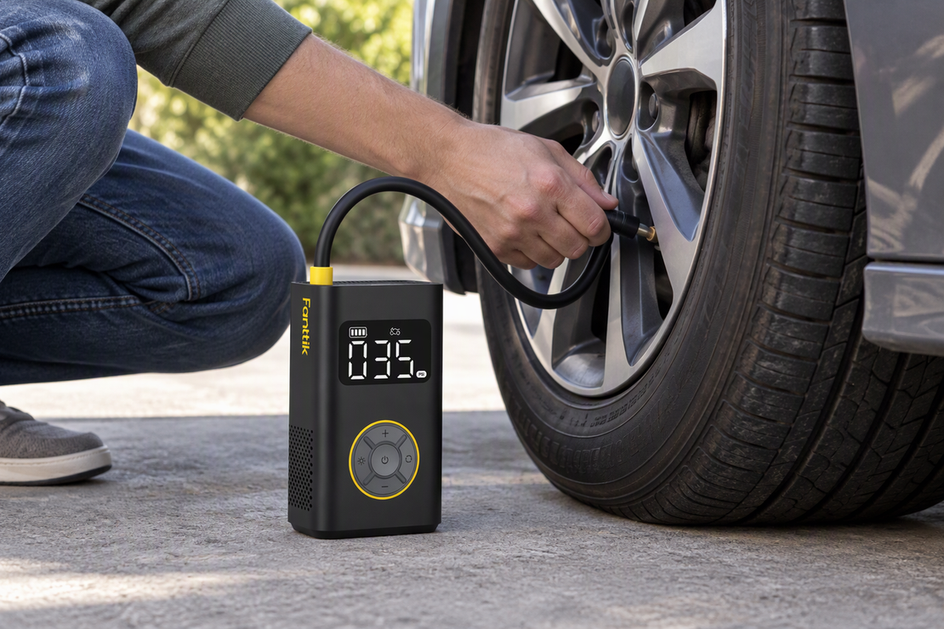
If you need a reliable tire inflator to bring tires back to that documented target, our X9 APEX inflator measures pressure and stops automatically once it reaches your set target, inflating a car tire from 28 to 33 PSI in about 35 seconds. It restores the number you already found on the placard. Using a car tire inflator does not test alignment, tire wear, or any other mechanical cause, so treat it as an inflation tool only.
Which Clues Point Beyond Tire Pressure?
If the pull disappears after correcting pressure, you're likely done. If it doesn't, use these clues to figure out where to look next.
| Clue | What it suggests | Next action |
|---|---|---|
| Pressure was uneven and pull disappears after correction | Pressure was the likely cause | Recheck pressure periodically; watch for repeat leaks |
| Pull persists with even, correct pressure | Tire wear, alignment, or suspension component | Schedule a qualified inspection |
| Steering wheel is off-center or car drifts on a crowned road | Road influence or possible alignment angle | Test on a flat, straight road before concluding alignment is at fault |
| Pull appears or worsens during braking | Brake drag or uneven brake wear | Stop testing and get brakes inspected promptly |
| Visible tire damage, bulge, or uneven tread wear | Tire condition issue | Have the tire inspected or replaced before further driving |
A pull that survives a correct, even pressure check isn't automatically an alignment problem. It could involve tire condition, road crown, worn suspension parts, or braking components. Don't collapse all of these into one label; each points to a different fix.
When Should You Stop Driving and Get the Car Inspected?
Stop road-testing and get the car inspected promptly if the pull is strong, unstable, happens during braking, or if you see tire damage. These are not conditions to keep diagnosing on your own.
A mild pull that remains after you've corrected pressure and checked tire condition is a different situation. That calls for a scheduled, qualified inspection that can evaluate alignment, suspension, steering, and brakes together, rather than assuming one part is at fault. Ask the shop to diagnose the pull itself rather than requesting an alignment by default; a shop can rule out worn components or damage that an alignment adjustment alone won't fix.
Either way, don't keep testing a car that pulls hard, feels unstable, or drags during braking. Those symptoms can escalate quickly and are worth addressing before the next drive, not after more road tests.

FAQs
Should I inflate the tires to the PSI printed on the tire sidewall?
No. The number on the sidewall is the tire's maximum rating, not the vehicle's recommended operating pressure. Use the number on your vehicle's tire placard or in the owner's manual, and measure the tires cold for an accurate reading.
Can the steering wheel be off-center even if the car does not pull?
Yes. An off-center steering wheel can appear without a strong pull and may be a separate clue related to alignment. It isn't enough on its own to identify which alignment angle is off. If it persists, a qualified inspection can confirm whether adjustment is needed.
How far should I drive after correcting the tire pressure?
There's no set distance. A short drive on a familiar, flat road is enough to tell if the pull is gone. If it's still present or gets worse, stop retesting yourself and have the car inspected rather than continuing to drive and reassess.
Continue reading
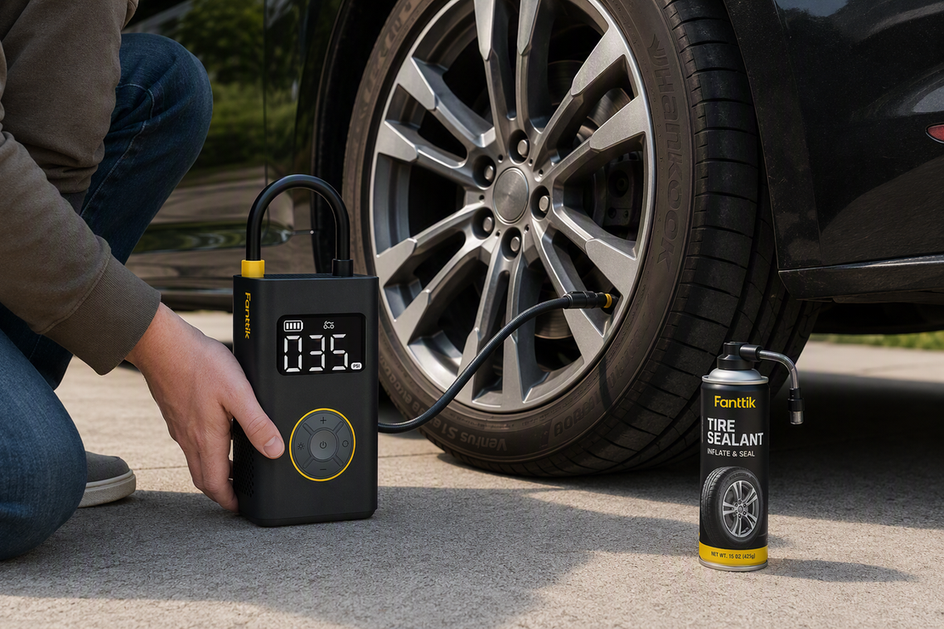 Why You Should Never Use Tire Sealant Cans as a Permanent Flat Repair
Aerosol sealant masks a leak but never replaces inspection. Here's what it can do to TPMS sensors, shop...
Why You Should Never Use Tire Sealant Cans as a Permanent Flat Repair
Aerosol sealant masks a leak but never replaces inspection. Here's what it can do to TPMS sensors, shop...
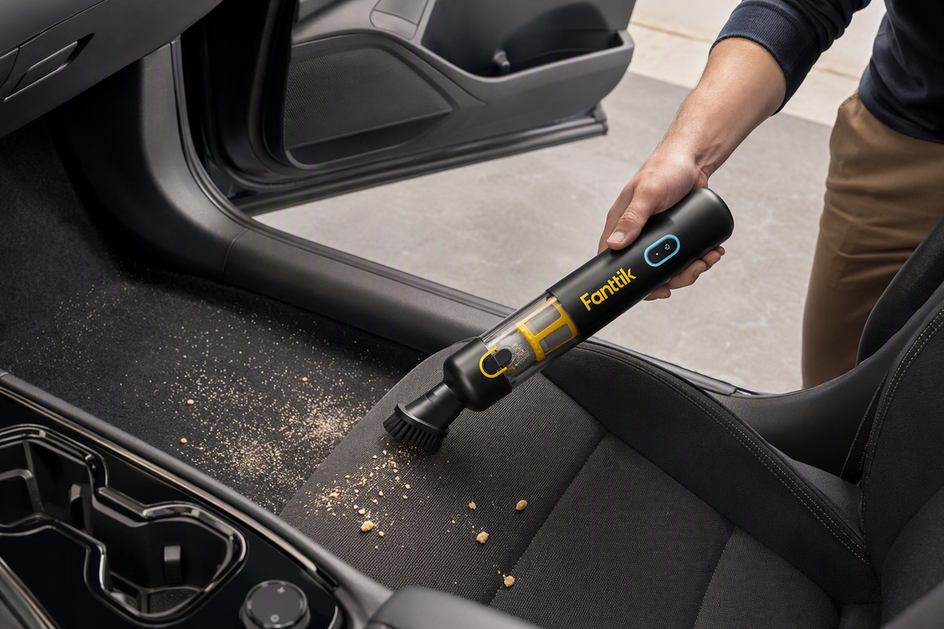 How to Deep Clean Sand and Crumbs from Car Seat Crevices with Handheld Vacuums
A step-by-step guide to clearing packed sand and crumbs from car seat seams using nozzle attachments, safe air...
How to Deep Clean Sand and Crumbs from Car Seat Crevices with Handheld Vacuums
A step-by-step guide to clearing packed sand and crumbs from car seat seams using nozzle attachments, safe air...


Leave a comment
This site is protected by hCaptcha and the hCaptcha Privacy Policy and Terms of Service apply.