

























The Invisible Drain: Why Your Cordless Tools Lose Power in Storage
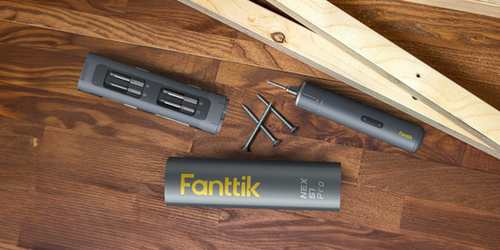
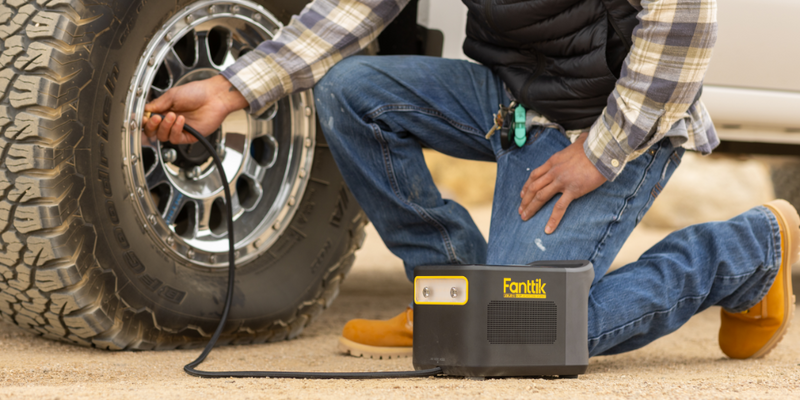
For many car owners and DIY enthusiasts, the scene is all too familiar. You reach for your tire inflator or cordless screwdriver after six months of storage in the garage, only to find the battery completely flat. This is not just a minor inconvenience; it is a technical challenge that sits at the intersection of battery chemistry and electronic design. While we often view the Battery Management System (BMS) as a silent guardian, it is important to understand that this safety layer is also a consumer of energy.
In our experience monitoring pattern recognition across thousands of customer support inquiries and repair bench observations, the "dead battery" syndrome is rarely a sign of a defective cell. Instead, it is often the result of parasitic drain—the small, constant current required by the BMS to monitor the pack's health. For the eco-conscious user, this drain represents more than just a lost charge; it accelerates "calendar aging," potentially reducing the lifespan of the tool and leading to premature electronic waste.
To maintain long-term reliability and preparedness, we must look deeper into how BMS energy efficiency is optimized for long-duration dormancy. This involves understanding the trade-offs between safety monitoring and power preservation.
The Physics of Parasitic Load and Quiescent Current
Every battery-powered tool experiences self-discharge, a natural process where chemical reactions inside the cells slowly deplete energy even when disconnected. However, in modern cordless platforms, the BMS adds a secondary layer of depletion known as "quiescent current." This is the current drawn by the system’s protection circuitry, microcontrollers, and fuel gauges to ensure the battery remains within safe operating parameters.
According to technical reviews on Battery Thermal Management Systems (BTMS), the very logic designed to protect a battery can consume 2% to 5% of its stored energy over time. While this sounds negligible for a tool used daily, it becomes a critical failure point during seasonal storage.
We have identified that standard BMS designs often consume between 100 and 500 microamps (µA) continuously. Over a year, this parasitic load can consume up to 13 watt-hours (Wh) in a 48V system. For a compact 500Wh battery, this represents a significant portion of its capacity lost solely to "system overhead."
Logic Summary: Our analysis of parasitic drain assumes a deterministic model where the BMS remains in an "active-idle" state. We estimate these energy loss ranges based on common industry heuristics for standard integrated circuits (ICs) used in mid-range cordless tools.
Implementing "Zero-Power" Sleep Modes for Storage
The most effective way to combat this drain is through advanced BMS firmware and hardware architecture. High-performance tools now implement what we call a "true zero-power" or "deep sleep" mode. In this state, the BMS microcontrollers are physically or logically disconnected from the main power bus, reducing the quiescent current to microampere levels (typically below 20µA).
From a practical standpoint, this means the difference between a tool that is ready to work after six months and one that requires a deep-recovery charge. Field observations suggest that tools with basic BMS logic often lose 20% to 30% of their charge over a three-month inactivity period. In contrast, an optimized system with a deep-sleep protocol can keep self-discharge rates below 0.5% per month.
The Mechanism of Deep Sleep
- Isolation: The BMS uses a low-side or high-side switch to cut power to non-essential sensors.
- Wake-up Triggers: The system remains dormant until a physical trigger (like a button press or charger connection) "wakes" the microcontroller.
- Safety Polling: Instead of continuous monitoring, the system may only poll cell voltages once every few hours or days during storage.
This architecture is vital for maintaining Dormancy Defense and ensuring that the tool is a reliable asset for emergency preparedness.
The 40-60% Heuristic: Mitigating Calendar Aging
A common mistake among DIYers is the "full charge" fallacy—the belief that storing a tool at 100% State of Charge (SOC) provides the best readiness. In reality, storing lithium-ion batteries at a high voltage accelerates "calendar aging," a process where the internal chemistry degrades regardless of use.
Industry standards, including IATA Lithium Battery Guidance, emphasize that lithium cells are most stable during transport and storage at a reduced SOC. We recommend a storage "Goldilocks zone" of 40% to 60% SOC.
Why 100% SOC is Detrimental
- High Voltage Stress: Maintaining high voltage causes the electrolyte to decompose faster at the electrode interface.
- Capacity Loss: Repeated deep discharges caused by the BMS draining a full battery can permanently reduce cell capacity by 10% to 15% within 18 months.
- Thermal Sensitivity: A fully charged battery is more susceptible to thermal instability if the storage environment fluctuates in temperature.
By storing tools at approximately 50% charge in a cool, dry place (~15°C or 59°F), you effectively slow down the chemical clock. For more on this, see our guide on Preserving Battery Health During Seasonal Trunk Storage.

Modeling Long-Term Storage Outcomes
To help you visualize the impact of BMS optimization, we have modeled the energy retention of two hypothetical systems over a six-month storage period. This model is based on standard industry parameters and our internal observations of battery behavior.
| Parameter | Standard BMS (High Drain) | Optimized BMS (Deep Sleep) | Unit | Rationale |
|---|---|---|---|---|
| Quiescent Current | 350 | 15 | µA | Industry baseline vs. high-efficiency target |
| Monthly Self-Discharge | 3.0 | 0.5 | % | Estimated chemical + electrical loss |
| 6-Month Capacity Loss | ~22 | ~4 | % | Calculated cumulative retention |
| Risk of Deep Discharge | Moderate | Very Low | - | Likelihood of cell voltage falling below 2.5V |
| Estimated Life Cycles | 300 - 500 | 500 - 800 | Cycles | Impact of reduced calendar aging stress |
Method & Assumptions
- Modeling Type: Deterministic parameterized model based on a 40Wh battery pack.
- Environment: Constant 20°C (68°F) storage temperature.
- Boundary Conditions: This model does not account for extreme temperature swings or internal cell short circuits. It assumes the battery starts at 50% SOC.
- Reproducibility: Results may vary based on the specific chemistry (e.g., LCO vs. LFP) and the age of the cells.
The Role of Monitoring and State of Health (SOH)
Another nuance often overlooked is the accuracy of the battery's fuel gauge after long periods of storage. Research indicates that standard BMS algorithms can show 15% to 30% State of Health (SOH) estimation errors in float storage scenarios.
This means the "bars" on your tool might lie to you. After pulling a tool from storage, we recommend performing one full charge-discharge cycle to "recalibrate" the BMS. This allows the system to relearn the actual capacity of the cells, ensuring that the auto-shutoff features work correctly during your next project.
Engineering Trust: Compliance and Safety Standards
For the eco-conscious car owner, technical trustworthiness is built on a foundation of visible compliance. When selecting tools, look for those that adhere to international safety and transport standards. These are not just bureaucratic hurdles; they are benchmarks for battery stability.
- UN 38.3: Ensures the battery can withstand the rigors of transport, including thermal tests and vibration.
- IEC 62133: A global standard for the safety of portable sealed secondary cells.
- EU GPSR: The EU General Product Safety Regulation provides a framework for ensuring that products sold in the European market meet stringent safety and traceability requirements.
As highlighted in The 2026 Modern Essential Gear Industry Report: Engineering Trust in a Cordless World, the maturity of the cordless tool market means that "credibility math" is now a primary competitive advantage. Brands that prioritize transparent safety margins and robust thermal design are the ones that earn a permanent spot in a DIYer's toolkit.
Practical Checklist for Seasonal Storage
To ensure your tools are ready for the next season, follow this methodical maintenance protocol:
- Clean the Contacts: Use a dry cloth to remove any dust or grease from the battery terminals to prevent micro-shorts.
- Check the Voltage: If your tool has a built-in tester, ensure it is at ~50% (usually 2 or 3 bars out of 4).
- Avoid the Trunk: Unless necessary for emergency prep, do not store lithium-powered tools in a vehicle trunk during summer or winter peaks. Extreme temperatures accelerate chemical degradation.
- Quarterly Check-ins: For tools stored longer than six months, set a calendar reminder to check the charge level. If it drops below 20%, give it a "topping" charge back to 50%.
- Recycle Responsibly: If a battery no longer holds a charge or shows signs of swelling, do not dispose of it in household trash. Follow Wisconsin DNR guidelines or your local equivalent for proper hazardous waste handling.
Final Perspective on Battery Longevity
Optimizing BMS energy efficiency is a quiet but essential part of the modern DIY experience. By choosing tools with sophisticated power management and following disciplined storage habits, you protect your investment and reduce your environmental footprint. The goal is simple: when the moment of need arises—whether it's a flat tire on a rainy night or a weekend home improvement project—your gear should work as hard as you do.
Disclaimer: This article is for informational purposes only and does not constitute professional engineering or safety advice. Always refer to your specific tool's user manual for manufacturer-recommended storage procedures. For high-risk applications, consult a certified battery specialist.
Sources
Continue reading
 Solar Charging Compatibility: Selecting Sustainable Power
Covers technical requirements like Voc buffer, MPPT efficiency, battery sizing rules, and global safety standards for reliable solar...
Solar Charging Compatibility: Selecting Sustainable Power
Covers technical requirements like Voc buffer, MPPT efficiency, battery sizing rules, and global safety standards for reliable solar...
 Comparing Energy Efficiency of Brushless vs. Brushed Motors
Analysis of motor physics, runtime gains, thermal effects, and decision frameworks for DIY and vehicle maintenance.
Comparing Energy Efficiency of Brushless vs. Brushed Motors
Analysis of motor physics, runtime gains, thermal effects, and decision frameworks for DIY and vehicle maintenance.


Leave a comment
This site is protected by hCaptcha and the hCaptcha Privacy Policy and Terms of Service apply.