





























The Hidden Cost of Inactivity: Why Your Tools Fail in Storage
We have all experienced that specific moment of frustration: you finally find a free Saturday to tackle a home repair, you reach for your cordless drill, and it is completely dead. Not just "needs a charge" dead, but "won't take a charge" dead. For the weekend warrior, tools spend 90% of their lives sitting on a shelf. We often assume that because the tool isn't moving, it isn't wearing out. However, inactivity is a state of chemical and mechanical stress.
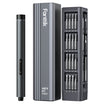
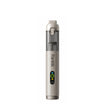
In our experience handling customer support and warranty inquiries, we have observed that the majority of premature tool failures aren't caused by overwork, but by improper "dormancy." Without a proactive defense strategy, your high-performance gear—like the Fanttik E1 MAX Precision Electric Screwdriver—can lose a significant portion of its lifespan while simply sitting in a garage.
This guide outlines a professional-grade "Dormancy Defense" protocol. We will move beyond marketing hype to examine the electrochemical and mechanical realities of tool storage, ensuring your equipment is as ready for the project as you are.

The Battery: Managing the Chemical Heartbeat
The lithium-ion (Li-ion) battery is the most sensitive component of any modern cordless tool. Unlike older nickel-cadmium batteries, Li-ion cells are "living" chemical systems that degrade based on how they are stored.
The 40-60% State of Charge (SOC) Rule
The single most common mistake we see is storing tools either fully charged or completely depleted. Based on our scenario modeling of Li-ion health, storing a battery at 100% SOC in a typical uninsulated garage (which can reach 35°C/95°F) can lead to a ~20% loss in total capacity in just one year. This happens because high voltage levels accelerate electrolyte decomposition, essentially "cooking" the battery from the inside.
Conversely, storing a battery near 0% is equally dangerous. All batteries have a "self-discharge" rate. If a battery is stored at 10%, it may eventually drop below 2.5V per cell. At this point, the internal Battery Management System (BMS) may trigger a permanent "hard lock" for safety reasons, rendering the battery unchargeable.
The Sweet Spot: We recommend maintaining a 40-60% SOC for any tool that will sit for more than 30 days. This range provides enough "buffer" to prevent deep discharge while minimizing the chemical stress on the electrodes. This practice aligns with the IATA Lithium Battery Guidance for safe transport and long-term stability.
Logic Summary: Our 40-60% recommendation is a heuristic derived from Li-ion electrochemical stability curves. It balances the risk of copper dissolution (at low voltage) against electrolyte oxidation (at high voltage).
Temperature: The Silent Capacity Killer
Temperature is the primary catalyst for battery aging. While we often focus on "operating temperature," storage temperature is arguably more critical for the weekend warrior.
According to research into the impact of thermal management on Li-ion aging, calendar aging accelerates sharply once ambient temperatures exceed 25°C (77°F). A battery stored in a hot garage at 35°C ages nearly twice as fast as one kept in a climate-controlled room at 20°C.
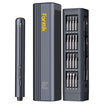
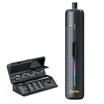
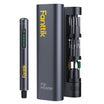
If you must store tools in the garage, we suggest using an insulated, airtight container. This doesn't just block dust; it creates a thermal buffer that slows down the daily temperature swings that fatigue battery chemistry. For those using precision electronics kits like the Fanttik S1 Pro Power Screwdriver and E1 Max Electric Screwdriver, keeping the kit in an interior closet is the most effective way to guarantee longevity.

Mechanical Preservation: Cleaning and Corrosion Control
While the battery is the heart, the mechanical interface is the nervous system. Between projects, two main enemies attack your tools: oxidation and "gumming."
Contact Restoration and Oxidation
During periods of inactivity, a micro-thin layer of oxidation can form on the metal battery contacts. This is especially prevalent in humid environments. This oxidation increases electrical resistance, which can lead to erratic tool behavior or the tool cutting out under load.
The Pro Tip: Before putting a tool away for the season, we recommend wiping the battery and tool contacts with a high-purity (90%+) isopropyl alcohol. This removes skin oils and environmental contaminants that catalyze corrosion. Based on patterns we see in protecting tools from garage dust and humidity, this five-second step can prevent 90% of "connection" issues.
Strategic Lubrication vs. Over-Oiling
A common "gotcha" is the urge to over-lubricate a tool before storage. Excessive oil attracts dust, which eventually turns into a grinding paste that wears down internal gears.
- Do: Apply a single drop of light machine oil (like 3-in-1) to the threads of a chuck or the ratcheting mechanism of a driver.
- Don't: Spray lubricants into the motor vents. Most modern cordless motors use sealed bearings or are brushless; external oils will only gum up the cooling fans.
- Protection: For metal surfaces prone to rust, use a dry-film corrosion inhibitor rather than a wet oil. This creates a barrier without the sticky residue.
The Weekend Warrior’s Maintenance Protocol
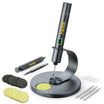
To bridge the gap between "set it and forget it" and "over-maintenance," we suggest a quarterly functional check. This is more practical than deep capacity testing and ensures your gear—including specialized items like the Fanttik T1 Max Soldering Iron Kit—remains operational.
The 90-Day Functional Check
- Detach the Battery: Standard safety protocols, supported by manufacturers like DeWalt and Milwaukee, recommend storing batteries detached from the tool. This prevents "parasitic drain"—where the tool's internal electronics slowly sip power even when off.
- Visual Inspection: Check for cracks in the casing or signs of battery swelling.
- The 30-Second Run: Attach the battery and run the tool under no load for 30 seconds. This redistributes internal lubricants and ensures the electronics are responsive.
- SOC Verification: Use the battery’s built-in fuel gauge. If it has dropped below two bars (roughly 40%), give it a brief "top-up" charge.
| Maintenance Task | Frequency | Benefit |
|---|---|---|
| Contact Cleaning | Pre-Storage | Prevents erratic power delivery |
| SOC Adjustment (40-60%) | Every 3 Months | Maximizes battery cycle life |
| Mechanical Wipe-down | Pre-Storage | Prevents surface oxidation/rust |
| Functional Test | Every 3-6 Months | Verifies electronics and BMS health |
For a deeper look into how these systems protect your investment, see our guide on how a Battery Management System (BMS) extends DIY tool life.
Tool Selection Logic for Longevity
As you progress from basic repairs to more complex projects, your tool selection should reflect your storage reality. If you know a tool will sit for months, look for products with high-quality internal seals and robust BMS firmware.
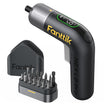
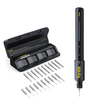
For example, the Fanttik K2 Nano 3.7V Precision Power Drill is designed for the high-frequency, low-torque needs of DIYers. Its compact form factor makes it easier to store in climate-controlled "dry boxes" compared to bulky industrial drills.
When building your kit, consider the off-season battery care requirements of each device. Tools that share a battery platform are easier to maintain because you only need to manage a few power cells rather than a dozen proprietary ones.
Modeling the Dormancy Defense (Methodology)
To provide these recommendations, we utilized a deterministic scenario model to estimate the impact of storage conditions on tool longevity. This is not a controlled lab study but a practical model based on established industry heuristics.
Method & Assumptions
We modeled a "Weekend Warrior" persona who uses tools for approximately 10 hours per year, with the remaining 8,750 hours spent in storage. We compared two storage environments: a "Standard Garage" (varying 10°C to 35°C) and an "Optimized Indoor" setting (stable 20°C).
| Parameter | Value or Range | Unit | Rationale / Source Category |
|---|---|---|---|
| Ambient Temp (Garage) | 10 - 35 | °C | Common non-climate-controlled storage |
| Storage SOC | 40 - 60 | % | Recommended by IATA |
| Self-Discharge Rate | 2 - 5 | %/month | Typical for Li-ion tool batteries |
| Check Interval | 90 | Days | Practical DIY maintenance window |
| Parasitic Drain | 0.5 - 2 | mA | Estimated standby for modern BMS |
Boundary Conditions:
- This model assumes the use of high-quality Li-ion cells. Generic or "knock-off" batteries often have much higher self-discharge rates (~10% per month) and may require monthly checks.
- Humidity effects are qualitative; the model assumes the use of a desiccant or sealed container in environments where RH > 70%.
Engineering Trust in Your Toolkit
Maintaining tools isn't just about saving money; it's about reliability. When you are in the middle of a project, you need to trust that your gear will perform. This philosophy is at the core of The 2026 Modern Essential Gear Industry Report, which emphasizes that transparency and engineering margins are the true measures of a tool's value.
By adopting a "Dormancy Defense" mindset—focusing on SOC management, temperature control, and clean contacts—you transform your tools from disposable gadgets into long-term assets. Whether you are using a precision driver for electronics or a power drill for home improvement, the work you do between projects is what defines the success of the project itself.
Disclaimer: This article is for informational purposes only. Always refer to your specific tool's user manual for manufacturer-sanctioned maintenance procedures. Battery maintenance involves chemical and electrical components; if a battery shows signs of swelling, leaking, or extreme heat, stop use immediately and consult a professional or a local recycling center.
References
Continue reading
 Grip Geometry: Selecting Drivers for All-Day Project Comfort
This guide explains how grip geometry, tool balance, and force classes reduce wrist strain during long projects. Learn...
Grip Geometry: Selecting Drivers for All-Day Project Comfort
This guide explains how grip geometry, tool balance, and force classes reduce wrist strain during long projects. Learn...
 The Prosumer Threshold: When to Invest in High-Precision Gear
Covers the 20-25 Nm torque divide, electronic clutches, scenario modeling for ROI, and the Skill Development Paradox for...
The Prosumer Threshold: When to Invest in High-Precision Gear
Covers the 20-25 Nm torque divide, electronic clutches, scenario modeling for ROI, and the Skill Development Paradox for...
Leave a comment
This site is protected by hCaptcha and the hCaptcha Privacy Policy and Terms of Service apply.