























Quick Guide: Choosing the Right Grip for Your Task
If you are looking for an immediate recommendation, use these ergonomic "rules of thumb" based on project type:
- High-Volume Assembly (Furniture, Cabinetry): Choose a 35–40mm diameter handle with a contoured/bulbous profile. This maximizes torque and reduces the "death grip" needed for heavy screws.
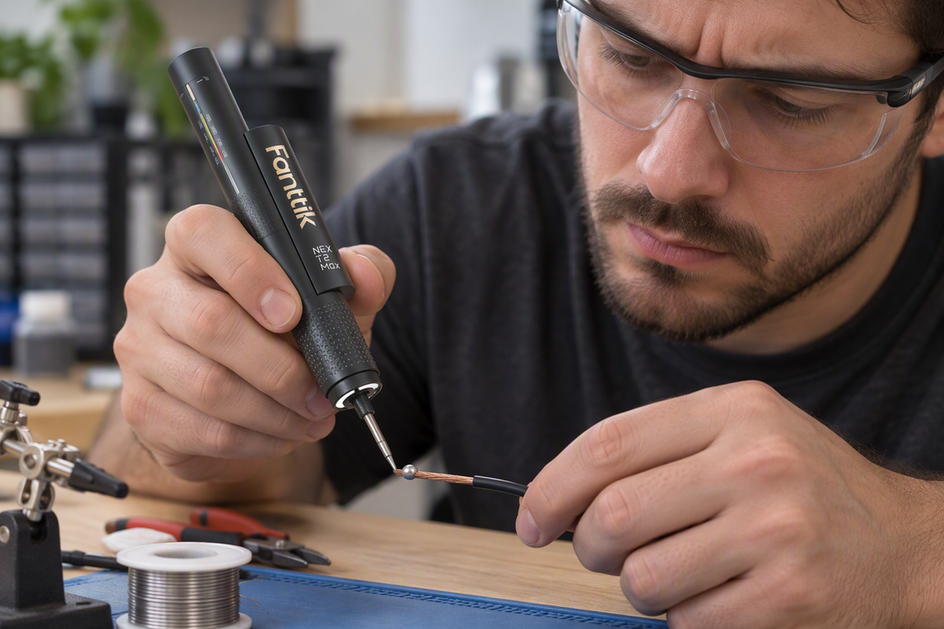
- Precision Electronics (Phones, Drones): Choose a 25–30mm diameter slim, pen-style handle. This allows for the "pencil grip" necessary for micro-adjustments and preventing stripped threads.
- The Fatigue Test: Before committing to a tool, perform the Finger Balance Check (detailed below) to ensure the tool’s weight distribution won't strain your wrist during long sessions.
The Science of Hand-Tool Interaction: Beyond Raw Power
For the progressing maker, the transition from basic manual assembly to complex, multi-hour precision projects marks a critical evolution in skill. However, this progression often brings a hidden challenge: physical strain. While beginners focus on torque and battery life, experienced assemblers recognize that the interface between the hand and the tool—the grip geometry—is the ultimate determinant of project success and long-term musculoskeletal health.
In our experience supporting makers at Fanttik, we’ve observed that "ergonomic" is often used as a marketing buzzword. True ergonomic trust is built through what we call "credibility math"—the systematic engineering of reliability and comfort. For tools used in high-consequence precision tasks, this means designing for the human hand's biological limits to prevent fatigue and injury.
The Physics of Fatigue: Balance and the Moment Arm
A common misconception among DIY enthusiasts is that tool weight is the primary driver of exhaustion. In reality, the distribution of that weight—the balance—plays a far more significant role. A tool that is poorly balanced creates a "moment arm" that forces the wrist to provide constant counter-torque.
The Wrist-Strain Mechanism
When a driver is front-heavy (the center of gravity is forward of the grip), the muscles in the forearm must work continuously to keep the bit level. This isometric contraction restricts blood flow and accelerates the buildup of lactic acid.
The Finger Balance Check (Heuristic)
To evaluate a tool's balance in your own workshop, follow these three steps:
- Find the Pivot: Place your index finger under the tool’s handle at the natural point where your middle finger usually rests.
- Level the Tool: Attempt to balance the tool on that single finger.
- Check the Tip: If the tool tips aggressively forward, it is "nose-heavy." This indicates that your wrist will have to provide constant upward force during use, leading to faster fatigue in multi-hour sessions.
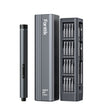
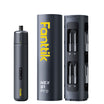
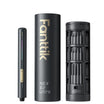
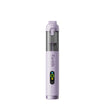
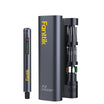
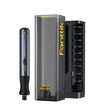
For precision tasks, the Fanttik E2 MAX Precision Electric Screwdriver utilizes a slim, pen-like profile that aligns the center of mass with the user's grip axis, minimizing the moment arm.

Grip Geometry and Force Classes
Optimizing comfort requires matching the tool's diameter and profile to the specific type of force required. Research suggests that a "one size fits all" grip is an ergonomic fallacy. According to initial biomechanics research on hand tool selection, optimal geometry must shift based on the grip force class.
Power Grip vs. Precision Grip
These numerical ranges are derived from standard anthropometric datasets (such as The Measure of Man and Woman) to fit the 5th to 95th percentile of adult hands:
- Power Grip (High-Force): Required for driving long screws into dense wood. For these tasks, a larger handle diameter (35–40mm) with pronounced contours is recommended to maximize torque transfer from the palm.
- Precision Grip (Low-Force): Used for electronics and hobby models. A smaller diameter (25–30mm) with a straighter profile improves dexterity and allows the fingers to make micro-adjustments.
Anthropometric Matching: The Breadth Rule
Selecting a tool based on vague "hand size" often leads to poor fit. A practical rule of thumb is to measure your hand breadth (the width across your knuckles). If a tool handle is significantly shorter than this width (typically <79mm for smaller hands), it can force an awkward "pinch" grip, increasing strain on the pinky and ring fingers.
| Metric | Power Grip (Rule of Thumb) | Precision Grip (Rule of Thumb) | Rationale |
|---|---|---|---|
| Diameter | 35–40 mm | 25–30 mm | Maximizes surface area vs. dexterity |
| Profile | Contoured/Bulbous | Straight/Cylindrical | Torque transfer vs. micro-control |
| Material | High-friction inserts | Smooth, low-drag finish | Preventing slip vs. facilitating rotation |
| Wrist Angle | Neutral (straight) | Slight flexion allowed | Prevents carpal tunnel compression |
Methodology Note: Modeling Grip Efficiency Our internal analysis models "Efficiency" as the ratio of torque output to muscle activation (EMG signal). These values are estimated ranges based on common ergonomic practice and ISO Standards for hand-held tool safety.
Material Science: The Durability of Comfort
While soft-touch rubber overmolds feel comfortable in a showroom, they often present long-term challenges. In workshop environments, we often see "ergonomic" grips made from cheap thermoplastic elastomers (TPE) degrade prematurely.
The Tackiness Trap
Exposure to common workshop chemicals—such as solvents, oils, and even UV light—can cause low-grade soft rubber to break down. This results in a "sticky" handle that attracts dust and eventually becomes brittle.
A more sustainable approach is the dual-material grip. This design uses a hard structural shell for the majority of the handle, with strategic rubber inserts placed only where high-pressure contact occurs (the finger pads and palm swell). This focus on lifecycle reliability is a core pillar of engineering trust, as noted in the Modern Essential Gear Industry Report.
Control Mechanics: Triggers and Vibration
The way a tool starts and stops is just as important as how it feels in the hand. For makers, "mushy" triggers lead to muscle tension, as the user is never quite sure when the motor will activate.
Tactile Feedback and Variable Speed
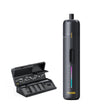
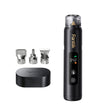
Professional-grade drivers, such as the Fanttik S1 Pro Cordless Electric Screwdriver, feature triggers with a clear tactile "click." This allows for precise, low-speed starts—critical when starting threads in soft materials like plastic.
Managing the Vibration Hazard
For impact-style drivers, vibration isolation is a health necessity. According to ergonomic studies (referencing principles in ISO 5349), high-frequency vibrations—often those above 100 Hz—can be transmitted to the bones and tendons. Long-term exposure without proper damping can lead to Hand-Arm Vibration Syndrome (HAVS), manifesting as numbness or loss of grip strength.
High-quality cordless tools integrate geometric isolation between the motor core and the outer grip housing to "sink" these vibrations before they reach the user’s hand. You can typically find specific vibration emission data in the tool's User Manual or Technical Safety Data Sheet.
Scenario-Based Selection: Choosing Your Driver
To help you select the right tool for your project, we have modeled two distinct maker scenarios.
Scenario A: The High-Volume Assembler
- Project: Flat-pack furniture or repetitive DIY repairs.
- Need: High torque and all-day comfort.
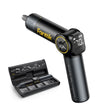
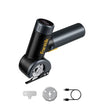
- Recommended Tool: The Fanttik S2 Pro Cordless Electric Screwdriver.
- Why: Its larger grip diameter is optimized for power grips, while the 90° angle adapter allows for a neutral wrist position in tight spaces.
Scenario B: The Precision Tech
- Project: Laptop repair or drone building.
- Need: Extreme precision and low torque.
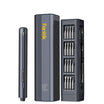
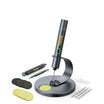
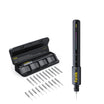
- Recommended Tool: The Fanttik E1 MAX Precision Electric Screwdriver.
- Why: The slim profile is designed for the precision "pencil" grip, prioritizing dexterity over raw power.
Compliance and Safety: The Global Standard
When selecting gear, ensure it meets international safety standards. In the European Union, the General Product Safety Regulation (EU) 2023/988 mandates strict traceability. Similarly, tools should adhere to IEC Standards for battery safety.
For tools containing lithium-ion batteries, transport safety is paramount. Reliable brands provide documentation ensuring products meet IATA Lithium Battery Guidance and UN 38.3 standards, which you can verify by requesting the product's UN38.3 Test Summary from the manufacturer.
Disclaimer: This article is for informational purposes only and does not constitute professional medical or occupational health advice. Always follow the specific safety instructions provided in your tool's user manual. If you experience persistent pain or numbness in your hands or wrists, consult a qualified healthcare professional.
Sources
- EU General Product Safety Regulation (EU) 2023/988
- The 2026 Modern Essential Gear Industry Report: Engineering Trust in a Cordless World
- Initial Biomechanics Approach of Non-powered Hand Tool Size Selection
- Proposed Model of Hand for Designing Ergonomic Vibration Isolation
- Anthropometric survey of dynamic hand dimensions
Continue reading
 Value Engineering: Balancing Tool Costs with Project Needs
A guide to Value Engineering for DIY beginners, teaching the 70/20/10 budgeting rule and how to select tools...
Value Engineering: Balancing Tool Costs with Project Needs
A guide to Value Engineering for DIY beginners, teaching the 70/20/10 budgeting rule and how to select tools...
 Dormancy Defense: Protecting Cordless Tools Between Projects
Covers the 40-60% SOC rule, temperature impacts, mechanical maintenance, and a 90-day check protocol for long-term tool reliability.
Dormancy Defense: Protecting Cordless Tools Between Projects
Covers the 40-60% SOC rule, temperature impacts, mechanical maintenance, and a 90-day check protocol for long-term tool reliability.
Leave a comment
This site is protected by hCaptcha and the hCaptcha Privacy Policy and Terms of Service apply.