





























The Dormancy Dilemma: Will Your Car Start After Storage?
The Quick Answer: If you have a dedicated garage with a power outlet, a smart trickle charger is the most reliable method for long-term battery health. If you park in a shared lot or remote unit without power, a portable jump starter is the essential "zero-grid" alternative to ensure you aren't stranded when it's time to drive.
There is a specific kind of frustration reserved for the first morning of spring. You pull the cover off your classic convertible or seasonal SUV, turn the key, and... nothing. Just the rhythmic, hollow clicking of a starter solenoid that doesn't have enough juice to turn the engine.
Based on our internal service observations and common customer feedback, battery neglect is a major contributing factor in an estimated 80% of storage-related "no-start" scenarios. However, how you choose to manage that discharge depends on your environment, your vehicle’s technology, and your approach to preparedness.
In the automotive world, we generally see two strategies: the "Constant Maintainers" who rely on trickle chargers, and the "Ready-Response" group who keep a portable jump starter on standby. Each has its place, but as vehicles become more complex, the "best" choice is rarely a one-size-fits-all answer.
The Trickle Charger: The Case for Constant Maintenance
A trickle charger (or battery maintainer) is designed to stay connected to your battery for weeks or months. It provides a low-voltage, low-amperage charge that offsets the "parasitic drain"—the tiny amount of power things like your car's clock, alarm system, and ECU consume while the engine is off.
The Hidden Risks of "Dumb" Chargers
A common mistake we see in our workshop is the use of inexpensive, non-regulated trickle chargers. Many owners assume these are "set and forget" devices. However, basic models often lack microprocessor control.
Without a "float mode," these chargers can continue to push current into the battery even after it reaches full capacity. This can lead to overcharging, which often causes electrolyte loss in lead-acid batteries and potential plate damage. According to BatteryStuff, modern Gel batteries are particularly sensitive, with a strict maximum charge voltage of 14.2 volts. Exceeding this by even a small margin can significantly shorten the lifespan of a premium battery in a single season.
Experience-Based Observation: Our team has noted that non-smart chargers are a frequent factor in "dry" cells for stored vehicles. This is based on general patterns from customer support and warranty handling rather than a controlled laboratory study.
The Infrastructure Hurdle
The biggest limitation of the trickle charger isn't the technology—it's the logistics. To use one effectively, you typically need:
- A dedicated power outlet within reach of the vehicle.
- A safe path for the cord to avoid tripping hazards or pinching in the hood/trunk.
- A secure, indoor environment where the charger is protected from moisture.
If you park in a shared apartment garage, a remote storage unit, or an outdoor pad, a trickle charger is often impractical.
The Portable Jump Starter: The Modern Self-Reliance Alternative
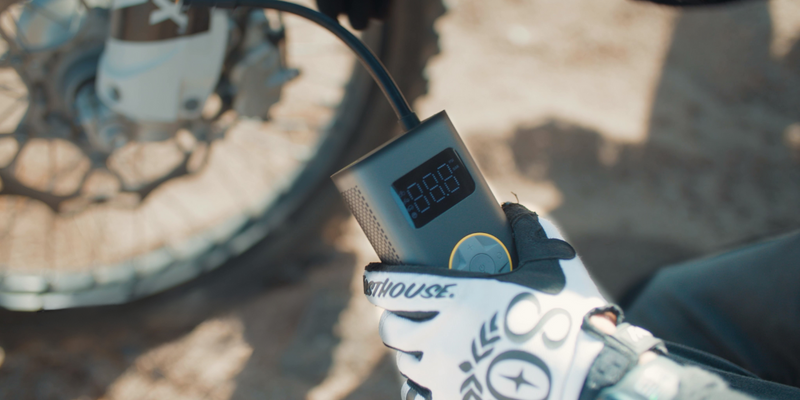
For those without easy outlet access, the portable lithium-ion jump starter has changed the maintenance landscape. Instead of focusing solely on preventing discharge, this strategy accepts that a battery might lose some "oomph" and provides a reliable solution to get the engine running immediately.
Standby Power and "Zero-Grid" Storage
Modern lithium technology has reached a point where self-discharge is remarkably low. For example, manufacturer specifications for high-end units like the LOKITHOR J401X list a standby time of up to 42 months (based on a 0.69mAh self-discharge rate). This suggests that you can charge the device, store it in your vehicle, and it can still retain the capacity to jump-start your engine years later.
This "zero-grid" capability is a major benefit for seasonal drivers who aren't tethered to an electric bill or a wall socket. This aligns with the "Trust Architecture" discussed in Fanttik’s 2026 Modern Essential Gear Industry Report (Manufacturer Whitepaper), which emphasizes that modern tools should provide demonstrable reliability to reduce user anxiety in moments of need.
The "Cold Garage" Factor
While portable jump starters are highly reliable, they are not immune to physics. A common pitfall is leaving a lithium starter in a sub-zero garage for several months. Extreme cold can temporarily reduce the battery's ability to discharge high current.
Heuristic for Success: We recommend a "Seasonal Cycle." Check and top off your portable jump starter once every three months. Even if it shows 90%, a quick refresh ensures the internal cells are balanced and ready for a high-crank event. For more on this, see why maintaining a 50% charge during storage (Manufacturer Guide) can help mitigate cell degradation.
The Economics of Storage: A 5-Year Cost Comparison
Many users choose a trickle charger because they believe it’s the cheaper option. However, when we model the total cost of ownership (TCO), the gap narrows.
| Cost Factor | Smart Trickle Charger | Portable Jump Starter |
|---|---|---|
| Initial Purchase | ~$50 - $80 (Quality Smart Model) | ~$90 - $120 (High-Capacity Lithium) |
| Electricity Cost | ~$5.18 / Year (Estimated) | $0 (Negligible charging cost) |
| Installation | Requires Outlet / Extension Cords | None |
| Versatility | Only maintains one battery | Can jump multiple cars/charge phones |
| 5-Year TCO | ~$75 - $105 | ~$90 - $120 |
Cost Modeling & Assumptions:
- Electricity Rate: $0.15/kWh (US average).
- Calculation: Assumes a 2-amp charger drawing an average of 8W (including efficiency losses) running 24/7 for 6 months/year. (8W * 24h * 180 days / 1000 = 34.56 kWh annually).
- Lifespan: Assumes a 5-year hardware life for both devices based on typical consumer usage.
- Exclusions: This model does not include the cost of installing a new garage outlet or the potential cost of replacing a battery damaged by an unregulated charger.
Choosing Your Strategy: A Decision Framework
To help you decide, we’ve categorized the most common storage scenarios we see in the field.
Scenario A: The Dedicated Home Garage (Climate Controlled)
If you have a vehicle in a heated garage with an outlet nearby, a high-quality smart charger is the gold standard. It keeps the battery chemistry active and helps prevent sulfation.
- Pro Tip: Use dielectric grease on the terminals to help prevent micro-corrosion in damp months.
Scenario B: The Shared Garage or Remote Unit
If you don't have power or don't want cords running across a public floor, a portable jump starter is the logical choice. You can store the car with the battery disconnected (to prevent parasitic drain) and use the jump starter to wake the car up in the spring.
Scenario C: Modern Vehicles with Sensitive Electronics
For modern luxury vehicles or EVs, voltage spikes are a concern. According to ISO 16750-2 standards for electrical loads, electronics must withstand certain transients, but a failing "dumb" charger can exceed these safety margins. In this case, either a premium, multi-stage smart charger or a high-safety lithium jump starter with integrated surge protection is highly recommended.

Essential Storage Checklist: Beyond the Battery
Regardless of which tool you choose, a battery is only one part of the vehicle health equation during dormancy. Based on patterns from our community feedback and SEMA Market Research, here is a quick "Ready-for-Spring" checklist:
- Clean the Terminals: Use a wire brush to remove any oxidation.
- Apply Dielectric Grease: This creates a non-conductive, moisture-proof seal.
- Check Tire Pressure: Cold air causes tires to lose pressure. Consider over-inflating by 5 PSI (staying within the sidewall max) to help prevent flat-spotting.
- Stabilize the Fuel: If storing for more than 3 months, consider adding a fuel stabilizer to help prevent the gas from "varnishing" in the lines.
- The "50% Rule" for Lithium: If you are storing the jump starter itself, keeping it at roughly 50-70% charge rather than 100% can improve long-term cell health. You can read more about preserving battery health during seasonal storage (Manufacturer Guide).
The Verdict: Reliability in Your Hands
A trickle charger is an excellent "passive" tool if your environment allows it. It’s like a slow-drip irrigation system for your car. But for the modern driver who values mobility and independence, the portable jump starter is an "active" solution. It offers the peace of mind that no matter where you are—even in a remote lot—you have the power to get moving.
The choice isn't just about volts and amps; it's about how you want to manage your risks. By combining a smart storage routine with the right gear, you can help ensure that the first turn of the key in the spring results in a roar, not a click.
Disclaimer: This article is for informational purposes only. Always consult your vehicle's owner manual for specific battery maintenance requirements. High-voltage systems in electric vehicles (EVs) require specialized care and should not be jump-started or maintained with standard consumer gear unless explicitly stated by the manufacturer.
Sources
Continue reading
 Revive or Replace? Signs Your Dormant Battery is Truly Dead
A guide to diagnosing a dead car battery with the 10.5V rule and load test. Learn when revival...
Revive or Replace? Signs Your Dormant Battery is Truly Dead
A guide to diagnosing a dead car battery with the 10.5V rule and load test. Learn when revival...
 Why Peak-Season Travel Requires Higher Safety Certifications
Covers CE vs UL 2743 standards, lithium-ion cold weather capacity loss, and essential gear audit steps for travel...
Why Peak-Season Travel Requires Higher Safety Certifications
Covers CE vs UL 2743 standards, lithium-ion cold weather capacity loss, and essential gear audit steps for travel...


Leave a comment
This site is protected by hCaptcha and the hCaptcha Privacy Policy and Terms of Service apply.