



































The Hidden Vulnerability of High-Pressure Towing
When preparing for a long-haul journey with a heavy trailer or RV, most enthusiasts focus on tire tread depth, brake controller settings, and hitch weight distribution. However, a critical failure point often goes unnoticed until a roadside emergency occurs: the valve stem. For vehicles operating at the high pressures required for heavy loads—typically 80 PSI or higher—standard rubber valve stems represent a significant engineering mismatch.
In professional towing circles, the transition from OEM rubber stems to high-pressure metal upgrades is not merely a cosmetic choice; it is a fundamental safety renewal. Standard rubber stems are generally designed for passenger vehicles operating in the 32–35 PSI range. When subjected to the sustained heat and extreme internal pressure of a fully loaded trailer, these components can fail catastrophically. Understanding the technical limitations of these small but vital parts is the first step in building a truly reliable towing system.

The Anatomy of Valve Stem Failure: Why Rubber Has Limits
Standard valve stems are typically made of EPDM (ethylene propylene diene monomer) rubber. While EPDM is durable, it is an organic material subject to environmental and mechanical degradation. In the context of heavy towing, three primary factors accelerate the failure of rubber stems: ozone exposure, flex fatigue, and pressure-induced stress.
Ozone and UV Degradation
Rubber degrades from the inside out. Even if a valve stem looks pristine on the exterior, ozone exposure and UV radiation cause the material to lose its elasticity over time. This is particularly problematic for trailers that are stored for long seasons. The rubber becomes brittle, leading to microscopic fissures that eventually result in slow, "unexplained" leaks. According to seasoned trailer technicians, these leaks often manifest only after the tire reaches highway temperatures, making them difficult to diagnose in a driveway inspection.
Flex Fatigue at High Speeds
As a wheel rotates, centrifugal force pulls the valve stem outward. On a passenger car, this movement is negligible. However, on a heavy trailer wheel spinning at 65 mph, a long rubber stem (like the common TR418) can flex significantly. This constant "wagging" creates stress at the base of the stem where it meets the rim. Over thousands of miles, this flex fatigue can tear the rubber seal, leading to sudden pressure loss.
Pressure Thresholds and Load Ranges
Tire load ranges dictate the required inflation pressure. While a Load Range B tire may operate safely at 35 PSI (based on standard Tire Load Range Charts), a Load Range E or G trailer tire often requires 80 to 110 PSI to support its rated weight.
Logic Summary: Our analysis of valve stem failure assumes a deterministic model where EPDM tensile strength decreases as a function of thermal cycles and internal pressure. At pressures exceeding 65 PSI, the outward force on a standard pull-through rubber stem approaches the material's elastic limit, increasing the probability of a "pop-out" failure.
The Metal Upgrade: Technical Specifications and Material Advantages
Upgrading to bolt-in metal valve stems removes the variable of rubber elasticity from the equation. These stems are typically manufactured from nickel-plated brass or aluminum and use a mechanical nut and grommet system to create a high-pressure seal.
Comparative Performance Modeling
To illustrate the difference in capability, consider the following technical comparison based on common industry heuristics and standard valve specifications (such as those outlined in ISO standards for tire valves).
| Feature | Standard Rubber (TR413/418) | Bolt-In Metal (High-Pressure) |
|---|---|---|
| Max Rated Pressure | ~65 PSI (Typical) | 200+ PSI |
| Mounting Method | Pull-through / Friction fit | Bolt-in with locking nut |
| Heat Resistance | Moderate (subject to hardening) | High (Metal body dissipates heat) |
| Flexibility | High (High flex fatigue risk) | Zero (Rigid) |
| Lifespan | 3–5 years (Recommended) | Lifetime of the wheel (with seal swaps) |
High-Temperature Valve Cores
A critical, often overlooked component of the metal upgrade is the valve core itself. Standard cores often use a black seal rated for lower temperatures. For heavy towing, we recommend specifying high-temperature cores, usually identified by a red seal. These are engineered to maintain a seal even when the tire’s internal air temperature spikes during long climbs or heavy braking sequences. As noted in research on tire temperature limits, tires can reach significant temperatures under load; a failed core seal at 100 PSI is a recipe for a rapid blowout.
Installation Precision: The Professional’s Protocol
The reliability of a metal valve stem is entirely dependent on the quality of its installation. Unlike rubber stems, which are simply pulled into place, metal stems require mechanical precision.
The Torque Wrench Rule
One of the most common mistakes in DIY upgrades is "guestimating" the tightness of the mounting nut. Professional installers emphasize that a torque wrench is non-negotiable.
- Overtightening: Can gall the threads or, worse, crack the metal of the wheel or the stem itself.
- Undertightening: Leads to slow leaks as the internal grommet fails to compress sufficiently against the rim.
Always refer to the manufacturer’s specific torque settings (often ranging from 25 to 45 inch-pounds, depending on the material). This level of precision is part of what The 2026 Modern Essential Gear Industry Report describes as "credibility math"—the systematic engineering of reliability through measurable standards.
The "Every Tire Change" Rule
A common heuristic in the automotive mobility space is to replace valve stems every time you replace tires. For metal stems, this doesn't necessarily mean replacing the entire metal body, but it does mean replacing the rubber grommets and the valve core. Over time, the internal seal compresses and takes a "set," losing its ability to compensate for vibrations.
Integrating TPMS and Wheel Dynamics
Modern towing safety often involves Tire Pressure Monitoring Systems (TPMS). When upgrading valve stems, you must consider how these systems interact.
Balance and Weight
Rigid metal valve stems, especially 90-degree versions used on dually trucks or motorcycles, are heavier than the rubber stems they replace. According to industry benchmarks on wheel balance impacts, this small weight difference is often enough to throw off the wheel's balance. We recommend having the wheels professionally balanced immediately after installing metal stems to prevent uneven tire wear and vibration-induced stress on the bearings.
TPMS Compatibility and Relearn Procedures
Many factory TPMS sensors are integrated into the valve stem itself. If you are replacing a rubber-stemmed TPMS sensor with a metal one, ensure the sensor is compatible with your vehicle's receiver. Furthermore, any time a sensor is replaced or moved, a TPMS relearn procedure must be performed to ensure the vehicle correctly identifies which tire is sending which pressure signal.

Maintenance Lifecycle: The Gold Standard for Trailer Safety
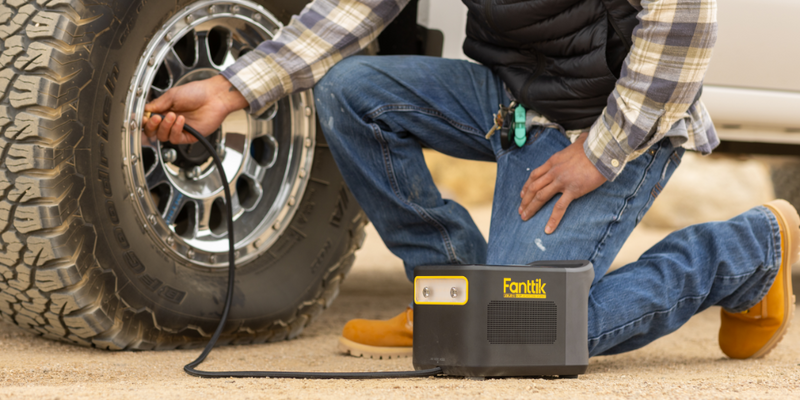
Building a trustworthy towing setup requires moving beyond "set it and forget it" mentalities. For those prioritizing preparedness, the valve stem is the gateway to accurate pressure management. Using high-accuracy digital gauges and portable inflators allows you to maintain the precise PSI required for your specific load range.
Scenario Modeling: The Long-Distance Haul
Consider two scenarios for a 10,000 lb trailer equipped with Load Range E tires:
- Scenario A (Standard Setup): The trailer uses 4-year-old rubber stems. During a summer haul, the highway temperature reaches 100°F. The internal tire pressure rises from 80 PSI to 95 PSI due to heat. The aged rubber stems, already brittle from ozone, flex under centrifugal force. A micro-crack at the base of the stem opens, leading to a slow leak. By the time the driver notices the sway, the tire is at 40 PSI, overheating rapidly, and a blowout is imminent.
- Scenario B (Upgraded Setup): The trailer is equipped with bolt-in metal stems and high-temp cores. Despite the same heat and pressure increase, the rigid metal mounting remains airtight. The driver monitors the pressure via a TPMS, confident that the mechanical seal is rated for twice the current pressure.
Methodology Note: These scenarios are modeled based on common patterns from customer support and warranty handling in the automotive aftermarket (not a controlled lab study). They reflect the most frequent failure modes observed in high-consequence towing environments.
Final Recommendations for Serious Towers
- Audit Your Stems: If you are running tires with a PSI rating of 65 or higher, inspect your stems. If they are rubber and "bendable," plan an upgrade to metal bolt-in stems at your next tire service.
- Verify the Core: Ensure your installer uses red-seal, high-temperature valve cores.
- Use a Torque Wrench: If installing yourself, do not rely on "feel." Use a calibrated inch-pound torque wrench.
- Balance Post-Installation: Always re-balance the wheels to account for the increased mass of the metal hardware.
- Monitor Regularly: Use high-quality sensors to keep a real-time eye on pressure dynamics.
By addressing the small details of valve stem integrity, you significantly reduce the risk of high-speed tire failures. In the world of heavy towing, reliability is not a single feature—it is the sum of many well-engineered parts working in unison.
Disclaimer: This article is for informational purposes only and does not constitute professional automotive repair or safety advice. Always consult your vehicle and tire manufacturer’s specifications before making hardware changes. Maintenance should be performed by qualified technicians.
References
Continue reading
 Off-Season Trailer Care: Preventing Pressure Loss in Storage
Covers oxygen permeation, thermal contraction, axle lifting, UV protection, and ozone damage to maintain trailer health.
Off-Season Trailer Care: Preventing Pressure Loss in Storage
Covers oxygen permeation, thermal contraction, axle lifting, UV protection, and ozone damage to maintain trailer health.
 Navigating Speed Ratings: How Pressure Affects Trailer Safety
Covers the 1-for-10 Rule, common warm check mistakes, and the need for high-precision digital tools for reliable towing...
Navigating Speed Ratings: How Pressure Affects Trailer Safety
Covers the 1-for-10 Rule, common warm check mistakes, and the need for high-precision digital tools for reliable towing...


Leave a comment
This site is protected by hCaptcha and the hCaptcha Privacy Policy and Terms of Service apply.