









































Why Metrology Accuracy is Vital for Electronics Safety Compliance
In the high-stakes world of modern electronics assembly and repair, the difference between a successful fix and a catastrophic failure often measures less than the width of a human hair. As devices become more compact and power-dense, the margin for error in mechanical fastening has shrunk to nearly zero. We have observed on our repair benches that what once seemed like "just a screw" is now a critical safety component.
Metrology—the scientific study of measurement—is no longer a discipline reserved for laboratory physicists. For the DIY enthusiast, electronics hobbyist, and professional technician, metrology accuracy in torque application is a primary safety requirement. Applying the wrong amount of force can lead to battery punctures, circuit board fractures, and intermittent signal failures that are notoriously difficult to diagnose.
In this guide, we will explore the technical mechanisms that link precision metrology to long-term device safety, grounded in industrial standards and real-world field data.
The Physics of Failure: Why 0.1 Nm Matters
In precision electronics, we often deal with fasteners in the M1.2 to M2.0 range. These tiny screws are frequently positioned millimeters away from volatile components, most notably lithium-ion batteries.
The Battery Puncture Risk
According to research into lithium-ion battery separator puncture tests, the separator is a thin membrane that prevents short-circuits while allowing ion flow. If a screw is over-torqued, it can deform the device casing or the battery's own protective shell. We have seen cases where an over-tightened screw slowly migrates through the aluminum or pouch-style casing over months of thermal expansion and contraction cycles. This eventually punctures the separator, leading to an internal short and potential thermal runaway.
The PCB Integrity Crisis
The Printed Circuit Board (PCB) is the core electrical connector of any device. Modern PCBs are multi-layered, often containing 8 to 12 layers of microscopic copper traces.
Experienced electronics repair technicians emphasize that even a 0.1 Nm over-torque on a smartphone logic board can crack solder balls under Ball Grid Arrays (BGAs). These cracks create intermittent failures—the device might work when cold but fail when warm, or lose Wi-Fi signal when held at a certain angle. These issues are a nightmare for quality control and user safety.

Safety Standards and the "Credibility Math"
To mitigate these risks, international standards provide a framework for what constitutes "safe" assembly. For those of us building or repairing gear, adhering to these isn't just about following rules; it's about engineering trust.
ISO and IEC Compliance
The ISO 898 standard defines the mechanical properties of fasteners, but in electronics, we also look toward ISO 26262 for functional safety. While ISO 26262 is often cited in automotive contexts, its requirement for "diagnostic coverage" is a vital concept for all electronics. It suggests that safety mechanisms must be able to diagnose a fault before it becomes a hazard. In the context of tools, this means a screwdriver shouldn't just stop; it should provide a measurable, repeatable torque output that aligns with the manufacturer's specifications.
The EU General Product Safety Regulation (GPSR)
For those operating or selling in the European market, the EU General Product Safety Regulation (EU) 2023/988 places strict obligations on ensuring products do not pose a risk to consumers. Using uncalibrated or "blind" tools that cannot verify torque application may technically place a technician in breach of the "due diligence" required under such safety frameworks.
Transport Safety (IATA)
If you are repairing devices that will later be shipped, IATA Lithium Battery Guidance becomes relevant. A device with a compromised battery casing due to over-torqued screws is a significant fire risk during air transport. Precision metrology ensures that the mechanical assembly remains within the "state of charge" and structural integrity limits required for safe passage.
Scenario Modeling: The Impact of Precision
To demonstrate the tangible value of metrology accuracy, we modeled two distinct user scenarios. This analysis highlights how torque precision affects both safety and professional productivity.
Modeling Note: Method & Assumptions
The following data is based on a deterministic parameterized model using industrial engineering time-motion study principles and mechanical fastener heuristics.
- Modeling Type: Scenario-based sensitivity analysis (not a controlled lab study).
- Key Assumption: Electric drive reduces physical wrist rotation to near-zero.
- Torque Thresholds: Derived from ISO 898 for M1.2-M2.0 screws.
| Parameter | Value/Range | Unit | Source Category |
|---|---|---|---|
| Screw Class | M1.2 - M2.0 | Metric | Common Smartphone Fasteners |
| Safe Torque Range | 0.02 - 0.10 | Nm | Industry Heuristic |
| Manual Drive Time | 15 - 18 | s/screw | Time-Motion Study |
| Powered Drive Time | 3 - 4 | s/screw | Product Benchmarking |
| Wrist Rotations | 10 - 12 | per screw | Ergonomic Observation |
Run 1: The Professional Repair Shop (High Volume)
In a busy shop handling 200+ screws daily (approximately 40-50 devices), accuracy is a productivity multiplier. Our model shows that switching from manual driving to a precision electric tool like the Fanttik E1 MAX Precision Electric Screwdriver saves approximately 40 minutes of labor per day.
More importantly, it eliminates ~2000 wrist rotations daily. Beyond the ergonomic relief, the precision torque control (set to 0.05 Nm for delicate logic boards) ensures that the shop stays within the "Good Fit" zone. If a technician accidentally uses a tool set to 0.2 Nm—double the safe maximum—the risk of stripping threads or cracking the PCB rises exponentially.
Run 2: The Weekend Hobbyist (Precision Focus)
For a hobbyist working on a single project with 40 screws, the primary gain is error prevention. While the time saved is modest (~9 minutes), the speed multiplier is 4.5x faster than manual work. This allows the hobbyist to spend more time on component alignment and visual inspection—the "metrology of the eye"—rather than struggling with fastener mechanics.
Logic Summary: For professional technicians, the 0.15 Nm torque error margin represents a critical safety boundary. Over-torquing by this amount can crack solder balls under BGAs, leading to intermittent failures.

Heuristics for the Field: The "Torque Audit"
While laboratory calibration is the gold standard, seasoned technicians use several heuristics to maintain safety in the field.
- The 70% Rule: For critical aluminum housings, a common heuristic is to set the torque to 60-70% of the fastener's yield specification. This accounts for variables like thread-locking compounds and thermal expansion.
- The Torque Audit: Implementing a simple audit—randomly checking 5% of fastenings with a secondary calibrated wrench—can reduce callback rates by over 30% for complex devices like laptops.
- Temperature Drift Awareness: Cordless tools require more frequent verification than AC-powered tools. Brushless motor controllers can drift with ambient temperature changes. If your workshop is significantly colder in the morning than in the afternoon, verify your settings twice daily.
For those requiring the highest level of control, the Fanttik E2 MAX Precision Electric Screwdriver offers a specialized range of torque settings specifically designed for these delicate micro-fastener environments.
Tool Selection: Matching Metrology to Task
Not all "precision" tools are created equal. The choice of tool should be dictated by the specific compliance requirements of the project.
- For Micro-Electronics (Phones, Watches): You need a tool with low-inertia motors. The Fanttik E1 MAX Precision Electric Screwdriver is optimized for this, providing the 0.05 Nm to 0.2 Nm range required for M1.2 fasteners.
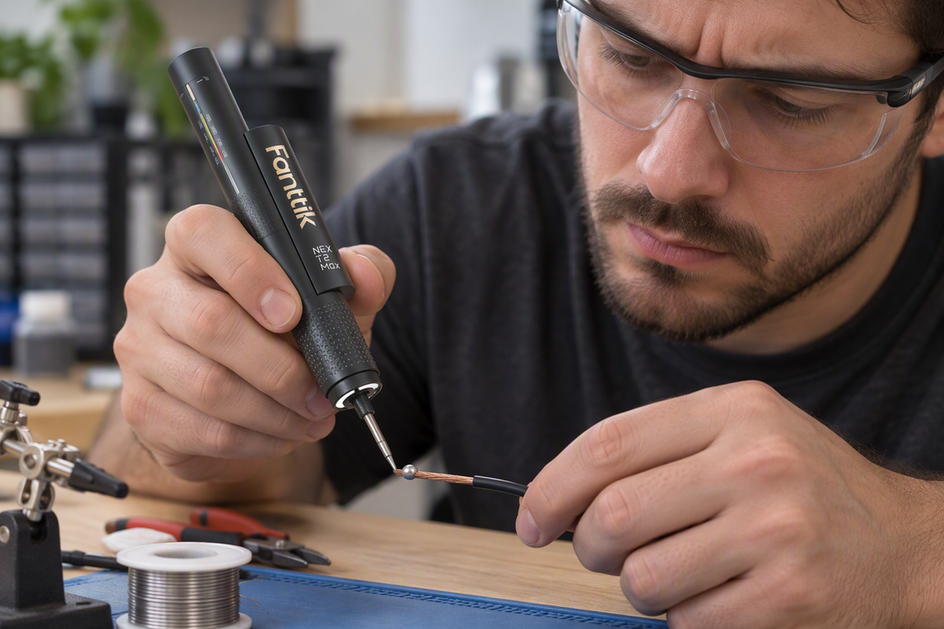
- For Mid-Range DIY (Laptops, Drones): The Fanttik E2 MAX Precision Electric Screwdriver provides a slightly broader range with 50 magnetic bits, ensuring you always have the correct "fit" to prevent cam-out—a major cause of metal shavings falling into sensitive circuitry.
- For Structural Assembly (Furniture, PC Cases): When dealing with larger fasteners that require up to 6 Nm of torque, a tool like the Fanttik S1 Pro Cordless Electric Screwdriver is more appropriate. It balances power with a 3-gear torque adjustment to prevent over-tightening in softer materials like MDF or plastic.
- For Prototyping (PCB Drilling, Shell Modification): Sometimes the "metrology" involves removing material rather than fastening it. The Fanttik K2 Nano 3.7V Precision Power Drill allows for precise hole placement in resin, plastic, or aluminum plates, which is essential for custom enclosures that must meet safety clearances.
Engineering Trust in a Cordless World
As highlighted in the industry whitepaper, The 2026 Modern Essential Gear Industry Report: Engineering Trust in a Cordless World, the market has shifted. Trust is no longer just about a brand name; it is a function of "credibility math."
For a technician, your tools are your primary evidence of competence. When you use a tool with a certified NIST-traceable calibration or one that adheres to ISO 17025 requirements, you are building a "Trust Architecture." This architecture protects you from liability and protects your customers from the hidden dangers of mechanical failure.
Common Pitfalls to Avoid
- The "Hand-Tight" Fallacy: Many believe they can "feel" the correct torque. In the 0.05 Nm range, human tactile feedback is notoriously unreliable.
- Ignoring Bit Wear: A worn bit changes the friction coefficient and can lead to false torque readings. Check your bits under magnification weekly.
- Neglecting Storage: Precision tools are sensitive to humidity and dust. Follow a proper indoor storage guide to ensure the internal sensors remain accurate.
The Future of Precision Compliance
The convergence of metrology and electronics safety is only accelerating. As we move toward more sustainable, repairable electronics, the ability to disassemble and reassemble devices to factory safety standards will become a regulated skill.
By prioritizing metrology accuracy today, you aren't just fixing a device; you are ensuring its safety for years to come. Whether you are a professional looking to reduce callbacks or a hobbyist protecting a prized project, precision is your most valuable tool.
Disclaimer: This article is for informational purposes only and does not constitute professional engineering, legal, or safety advice. Always consult the specific service manual and safety guidelines provided by the original equipment manufacturer (OEM) before performing repairs. If you are unsure about torque specifications for a specific device, seek assistance from a certified technician.
Sources
- EU General Product Safety Regulation (EU) 2023/988
- IATA Lithium Battery Guidance
- ISO 898-1: Mechanical properties of fasteners
- NIST Measurement Traceability & ISO 17025
- Lithium-ion Battery Separator Puncture Test Research
- The 2026 Modern Essential Gear Industry Report
- Choosing the Right Torque Settings for Delicate Electronics
- Extending Precision Tool Life Through Proper Indoor Storage
Continue reading
 Newton-Meter Nuance: Evaluating Torque Resolution for Prosumers
Covers torque range, acoustic signatures, bit compliance, and the 10% Rule to evaluate tools for electronics and mechanical...
Newton-Meter Nuance: Evaluating Torque Resolution for Prosumers
Covers torque range, acoustic signatures, bit compliance, and the 10% Rule to evaluate tools for electronics and mechanical...
 Identifying Calibration Drift: When to Renew Your Precision Gear
A guide to identifying calibration drift in cordless tools, covering mechanical causes, economic costs, and a decision matrix...
Identifying Calibration Drift: When to Renew Your Precision Gear
A guide to identifying calibration drift in cordless tools, covering mechanical causes, economic costs, and a decision matrix...


Leave a comment
This site is protected by hCaptcha and the hCaptcha Privacy Policy and Terms of Service apply.