


























The Hidden Battle for Your Vehicle’s Interior Health
We have all experienced that sinking feeling: you open your car door after a week of relentless rain, and instead of the familiar scent of your upholstery, you are greeted by a heavy, musty odor. It is a scent that signals more than just a lack of "new car smell"—it is the olfactory warning of a microscopic invasion.
In damp climates, your vehicle’s interior acts as a biological incubator. The combination of high humidity, stagnant air, and organic debris (like skin cells or spilled coffee) creates a perfect storm for mold and mildew. Beyond the aesthetic damage to leather and fabric, these spores represent a genuine concern for respiratory health and the long-term resale value of your asset.
This guide moves beyond surface-level cleaning. We will explore the professional-grade strategies required to manage humidity effectively, the "hidden" zones where mold actually begins, and why the tools you choose for maintenance are the foundation of what industry experts call "Trust Architecture."
In the modern automotive landscape, maintaining a vehicle is no longer just about oil changes; it is about engineering a safe, dry environment for yourself and your family. As noted in the industry white paper The 2026 Modern Essential Gear Industry Report: Engineering Trust in a Cordless World, the shift toward "modern self-reliance" means car owners are increasingly taking professional-grade maintenance into their own hands, requiring reliable, standard-backed tools to get the job done right.

The Evaporator Core: Ground Zero for Musty Odors
Most car owners focus their cleaning efforts on the carpets and seats. However, professional auto detailers know a secret: the most dangerous mold often starts where you cannot see it—the air conditioning system’s evaporator core.
When you run your A/C, the evaporator core becomes ice-cold to remove heat from the cabin. This process creates significant condensation. When you reach your destination and turn off the engine, that core remains soaking wet, housed in a dark, warm plastic box behind your dashboard. This is the ultimate breeding ground for mold.
The "Dry-Out" Protocol
To prevent this, adopt a simple but highly effective habit:
- Two-Minute Rule: About two minutes before you reach your destination, turn off the A/C button but keep the fan running.
- High Blast: Turn the fan to its highest setting.
- The Result: This forces ambient air across the wet evaporator coils, drying them before the vehicle is parked.
By eliminating the standing water in the HVAC housing, you remove the primary moisture source that allows mold to germinate. If you already have a "gym locker" smell coming from your vents, surface sprays are rarely enough; the system likely requires a professional foaming cleaner injected directly into the drain tube.
Understanding Humidity Thresholds: Beyond the 50% Myth
There is a common misconception that any humidity above 50% leads to instant mold growth. In reality, the biology of mold is more nuanced. According to research published in PubMed (15104787), toxic black mold (Stachybotrys chartarum) typically requires sustained relative humidity (RH) levels above 90% to germinate.
However, more common species like Aspergillus and Penicillium—which still cause odors and allergic reactions—can begin to thrive when RH levels sit between 60% and 70%.
The "Moisture Battery" Effect
The real danger in a car is not just the air humidity, but the "moisture battery" effect of porous materials. Drywall, carpets, and foam-backed headliners act as sponges. They can absorb moisture during a humid day and then "leak" that vapor back into the cabin air for days afterward, even if the weather turns dry.
Methodology Note (Scenario Modeling): Our analysis of interior moisture retention assumes a standard mid-sized sedan interior volume (~100 cubic feet) and typical polyester-blend automotive carpeting.
Parameter Value or Range Unit Rationale / Source Category Ambient Humidity 75–85 % RH Typical wet season baseline Surface Temp 65 °F Average damp climate interior Airflow Rate <0.1 m/s Stagnant air in parked vehicle Material Porosity High - Foam-backed carpets/headliners Mold Germination 48–72 Hours Industry standard window Note: This is a scenario model, not a controlled lab study.
The Dew Point vs. Ventilation Conflict
A common mistake is opening windows for "ventilation" during the rainy season. If the outdoor dew point exceeds 55°F, or if the outdoor humidity is higher than 60%, opening your windows actually imports moisture. In these conditions, it is more effective to keep windows closed and use the vehicle's A/C system in "recirculation" mode to pull moisture out of the air.
Material Science: Choosing Your Interior Wisely
If you live in a perpetually damp region, the materials inside your car have a 3-5x greater impact on mold risk than mechanical dehumidifiers alone. This is grounded in the reality that low-moisture-absorption materials reduce the window of time that mold has to grow.
- Leather and Vinyl: These are relatively non-porous. While mold can grow on the surface (especially on organic "food" like dust or skin oils), it cannot easily penetrate the core.
- Fabric Upholstery: These are "moisture batteries." They trap spores and humidity deep within the foam.
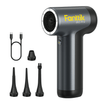
To maintain these materials, regular vacuuming is non-negotiable. It is not just about crumbs; it is about removing the dust and organic matter that mold uses as a food source. Using a high-suction, portable cordless vacuum allows you to reach the dark crevices under seats where airflow is lowest and humidity is highest.
The Professional Recovery Protocol: Dealing with Existing Mold
If you discover mold on a porous surface like a fabric headliner or floor mat, the "spray and wipe" method will fail. In fact, using too much liquid cleaner often worsens the problem by soaking deeper into the foam.
The Injection-Extraction Method
The professional standard for treating deep-seated mold involves:
- Antimicrobial Injection: Using a low-pressure sprayer to mist a mild, EPA-approved antimicrobial cleaner onto the surface.
- Immediate Extraction: Using a high-powered wet/dry vacuum to pull the liquid out immediately. The goal is to "flush" the fibers without saturating the backing.
- The 16% Threshold: This is the most critical step. The human "touch test" is unreliable for checking dryness. Professionals use a moisture meter designed for building materials. Mold growth typically halts when the relative moisture content of a material drops below 16%.
Why Silica and Desiccants are Secondary
Many people toss a bag of silica gel under the seat and assume they are protected. While silica is excellent for small, airtight containers (like a camera bag), a car cabin is too large and leaky for a small desiccant bag to have a meaningful impact on RH levels. They are a "support" tool, not a primary solution.
The Economics of Prevention
Maintaining a dry interior is an investment in your vehicle’s "Trust Architecture." Neglecting humidity doesn't just lead to smells; it leads to the degradation of electronic components behind the dash and the permanent staining of expensive headliners.
According to the Auto Care Factbook, the average age of vehicles on the road is increasing. As we keep our cars longer, the cumulative effect of seasonal moisture becomes a major factor in interior longevity. Furthermore, SEMA Market Research indicates that "interior protection" is one of the fastest-growing segments in the aftermarket, as owners realize that a pristine interior is a key driver of resale value.
Seasonal Interior Preservation Checklist
To keep your car in "benchmark" condition during the wet months, follow this routine:
- Weekly: Perform a "deep reach" vacuuming of all footwells and under-seat areas to remove organic "food" for mold.
- Bi-Weekly: Inspect the spare tire well. This is a common collection point for "ghost leaks" that can raise the entire cabin's humidity.
- After Every Drive: Practice the two-minute fan-only dry-out for the A/C evaporator.
- Monthly: Use a moisture meter on the carpets. If levels exceed 16%, use a portable heater or a dedicated garage dehumidifier with the car windows cracked to "reset" the interior moisture levels.
Engineering a Healthier Drive
Mold prevention is a proactive discipline. By understanding the physics of the evaporator core, the biology of humidity thresholds, and the "moisture battery" nature of car fabrics, you can transform your vehicle from a potential health hazard into a clean, preserved sanctuary.
Choosing high-performance tools and following standard-backed protocols—like the 16% moisture threshold—ensures that your maintenance efforts are effective, not just performative. As we navigate increasingly unpredictable weather patterns, the ability to self-rely on professional-grade knowledge and gear becomes the ultimate luxury.
YMYL Disclaimer: This article is for informational purposes only and does not constitute professional medical, health, or automotive repair advice. Mold exposure can cause serious respiratory issues in sensitive individuals. If you suspect a significant mold infestation or are experiencing health symptoms, consult a certified industrial hygienist or a medical professional. Always follow the safety instructions provided by tool and chemical manufacturers.
Sources
Continue reading
 Hidden Spill Cleanup: Seasonal Sanitization Under Child Seats
A step-by-step guide to cleaning mold, spills, and salt from under child car seats. Learn the professional blast-and-vacuum...
Hidden Spill Cleanup: Seasonal Sanitization Under Child Seats
A step-by-step guide to cleaning mold, spills, and salt from under child car seats. Learn the professional blast-and-vacuum...
 Winter Grime Defense: Protecting Floor Liners from Salt Damage
Covers material comparisons, restoration steps, and a scenario model for extreme climates to protect your vehicle's resale value.
Winter Grime Defense: Protecting Floor Liners from Salt Damage
Covers material comparisons, restoration steps, and a scenario model for extreme climates to protect your vehicle's resale value.


Leave a comment
This site is protected by hCaptcha and the hCaptcha Privacy Policy and Terms of Service apply.