



























Understanding the Burden of Resistance in Outdoor Motors
In the field, whether you are clearing debris from a campsite or inflating a high-volume off-road tire, the reliability of your tools depends on a hidden battle of physics. Portable outdoor motors are frequently pushed to their limits, encountering sudden resistance that triggers peak current spikes. For the technically curious DIYer, understanding these spikes is the difference between a tool that lasts a decade and one that burns out in a single season.
When a motor encounters a physical obstruction—like a clump of wet grass in a blower or the high back-pressure of a nearly full tire—the rotor slows down. This reduction in speed decreases the "back-electromotive force" (back-EMF), which normally acts as a brake on current flow. As back-EMF drops, the current drawn from the battery surges. In our engineering observations, these spikes can reach up to 2200% of the motor's Full Load Amps (FLA) during a "debris-locked" rotor scenario (based on standard inrush models for high-torque DC motors).
Managing this surge requires a sophisticated synergy between the battery management system (BMS) and the motor's thermal architecture. As outlined in The 2026 Modern Essential Gear Industry Report: Engineering Trust in a Cordless World, building trust in cordless tools requires moving beyond marketing hype and focusing on the "credibility math" of safety margins and thermal design.
The Physics of Peak Current and Instantaneous Torque
The relationship between current and torque is direct: more Amps generally equal more Newton-meters of force. However, this relationship is not a "free lunch." Every spike in current generates heat according to Joule's Law ($P = I^2R$), where power loss (heat) increases with the square of the current.
Inrush vs. Stall Current
It is a common mistake to use "inrush current" and "stall current" interchangeably.
- Inrush Current: The momentary surge when you first pull the trigger. It is the energy required to overcome the inertia of the motor's internal components.
- Stall Current: The sustained high current drawn when the motor is physically prevented from turning while power is still applied.
In outdoor environments, "debris-locked" scenarios are the primary cause of premature failure. While a standard startup model assumes a clean environment, real-world tools face sand, ice, or thick vegetation. According to discussions on All About Circuits, effective design requires the motor controller to be calibrated for these "debris stall" currents, rather than just theoretical startup figures.
Logic Summary: Our torque-delivery analysis assumes a linear relationship between current and torque up to the point of magnetic saturation. We estimate that inrush spikes typically last less than 100ms, whereas a stall can persist until a thermal cutout is triggered.
Thermal Management: The 10°C Lifespan Rule
In our repair shop observations, the most common failure point for portable motors isn't the peak spike itself, but the sustained heat buildup that follows. A critical heuristic for motor health is the 10°C Rule: for every 10°C rise above a motor's rated continuous operating temperature, the lifespan of its permanent magnets and winding insulation can halve (based on standard Arrhenius equation models for insulation degradation).
Insulation Classes and Safety Margins
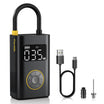
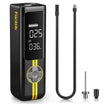
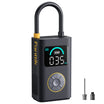
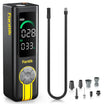
Quality outdoor tools, such as the Fanttik X8 APEX EV Tire Inflator, utilize high-temperature magnets (like N52SH) and Class H or Class F insulation. These materials are designed to withstand internal temperatures approaching 180°C. However, if a user mistakes "stall torque" for a continuous rating, they risk crossing this threshold.
A well-engineered system does not simply cut power when it gets hot; it uses the BMS to "ramp down" current. This current limiting prevents the jarring loss of function that could be dangerous—for instance, if a high-torque screwdriver suddenly stops while you are balanced on a ladder.
Scenario Model: The Off-Road Thermal Stress Test
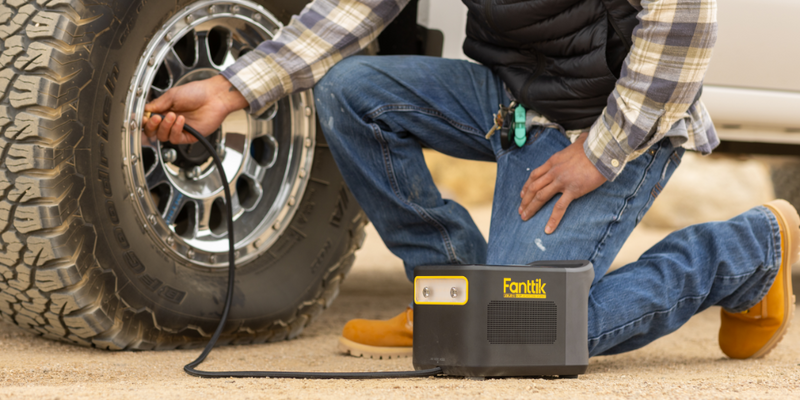
To demonstrate how sustained resistance affects motor performance, we modeled a common high-stress scenario: an off-road enthusiast reinflating large 315/70R17 tires in a desert environment. This represents a "worst-case" thermal load where the motor must fight increasing back-pressure for over an hour.
Modeling Methodology & Assumptions
Our analysis uses a deterministic parameterized model to estimate thermal accumulation during sequential tire inflation.
- Modeling Type: Sensitivity analysis of inflation time vs. pressure-dependent flow decay.
- Boundary Conditions: Assumes an ambient temperature of 35°C (95°F) and no active cooling between tires.
| Parameter | Value | Unit | Rationale |
|---|---|---|---|
| Tire Size | 315/70R17 | ISO-Metric | Standard for off-road vehicles (e.g., Ford Raptor) |
| Target Pressure | 35 | PSI | Recommended highway pressure |
| Delta Pressure | 30 | PSI | Airing up from 5 PSI (sand pressure) |
| Calculated Runtime | ~18 | Min/Tire | Based on 32L/min flow rate at 0 PSI |
| Total Runtime | ~73 | Minutes | Sequential inflation of 4 tires |
| Predicted Temp Rise | ~128 | °C | Theoretical adiabatic compression rise |
Analysis of the Results
In this model, the total runtime of ~73 minutes significantly exceeds the standard 40-minute continuous duty cycle of many portable compressors. The calculated ~128°C adiabatic rise, when added to a 35°C ambient start, puts the exit air temperature at ~163°C. This is hot enough to soften internal plastic components if the tool lacks a robust metallic heat sink.
For users in these conditions, we recommend a mandatory 15-minute cooldown after two tires. This heuristic—The Two-Tire Rest Rule—is a practical way to ensure the motor remains within its safe thermal envelope.

The Role of the Battery: "Stiff" Power Delivery
One non-obvious factor in managing current spikes is the "stiffness" of the battery. A "stiff" battery—one with ultra-low internal impedance—prevents voltage sag during a high-draw event.
When a motor stalls, it demands massive current. If the battery is weak or has high resistance, the voltage drops. This voltage drop can cause the tool's control logic (microcontroller) to reset, leading to erratic behavior. High-performance tools prioritize high-C discharge lithium-ion cells or LiFePO4 chemistry to maintain voltage stability. This approach addresses the root cause of logic failure rather than just suppressing the symptom.
Linear vs. Switching Regulators
In harsh outdoor environments, the choice of internal voltage regulation is critical. While switching regulators are more efficient, they generate high-frequency noise. In conductive, high-humidity environments, this noise can couple into moisture-induced leakage paths, causing "ghost" resets. We have observed that in some specialized marine or high-humidity outdoor applications, linear regulators—though less efficient—offer superior system-level reliability due to their low-noise operation (aligned with industry application notes on EMI in harsh environments).
Mechanical Durability: Bearings and Vibration
Managing electrical spikes is only half the battle; the mechanical components must survive the physical stress of high torque.
Ball Bearings vs. Sleeve Bearings
In dusty or sandy conditions, the choice of bearings is a common "gotcha."
- Sleeve Bearings: Quieter and cheaper, but they rely on a thin film of oil. In desert environments, grit can mix with this oil, creating an abrasive paste that destroys the motor from the inside.
- Ball Bearings: Handle radial loads (the side-to-side force common in belt-driven or geared tools) much better. However, they must be shielded or sealed (e.g., 2RS rating) to prevent catastrophic failure from grit ingress.
Solder Joint Fatigue
Vibration is a dominant failure mode for the electronics that manage current spikes. In tools like brushcutters or portable generators, constant vibration can lead to solder joint fatigue on surface-mount MOSFETs. To mitigate this, look for tools that use conformal coating or strategic "underfill" on critical ICs. This mechanical reinforcement turns a potential "unpredictable mechanical failure" into a managed electrical system.

Practical Applications in DIY and Maintenance
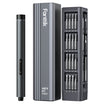
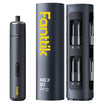
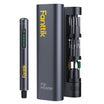
Understanding these engineering principles allows you to select and maintain your tools more effectively. Whether you are using a precision tool like the Fanttik E1 MAX Precision Electric Screwdriver for electronics or a high-draw vacuum for car detailing, the same rules of heat and resistance apply.
Managing High-Draw Cleaning Tasks
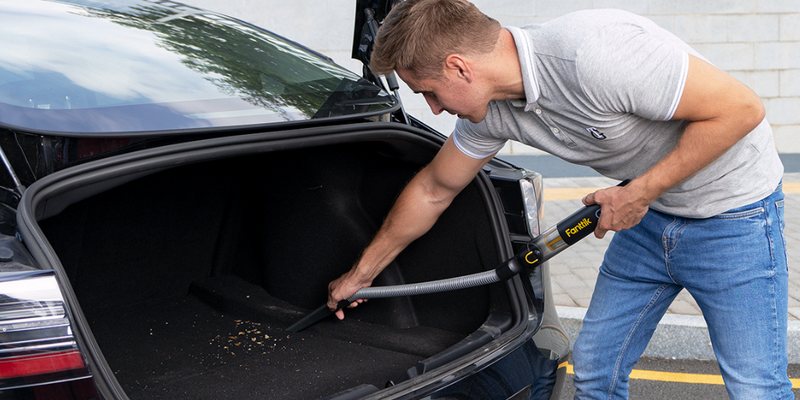
For automotive maintenance, tools like the Fanttik Fold V10 Apex Foldable Car Vacuum Dynamicclean® or the Fanttik Slim V10 Apex Cordless Car Vacuum rely on brushless motors to maintain suction. Brushless designs are inherently better at managing heat because the windings are on the outside (the stator), making it easier to shed heat to the environment compared to brushed motors where the heat is trapped on the spinning rotor.
Common DIY Pitfalls to Avoid:
- Over-shrouding: Never wrap a portable motor in a rag or plastic bag to keep it "clean." This blocks the airflow required for thermal dissipation.
- Ignoring the "Smell Test": If you smell a faint "sweet" or "ozone" scent, the winding insulation is likely overheating. Stop immediately.
- Abrupt Reversals: Rapidly switching from forward to reverse creates massive current spikes as the motor fights its own inertia. Allow the motor to come to a full stop first.
Compliance and Safety Standards
For tools sold in the European Union, the EU General Product Safety Regulation (EU) 2023/988 mandates strict traceability and safety obligations for manufacturers. This includes ensuring that portable motors do not pose a fire risk during a "locked rotor" condition.
When reviewing tool specifications, look for references to IEC Standards (such as IEC 60335 for household appliances) or ISO Standards for quality management. A tool that explicitly states it meets "Locked Rotor Thermal Protection" standards has been engineered to shut down safely rather than catch fire if a spike becomes a sustained stall.
Trust and Transparency
As a consumer, you should demand more than just a "peak power" number. Look for brands that provide "Duty Cycle" ratings. A 100% duty cycle means the tool can run indefinitely; a 25% duty cycle means it needs 45 minutes of rest for every 15 minutes of work. Transparency regarding these limits is the hallmark of an authoritative gear manufacturer.
Summary of Motor Management Heuristics
To keep your outdoor gear running at peak performance, keep these engineering rules of thumb in mind:
- The 10°C Rule: Keep it cool to double the life of your magnets.
- The Two-Tire Rest Rule: For high-volume inflation, give the motor a 15-minute break every two tires in hot weather.
- The Stiff Battery Principle: Use high-quality, high-discharge batteries to prevent logic resets during torque spikes.
- The Bearing Seal Check: Ensure outdoor tools used in sand or dust use sealed ball bearings (2RS) rather than open sleeve bearings.
By understanding the physics of peak current and the reality of thermal stress, you move from being a "user" to a "steward" of your equipment. Reliable power in the outdoors isn't about having the biggest motor; it's about having the smartest management of the energy you have.
Disclaimer: This article is for informational purposes only. Always refer to your specific tool's user manual for safety guidelines and duty cycle limitations. Working with high-current batteries and motors involves thermal and electrical risks; consult a professional if you are unsure of a tool's operating condition.
References
Continue reading
 Preventing Motor Stall During Heavy-Duty Outdoor Projects
Covers BLDC motors, lithium-ion battery synergy, feathering triggers, burden tests, and maintenance for reliable tool performance.
Preventing Motor Stall During Heavy-Duty Outdoor Projects
Covers BLDC motors, lithium-ion battery synergy, feathering triggers, burden tests, and maintenance for reliable tool performance.
 Diagnosing Torque Loss in Cordless High-Pressure Cleaners
Covers battery voltage sag, brushless motor firmware, hydraulic pump scaling, and systematic troubleshooting methods for DIY repair.
Diagnosing Torque Loss in Cordless High-Pressure Cleaners
Covers battery voltage sag, brushless motor firmware, hydraulic pump scaling, and systematic troubleshooting methods for DIY repair.



Leave a comment
This site is protected by hCaptcha and the hCaptcha Privacy Policy and Terms of Service apply.