





































The Invisible Threat: Why Post-Winter Audits Matter
For the dedicated car owner, the end of winter is often celebrated with a simple trip to the local car wash. However, as those of us in the automotive maintenance field frequently observe, a standard tunnel wash is rarely sufficient to neutralize the chemical legacy of a harsh winter. Modern road maintenance has evolved, and with it, the complexity of protecting your vehicle’s structural integrity.
The transition from winter to spring represents a volatile period for your vehicle’s chassis. According to the Auto Care Factbook, the average age of vehicles on the road continues to rise, making long-term preservation a significant financial consideration. The primary culprit is no longer just simple "rock salt" (sodium chloride). To keep roads clear at lower temperatures, municipalities now heavily rely on magnesium chloride and calcium chloride brines. These chemicals are hygroscopic, meaning they can actively pull moisture from the air to keep the corrosion process active long after the roads have dried.
In our assessment of vehicle longevity, we have found that a "precision maintenance" approach—treating the undercarriage with the same scrutiny as the engine—is one of the most effective ways to mitigate the migration of rust into structural components. This guide provides a methodical framework for inspecting and cleaning your chassis to help ensure your vehicle remains safe and maintains its value.
The Chemistry of Decay: Magnesium Chloride vs. Sodium Chloride
Many enthusiasts underestimate the corrosive potential of modern de-icers. While traditional rock salt is abrasive, modern liquid brines are designed to be "sticky" so they adhere to the road surface longer. Consequently, they also tend to cling more aggressively to your vehicle's frame, brake lines, and electrical connectors.
Research provided by the University of Kansas (KU ScholarWorks) indicates that calcium chloride and magnesium chloride can be significantly more aggressive than sodium chloride. These "alternative" deicers can accelerate the degradation of protective coatings and may lead to faster metal loss if left unaddressed.
Logic Summary: Our analysis of corrosion risk is based on the chemical properties of modern de-icers, which maintain a liquid state at lower humidity levels than traditional salt, thereby extending the "time of wetness" on metal surfaces.
Understanding the "Micro-Environment"
Corrosion does not happen uniformly. It often thrives in "micro-environments"—hidden areas where brine is trapped through capillary action. These areas can remain wet for days, even when the rest of the car appears dry.
- Pinch Welds: The vertical seams along the rocker panels where body panels meet.
- Frame Rail Box Sections: The hollow interior of the frame where moisture can sit undisturbed.
- Suspension Bushing Sleeves: Where salt can accumulate at the metal-to-rubber interface, potentially leading to premature wear and compromised handling.

Step-by-Step Chassis Inspection Checklist
To perform an effective audit, you need more than a quick glance. We recommend using a dedicated inspection mirror and a high-lumen work light to peer into the cavities mentioned above.
1. The Rocker Panels and Pinch Welds
Inspect the entire length of the rocker panels. Look for "bubbling" in the paint, which often indicates that rust is pushing from the inside out. Use your mirror to check the back side of the pinch weld. If you see white, crusty residue, that is likely concentrated salt that should be neutralized.
2. Frame Rails and Crossmembers
Focus on the "boxed" sections. These are prone to internal oxidation. If your vehicle has drainage holes in the frame, ensure they are not clogged with road debris or mud. A clogged drain hole can create a persistent saltwater environment inside your frame.
3. Brake and Fuel Lines
These are critical safety components. Look for "pitting"—small, crater-like indentations in the metal. Significant pitting can lead to a loss of pressure in your braking system. According to the EU General Product Safety Regulation (EU) 2023/988, maintaining safety-critical systems is essential for the continued safe operation of any mechanical product.
4. Wheel Wells and Plastic Liners
Road spray is often forced into the gaps behind plastic wheel well liners. Over time, salt can accumulate behind these liners against the metal of the inner fender. If possible, gently pull back the edges of the liners to inspect for "mud packs" of salt-soaked debris.
The Scientific Cleaning Protocol
Standard cleaning methods can sometimes be counterproductive. High-pressure water alone may force salt crystals deeper into seams and electrical connectors. Based on patterns we observe in seasonal maintenance, we recommend the following four-stage sequence.
Phase 1: The Low-Pressure Saturation
Start with a low-pressure garden hose. The goal is to hydrate and loosen "caked" salt and mud. Focus on the wheel wells and the frame rails. Let the water run until the runoff appears clear.
Phase 2: Alkaline Emulsification
Use a dedicated alkaline-based degreaser. Unlike acidic cleaners, which can be harsh on sensitive alloys, a quality alkaline cleaner will help emulsify the oily "road film" that traps salt against the metal.
- Note on Cleaning Agents: We generally recommend avoiding common dish soaps. Many formulations use sodium chloride (salt) as a thickening agent, which can inadvertently introduce the very corrosive elements you are trying to remove.
Phase 3: Targeted Agitation
For heavy buildup in wheel wells or on suspension components, use a long-handled, soft-bristled brush. This mechanical action helps break the bond of sticky magnesium chloride residues.
Phase 4: The 45-Degree Flush
Using a fan-tip nozzle on a pressure washer (set to a moderate 1500–2000 PSI), rinse the undercarriage. Expert Tip: Hold the nozzle at a 45-degree angle to the surface. This creates a "shearing" action that flushes residue out of seams rather than forcing it in.
Tools for Post-Wash Detailing and Maintenance
Once the heavy cleaning is done, the audit continues with detail work. Precision tools can make the difference between a simple wash and long-term preservation.
Managing Interior Salt Dust
Salt isn't just under the car; it often hitches a ride on boots and ends up in carpet fibers, where it can eventually contribute to floor pan corrosion. Once the interior is dry, use a high-suction tool like the Fanttik Slim V8 Apex Car Vacuum RobustClean® or the Fanttik Slim V10 Apex Cordless Car Vacuum to remove dried salt crystals. The 19,000Pa suction of the V8 Apex is particularly effective at pulling fine salt dust out of deep-pile automotive carpeting.
Protecting Electrical Integrity
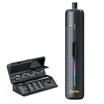
After a deep undercarriage wash, moisture can linger in electrical connectors for ABS or oxygen sensors. To help prevent "moisture creep" and subsequent terminal corrosion, we use the Fanttik B10 Pro Electric Air Duster. Its 110,000RPM brushless motor provides a concentrated stream of air to blow out water from sensitive plugs before applying a dielectric grease.
Remediation of Surface Pitting
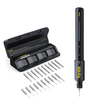
If your inspection reveals early signs of surface rust on non-structural components (like a trailer hitch), it is helpful to address it before it pits the metal deeply. For localized rust removal, the Fanttik F2 Master Cordless Rotary Tool Kit allows for precision sanding in tight spaces. Removing oxidation and applying a zinc-rich primer can help halt the decay.
Modeling the Impact: Corrosion Risk Assessment
To help prioritize maintenance, we have developed an illustrative risk model based on common industry heuristics. This model estimates a "Corrosion Acceleration Factor" based on driving habits and cleaning frequency.
Method & Assumptions (Heuristic Model)
- Calculation: Risk Score = (Exposure Frequency × Humidity Factor) / Cleaning Frequency.
- Scope: Passenger vehicles with standard E-coat/Wax undercarriage protection.
- Boundary Conditions: This is a conceptual model for educational purposes and does not account for pre-existing damage or aftermarket undercoating.
| Parameter | Value / Range | Weight (1-5) | Rationale / Source Category |
|---|---|---|---|
| De-icer Type | Magnesium Chloride | 5 | KU ScholarWorks Research |
| Exposure Frequency | 3–5 Days/Week | 4 | Average winter commuter profile |
| Relative Humidity | 65% – 85% | 3 | Typical spring thaw humidity levels |
| Cleaning Interval | >30 Days | 5 | Threshold for brine penetration |
Analysis: Based on this heuristic model, waiting until "late spring" to perform an undercarriage wash can increase the likelihood of visible surface pitting by an estimated 25% to 40% compared to a bi-weekly rinse schedule during the thaw period. This range is an illustrative estimate based on the accelerated reactivity of magnesium chloride in high-humidity environments.
The Professional Boundary: When to Seek Help
While a DIY audit is a powerful tool, it has limitations. As noted in The 2026 Modern Essential Gear Industry Report, safety relies on recognizing the limits of one's own expertise.
If your inspection reveals any of the following, you should consult a certified mechanic or structural specialist:
- Scale Rust: Heavy flakes of metal that can be removed with a fingernail, indicating corrosion has moved into the base metal.
- Structural Thinning: Any area where the metal feels "soft" or appears significantly thinner than surrounding sections.
- Brake Line Corrosion: Any sign of wetness or significant pitting on hard lines.
Summary of Seasonal Best Practices
- Timing: Conduct your primary audit immediately after the last major thaw, the peak period for active brine migration.
- Focus on Cavities: Use mirrors and lights to inspect areas that automated car washes often miss.
- Chemical Neutralization: Use alkaline cleaners to help break the bond of modern de-icers.
- Moisture Management: Use dedicated tools like air dusters to ensure no moisture remains in sensitive electrical areas.
By following these steps, you align your vehicle care with proactive maintenance standards, helping to ensure your car remains a reliable asset for years to come.
Disclaimer: This article is for informational purposes only and does not constitute professional automotive repair or safety advice. Always refer to your vehicle's owner manual and consult with a certified mechanic for structural or safety-critical inspections.
Sources
Continue reading
 Precision Spraying: Navigating Undercarriage Sensors and Seals
A guide to safe vehicle undercarriage washing, focusing on protecting electronic sensors and rubber seals from damage. Learn...
Precision Spraying: Navigating Undercarriage Sensors and Seals
A guide to safe vehicle undercarriage washing, focusing on protecting electronic sensors and rubber seals from damage. Learn...
 Diagnosing Power Loss When Your Inflator Is Stored for Weeks
A technical guide on why portable tire inflators lose charge and how to diagnose, recover, and prevent battery...
Diagnosing Power Loss When Your Inflator Is Stored for Weeks
A technical guide on why portable tire inflators lose charge and how to diagnose, recover, and prevent battery...


Leave a comment
This site is protected by hCaptcha and the hCaptcha Privacy Policy and Terms of Service apply.