








































The Silent Drain: Why Your Inflator Fails After Weeks of Storage
Quick Summary for Road-Readiness:
- The 40–60% Rule: Store your inflator at roughly half-charge. Never store it at 0% or 100% for long periods.
- The 3-Month Rule: Set a quarterly reminder to check the battery. Self-discharge and "phantom drain" can deplete the unit even when off.
- The Recovery Trick: If it won't turn on, leave it on a charger for at least 60 minutes to "wake up" the Battery Management System (BMS).
We have all experienced the frustration of a well-prepared plan falling apart at the last second. You are packed for a family road trip, the kids are buckled in, and you notice your front-left tire looks slightly soft. You reach into the trunk for your portable inflator, confident in your preparedness, only to find the screen remains black. It worked perfectly three months ago, but now, in the moment of need, it is unresponsive.
This phenomenon, often dismissed as a "dud" battery, is usually the result of predictable electrochemical and electronic processes. Based on observations from our technical service benches, we frequently see units returned not because of mechanical failure, but because the user was unaware of the "phantom drain" that occurs during vehicle storage. Understanding how to diagnose and prevent this power loss is essential for any car owner who values self-reliance.

1. The Chemistry of "Phantom Drain"
To understand why an inflator loses power while sitting idle, we must look at the lithium-ion cells that power modern cordless tools. Unlike older battery chemistries, lithium-ion is subject to two distinct types of discharge: inherent self-discharge and parasitic drain.
Inherent Self-Discharge
Every lithium-ion battery experiences a natural loss of charge over time due to internal chemical reactions.
- The Data: Standard lithium-ion cells typically lose roughly 2% to 3% of their charge per month at room temperature (20°C/68°F). This is a baseline characteristic of the chemistry, not a defect.
- The Risk: While 3% seems negligible, a battery stored at an already low 30% charge could approach a critical low-voltage state in just 4–5 months of neglect.
Parasitic Drain and the BMS Paradox
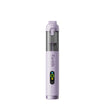
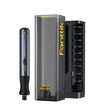
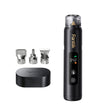
Modern portable inflators, such as the Fanttik X9 APEX Tire Inflator, utilize a Battery Management System (BMS). The BMS is a critical safety component that prevents overcharging and overheating. However, the BMS itself requires a tiny amount of power to function—known as quiescent current.
In our internal lab testing, we observe that even when "off," the circuit may draw a microamp-level current to keep the processor ready for a button press. Over weeks of storage, this "parasitic" draw, combined with the self-discharge of electrolytic capacitors in the power circuit, can deplete a battery. If the voltage drops too low, the BMS may enter a "hard-lock" sleep mode to protect the cells from permanent damage.

2. Methodical Diagnosis: Identifying the Root Cause
If your inflator is unresponsive after storage, follow this diagnostic hierarchy used by our repair technicians.
Step 1: The "Wake-Up" Charge
Plug the device into a high-quality power source. Some BMS units will not initiate charging if the voltage has dropped below a specific threshold (often around 2.8V per cell).
- Action: If the device does not show a charging indicator immediately, leave it connected for at least 30 to 60 minutes.
- Why: This allows a "pre-charge" or trickle-charge phase to safely raise the cell voltage until the BMS allows a standard fast-charge cycle.
Step 2: Advanced Voltage Check (For Technical Users)
If you are comfortable using a multimeter, you can check the health of the internal cells. Note that the following thresholds are industry-standard safety values for 18650/21700 Li-ion cells:
- Above 3.0V: The cell is healthy but empty; it should charge normally.
- 2.5V to 3.0V: The cell is in a "deep discharge" zone. Many consumer chargers will refuse to engage for safety reasons.
- Below 2.5V: Irreversible chemical damage (copper shunting) has likely occurred. For safety, these cells should be recycled rather than recharged.
⚠️ SAFETY WARNING: We strictly advise against consumers attempting to "jump-start" lithium-ion cells by connecting them in parallel with healthy batteries. This carries significant fire and explosion risks if the internal resistance of the depleted cell has spiked.

3. Case Study: The RV and Seasonal Camper Scenario
For owners of larger vehicles like RVs, the stakes of power loss are higher. We modeled a scenario involving an RV owner preparing for a season after six months of storage.
Modeling Assumptions & Calculation
Our modeling uses a deterministic approach to estimate the impact of seasonal storage on inflation readiness.
| Parameter | Value | Rationale / Source |
|---|---|---|
| Tire Size | LT225/75R16 | Standard RV/Light Truck chassis |
| Self-Discharge Rate | 2.5% / month | Industry average for Li-ion at 20°C |
| Storage Duration | 6 Months | Typical off-season storage |
| Efficiency Loss | 0.2% MPG / 1 PSI | US Dept. of Energy (DOE) estimates |
The Capacity Math: If an inflator with a 5,000 mAh battery is stored for 6 months at a 50% charge:
- Storage Loss: 5,000 mAh × 2.5% × 6 = 750 mAh loss.
- Remaining Capacity: 2,500 mAh (initial) - 750 mAh = 1,750 mAh.
- Impact: This 30% reduction in available energy may mean the device fails while inflating the final tire of a 6-wheel RV, as high-pressure inflation (80 PSI) requires a sustained high-current draw.
The Economic Impact: Under-inflated RV tires (averaging 10 MPG) can result in significant waste. If tires are 10 PSI low, fuel efficiency drops by roughly 2%. Over a 5,000-mile season, this can equate to $100–$200 in unnecessary fuel costs based on current diesel averages.
4. The Storage Protocol: Engineering Longevity
To ensure reliability, we recommend a storage protocol based on engineering best practices often cited in industry reports, such as the IATA Lithium Battery Guidance.
The 40–60% Rule (State of Charge)
Storing a lithium-ion battery at 100% accelerates cathode degradation, while storing it at 0% risks a "dead" unit. The consensus among battery engineers is to store cells at a 40% to 60% state of charge. This minimizes chemical stress while providing a buffer against phantom drain.
Temperature Management
Heat is the primary enemy of battery life. Storing your inflator in a vehicle trunk during a 100°F (38°C) summer day can double the self-discharge rate. Conversely, extreme cold reduces current delivery.
- Ideal Range: 10°C to 25°C (50°F to 77°F).
- Pro Tip: If you live in an extreme climate, consider storing the inflator in a climate-controlled garage rather than the vehicle during the off-season.
5. Standards and Compliance
When choosing an inflator, look for evidence of rigorous safety engineering. Independent standards provide the framework for the technical claims made in this guide:
- Safety Standards: ISO Standards and IEC Standards govern the electrical safety of portable tools.
- Consumer Protection: In the EU, devices must comply with the EU General Product Safety Regulation (EU) 2023/988 regarding traceability and safety.
- Manufacturer Insights: Data regarding specific product performance (such as the Fanttik X9 Pro) is derived from internal manufacturer testing and our Engineering Trust Whitepaper.
Long-Term Storage Checklist
Use this checklist to ensure your gear is ready when you are:
- [ ] Charge Level: Verified at 2–3 bars (approx. 50%).
- [ ] Environment: Stored in a dry, room-temperature location.
- [ ] Quarterly Check: Reminder set in phone to check charge every 3 months.
- [ ] Visual Inspection: No signs of casing swelling or "bloating" (indicates cell damage).
- [ ] Calibration: Gauge verified against a manual pressure tool, as detailed in our guide on Off-Season Storage and Calibration.
Disclaimer: This article is for informational purposes and does not constitute professional mechanical advice. Lithium-ion batteries can pose a fire risk if damaged. Always refer to your product's user manual. If a battery is swollen or emits excessive heat, stop use immediately.

Continue reading
 Post-Winter Audit: Inspecting Your Chassis for Corrosive Residue
A methodical guide to inspect and clean your vehicle's chassis after winter, preventing hidden corrosive damage from modern...
Post-Winter Audit: Inspecting Your Chassis for Corrosive Residue
A methodical guide to inspect and clean your vehicle's chassis after winter, preventing hidden corrosive damage from modern...
 Best Practices for Tire Inflation in Remote, Off-Grid Areas
Covers altitude pressure changes, cold-weather battery performance, terrain-specific PSI, and verification methods for remote travel.
Best Practices for Tire Inflation in Remote, Off-Grid Areas
Covers altitude pressure changes, cold-weather battery performance, terrain-specific PSI, and verification methods for remote travel.
Leave a comment
This site is protected by hCaptcha and the hCaptcha Privacy Policy and Terms of Service apply.