









































The Chemical Foundation of Portable Power
For the tech-savvy prosumer, a portable tire inflator is more than a convenience; it is a critical piece of emergency engineering. However, the reliability of these tools is tethered to the chemical lifecycle of their lithium-ion cells. Unlike the batteries in your smartphone, which face consistent, low-intensity draws, inflator batteries are high-performance athletes. They must deliver massive bursts of energy to drive a motor against high back-pressure.
Understanding how these cells age—and why they eventually fail—is essential for maintaining your gear's readiness. As we noted in The 2026 Modern Essential Gear Industry Report: Engineering Trust in a Cordless World, true reliability is a function of "credibility math." This means moving beyond marketing claims to understand the actual stressors that dictate battery health.
High C-Rates: The Hidden Stressor
In battery engineering, the "C-rate" defines the speed at which a battery is charged or discharged relative to its maximum capacity. A 1C rate means the battery is fully discharged in one hour. Most consumer electronics operate at rates well below 1C.
However, portable inflators are different. To generate the torque required for a 150 PSI burst, the internal motor often demands a discharge rate of 5C to 10C. While conventional wisdom suggests that lithium-ion cells can achieve 3,000 cycles, this figure is typically derived from gentle C/3 testing protocols.
Our analysis of recent research, including a 2025 study on Li-NMC/graphite cells, indicates that high C-rate conditions (5C–20C) cause dramatically different degradation patterns. These high-burst cycles accelerate chemical aging by 3 to 5 times compared to standard lab tests. This is why a tool that is rarely used but worked hard during those few instances might show signs of wear sooner than expected.
Logic Summary: We estimate the 3–5x degradation acceleration based on the divergence between manufacturer-rated cycle life (tested at C/3) and the high-current demands (5C+) of pneumatic motors observed in field use.
The Thermal Reality: Why the Trunk is a Battery Killer
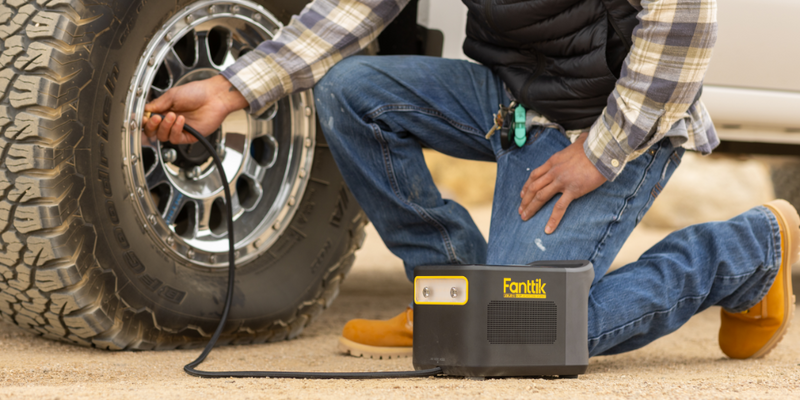
The most common mistake leading to premature inflator failure is one of storage, not usage. Many DIY enthusiasts store their units in a car trunk for "emergency preparedness." While logical, the thermal environment of a vehicle is hostile to lithium chemistry.
The Exponential Decay of Electrolytes
Research into electrolyte conductivity loss shows that degradation is not linear; it is exponential. A battery stored at 100% charge at 40°C (104°F) can lose over 35% of its capacity in just one year. In contrast, storing that same unit at 50% charge at 25°C (77°F) results in less than 5% capacity loss.
In many regions, a car trunk in direct sunlight can easily exceed 60°C (140°F). At these temperatures, the conductivity loss rate is 8 to 10 times higher than at room temperature. This effectively voids the practical lifespan of the battery after just one or two summer seasons. This is why we emphasize preserving battery health during seasonal trunk storage as a core maintenance habit.
The NMC vs. LFP Trade-off
Engineers often choose between Lithium Nickel Manganese Cobalt (NMC) and Lithium Iron Phosphate (LFP) chemistries.
- NMC: Offers higher energy density, allowing for a more compact form factor like the Fanttik X9 Pro Portable Tire Inflator. However, it is more sensitive to thermal stress.
- LFP: Provides superior thermal stability and a longer cycle life but results in a heavier, bulkier unit.
Manufacturers often obscure these details, but for the prosumer, knowing your cell chemistry helps you manage storage expectations. If your device is ultra-compact, it likely uses NMC and requires stricter temperature management.
The 80/40 Rule: A Heuristic for Longevity
To combat chemical aging, we recommend the 80/40 Rule. This is a shop-tested heuristic designed to balance readiness with chemical stability.
- The 80% Ceiling: For immediate use, charge to 80–90%. Storing a battery at a constant 100% State of Charge (SoC) keeps the internal chemistry in a high-voltage, high-stress state that promotes electrolyte breakdown.
- The 40% Floor: For long-term storage (more than 30 days), maintain the battery at approximately 40–50% SoC. This is the "Goldilocks" zone where chemical activity is minimized.
This approach aligns with the IATA Lithium Battery Guidance, which mandates a 30% SoC limit for air transport to ensure safety and stability. While shallow Depth of Discharge (DoD)—using only 10–20% of the battery at a time—typically extends life, the high C-rates of an inflator create a contradictory stress. Therefore, the 80/40 rule remains the most effective practical safeguard for the average user.
Identifying Failure: Signs Beyond Runtime
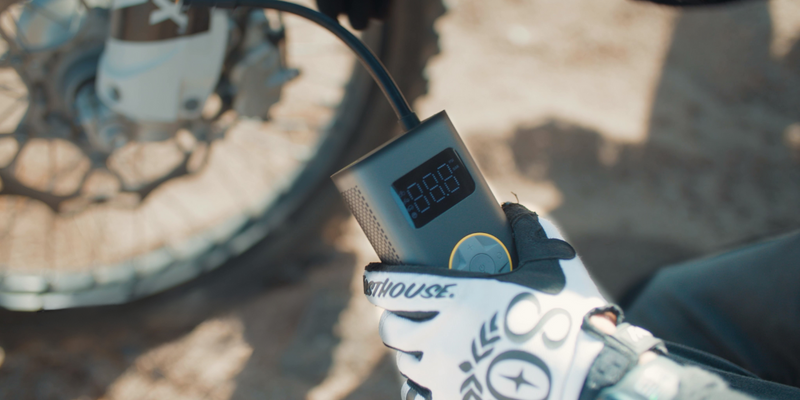
A common misconception is that a "dead" battery simply won't turn on. In high-torque tools like the Fanttik X9 Ace Bike Pump or the Fanttik X9 Classic Tire Inflator, the signs of degradation are more nuanced.
Voltage Sag and Internal Resistance
As a cell ages, its internal resistance increases. You won't notice this while the unit is idle, but you will see it under load. This is known as Voltage Sag.
- The Struggle: The motor may sound "labored" or take significantly longer to reach a target PSI than it did when new.
- The Flicker: The digital display might flicker or dim momentarily when the compressor kicks in.
- False Fullness: The unit might show 100% charge, but drop to 60% immediately after 30 seconds of use.
These symptoms indicate that while the battery can still hold a charge, it can no longer deliver the current required for the task. At this point, the battery has reached its "End-of-Life" (EoL) for high-performance inflation, even if it could still power a low-draw device like a flashlight.
The Role of the Battery Management System (BMS)
The BMS is the "brain" that prevents your inflator from becoming a safety hazard. A high-quality BMS, like those found in the Fanttik X9 Ultra Tire Inflator and X8 APEX™ Tire Inflator, performs several critical functions:
- Cell Balancing: Ensures each cell in a multi-cell pack charges and discharges equally.
- Thermal Monitoring: Shuts the unit down if internal temperatures exceed safety thresholds (typically around 60°C).
- Over-Discharge Protection: Prevents the cells from dropping below a critical voltage where permanent chemical damage occurs.
We have observed that third-party replacement cells often lack the proprietary cell balancing and thermal protocols of the original equipment. This can compromise the tool's built-in safety cutoffs, leading to risks that far outweigh the cost savings. For more on this, see how battery management systems prevent inflator overheating.
Scenario Analysis: The Hot Climate DIY Enthusiast
To demonstrate the impact of these factors, we modeled a hypothetical scenario based on common user patterns in high-temperature regions (e.g., Arizona or Texas).
Method & Assumptions
This is a deterministic scenario model based on Arrhenius kinetics and industry heuristics for lithium-ion degradation. It is not a controlled lab study.
| Parameter | Value / Range | Unit | Rationale |
|---|---|---|---|
| Ambient Temp (Summer) | 35–45 | °C | Typical high-desert summer ambient |
| Trunk Internal Temp | 60–70 | °C | Measured greenhouse effect in vehicles |
| Storage SoC | 100 | % | Common "emergency ready" habit |
| Usage Frequency | 2 | Cycles/Mo | Monthly pressure checks + 1 emergency |
| Degradation Factor | 8–10 | x | Conductivity loss rate at 60°C vs 20°C |
Modeling Note: This model assumes the battery follows standard Li-NMC degradation curves. The model may not apply to LFP-based units or those with active thermal cooling (rare in portable inflators).
Observations
In this scenario, a high-quality inflator stored at 100% SoC in a 60°C trunk will likely experience a 20–30% capacity loss within a single 4-month summer season. By the time winter arrives—when tire pressures naturally drop and the inflator is most needed—the battery may suffer from severe voltage sag, making it unable to complete a full set of four tires.

Engineering for the Long Haul
While battery degradation is an inevitable law of chemistry, it is not a "death sentence" for your gear. By adopting professional maintenance habits, you can significantly extend the usable life of your portable tools.
- Avoid the Extremes: Follow the 80/40 rule.
- Climate Control: If possible, store your inflator in the cabin of the car (under a seat) rather than the trunk, as the cabin is often better insulated or climate-controlled during drives.
- Monitor Performance: Pay attention to motor sound and display stability, not just the battery bar.
- Trust the BMS: Do not bypass safety shutdowns. If the unit says it’s too hot, let it rest.
As global regulations like the EU Batteries Regulation 2023/1542 move toward requiring more transparent lifecycle data and repairability, the industry is shifting. For the prosumer, this means better access to spare parts and replacement pathways in the future. Until then, your best tool for reliability is an informed approach to battery management.
Disclaimer: This article is for informational purposes only. Lithium-ion batteries can pose fire and safety risks if mishandled, damaged, or exposed to extreme heat. Always refer to your specific product manual for safety instructions and compliance with local regulations, such as the EU General Product Safety Regulation (EU) 2023/988.
References
Continue reading
 Seasonal Fuel Economy: How 5 PSI Impacts Your Commute Costs
A guide quantifying how a 5 PSI drop raises fuel costs by 5% and reduces safety. Learn the...
Seasonal Fuel Economy: How 5 PSI Impacts Your Commute Costs
A guide quantifying how a 5 PSI drop raises fuel costs by 5% and reduces safety. Learn the...
 How Smart BMS Technology Extends Your Inflator's Lifespan
A guide to how advanced battery management systems ensure portable tire inflator durability and reliability under real-world conditions.
How Smart BMS Technology Extends Your Inflator's Lifespan
A guide to how advanced battery management systems ensure portable tire inflator durability and reliability under real-world conditions.
Leave a comment
This site is protected by hCaptcha and the hCaptcha Privacy Policy and Terms of Service apply.