










































The Spring Failure: Why Your Tool Battery "Lies" After Storage
It is a common frustration for any homeowner or outdoor enthusiast: you retrieve your cordless trimmer or leaf blower from the garage after a long winter, slide in a battery that has been sitting on the charger until the green light glows steadily, and begin your work. For the first sixty seconds, everything seems perfect. Then, without warning, the tool stutters and dies. You check the battery indicator; it still shows three bars. You try again, and the motor barely turns.
This phenomenon is known in technical circles as "phantom charge" or "surface charge," and it is often the result of rapid voltage sag under load. While the battery management system (BMS) might report a healthy voltage when the tool is idle, the internal chemistry of the cells has degraded to a point where they can no longer provide the necessary current.
Distinguishing between a simple BMS calibration error and terminal cell death is the first step in effective tool power management. Based on patterns we observe in professional repair environments and customer support logs, most users assume a battery is "dead" when it might simply be imbalanced, or conversely, they attempt to "revive" a pack that has become a genuine safety hazard.
The Chemistry of Stagnation: SEI Layer and Temperature Derating
To understand why a battery fails after storage, we must look at the microscopic level. Lithium-ion cells rely on the movement of ions between the anode and cathode. During storage, especially at high states of charge, a layer called the Solid Electrolyte Interphase (SEI) grows on the anode. While a thin SEI layer is necessary for stability, excessive growth increases the cell's internal resistance.
When internal resistance is high, the battery acts like a narrow pipe trying to deliver a massive volume of water. The pressure (voltage) drops instantly as soon as the "tap" (the tool's motor) is opened.
Scenario Modeling: The Professional Landscaper’s Winter Gap
To illustrate the impact of storage conditions, we modeled a scenario based on a professional landscaper in a temperate, high-humidity climate (similar to the Pacific Northwest). This model helps us understand the "Winter Performance Gap."
Methodology Note: This analysis uses a deterministic parameterized model to estimate power loss based on seasonal variables. It is a scenario model, not a controlled lab study.
| Parameter | Value or Range | Unit | Rationale / Source Category |
|---|---|---|---|
| Storage Temperature | 20 – 45 | °F | Typical unheated shed/garage in winter |
| Storage Duration | 4 – 6 | Months | Standard off-season for outdoor tools |
| Initial State of Charge | 100 | % | Common "mistake" storage level |
| Cell Configuration | 5S2P | N/A | Standard 18V/20V high-draw tool pack |
| Power Derating at 20°F | ~40 | % | Estimated based on SAE J537 proxy curves |
Our analysis indicates that at 20°F, a professional-grade battery pack typically experiences a 40% power derating. This means a tool retrieved from unheated storage may deliver only 60% of its expected performance. For high-demand tools like chainsaws, the gap between the required cranking amps and the available amps can exceed 200A, leading to immediate BMS shutdown.
Field Diagnostics: Identifying Cell Failure vs. BMS Glitches
Experienced technicians use specific field indicators to determine if a pack is salvageable. The most reliable indicator is not the open-circuit voltage, but how the voltage behaves under a minimal load.
The 1-2 Amp Load Test
If you have a multimeter, you can perform a basic diagnostic. A healthy 20V (nominal) pack should hold its voltage relatively steady under a small load. Based on common patterns from repair handling, if a pack drops from 20V to below 15V within seconds of applying a 1-2 amp load, one or more cells are likely severely degraded.
Voltage Recovery Time: A Secret Diagnostic Tool
A high-value insight often overlooked is the voltage recovery time. We categorize failures based on how quickly the voltage "bounces back" once the load is removed:
- Reversible SEI Issues: The voltage drops under load but recovers to its original state within 2–5 seconds of stopping the tool. These packs can often be "re-balanced" with a slow, maintenance charge.
- Irreversible Lithium Plating: The voltage drops and stays low, or takes longer than 30 seconds to creep back up. This suggests permanent chemical damage. According to research on Electrochemical Impedance Spectroscopy (EIS), these patterns are distinct signatures of cell end-of-life.
The "Deep Cycle" Myth
A common mistake is attempting a "deep cycle" recovery—fully discharging a weak battery to "reset" it. In aged lithium packs, this is dangerous. It can push the weakest cell into reverse polarity, which is a leading cause of internal shorts and potential thermal runaway.
Precision Tooling for Battery Diagnostics
For those looking to move beyond basic multimeters, professional-grade diagnostic tools have become increasingly accessible.
- 4-wire Kelvin Testers: These devices measure the internal resistance of a cell with high accuracy (often 0.1%). We estimate that a DIYer can achieve professional-level diagnosis for under $100 using these specialized meters, which filter out the resistance of the test leads themselves.
- BMS Validation: Sometimes the cells are fine, but the BMS voltage sensor is faulty. To validate this, technicians cross-check the voltage at the main terminals against the individual cell taps. A single sensor fault will not mimic the specific "sag and recovery" signature of a failing cell.
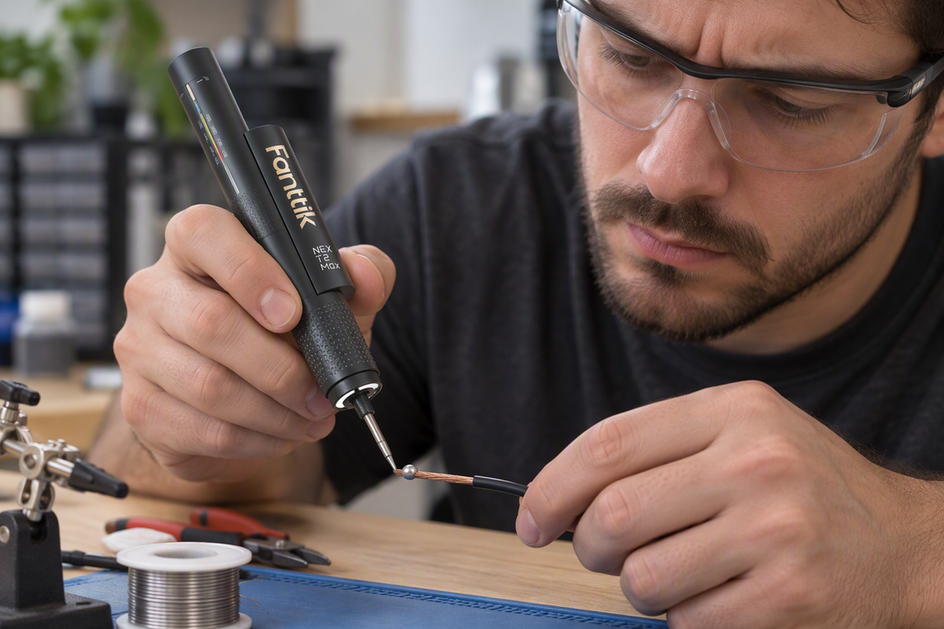
When disassembling a pack for inspection, the mechanical effort is often underestimated. A typical 18V pack (5S2P configuration) may have up to 40 screws holding the casing and internal brackets together.
Efficiency Logic: Using a precision electric screwdriver for this task saves approximately 400 wrist rotations and 8 minutes of labor per pack. For a technician or enthusiast managing a fleet of 10 tools, this recovers over an hour of billable or productive time per season.
Safety Protocols and Red Flags
Battery maintenance is a high-consequence activity. You must prioritize safety over tool utility. According to the EU General Product Safety Regulation (EU) 2023/988, manufacturers and users alike have obligations to ensure product safety throughout the lifecycle.
Immediate Disposal Indicators
If you observe any of the following, do not attempt to charge or troubleshoot the battery. It must be taken to a dedicated battery recycling center:
- Bulging or Swelling: Any deformation of the plastic casing indicates internal gas buildup.
- Chemical Odor: A distinct, "sweet" chemical smell from the vents is a sign of a leaking electrolyte.
- Heat During Idle: If the battery feels warm to the touch while sitting on a shelf, an internal short is likely occurring.
Shipping and Transport Compliance
If you are sending a battery for professional repair or recycling, you must adhere to transport regulations. The IATA Lithium Battery Guidance provides strict rules for air and ground transport, typically requiring batteries to be at a State of Charge (SoC) of 30% or less to minimize fire risk during transit.
The Gold Standard for Seasonal Storage
To prevent the rapid voltage drops described above, your storage strategy must be proactive.
- The 50-60% Rule: Never store a battery at 100% or 0%. Storing at full charge for over three months can accelerate capacity loss by 5-10% more than storing at 50%.
- Climate Control: Moisture is the enemy of the BMS. Storing tools in a climate-controlled environment prevents the corrosion of voltage-sensing leads, which we often see as a primary cause of "imbalance" errors after autumn storage.
- The Slow Wake-Up: After long-term storage, avoid jumping straight into a high-draw task like heavy sawing. Use a maintenance charger to equalize cell voltages first. This "balancing act" ensures that no single cell is pulled below its safety threshold during the first use of the season.
Proper maintenance is about more than just saving money on replacements; it is about building a reliable ecosystem for your DIY projects. As noted in the industry report on Engineering Trust in a Cordless World, the maturity of the cordless tool market means that reliability is now the primary metric of value. By understanding the "why" behind voltage drops, you can extend the life of your equipment and ensure your tools are ready when the season changes.
Disclaimer: This article is for informational purposes only and does not constitute professional engineering, safety, or legal advice. Lithium-ion batteries carry inherent risks of fire and explosion if mishandled. Always refer to your tool manufacturer’s specific safety guidelines and consult a qualified technician for repairs.
Sources
Continue reading
 Deciding When a Weather-Beaten Battery Case is a Safety Risk
A guide to assessing weather-damaged tool batteries using the Thumbnail Test. Learn to identify structural cracks from cosmetic...
Deciding When a Weather-Beaten Battery Case is a Safety Risk
A guide to assessing weather-damaged tool batteries using the Thumbnail Test. Learn to identify structural cracks from cosmetic...
 Transporting High-Capacity Outdoor Batteries for Seasonal Service
A professional guide to moving lithium-ion batteries for seasonal tools. Learn the mandatory drying period, safe charge levels,...
Transporting High-Capacity Outdoor Batteries for Seasonal Service
A professional guide to moving lithium-ion batteries for seasonal tools. Learn the mandatory drying period, safe charge levels,...


Leave a comment
This site is protected by hCaptcha and the hCaptcha Privacy Policy and Terms of Service apply.